
Browse "Types of Law"
-
Article
Law Reform
Law reform is the process of ensuring that law meets the needs of the society it is designed to serve. The process may involve updating by repealing old and obsolete enactments, consolidating or rationalizing an area of law, or even proposing entirely new concepts.
"https://thecanadianencyclopedia.ca/images/tce_placeholder.jpg?v=e9dca980c9bdb3aa11e832e7ea94f5d9" // resources/views/front/categories/view.blade.php
https://thecanadianencyclopedia.ca/images/tce_placeholder.jpg?v=e9dca980c9bdb3aa11e832e7ea94f5d9
-
Article
London Conference (Plain-Language Summary)
The London Conference took place in London, England, from 4 December 1866 to March 1867. Politicians from British North America met with members of the British government. This was the last of three conferences that were held to work out the legal details of Confederation. The first two were the Charlottetown Conference and Quebec Conference. They were both held in 1864. The Quebec Resolutions were agreed upon in Quebec City. They were reviewed and updated in London. They formed the basis of the British North America Act (now the Constitution Act, 1867). It is the foundation of Canada’s Constitution. It was passed by the British Parliament. It received Queen Victoria’s Royal Assent on 29 March 1867. This article is a plain-language summary of the London Conference. If you would like to read about this topic in more depth, please see our full-length entry: London Conference.
"https://d3d0lqu00lnqvz.cloudfront.net/media/media/9a650dcd-e8ad-4685-8baf-c4bba9cae8e7.jpg" // resources/views/front/categories/view.blade.php
https://d3d0lqu00lnqvz.cloudfront.net/media/media/9a650dcd-e8ad-4685-8baf-c4bba9cae8e7.jpg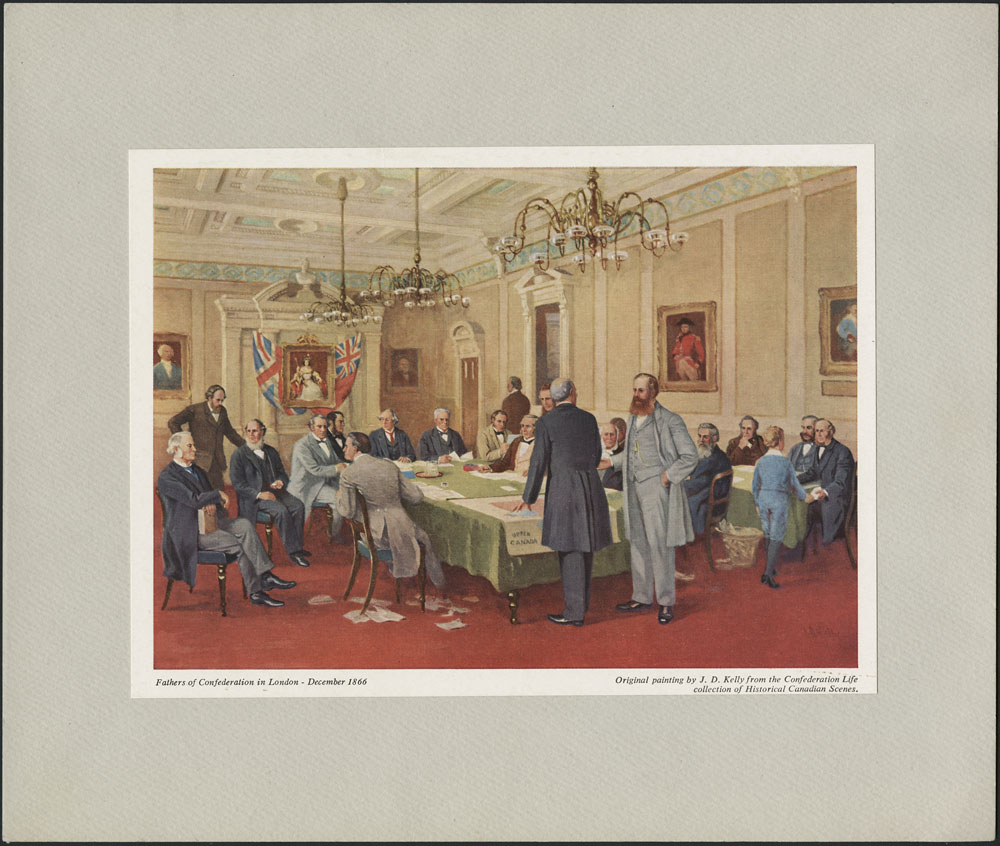
-
Article
Malpractice
Malpractice is intentional or negligent failure by any professional, eg, doctor, lawyer, accountant, to meet the standards of reasonable competence in his field. These standards are set taking into account the circumstances in which the professional is acting.
"https://thecanadianencyclopedia.ca/images/tce_placeholder.jpg?v=e9dca980c9bdb3aa11e832e7ea94f5d9" // resources/views/front/categories/view.blade.php
https://thecanadianencyclopedia.ca/images/tce_placeholder.jpg?v=e9dca980c9bdb3aa11e832e7ea94f5d9
-
Article
Marriage in Canada
Marriage remains one of the most important social institutions in Canada. It has undergone profound changes since the 1960s. The marriage rate is in decline and the traditional idea of a family is being transformed. After the turn of the millennium, the marriage rate fell to 4.7 marriages per 1,000 people (compared to 10.9 in the 1940s). Married couples are still the predominant family structure. But between 2001 and 2016, the number of common-law couples rose 51.4 per cent; more than five times the increase for married couples over the same period. The definition of what constitutes a married couple also changed in 2005 with the legalization of same-sex marriage. In 2016, 65.8 per cent of Canadian families were headed by married couples; down from 70.5 per cent in 2001. Marriage falls under federal jurisdiction, but the provinces regulate marriage ceremonies and grant marriage licences.
"https://d3d0lqu00lnqvz.cloudfront.net/media/media/774be527-3b4e-4d62-8441-076a3a72ec1e.jpg" // resources/views/front/categories/view.blade.php
https://d3d0lqu00lnqvz.cloudfront.net/media/media/774be527-3b4e-4d62-8441-076a3a72ec1e.jpg
-
Article
Media and the Law
The media are the means by which we receive information we want and need. Over time, town criers and clay tablets have given way to printed text. Now, a wide variety of aural and visual information is conveyed to us in bits and bytes through a number of intermediaries.
"https://thecanadianencyclopedia.ca/images/tce_placeholder.jpg?v=e9dca980c9bdb3aa11e832e7ea94f5d9" // resources/views/front/categories/view.blade.php
https://thecanadianencyclopedia.ca/images/tce_placeholder.jpg?v=e9dca980c9bdb3aa11e832e7ea94f5d9
-
Article
Medical Ethics
Medical ethics are concerned with moral questions raised by the practice of medicine and, more generally, by health care.
"https://thecanadianencyclopedia.ca/images/tce_placeholder.jpg?v=e9dca980c9bdb3aa11e832e7ea94f5d9" // resources/views/front/categories/view.blade.php
https://thecanadianencyclopedia.ca/images/tce_placeholder.jpg?v=e9dca980c9bdb3aa11e832e7ea94f5d9
-
Article
Meech Lake Accord: Document
Meech Lake Accord: Document1987 Constitutional AccordComplete Text June 3, 1987 WHEREAS first ministers, assembled in Ottawa, have arrived at a unanimous accord on constitutional amendments that would bring about the full and active participation of Quebec in Canada's constitutional evolution, would recognize the principle of equality of all provinces, would provide new arrangements to foster greater harmony and cooperation between the Government of Canada and the governments of the provinces and would require that annual...
"https://thecanadianencyclopedia.ca/images/tce_placeholder.jpg?v=e9dca980c9bdb3aa11e832e7ea94f5d9" // resources/views/front/categories/view.blade.php
https://thecanadianencyclopedia.ca/images/tce_placeholder.jpg?v=e9dca980c9bdb3aa11e832e7ea94f5d9
-
Article
Names
Personal names carry history, traditions, identity, spiritual meaning and hopes. The history of Canada includes both developments and controversy in naming. Naming has been an issue for many aboriginal communities. The use of European-origin names instead of traditional names is one example.
"https://thecanadianencyclopedia.ca/images/tce_placeholder.jpg?v=e9dca980c9bdb3aa11e832e7ea94f5d9" // resources/views/front/categories/view.blade.php
https://thecanadianencyclopedia.ca/images/tce_placeholder.jpg?v=e9dca980c9bdb3aa11e832e7ea94f5d9
-
Article
Notwithstanding Clause
Section 33 of the Canadian Charter of Rights and Freedoms is known as the notwithstanding clause. Also known as the override clause, it is part of the Constitution of Canada. The clause allows federal, provincial or territorial governments to temporarily override, or bypass, certain Charter rights. These overrides are subject to renewal after five years. Although the clause is available to governments, its use is politically difficult and therefore rare. It is known colloquially as the “nuclear option,” because its use is considered extremely severe. Since the Constitution was patriated in 1982, the clause has been used only a handful of times by various provinces. The federal government has never invoked the clause.
"https://d3d0lqu00lnqvz.cloudfront.net/media/media/eb6ec132-1f25-4df9-b54d-d101ef2e4e7e.jpg" // resources/views/front/categories/view.blade.php
https://d3d0lqu00lnqvz.cloudfront.net/media/media/eb6ec132-1f25-4df9-b54d-d101ef2e4e7e.jpg
-
Article
Organized Crime in Canada
Organized crime is defined in the Criminal Code as a group of three or more people whose purpose is the commission of one or more serious offences that would “likely result in the direct or indirect receipt of a material benefit, including a financial benefit, by the group.” Organized crime centres on illegal means of making money, such as gambling; prostitution; pornography; drug trafficking; insurance and construction fraud; illegal bankruptcy; motor vehicle theft; computer crime; and counterfeiting, among many others. The structure, sophistication and widespread nature of organized crime first became evident in the 1960s and 1970s. Some criminal organizations are based on ethnicity, such as the Italian Mafia and Chinese triads. Others are founded within certain industries (e.g., construction) or activities (e.g., biker gangs).
"https://d3d0lqu00lnqvz.cloudfront.net/media/new_article_images/OrganizedCrime/Bonannos_and_Rizzuto.jpg" // resources/views/front/categories/view.blade.php
https://d3d0lqu00lnqvz.cloudfront.net/media/new_article_images/OrganizedCrime/Bonannos_and_Rizzuto.jpg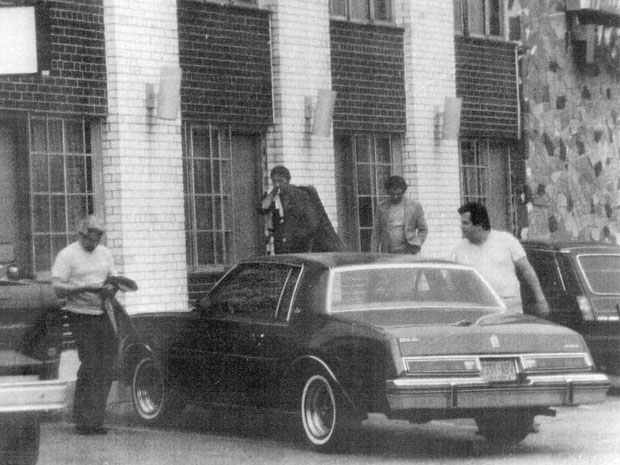
-
Article
Peace, Order and Good Government
“Peace, order and good government” is a phrase that is used in section 91 of the British North America Act of 1867 (now called the Constitution Act, 1867). It offers a vague and broad definition of the Canadian Parliament’s lawmaking authority over provincial matters. Since Confederation, it has caused tensions between federal and provincial governments over the distribution of powers. The phrase has also taken on a value of its own with Canadians beyond its constitutional purpose. It has come to be seen as the Canadian counterpart to the American “life, liberty and the pursuit of happiness” and the French “liberty, equality, fraternity.”
"https://d3d0lqu00lnqvz.cloudfront.net/media/media/143f8587-f938-4cf1-bdc2-c441d02dc962.jpg" // resources/views/front/categories/view.blade.php
https://d3d0lqu00lnqvz.cloudfront.net/media/media/143f8587-f938-4cf1-bdc2-c441d02dc962.jpg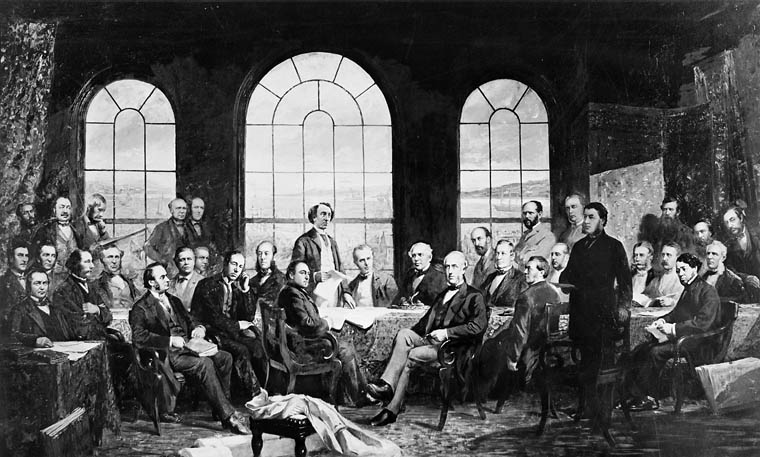
-
Article
Persons Case (Plain-Language Summary)
The Persons Case was a constitutional ruling. It established the right of women to serve in the Senate. The case was started by the Famous Five. They were a group of women activists. In 1928, they objected to a Supreme Court of Canada ruling that women were not “persons.” As such, they were not allowed to serve in the Senate. The Famous Five challenged the law. In 1929, the decision was reversed. As a result, women were legally recognized as “persons.” They could no longer be denied rights based on a narrow reading of the law. (This article is a plain-language summary of the Persons Case. If you are interested in reading about this topic in more depth, please see the full-length entry.)
"https://d3d0lqu00lnqvz.cloudfront.net/media/media/65699b89-06c0-4518-aa06-4eea43f2ec74.jpg" // resources/views/front/categories/view.blade.php
https://d3d0lqu00lnqvz.cloudfront.net/media/media/65699b89-06c0-4518-aa06-4eea43f2ec74.jpg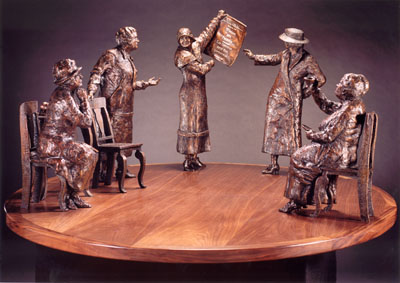
-
Article
Piracy in Canada
Piracy is traditionally defined as the seizure and robbery of craft at sea or in the air. Though piracy had only a small role in Canada’s history, it has been the subject of legendary tales over the years. Pirates traversed the Atlantic coast of the country during the 17th and 18th centuries, plundering and causing mayhem wherever they went. Stories about pirates like Peter Easton and Bartholomew Roberts remain a part of local histories. While maritime piracy is no longer a significant threat in Canada, it remains so in parts of Asia, Africa, South America and Central America. The Canadian Armed Forces have assisted in anti-piracy missions in various parts of the world. In the modern age, piracy has taken on new forms, such as virtual crime and digital theft. Online piracy poses threats to the Canadian people, industries and economy.
"https://thecanadianencyclopedia.ca/images/tce_placeholder.jpg?v=e9dca980c9bdb3aa11e832e7ea94f5d9" // resources/views/front/categories/view.blade.php
https://thecanadianencyclopedia.ca/images/tce_placeholder.jpg?v=e9dca980c9bdb3aa11e832e7ea94f5d9
-
Article
Property Law
Property, in the legal sense, can mean real property in the form of land and buildings, or personal, movable property. Property law — whether under the common law in most of Canada, or the Civil Code in Quebec — deals with a wide range of rights and obligations owing to individuals and governments, and has evolved enormously, particularly in fairness to women, since the 19th Century.
"https://thecanadianencyclopedia.ca/images/tce_placeholder.jpg?v=e9dca980c9bdb3aa11e832e7ea94f5d9" // resources/views/front/categories/view.blade.php
https://thecanadianencyclopedia.ca/images/tce_placeholder.jpg?v=e9dca980c9bdb3aa11e832e7ea94f5d9
-
Article
Quebec Biker War (1994–2002)
The Quebec Biker War was an almost decade-long territorial conflict between two outlaw motorcycle gangs in Quebec: the Hells Angels and the Rock Machine. The war centred on control over the narcotics trade in Quebec. It was also driven by intense rivalries and deep-seated animosities between major figures in Quebec’s criminal underworld. (See Organized Crime.) The conflict involved over 80 bombings, some 130 cases of arson and 20 disappearances. More than 160 people were killed and over 200 were injured, including many innocent bystanders.
"https://d3d0lqu00lnqvz.cloudfront.net/media/Hells_Angels_Quebec_-_Nomads.svg.png" // resources/views/front/categories/view.blade.php
https://d3d0lqu00lnqvz.cloudfront.net/media/Hells_Angels_Quebec_-_Nomads.svg.png