
Browse "Nature & Geography"
-
Article
Platinum
Platinum (Pt) is the best known of the 6 greyish-white, metallic, platinum group elements, which also include palladium (Pd), iridium (Ir), rhodium (Rh), osmium (Os) and ruthenium (Ru). Platinum and palladium are more commonly used than the other elements in the group.
"https://thecanadianencyclopedia.ca/images/tce_placeholder.jpg?v=e9dca980c9bdb3aa11e832e7ea94f5d9" // resources/views/front/categories/view.blade.php
https://thecanadianencyclopedia.ca/images/tce_placeholder.jpg?v=e9dca980c9bdb3aa11e832e7ea94f5d9
-
Article
Plover
Plover is the common name for a family (Charadriidae) of shorebirds with 2 subfamilies: Charadriinae, including true plovers; and Vanellinae, including lapwings.
"https://d3d0lqu00lnqvz.cloudfront.net/media/media/54ed14de-ebc8-46ba-80f7-c4f5bbef4130.jpg" // resources/views/front/categories/view.blade.php
https://d3d0lqu00lnqvz.cloudfront.net/media/media/54ed14de-ebc8-46ba-80f7-c4f5bbef4130.jpg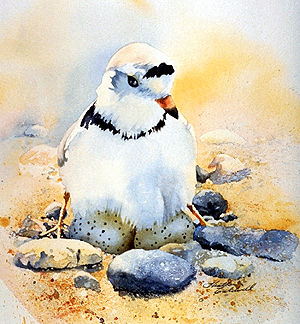
-
Article
Plum
Plum is a common name for certain members of genus Prunus of the rose family, which produce a smooth-skinned, elliptical, heart-shaped, oblong, ovate or round fruit with a flat seed. About 18 plum species are horticulturally important, including the European plum (P. domestica), which probably originated in the Caspian Sea area; Japanese plum (P. salicina), of Chinese origin; cherry plum (P. ceracifera), native to southeast Europe or southwest Asia; and P. nigra and P. americana, of Canadian and American origin respectively.
"https://d3d0lqu00lnqvz.cloudfront.net/media/media/a7b2bcfe-316e-4c50-b69e-69d4fc395472.jpg" // resources/views/front/categories/view.blade.php
https://d3d0lqu00lnqvz.cloudfront.net/media/media/a7b2bcfe-316e-4c50-b69e-69d4fc395472.jpg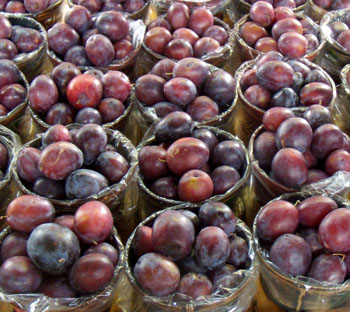
-
Article
Poison Ivy
Poison ivy is the common name collectively referring to a small genus (Toxicodendron) of woody perennial plants of the cashew family (Anacardiaceae). Poison ivy is closely related to and sometimes classified with the Sumacs in the genus Rhus.
"https://thecanadianencyclopedia.ca/images/tce_placeholder.jpg?v=e9dca980c9bdb3aa11e832e7ea94f5d9" // resources/views/front/categories/view.blade.php
https://thecanadianencyclopedia.ca/images/tce_placeholder.jpg?v=e9dca980c9bdb3aa11e832e7ea94f5d9
-
Article
Pondweed
Pondweed is a common name for members of the family Potamogetonaceae [Gk potamos, "river"], which consists of the genus Potamogeton.
"https://thecanadianencyclopedia.ca/images/tce_placeholder.jpg?v=e9dca980c9bdb3aa11e832e7ea94f5d9" // resources/views/front/categories/view.blade.php
https://thecanadianencyclopedia.ca/images/tce_placeholder.jpg?v=e9dca980c9bdb3aa11e832e7ea94f5d9
-
Article
Poplar
The poplar is a short-lived, deciduous, hardwood tree of genus Populus of the willow family, widely distributed in the northern temperate zone.
"https://d3d0lqu00lnqvz.cloudfront.net/media/media/62bf6280-e044-4789-abc5-84a773ec839d.jpg" // resources/views/front/categories/view.blade.php
https://d3d0lqu00lnqvz.cloudfront.net/media/media/62bf6280-e044-4789-abc5-84a773ec839d.jpg
-
Article
Potato
The potato (Solanum tuberosum) is a herbaceous annual of the nightshade family, which produces tubers at the end of underground branches called stolons. The principal cultivars (cultivated varieties) grown in Canada for table stock and processing are Superior (early), Norchip (mid-season), Kennebec (main crop) and Russet Burbank (late). Tubers are about 75–80 per cent water; the remainder contains useful amounts of minerals, vitamins B6 and C, carbohydrates, protein, potassium and dietary fibre. A 150 g baked potato contains only 100 calories and 0 fat. Potatoes comprise 52 per cent of all fresh vegetables consumed in Canada.
"https://d3d0lqu00lnqvz.cloudfront.net/media/media/7b83d57e-9794-41ff-99cc-34ba45f21bba.jpg" // resources/views/front/categories/view.blade.php
https://d3d0lqu00lnqvz.cloudfront.net/media/media/7b83d57e-9794-41ff-99cc-34ba45f21bba.jpg
-
Article
Potato Wart Disease
Potato wart disease, also called potato canker, is a fungal disease of potato sprouts, eyes and stolons. The disease is caused by the soil-borne fungus, Synchytrium endobioticum. Potato wart disease poses no danger to human health or food safety, but it can impact local economies as the disease can reduce yield and effect economic regulations, such as potato exports. (See also Agricultural Economics.)
"https://thecanadianencyclopedia.ca/images/tce_placeholder.jpg?v=e9dca980c9bdb3aa11e832e7ea94f5d9" // resources/views/front/categories/view.blade.php
https://thecanadianencyclopedia.ca/images/tce_placeholder.jpg?v=e9dca980c9bdb3aa11e832e7ea94f5d9
-
Article
History of Settlement in the Canadian Prairies
The Canadian Prairies were peopled in six great waves of migration, spanning from prehistory to the present. The migration from Asia, about 13,300 years ago, produced an Indigenous population of 20,000 to 50,000 by about 1640. Between 1640 and 1840, several thousand European and Canadian fur traders arrived, followed by several hundred British immigrants. They created dozens of small outposts and a settlement in the Red River Colony, where the Métis became the largest part of the population. The third wave, from the 1840s to the 1890s, consisted mainly but not solely of Canadians of British heritage. The fourth and by far the largest wave was drawn from many nations, mostly European. It occurred from 1897 to 1929, with a pause (1914–22) during and after the First World War. The fifth wave, drawn from other Canadian provinces and from Europe and elsewhere, commenced in the late 1940s. It lasted through the 1960s. The sixth wave, beginning in the 1970s, drew especially upon peoples of the southern hemisphere. It has continued, with fluctuations, to the present. Throughout the last century, the region has also steadily lost residents, as a result of migration to other parts of Canada, to the United States, and elsewhere.
"https://d3d0lqu00lnqvz.cloudfront.net/media/media/e1c671ab-3dcf-459c-b108-0bc6e4a86b99.jpg" // resources/views/front/categories/view.blade.php
https://d3d0lqu00lnqvz.cloudfront.net/media/media/e1c671ab-3dcf-459c-b108-0bc6e4a86b99.jpg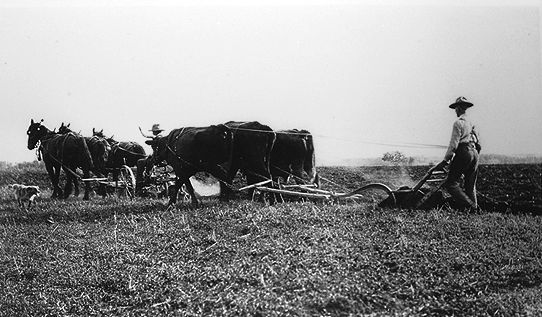
-
Article
Pronghorn
The pronghorn (Antilocapra americana) is a small, very fleet ungulate of the order Artiodactyla. It is the last surviving species of a once abundant and diverse North American family of ruminants, known as Antilocapridae. Although sometimes called pronghorn antelope, it is not a true antelope.
"https://d3d0lqu00lnqvz.cloudfront.net/media/media/3993ea60-8103-42ca-ab0e-377311c98d8f.jpg" // resources/views/front/categories/view.blade.php
https://d3d0lqu00lnqvz.cloudfront.net/media/media/3993ea60-8103-42ca-ab0e-377311c98d8f.jpg
-
Article
Provincial Floral Emblems
Floral emblems are generally selected from the flora of the country, nation, state, territory, or province they represent. Tradition dictates that the selected plant be popular and widely found throughout the region.
"https://d3d0lqu00lnqvz.cloudfront.net/Provincial-Floral-Emblems/provincial-floral-emblems-en.jpg" // resources/views/front/categories/view.blade.php
https://d3d0lqu00lnqvz.cloudfront.net/Provincial-Floral-Emblems/provincial-floral-emblems-en.jpg
-
Article
Pseudoscorpion
Pseudoscorpion and false-scorpion are the common names for tiny creatures in the class Arachnida, order Pseudoscorpiones (or Pseudoscorpionida).
"https://d3d0lqu00lnqvz.cloudfront.net/media/media/e9645241-0eeb-42fd-8aba-c143926ecddb.jpg" // resources/views/front/categories/view.blade.php
https://d3d0lqu00lnqvz.cloudfront.net/media/media/e9645241-0eeb-42fd-8aba-c143926ecddb.jpg
-
Article
Ptarmigan in Canada
Ptarmigan are distinguished from other members of the grouse subfamily by their all-white wings. Like other grouse, they are well adapted to cold environments, e.g., nostrils are hidden by feathers, body feathers have a long, downy aftershaft that increases insulation, and toes are feathered. Ptarmigan are the only birds with snow-white winter plumage. Summer plumage is mottled brown. The ptarmigan is the provincial game bird of Newfoundland and Labrador, and the rock ptarmigan is the territorial bird of Nunavut.
"https://d3d0lqu00lnqvz.cloudfront.net/media/media/e17af2d1-1e7f-4962-aef2-a774309f6e3f.jpg" // resources/views/front/categories/view.blade.php
https://d3d0lqu00lnqvz.cloudfront.net/media/media/e17af2d1-1e7f-4962-aef2-a774309f6e3f.jpg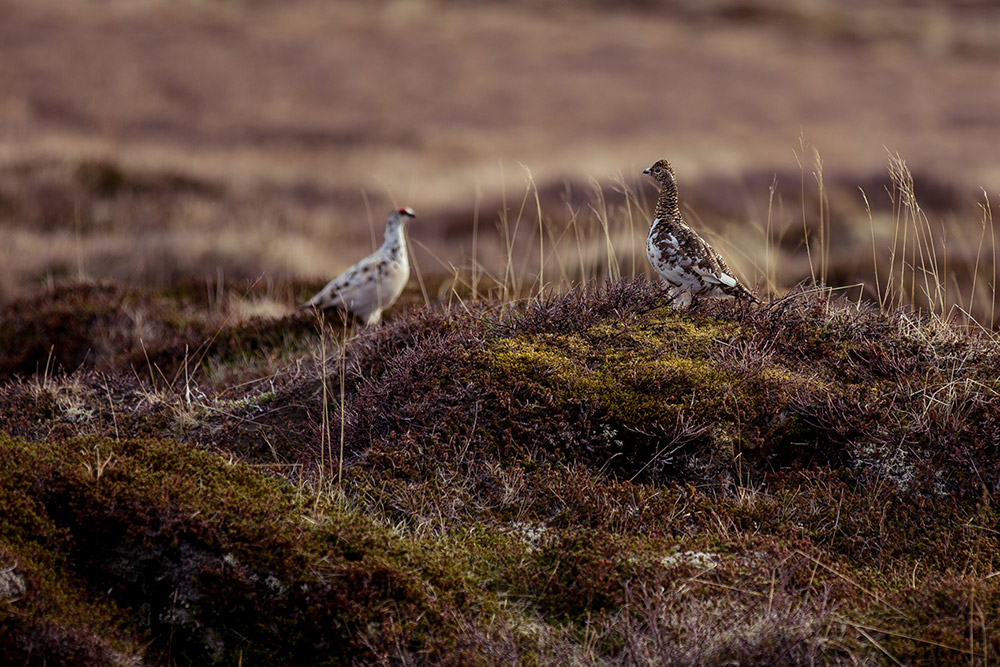
-
Article
Puffins in Canada
Puffin is a common name for three species of medium-sized seabirds of the Auk family. Most commonly, the name refers to the Atlantic puffin (Fratercula arctica), about 26–36 cm long, 460 g, with a wing span of 47–63 cm and a distinctive triangular bill, red with a bluish grey base. The Atlantic puffin is the provincial bird of Newfoundland and Labrador.
"https://d3d0lqu00lnqvz.cloudfront.net/media/media/cb1df95f-1dbb-4df1-90be-50eaee21f53c.jpg" // resources/views/front/categories/view.blade.php
https://d3d0lqu00lnqvz.cloudfront.net/media/media/cb1df95f-1dbb-4df1-90be-50eaee21f53c.jpg
-
Article
Pulse Crops
Pulse crops are members of the family Leguminosae or Fabaceae (see LEGUME). The term "pulse crops" generally refers to those plant species harvested primarily for dry seed that is used as both human food and animal feed.
"https://d3d0lqu00lnqvz.cloudfront.net/media/media/8e804f6a-faf5-40ac-966e-493d9162961b.jpg" // resources/views/front/categories/view.blade.php
https://d3d0lqu00lnqvz.cloudfront.net/media/media/8e804f6a-faf5-40ac-966e-493d9162961b.jpg