
Browse "Nature & Geography"
-
Article
Frank Slide
At 4:10 AM on 29 April 1903, 74 million tonnes of rock crashed down the east slope of Turtle Mountain in the Crowsnest Pass region of Alberta
"https://d3d0lqu00lnqvz.cloudfront.net/media/media/698e80ed-51d4-40c7-a75f-36d14b5e66b3.jpg" // resources/views/front/categories/view.blade.php
https://d3d0lqu00lnqvz.cloudfront.net/media/media/698e80ed-51d4-40c7-a75f-36d14b5e66b3.jpg
-
Editorial
Frank Slide: Canada's Deadliest Rockslide
The following article is an editorial written by The Canadian Encyclopedia staff. Editorials are not usually updated.
"https://thecanadianencyclopedia.ca/images/tce_placeholder.jpg?v=e9dca980c9bdb3aa11e832e7ea94f5d9" // resources/views/front/categories/view.blade.php
https://thecanadianencyclopedia.ca/images/tce_placeholder.jpg?v=e9dca980c9bdb3aa11e832e7ea94f5d9
-
Article
Fraser River Canyon
The Fraser River Canyon was formed during the Miocene period (22.9-5.33 million years ago) when the river cut down into the uplifting southern part of the Interior Plateau of British Columbia. The canyon characteristics of this
"https://d3d0lqu00lnqvz.cloudfront.net/media/media/49e5b82d-d0a2-4ca6-aa37-99ecf1243a3d.jpg" // resources/views/front/categories/view.blade.php
https://d3d0lqu00lnqvz.cloudfront.net/media/media/49e5b82d-d0a2-4ca6-aa37-99ecf1243a3d.jpg
-
Article
Fraser River Gold Rush
In 1858, around 30,000 gold seekers flooded the banks of the Fraser River from Hope to just north of Lillooet in British Columbia’s first significant gold rush. Although it dissipated by the mid-1860s, the Fraser River Gold Rush had a significant impact on the area’s Indigenous peoples and resulted in the Fraser Canyon War. Fears that the massive influx of American miners would lead the United States to annex the non-sovereign British territory known as New Caledonia also resulted in the founding of British Columbia as a colony on 2 August 1858 (see The Fraser River Gold Rush and the Founding of British Columbia). By the mid-1860s, the Fraser Rush collapsed, and British Columbia sank into a recession.
"https://d3d0lqu00lnqvz.cloudfront.net/media/new_article_images/FraserCanyonWar/Fraser Canyon near Chapmans Bar, Daniel Marshall(1).jpg" // resources/views/front/categories/view.blade.php
https://d3d0lqu00lnqvz.cloudfront.net/media/new_article_images/FraserCanyonWar/Fraser Canyon near Chapmans Bar, Daniel Marshall(1).jpg.jpg)
-
Article
Fraser River Lowland
The Fraser River Lowland is a triangular area in southwestern British Columbia. The eastern apex of the triangle is at Hope, about 160 km inland from the Strait of Georgia. From here, the lowland broadens to the west to a width of about 50 km. The international boundary between British Columbia and Washington State crosses the southwestern part of the lowland. The Coast Mountains form the northern boundary of the delta-lowland. The Fraser River Lowland is the largest area of level land with suitable agricultural soils in coastal British Columbia.
"https://d3d0lqu00lnqvz.cloudfront.net/media/new_article_images/FraserRiverLowland/FraserRiverLowlandMap.png" // resources/views/front/categories/view.blade.php
https://d3d0lqu00lnqvz.cloudfront.net/media/new_article_images/FraserRiverLowland/FraserRiverLowlandMap.png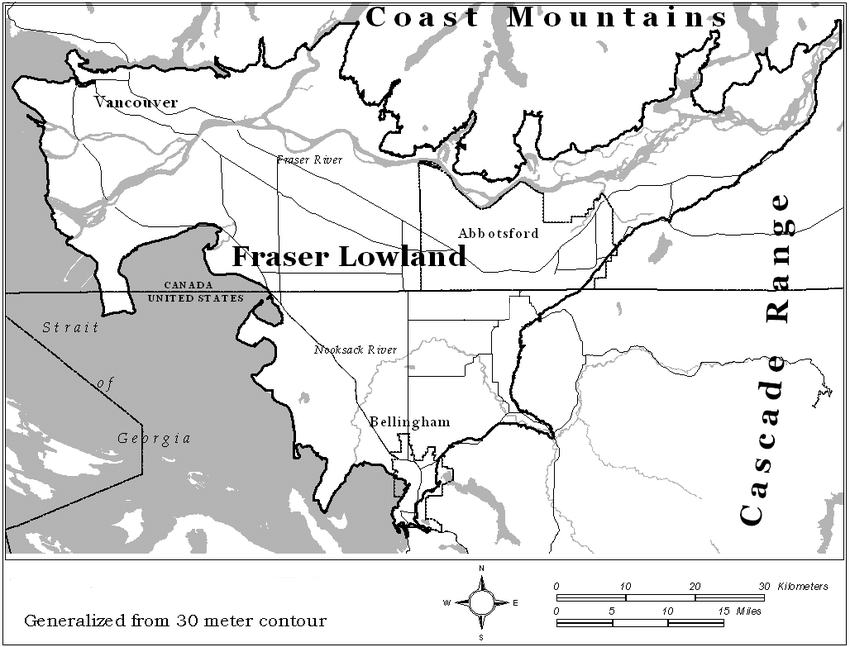
-
Article
F. Kenneth Hare
Frederick Kenneth Hare, CC, FRSC, environmental scientist, professor, administrator (born 5 February 1919 in Wylye, England; died 3 September 2002 in Oakville, ON). F. Kenneth Hare has been widely recognized for his research contributions in climatology and biogeography. During his career, he participated in several committees and commissions concerned with environmental issues, such as climate change, nuclear reactors and nuclear waste and acid rain (see Nuclear Energy).
"https://d3d0lqu00lnqvz.cloudfront.net/TCE_placeholder.png" // resources/views/front/categories/view.blade.php
https://d3d0lqu00lnqvz.cloudfront.net/TCE_placeholder.png
-
Article
Freshwater Institute (FWI)
The Freshwater Institute, located on the University of Manitoba campus in Winnipeg, Man, is one of the world's leading research centres for freshwater and Arctic fisheries research.
"https://d3d0lqu00lnqvz.cloudfront.net/media/media/8ff204ea-7793-42b9-9f34-39964ccf0d12.jpg" // resources/views/front/categories/view.blade.php
https://d3d0lqu00lnqvz.cloudfront.net/media/media/8ff204ea-7793-42b9-9f34-39964ccf0d12.jpg
-
Macleans
Friedland's Environmental Problems
"I don't understand. Is this a loaded question?" The line of query had not been terribly abstract.This article was originally published in Maclean's Magazine on September 9, 1996
"https://thecanadianencyclopedia.ca/images/tce_placeholder.jpg?v=e9dca980c9bdb3aa11e832e7ea94f5d9" // resources/views/front/categories/view.blade.php
https://thecanadianencyclopedia.ca/images/tce_placeholder.jpg?v=e9dca980c9bdb3aa11e832e7ea94f5d9
-
Article
Fruit and Vegetable Industry
This important sector of Canada's FOOD AND BEVERAGE INDUSTRIES is made up of companies that process fruits and VEGETABLES.
"https://d3d0lqu00lnqvz.cloudfront.net/media/media/c5d66760-a348-43b1-af55-7b9263c442cb.jpg" // resources/views/front/categories/view.blade.php
https://d3d0lqu00lnqvz.cloudfront.net/media/media/c5d66760-a348-43b1-af55-7b9263c442cb.jpg
-
Article
Fruit Cultivation
Fruit growing is an important part of Canada’s food industry. Growing is usually restricted to areas where winter temperatures do not go much below -20°C.
"https://d3d0lqu00lnqvz.cloudfront.net/media/media/a2ab80b2-d4e9-4e51-aef5-dd1615e358f8.JPG" // resources/views/front/categories/view.blade.php
https://d3d0lqu00lnqvz.cloudfront.net/media/media/a2ab80b2-d4e9-4e51-aef5-dd1615e358f8.JPG
-
Article
Gallinule
Gallinule is a common name for some marsh-dwelling birds of the rail family (Rallidae), now also known as moorhens.
"https://d3d0lqu00lnqvz.cloudfront.net/media/media/7a9dff00-31fa-400c-910d-dbc148c48f73.jpg" // resources/views/front/categories/view.blade.php
https://d3d0lqu00lnqvz.cloudfront.net/media/media/7a9dff00-31fa-400c-910d-dbc148c48f73.jpg
-
Article
Game Bird
Game bird is not a scientific term, but refers to any bird that is hunted. There are 2 categories in Canada, migratory and nonmigratory.
"https://d3d0lqu00lnqvz.cloudfront.net/media/media/82572582-06cb-4165-a0ba-fbb3f8e521d1.jpg" // resources/views/front/categories/view.blade.php
https://d3d0lqu00lnqvz.cloudfront.net/media/media/82572582-06cb-4165-a0ba-fbb3f8e521d1.jpg
-
Article
Northern Gannet
The gannet, or northern gannet (Sula bassanus), is a large, long-winged seabird, white except for conspicuous black wing tips and a yellowish-tinged head. It weighs about 3,100 g and is up to 100 cm long. Nine species of gannets and boobies comprise the predominantly tropical family Sulidae. All have a stout appearance, thick, sharply pointed bills, fairly short necks and legs, and wedge-shaped tails. They feed on fish caught by plunge-diving, often from heights of 20–30 m. Summer diet mainly consists of mackerel, herring and capelin; winter foods are poorly known.
"https://d3d0lqu00lnqvz.cloudfront.net/media/media/b2be0d1b-9e0f-4794-997a-2ec03cbfab51.jpg" // resources/views/front/categories/view.blade.php
https://d3d0lqu00lnqvz.cloudfront.net/media/media/b2be0d1b-9e0f-4794-997a-2ec03cbfab51.jpg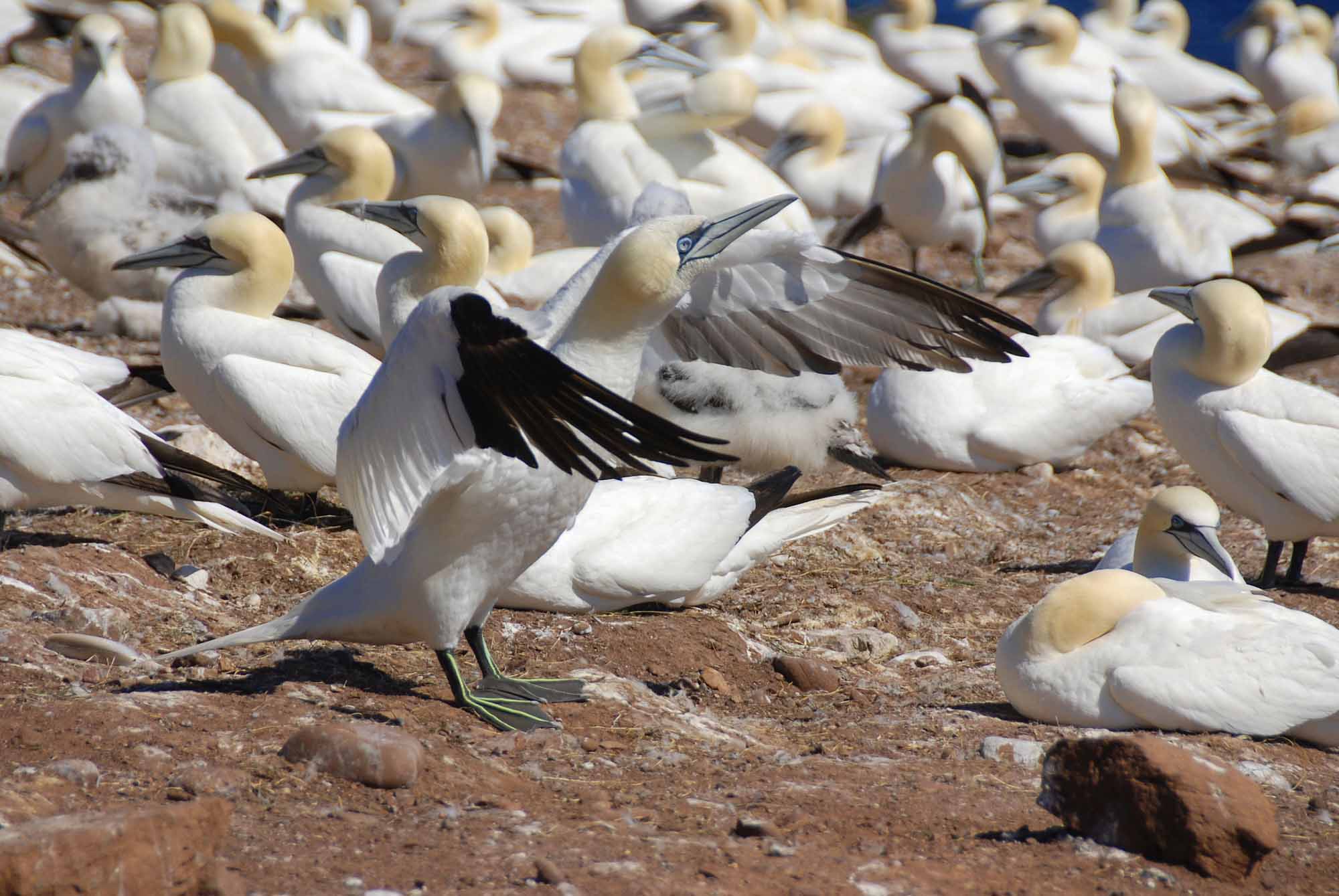
-
Article
Gar in Canada
Gar are large, slender, thick-scaled, predatory fish of the family Lepisosteidae, order Semionotiformes, class Actinopterygii. Gars are found in the fresh waters of eastern North America, Central America and Cuba, occasionally in brackish water and, rarely, in the sea. The seven living species are divided into two genera (Lepisosteus and Atractosteus) by some ichthyologists; others consider them all as Lepisosteus. In Canada, two species, the rare spotted gar (L. oculatus) and the more familiar longnose gar (L. osseus), reach their northern limit in the Great Lakes drainage basin.
"https://d3d0lqu00lnqvz.cloudfront.net/media/media/120636ae-9a48-4754-a80f-9db3245a83bc.jpg" // resources/views/front/categories/view.blade.php
https://d3d0lqu00lnqvz.cloudfront.net/media/media/120636ae-9a48-4754-a80f-9db3245a83bc.jpg
-
Article
Gemstone
Canada's first DIAMOND mine - the Ekati mine near Lac de Gras, NWT - began production in 1998. Most of the diamond production is exported, but a small percentage is reserved for cutting in Canada.
"https://d3d0lqu00lnqvz.cloudfront.net/media/media/5a4c4cc1-df46-4365-8480-fa8562884413.jpg" // resources/views/front/categories/view.blade.php
https://d3d0lqu00lnqvz.cloudfront.net/media/media/5a4c4cc1-df46-4365-8480-fa8562884413.jpg