
Browse "Military"
-
Article
Troupes de la Marine
The Troupes de la Marine (also known as the Compagnies franches de la Marine) were French regular infantry soldiers under the control of the Ministère de la Marine. Their key purpose was to defend France’s overseas colonial possessions, including New-France. These soldiers can be considered Canada’s first permanent regular army.
"https://d3d0lqu00lnqvz.cloudfront.net/media/media/c006216k.jpg" // resources/views/front/categories/view.blade.php
https://d3d0lqu00lnqvz.cloudfront.net/media/media/c006216k.jpg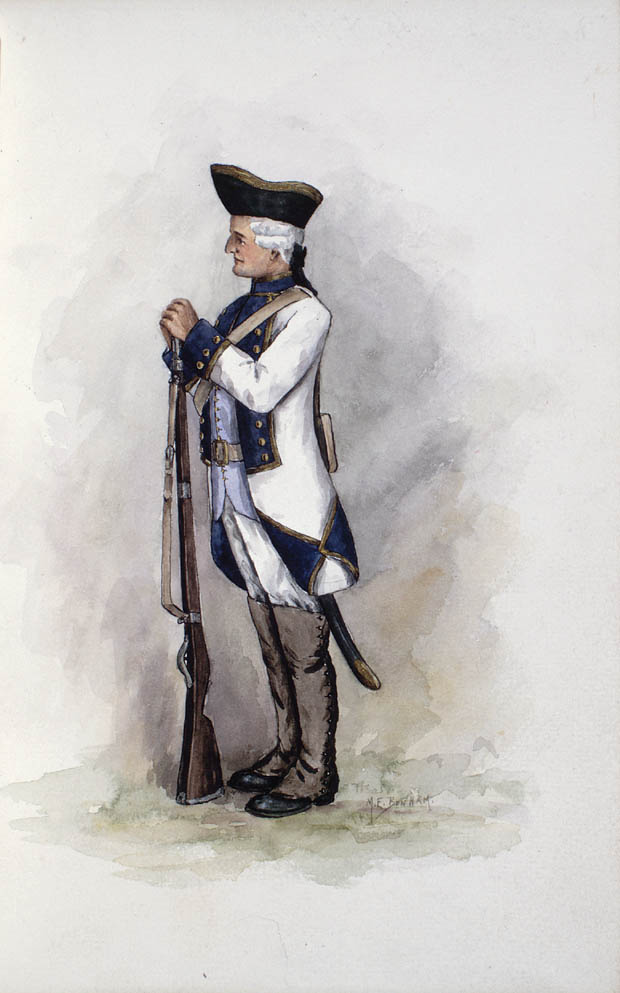
-
Article
U-boat Operations in Canadian Waters
U-boat operations threatened Canada's sovereignty in the First and Second World Wars. German submarines (Unterseeboote) operated in Canadian (and American) waters during both world wars, targeting merchant vessels sailing alone or in convoy. Dozens of merchant ships were lost due to enemy action, as well as several Canadian warships, and hundreds lost their lives.
"https://d3d0lqu00lnqvz.cloudfront.net/U-Boats/survivors-HMCS-Esquimalt.jpg" // resources/views/front/categories/view.blade.php
https://d3d0lqu00lnqvz.cloudfront.net/U-Boats/survivors-HMCS-Esquimalt.jpg
-
Article
UFOs in Canada
For 45 years, the Canadian government investigated unidentified flying objects (UFOs). Several of its departments and agencies collected sighting reports of UFOs in Canadian airspace from 1950 to 1995. These investigations started during the Cold War, spurred by fears of Soviet incursions. What began as a military question eventually became a scientific one. From the start, however, the government was reluctant to study this topic. It devoted few resources to it, believing UFOs to be natural phenomena or the products of “delusional” minds. By contrast, many Canadian citizens were eager for information about UFOs. Citizens started their own investigations and petitioned the government for action. In 1995, due to budget cuts, the government stopped collecting reports altogether. For their part, citizen enthusiasts have continued to investigate UFOs.
"https://d3d0lqu00lnqvz.cloudfront.net/media/single_use_images/Michalak_sketch.jpg" // resources/views/front/categories/view.blade.php
https://d3d0lqu00lnqvz.cloudfront.net/media/single_use_images/Michalak_sketch.jpg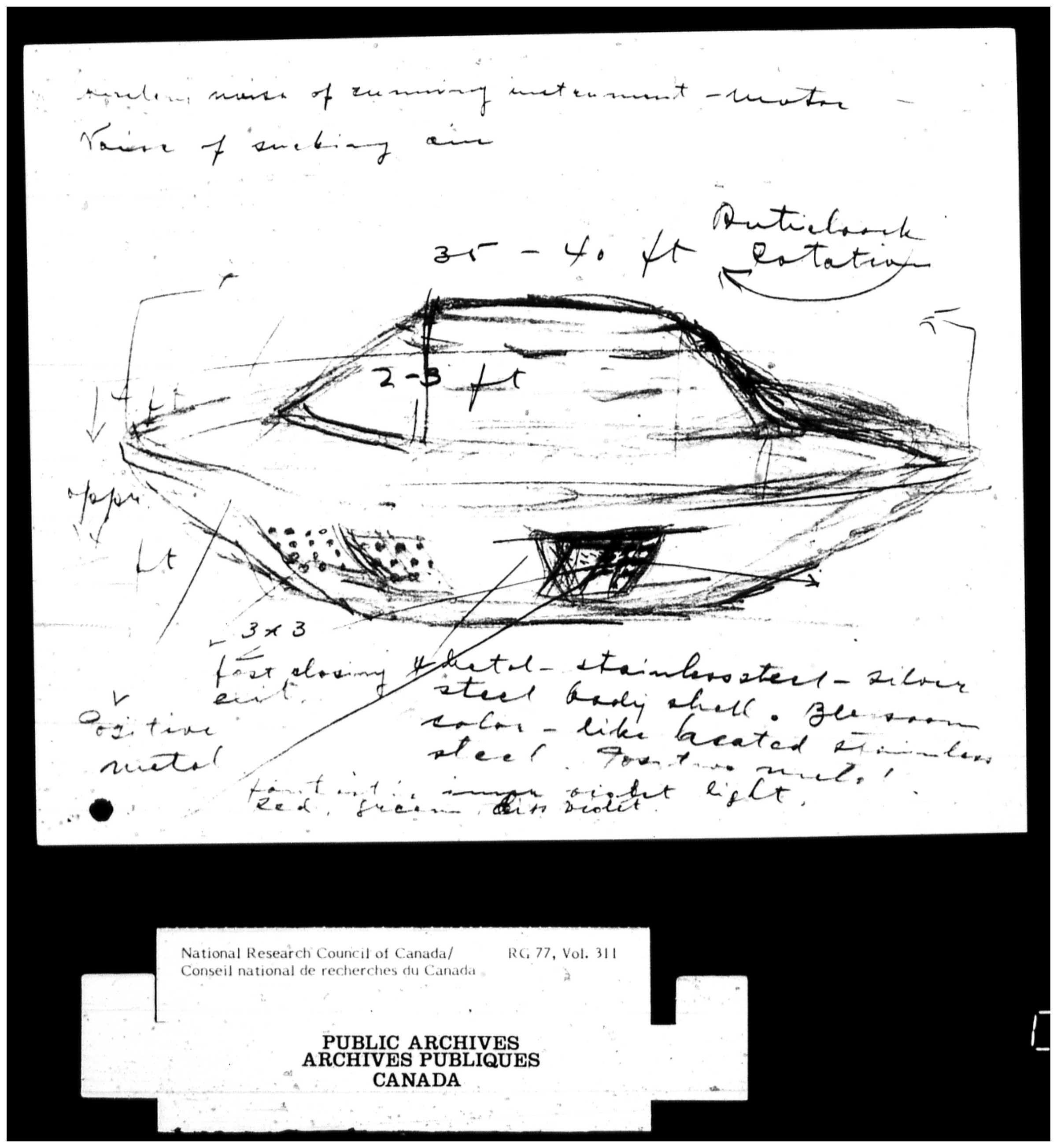
-
Article
Unification of the Canadian Armed Forces
On 1 February 1968, the Canadian Forces Reorganization Act (Bill C-243) came into effect, and the Royal Canadian Navy, Canadian Army and Royal Canadian Air Force ceased to exist as separate entities. The three previously separate armed services were combined into a unified Canadian Armed Forces. Liberal Minister of Defence Paul Hellyer drove the change. Its merits were widely debated before and after the Act came into effect. By 2014, many of the changes introduced by unification had been reversed.
"https://d3d0lqu00lnqvz.cloudfront.net/CAF/canadian-forces-badge-600.png" // resources/views/front/categories/view.blade.php
https://d3d0lqu00lnqvz.cloudfront.net/CAF/canadian-forces-badge-600.png
-
Article
USS Chesapeake
During the NAPOLEONIC WARS, Britain insisted on the right to search neutral ships on the high seas for Royal Navy deserters. On 22 June 1807 HMS Leopard forcibly took 4 seamen from the American frigate Chesapeake.
"https://thecanadianencyclopedia.ca/images/tce_placeholder.jpg?v=e9dca980c9bdb3aa11e832e7ea94f5d9" // resources/views/front/categories/view.blade.php
https://thecanadianencyclopedia.ca/images/tce_placeholder.jpg?v=e9dca980c9bdb3aa11e832e7ea94f5d9
-
Editorial
Vancouver Feature: Japanese-Canadians Held at Hastings Park
The following article is a feature from our Vancouver Feature series. Past features are not updated. For a century the Pacific National Exhibition has entertained families each summer with a mix of hair-raising Midway rides, live music and agricultural exhibits. But in 1942 the fun fair was a prison camp for thousands of displaced Japanese-Canadians
"https://d3d0lqu00lnqvz.cloudfront.net/media/media/0bec6156-0467-4a97-909f-da599383381d.jpg" // resources/views/front/categories/view.blade.php
https://d3d0lqu00lnqvz.cloudfront.net/media/media/0bec6156-0467-4a97-909f-da599383381d.jpg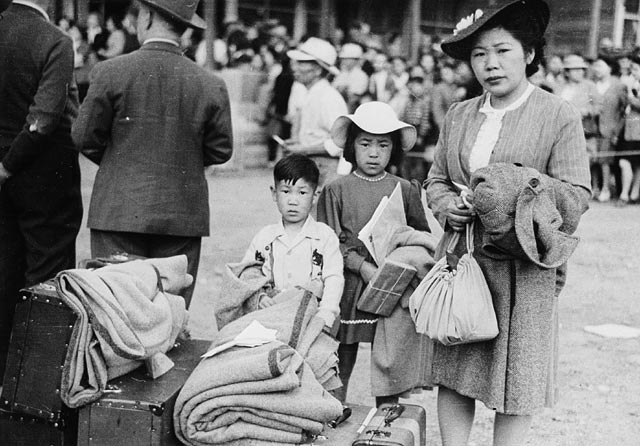
-
Article
Veronica Foster
Veronica Foster Guerrette, Second World War icon, model, vocalist (born 2 January 1922 in Montreal, Quebec; died 4 May 2000 in Toronto, Ontario). Foster worked for the John Inglis Company assembling Bren light machine guns during the Second World War. She was featured on propaganda posters that encouraged women to serve Canada by working in munitions factories. Foster became a Canadian icon representing female workers in the manufacturing industry. After the war, she was lead singer with the dance band Mart Kenney and His Western Gentlemen.
"https://d3d0lqu00lnqvz.cloudfront.net/media/new_article_images/VeronicaFoster/Veronica Foster_Bren Gun.jpg" // resources/views/front/categories/view.blade.php
https://d3d0lqu00lnqvz.cloudfront.net/media/new_article_images/VeronicaFoster/Veronica Foster_Bren Gun.jpg
-
Article
Second World War Veterans
When the Second World War ended, more than a million Canadian men and women, serving in uniform, were set to return to their homes. A driving question for the country was: What was owed to the veterans?
"https://d3d0lqu00lnqvz.cloudfront.net/media/media/5400b0fb-f0c7-418f-b2ae-ea899466560f.jpg" // resources/views/front/categories/view.blade.php
https://d3d0lqu00lnqvz.cloudfront.net/media/media/5400b0fb-f0c7-418f-b2ae-ea899466560f.jpg
-
Article
Victoria-class Submarines
The Victoria class are diesel-electric powered conventional attack submarines, referred to as SSK submarines. The Royal Canadian Navy (RCN) acquired four surplus Victoria-class submarines from the United Kingdom’s Royal Navy (RN) in the late-1990s. They were procured as a supposedly cost-effective interim measure to maintain a submarine capability for the RCN pending a permanent replacement for its three Oberon-class submarines. Following a troubled decade-long introduction process, the Victoria class eventually achieved full operational status. The Victoria-class submarines are intended to remain in service until a replacement projected for the late 2030s.
"https://d3d0lqu00lnqvz.cloudfront.net/VictoriaClassSubmarines/HMCS_Windsor_SSK_877.jpg" // resources/views/front/categories/view.blade.php
https://d3d0lqu00lnqvz.cloudfront.net/VictoriaClassSubmarines/HMCS_Windsor_SSK_877.jpg
-
Article
Victoria Rifles of Halifax
The Victoria Rifles of Halifax was a Black volunteer militia unit of about 70 men in Nova Scotia in the 1860s. The unit participated in anniversary celebrations of the founding of Halifax and in a parade honouring the Prince of Wales, who visited Nova Scotia in 1860. Despite their dedication and skill — and the support of some white Haligonians — the “Victorias” were subjected to anti-Black racism both within and outside the militia. The unit disbanded after approximately four years.
"https://d3d0lqu00lnqvz.cloudfront.net/TCE_placeholder.png" // resources/views/front/categories/view.blade.php
https://d3d0lqu00lnqvz.cloudfront.net/TCE_placeholder.png
-
Article
Vietnam War
The Vietnam War was a Cold War-era conflict between communist Northern Vietnamese forces and United States-backed Southern Vietnamese forces. Canada officially played the role of neutral peacemaker, but secretly backed the American effort in Vietnam.
"https://d3d0lqu00lnqvz.cloudfront.net/media/media/2dafdb1b-4b70-4fdb-8cd4-a7ea969412c3.jpg" // resources/views/front/categories/view.blade.php
https://d3d0lqu00lnqvz.cloudfront.net/media/media/2dafdb1b-4b70-4fdb-8cd4-a7ea969412c3.jpg
-
Editorial
HMCS Ville de Quebec in the Battle of the Atlantic
The following article is an editorial written by The Canadian Encyclopedia staff. Editorials are not usually updated.
"https://d3d0lqu00lnqvz.cloudfront.net/media/media/0427395c-3c01-4d33-9e61-08cb7eef24e1.jpg" // resources/views/front/categories/view.blade.php
https://d3d0lqu00lnqvz.cloudfront.net/media/media/0427395c-3c01-4d33-9e61-08cb7eef24e1.jpg
-
Article
Battle of Vimy Ridge
The Battle of Vimy Ridge was fought during the First World War from 9 to 12 April 1917. It is Canada’s most celebrated military victory — an often mythologized symbol of the birth of Canadian national pride and awareness. The battle took place on the Western Front, in northern France. The four divisions of the Canadian Corps, fighting together for the first time, attacked the ridge from 9 to 12 April 1917 and captured it from the German army. It was the largest territorial advance of any Allied force to that point in the war — but it would mean little to the outcome of the conflict. More than 10,600 Canadians were killed and wounded in the assault. Today an iconic memorial atop the ridge honours the 11,285 Canadians killed in France throughout the war who have no known graves. This is the full-length entry about the Battle of Vimy Ridge. For a plain-language summary, please see Battle of Vimy Ridge (Plain-Language Summary).
"https://d3d0lqu00lnqvz.cloudfront.net/media/media/a9aa6aaf-406d-4a4d-89a3-95d86d7359ca.jpg" // resources/views/front/categories/view.blade.php
https://d3d0lqu00lnqvz.cloudfront.net/media/media/a9aa6aaf-406d-4a4d-89a3-95d86d7359ca.jpg
-
Article
Vimy Ridge
Among Canada’s defining events, the Battle of Vimy Ridge in the First World War ranks high. It was a triumph — a major victory for the Allied side after a long, bloody stalemate — and a tragedy. In the four-day battle, 3,598 Canadians died and another 7,004 were wounded. In the century since it ended, on 12 April 1917, it has become something else: an event bordering on myth. “In those few minutes,” said Canadian Brigadier-General A.E. Ross of the victory, “I witnessed the birth of a nation.”
"https://d3d0lqu00lnqvz.cloudfront.net/media/media/16f32862-4f2b-488d-935e-7b4fcf5a5d64.jpg" // resources/views/front/categories/view.blade.php
https://d3d0lqu00lnqvz.cloudfront.net/media/media/16f32862-4f2b-488d-935e-7b4fcf5a5d64.jpg
-
Editorial
Vimy Ridge: Bloody Easter
The following article is an editorial written by The Canadian Encyclopedia staff. Editorials are not usually updated.
"https://thecanadianencyclopedia.ca/images/tce_placeholder.jpg?v=e9dca980c9bdb3aa11e832e7ea94f5d9" // resources/views/front/categories/view.blade.php
https://thecanadianencyclopedia.ca/images/tce_placeholder.jpg?v=e9dca980c9bdb3aa11e832e7ea94f5d9