
Browse "Military"
-
Article
Fort Beauséjour
Fort Beauséjour, on the west bank of the Missaguash River near present-day Sackville, New Brunswick was built 1751-55 by the French as a counter to nearby British Fort Lawrence (near Amherst, NS).
"https://thecanadianencyclopedia.ca/images/tce_placeholder.jpg?v=e9dca980c9bdb3aa11e832e7ea94f5d9" // resources/views/front/categories/view.blade.php
https://thecanadianencyclopedia.ca/images/tce_placeholder.jpg?v=e9dca980c9bdb3aa11e832e7ea94f5d9
-
Article
Fort Duquesne
Fort Duquesne, located at the confluence of the Allegheny and Monongahela Rivers at the site of present-day Pittsburgh, Penn, guarded the most important strategic location in the west at the time of the Seven Years' War.
"https://thecanadianencyclopedia.ca/images/tce_placeholder.jpg?v=e9dca980c9bdb3aa11e832e7ea94f5d9" // resources/views/front/categories/view.blade.php
https://thecanadianencyclopedia.ca/images/tce_placeholder.jpg?v=e9dca980c9bdb3aa11e832e7ea94f5d9
-
Article
Fort Frontenac
Frontenac reoccupied the site, rebuilding the fort in 1695, and the post became known as Fort Frontenac. Reinforced by troops under François-Charles de Bourlamaque and later the Marquis de MONTCALM, it nevertheless fell to the British under John Bradstreet in August 1758.
"https://d3d0lqu00lnqvz.cloudfront.net/media/media/224b2211-a1a9-4b89-888f-fab9972af144.jpg" // resources/views/front/categories/view.blade.php
https://d3d0lqu00lnqvz.cloudfront.net/media/media/224b2211-a1a9-4b89-888f-fab9972af144.jpg
-
Article
Fort Haldimand
Fort Haldimand, located on the west promontory of Carleton Island at the east end of Lake Ontario, about 16 km offshore from Kingston, Ontario, was built by the British in 1778 during the American Revolution.
"https://thecanadianencyclopedia.ca/images/tce_placeholder.jpg?v=e9dca980c9bdb3aa11e832e7ea94f5d9" // resources/views/front/categories/view.blade.php
https://thecanadianencyclopedia.ca/images/tce_placeholder.jpg?v=e9dca980c9bdb3aa11e832e7ea94f5d9
-
Article
Fort Henry
Fort Henry, KINGSTON, Ont, was originally built during the WAR OF 1812 on Point Henry, beside Lake Ontario, to guard the outlet to the St Lawrence River and the Kingston Navy Yards.
"https://d3d0lqu00lnqvz.cloudfront.net/media/media/c4427c9c-96dd-4f5c-bb92-6c22ac423cb3.jpg" // resources/views/front/categories/view.blade.php
https://d3d0lqu00lnqvz.cloudfront.net/media/media/c4427c9c-96dd-4f5c-bb92-6c22ac423cb3.jpg
-
Article
Fort Carillon (Ticonderoga)
Fort Carillon was built in 1755 on the orders of the governor of New France, Pierre de Rigaud de Vaudreuil. Situated at the junction of Lake George and Lake Champlain, the fort was intended to reinforce France's military presence in an area contested by the British colonies. In 1759, Fort Carillon was abandoned by the French and renamed Fort Ticonderoga by the British. (See Seven Years’ War.) Fort Ticonderoga later played a decisive role in the American Revolution. Since 1909, this historic site has been open to the public.
"https://d3d0lqu00lnqvz.cloudfront.net/Fort_Ticonderoga_Ticonderoga_NY.jpg" // resources/views/front/categories/view.blade.php
https://d3d0lqu00lnqvz.cloudfront.net/Fort_Ticonderoga_Ticonderoga_NY.jpg
-
Article
Frezenberg Ridge
Princess Patricia's Canadian Light Infantry, composed largely of British-born former regular soldiers, had gone to Flanders in December 1914 in advance of 1st Canadian Division as part of the British 27th Division.
"https://thecanadianencyclopedia.ca/images/tce_placeholder.jpg?v=e9dca980c9bdb3aa11e832e7ea94f5d9" // resources/views/front/categories/view.blade.php
https://thecanadianencyclopedia.ca/images/tce_placeholder.jpg?v=e9dca980c9bdb3aa11e832e7ea94f5d9
-
Macleans
Friendly Fire Victims Mourned
Canadians are not normally accustomed to outward displays of patriotic pride over their fallen warriors. Since 1948, more than 100 Canadians have lost their lives nobly in peacekeeping missions around the world, their passing hardly noted beyond their immediate families and regiments.This article was originally published in Maclean's Magazine on May 6, 2002
"https://thecanadianencyclopedia.ca/images/tce_placeholder.jpg?v=e9dca980c9bdb3aa11e832e7ea94f5d9" // resources/views/front/categories/view.blade.php
https://thecanadianencyclopedia.ca/images/tce_placeholder.jpg?v=e9dca980c9bdb3aa11e832e7ea94f5d9
-
Article
Garrison Towns
In 1662 Placentia had a garrison of 25 French soldiers. Its growing importance as the centre of the French fishing fleet meant an increase of its garrison to about 150 by 1704. It was fear of this garrison town that provoked the first British garrison at St John's in 1696.
"https://thecanadianencyclopedia.ca/images/tce_placeholder.jpg?v=e9dca980c9bdb3aa11e832e7ea94f5d9" // resources/views/front/categories/view.blade.php
https://thecanadianencyclopedia.ca/images/tce_placeholder.jpg?v=e9dca980c9bdb3aa11e832e7ea94f5d9
-
Article
George Cross
The aerial bombing of centres of civilian population in Britain early in WWII gave rise to numerous acts of the most conspicuous bravery. In response, King George VI instituted a major decoration in 1940 for which civilians and members of the armed forces are eligible.
"https://thecanadianencyclopedia.ca/images/tce_placeholder.jpg?v=e9dca980c9bdb3aa11e832e7ea94f5d9" // resources/views/front/categories/view.blade.php
https://thecanadianencyclopedia.ca/images/tce_placeholder.jpg?v=e9dca980c9bdb3aa11e832e7ea94f5d9
-
Article
Governor General of Canada
Canada is a constitutional monarchy. As such, there is a clear division between the head of state and the head of government. The head of government is the prime minister, an elected political leader. The head of state is the Canadian monarch. Their duties are carried out by the governor general, who acts as the representative of the Crown — currently Charles III — in Canada. (Lieutenant-Governors fulfill the same role in provincial governments.) The governor general performs a wide array of ceremonial duties. They also fulfill an important role in upholding the traditions of Parliament and other democratic institutions. Former Supreme Court of Canada justice Louise Arbour was named Canada's 31st governor general on 5 May 2026. She will officially assume the role in June.
"https://d3d0lqu00lnqvz.cloudfront.net/media/media/b04c47d2-1e58-43a1-9c62-18239a9f8495.jpg" // resources/views/front/categories/view.blade.php
https://d3d0lqu00lnqvz.cloudfront.net/media/media/b04c47d2-1e58-43a1-9c62-18239a9f8495.jpg
-
Article
Guelph in the First World War
Guelph, Ontario, was typical of small Canadian cities during the First World War. Of its population of about 16,000, more than a third, 5,610, volunteered for military service; 3,328 were accepted. Today, 216 of their names are engraved on the city’s cenotaph. While Guelphites served overseas, the war had a profound and lasting effect on their hometown — an experience that provides an insight into wartime Canada.
"https://d3d0lqu00lnqvz.cloudfront.net/media/media/e38f8065-b481-40c7-9d21-690d7e0a84dc.jpg" // resources/views/front/categories/view.blade.php
https://d3d0lqu00lnqvz.cloudfront.net/media/media/e38f8065-b481-40c7-9d21-690d7e0a84dc.jpg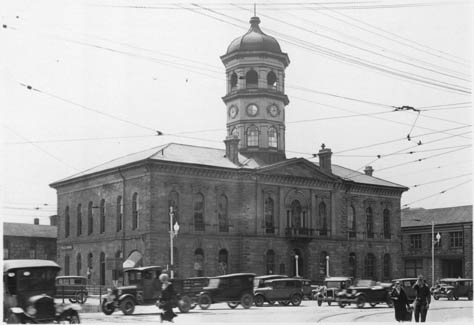
-
Article
HMCS Haida
The HMCS Haida is a “Tribal” Class destroyer that served in the Second World War and the Korean War. It is a National Historic Site operated by Parks Canada and is moored in Hamilton Harbour. The Haida is known as Canada’s “fightingest” warship.
"https://d3d0lqu00lnqvz.cloudfront.net/media/media/bdd8f002-5a0f-4adb-adc2-9afecd1e4bb1.jpg" // resources/views/front/categories/view.blade.php
https://d3d0lqu00lnqvz.cloudfront.net/media/media/bdd8f002-5a0f-4adb-adc2-9afecd1e4bb1.jpg
-
Article
Halifax Citadel
The general introduction of rifled artillery (with greater range and accuracy than earlier guns) shortly after completion of the Citadel rendered the costly installation obsolescent. It was partially rearmed in the 1860s and 1870s, and continued in use as a barracks into the 20th century.
"https://d3d0lqu00lnqvz.cloudfront.net/media/media/2a4ab68a-776a-430a-9155-c6d6ae17697b.jpg" // resources/views/front/categories/view.blade.php
https://d3d0lqu00lnqvz.cloudfront.net/media/media/2a4ab68a-776a-430a-9155-c6d6ae17697b.jpg
-
Article
Halifax-class Frigates
The Halifax class of helicopter-carrying frigates (FFH) are multi-purpose warships of the Royal Canadian Navy (RCN). There are 12 ships in the class. They were conceived in the 1970s as a replacement of the St Laurent and related classes of destroyer escorts, to provide antisubmarine warfare (ASW) protection for the fleet. The Halifax class entered service in the early 1990s, just after the end of the Cold War, and proved instead to be highly versatile general-purpose warships. Due to a major class-wide modernization project completed in the 2010s, they remain the backbone of the RCN surface fleet. The Halifax class will be replaced in the 2030s by the Canadian Surface Combatant (CSC) ships announced in 2019.
"https://d3d0lqu00lnqvz.cloudfront.net/Navy/HMCSVancouver.jpg" // resources/views/front/categories/view.blade.php
https://d3d0lqu00lnqvz.cloudfront.net/Navy/HMCSVancouver.jpg