Browse "Business & Economics"
-
Article
Fur Trade Route Networks
Throughout the period of the historical fur trade (early 17th to the mid-19th century), water routes were the natural “highways” of First Nations trappers and European fur traders. Water trading networks connected Indigenous societies from the Atlantic Ocean, along the St. Lawrence River to the Great Lakes, and then on towards the Hudson Bay watershed. North America’s waterborne geography facilitated intracontinental travel, enabled European expansion and settlement into Indigenous North America, and shaped the contours of Euro-Indigenous relations in the context of the fur trade. These extensive and interconnected systems of rivers, lakes and overland trails criss-crossed Indigenous territories and had been used for generations. At the height of the fur trade, the principal canoe route extended westward from the Island of Montreal through the Great Lakes, and from the northwestern shore of Lake Superior over the height of land into the Hudson Bay watershed. From the Lake Winnipeg basin, Indigenous trappers and European traders fanned out towards the Western Prairies via the Assiniboine, Qu’Appelle and Souris rivers, towards the foothills of the Rocky Mountains via the North and South branches of the Saskatchewan River, and finally towards the Athabasca Country via the Sturgeon-weir River and the Methye Portage.
"https://d3d0lqu00lnqvz.cloudfront.net/media/media/6a52818a-3f78-427a-a201-5e6bc9c5d874.jpg" // resources/views/front/categories/view.blade.php
https://d3d0lqu00lnqvz.cloudfront.net/media/media/6a52818a-3f78-427a-a201-5e6bc9c5d874.jpg
-
Article
Fur Trapping
The trapping of animals for fur occurs in almost every country of the world. In Canada, trapping is done primarily for the cultivation of animal pelts, though some may trap for food.
"https://thecanadianencyclopedia.ca/images/tce_placeholder.jpg?v=e9dca980c9bdb3aa11e832e7ea94f5d9" // resources/views/front/categories/view.blade.php
https://thecanadianencyclopedia.ca/images/tce_placeholder.jpg?v=e9dca980c9bdb3aa11e832e7ea94f5d9
-
Article
Furniture Industry
Canadian furniture originated with the first settlers and consisted of simple, handmade, utilitarian products. Later, local carpenters made furniture for others. The first Canadian furniture company was established in Berlin [Kitchener], Ontario, in 1830; the next, in Toronto in 1834.
"https://thecanadianencyclopedia.ca/images/tce_placeholder.jpg?v=e9dca980c9bdb3aa11e832e7ea94f5d9" // resources/views/front/categories/view.blade.php
https://thecanadianencyclopedia.ca/images/tce_placeholder.jpg?v=e9dca980c9bdb3aa11e832e7ea94f5d9
-
Macleans
Fuss Over Ontario Salaries
The meeting of hospital administrators last week in Toronto was overshadowed by a very personal issue: the participants' salaries.This article was originally published in Maclean's Magazine on April 15, 1996
"https://thecanadianencyclopedia.ca/images/tce_placeholder.jpg?v=e9dca980c9bdb3aa11e832e7ea94f5d9" // resources/views/front/categories/view.blade.php
https://thecanadianencyclopedia.ca/images/tce_placeholder.jpg?v=e9dca980c9bdb3aa11e832e7ea94f5d9
-
Article
G. Ricordi & Co. Ltd.
G. Ricordi & Co. (Canada) Ltd. Canadian branch of the Italian firm which was established in Milan in 1808 and became the publisher of Rossini, Donizetti, Bellini, Verdi, and Puccini. Gordon Wry acted as Ricordi's Canadian agent early in the 1950s.
"https://thecanadianencyclopedia.ca/images/tce_placeholder.jpg?v=e9dca980c9bdb3aa11e832e7ea94f5d9" // resources/views/front/categories/view.blade.php
https://thecanadianencyclopedia.ca/images/tce_placeholder.jpg?v=e9dca980c9bdb3aa11e832e7ea94f5d9
-
Article
Canada and the G7 (Group of Seven)
The G7, or Group of Seven, is an international group comprising the governments of the world’s largest economies: Germany, France, Italy, Japan, the United Kingdom, the United States and Canada. It was founded as the G6 in 1975 and became the G7 with the addition of Canada in 1976. The Group is an informal bloc; it has no treaty or constitution and no permanent offices, staff, or secretariat. The leaders of the member states meet at annual summits to discuss issues of mutual concern and to coordinate actions to address them. The meeting location and the organization’s presidency rotates among the members. The European Union is also a non-enumerated member, though it never assumes the rotating presidency.
"https://d3d0lqu00lnqvz.cloudfront.net/media/new_article_images/G7/G7_summit_at_Shimakan.jpg" // resources/views/front/categories/view.blade.php
https://d3d0lqu00lnqvz.cloudfront.net/media/new_article_images/G7/G7_summit_at_Shimakan.jpg
-
Article
Garden Island Rafting and Shipbuilding Enterprises
Dileno Dexter Calvin (1798-1884), a timber merchant from Clayton, New York, relocated his business on Garden Island (26.3 ha at the east end of Lake Ontario) in 1836. By 1880 he owned the island; today it remains the exclusive property of his descendants.
"https://thecanadianencyclopedia.ca/images/tce_placeholder.jpg?v=e9dca980c9bdb3aa11e832e7ea94f5d9" // resources/views/front/categories/view.blade.php
https://thecanadianencyclopedia.ca/images/tce_placeholder.jpg?v=e9dca980c9bdb3aa11e832e7ea94f5d9
-
Article
Gasoline Stations
Motor vehicle registration figures appear for the first time in The Canada Year Book for 1916-17. It was in this year that the Year Book accorded motor vehicles a new status as the most important means of transportation in Canada.
"https://d3d0lqu00lnqvz.cloudfront.net/media/media/0bfb66f1-3552-4566-a144-166cd2aa4d1e.jpg" // resources/views/front/categories/view.blade.php
https://d3d0lqu00lnqvz.cloudfront.net/media/media/0bfb66f1-3552-4566-a144-166cd2aa4d1e.jpg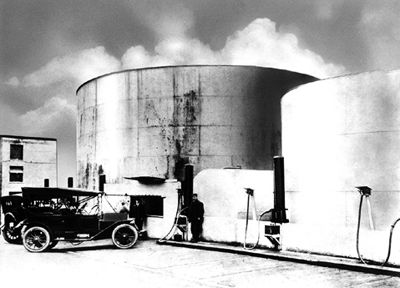
-
Article
General Agreement on Tariffs and Trade (GATT)
The General Agreement on Tariffs and Trade (GATT) was an international trade agreement. It was signed by 23 nations, including Canada, in 1947 and came into effect on 1 January 1948. It was refined over eight rounds of negotiations, which led to the creation of the World Trade Organization (WTO). It replaced the GATT on 1 January 1995. The GATT was focused on trade in goods. It aimed to liberalize trade by reducing tariffs and removing quotas among member countries. Each member of the GATT was expected to open its markets equally to other member nations, removing trade discrimination. The agreements negotiated through GATT reduced average tariffs on industrial goods from 40 per cent (1947) to less than five per cent (1993). It was an early step towards economic globalization. This is the full-length entry about the General Agreement on Tariffs and Trade (GATT). For a plain-language summary, please see General Agreement on Tariffs and Trade (GATT) (Plain-Language Summary).
"https://d3d0lqu00lnqvz.cloudfront.net/TCE_placeholder.png" // resources/views/front/categories/view.blade.php
https://d3d0lqu00lnqvz.cloudfront.net/TCE_placeholder.png
-
Article
General Agreement on Tariffs and Trade (GATT) (Plain-Language Summary)
The General Agreement on Tariffs and Trade (GATT) was an international trade agreement. It was signed by 23 nations, including Canada, in 1947. It came into effect on 1 January 1948. The GATT was focused on trade in goods. It aimed to reduce tariffs and remove quotas among member countries. The GATT helped reduce average tariffs from 40 per cent in 1947 to less than five per cent in 1993. The GATT was an early step toward globalization. The World Trade Organization (WTO) replaced the GATT on 1 January 1995. This article is a plain-language summary of the General Agreement on Tariffs and Trade (GATT). If you are interested in reading about this topic in more depth, please see our full-length entry, General Agreement on Tariffs and Trade (GATT).
"https://d3d0lqu00lnqvz.cloudfront.net/TCE_placeholder.png" // resources/views/front/categories/view.blade.php
https://d3d0lqu00lnqvz.cloudfront.net/TCE_placeholder.png
-
Article
General Motors of Canada Limited
General Motors of Canada Limited, with headquarters in OSHAWA, Ontario, is a major manufacturer and distributor of cars and trucks.
"https://thecanadianencyclopedia.ca/images/tce_placeholder.jpg?v=e9dca980c9bdb3aa11e832e7ea94f5d9" // resources/views/front/categories/view.blade.php
https://thecanadianencyclopedia.ca/images/tce_placeholder.jpg?v=e9dca980c9bdb3aa11e832e7ea94f5d9
-
Macleans
General Motors Strike Settled
This article was originally published in Maclean’s magazine on October 28, 1996. Partner content is not updated. For picketing Canadian autoworkers, it was a symbolic gesture. With the strike against General Motors of Canada Ltd. dragging into its third week, tempers flared at a cavernous GM plant in Oshawa, Ont.
"https://thecanadianencyclopedia.ca/images/tce_placeholder.jpg?v=e9dca980c9bdb3aa11e832e7ea94f5d9" // resources/views/front/categories/view.blade.php
https://thecanadianencyclopedia.ca/images/tce_placeholder.jpg?v=e9dca980c9bdb3aa11e832e7ea94f5d9
-
Article
Global Communications Limited
Global Communications Limited, established 1970, owns and operates Global Television Network and is based in Toronto. The CRTC granted the company a broadcast licence for operations in southern Ontario 21 July 1972.
"https://thecanadianencyclopedia.ca/images/tce_placeholder.jpg?v=e9dca980c9bdb3aa11e832e7ea94f5d9" // resources/views/front/categories/view.blade.php
https://thecanadianencyclopedia.ca/images/tce_placeholder.jpg?v=e9dca980c9bdb3aa11e832e7ea94f5d9
-
Macleans
Global Goes National
It was like a scene from Traders, Global TV's popular drama about life in Bay Street's fast lane. Only this time, the star of the show was Izzy Asper in the role of the shrewd and stubborn chief executive.This article was originally published in Maclean's Magazine on August 31, 1998
"https://thecanadianencyclopedia.ca/images/tce_placeholder.jpg?v=e9dca980c9bdb3aa11e832e7ea94f5d9" // resources/views/front/categories/view.blade.php
https://thecanadianencyclopedia.ca/images/tce_placeholder.jpg?v=e9dca980c9bdb3aa11e832e7ea94f5d9
-
Article
Globe and Mail
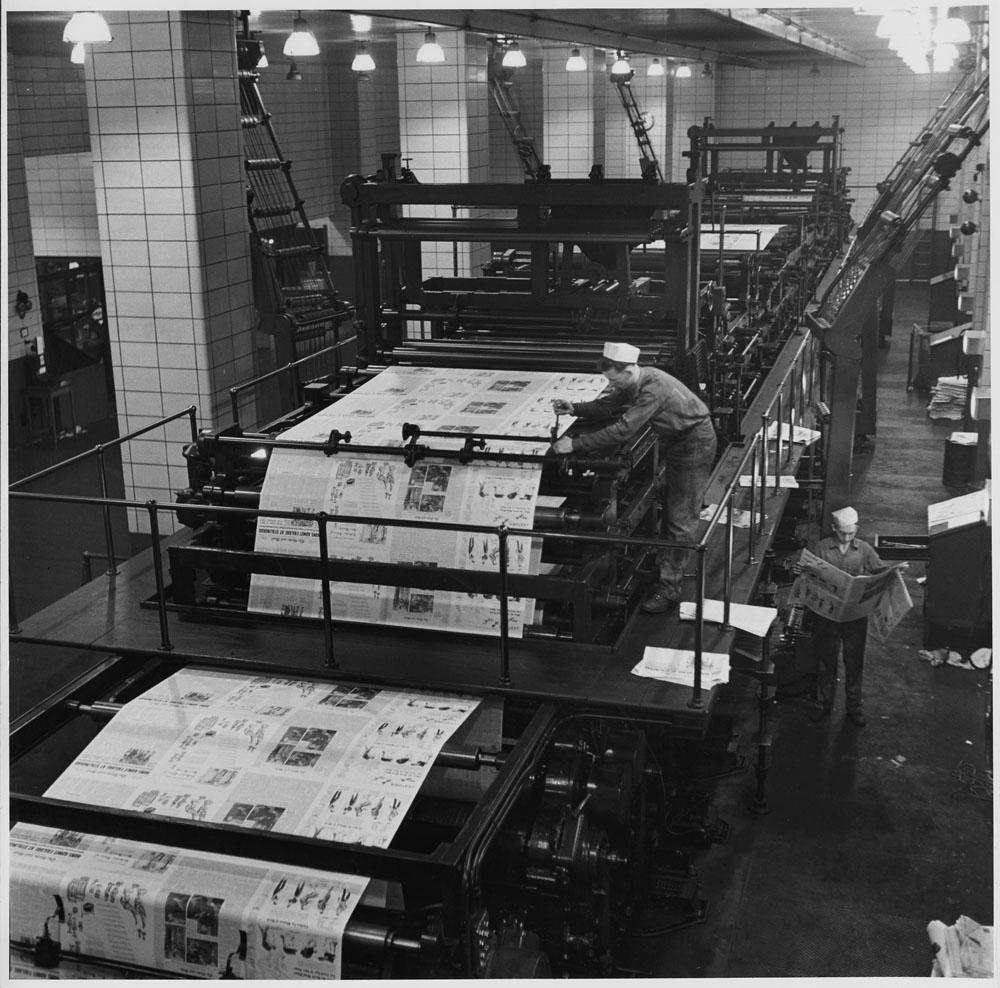
The Globe and Mail is a daily newspaper. It was founded in Toronto in 1936 when two influential and historically important dailies, The Globe and The Mail and Empire were merged. (See also Newspapers in Canada: 1800s-1900s.) As of 2026, the Globe and Mail’s website claims that its digital and print editions reach a combined audience of 6 million readers per week.
"https://d3d0lqu00lnqvz.cloudfront.net/globeandmail/newspaperprinting.jpg" // resources/views/front/categories/view.blade.php
https://d3d0lqu00lnqvz.cloudfront.net/globeandmail/newspaperprinting.jpg