
Browse "Arts & Culture"
-
Article
Nobel Prizes and Canada
The Nobel Prizes are awarded annually for achievements that have significantly benefitted humankind. The prizes are among the highest international honours and are awarded in six categories: physics, chemistry, physiology or medicine, literature, peace, and economic sciences. They are administered by the Nobel Foundation and awarded by institutions in Sweden and Norway. Eighteen Canadians have won Nobel Prizes, excluding Canadian-born individuals who gave up their citizenship and members of organizations that have won the peace prize. (See also Canadian Nobel Laureates.)
"https://d3d0lqu00lnqvz.cloudfront.net/TCEImages/dreamstime_xl_127967744.jpg" // resources/views/front/categories/view.blade.php
https://d3d0lqu00lnqvz.cloudfront.net/TCEImages/dreamstime_xl_127967744.jpg
-
Article
None Is Too Many
Written by Irving Abella and Harold Troper, None Is Too Many: Canada and the Jews of Europe 1933–1948 (published in 1982), documented antisemitism in the Canadian government’s immigration policies as they applied to European Jews fleeing persecution from Nazi Germany. The phrase “none is too many” entered the Canadian political lexicon largely because of this book. Even before its publication, the book played a crucial role in changing the Canadian government’s policies toward refugees, such that the government of Joe Clark welcomed Vietnamese refugees then referred to as the “Boat People.”
"https://d3d0lqu00lnqvz.cloudfront.net/media/media/6d356bb1-8262-40a1-a024-3e8d3226a9da.jpg" // resources/views/front/categories/view.blade.php
https://d3d0lqu00lnqvz.cloudfront.net/media/media/6d356bb1-8262-40a1-a024-3e8d3226a9da.jpg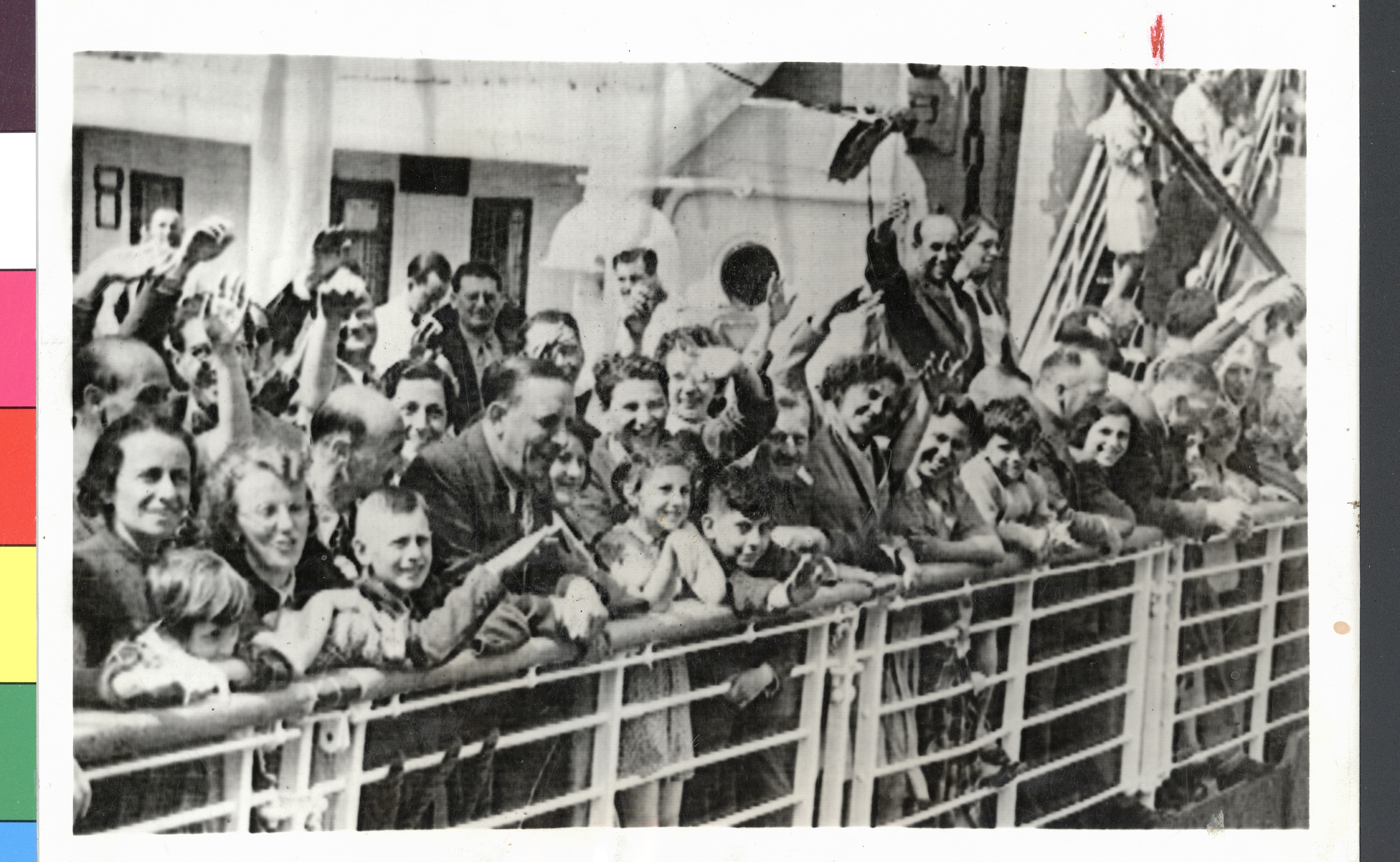
-
Article
“O Canada”
“O Canada” is Canada’s national anthem. Originally called “Chant national,” it was written in Quebec City by Sir Adolphe-Basile Routhier (French lyrics) and composer Calixa Lavallée (music), and first performed there on 24 June 1880. It began to be sung widely in French Canada at that time and later spread across Canada in various English-language versions, of which the best-known was written by Robert Stanley Weir in 1908. The lyrics of this version were amended several times over the years, with the most recent changes occurring in February 2018; the French lyrics have been shortened but otherwise remain unaltered from the original. “O Canada” was approved as Canada’s national anthem by a Special Joint Committee of the Senate and House of Commons on 15 March 1967. It was officially adopted as Canada’s national anthem under the National Anthem Act on 27 June 1980. The Act was proclaimed by Governor General Edward Schreyer in a public ceremony on Parliament Hill on 1 July 1980.
"https://d3d0lqu00lnqvz.cloudfront.net/media/media/b82d1c6f-e0dd-4fbe-ba40-5e1b7e2b35dd.jpg" // resources/views/front/categories/view.blade.php
https://d3d0lqu00lnqvz.cloudfront.net/media/media/b82d1c6f-e0dd-4fbe-ba40-5e1b7e2b35dd.jpg
-
Article
Oral History
Oral history is an account of the past transmitted by word of mouth. It has made important contributions to the ways in which we understand and interpret the past. Today, oral history has become an important field of study. Oral histories are also central to Indigenous cultures, both historical and contemporary. (See also Historical Sources and Indigenous Oral Histories and Primary Sources.)
"https://d3d0lqu00lnqvz.cloudfront.net/media/media/bcd6dc2a-0573-46da-a636-1d407d0ded29.jpg" // resources/views/front/categories/view.blade.php
https://d3d0lqu00lnqvz.cloudfront.net/media/media/bcd6dc2a-0573-46da-a636-1d407d0ded29.jpg
-
Article
Orange Shirt Day
At an event in May 2013, honouring residential school survivors in Williams Lake, British Columbia, the orange shirt was presented as a symbol of Indigenous peoples’ suffering caused by residential schools, which operated from the 1830s to the 1990s. The event led to the annual 30 September Orange Shirt Day as a means of remembrance, teaching and healing. In June 2021, the federal government declared 30 September a national statutory holiday to coincide with Orange Shirt Day. (See also Reconciliation in Canada.)
"https://d3d0lqu00lnqvz.cloudfront.net/OrangeShirtDay/OrangeShirt3.jpg" // resources/views/front/categories/view.blade.php
https://d3d0lqu00lnqvz.cloudfront.net/OrangeShirtDay/OrangeShirt3.jpg
-
Collection
Performing Arts in Canada
This collection explores the performing arts in Canada, ranging from directors, film history, and dance. The Canadian Encyclopedia includes videos, quizzes, and articles on the subject of performing arts.
"https://d3d0lqu00lnqvz.cloudfront.net/dreamstime_xl_40242975.jpg" // resources/views/front/categories/view.blade.php
https://d3d0lqu00lnqvz.cloudfront.net/dreamstime_xl_40242975.jpg
-
Article
Filipino Music in Canada
In the 1986 Census of Canada, 107,000 listed Filipino as their single or multiple ethnic origin. Of these, 27,000 were born in Canada and 80,000 had immigrated: 31,000 in the period 1978-86, 45,000 in the period 1967-77, and the rest before 1967.
"https://thecanadianencyclopedia.ca/images/tce_placeholder.jpg?v=e9dca980c9bdb3aa11e832e7ea94f5d9" // resources/views/front/categories/view.blade.php
https://thecanadianencyclopedia.ca/images/tce_placeholder.jpg?v=e9dca980c9bdb3aa11e832e7ea94f5d9
-
Article
Pit House
A pit house is a type of dwelling historically used by various Indigenous peoples living in the Plateau region of Canada. Partially built into the ground, pit houses provided warmth and shelter during the winter season. While pit houses no longer serve as common dwellings, they retain cultural significance for many Indigenous peoples. Archeological remains and replicas of pit houses can be found in various parts of Canada. (See also Architectural History of Indigenous Peoples in Canada.)
"https://d3d0lqu00lnqvz.cloudfront.net/media/media/f78eb160-4435-47f0-b8d4-d0694aa6ac55.jpg" // resources/views/front/categories/view.blade.php
https://d3d0lqu00lnqvz.cloudfront.net/media/media/f78eb160-4435-47f0-b8d4-d0694aa6ac55.jpg
-
Article
Plank House
Historically, plank houses were structures built by various Indigenous peoples on the Northwest Coast of Canada, such as the Coast Salish, Kwakwaka’wakw, Nuu-chah-nulth, Nuxalk, Haida, Tsimshian, Gitxsan and Nisga'a. Plank houses varied in size and design, depending on the community. Plank houses still exist in some communities and are used mainly for community and ceremonial purposes. (See also Architectural History of Indigenous Peoples in Canada.)
"https://d3d0lqu00lnqvz.cloudfront.net/PlankHouse/SalishPlankHouse1907.jpg" // resources/views/front/categories/view.blade.php
https://d3d0lqu00lnqvz.cloudfront.net/PlankHouse/SalishPlankHouse1907.jpg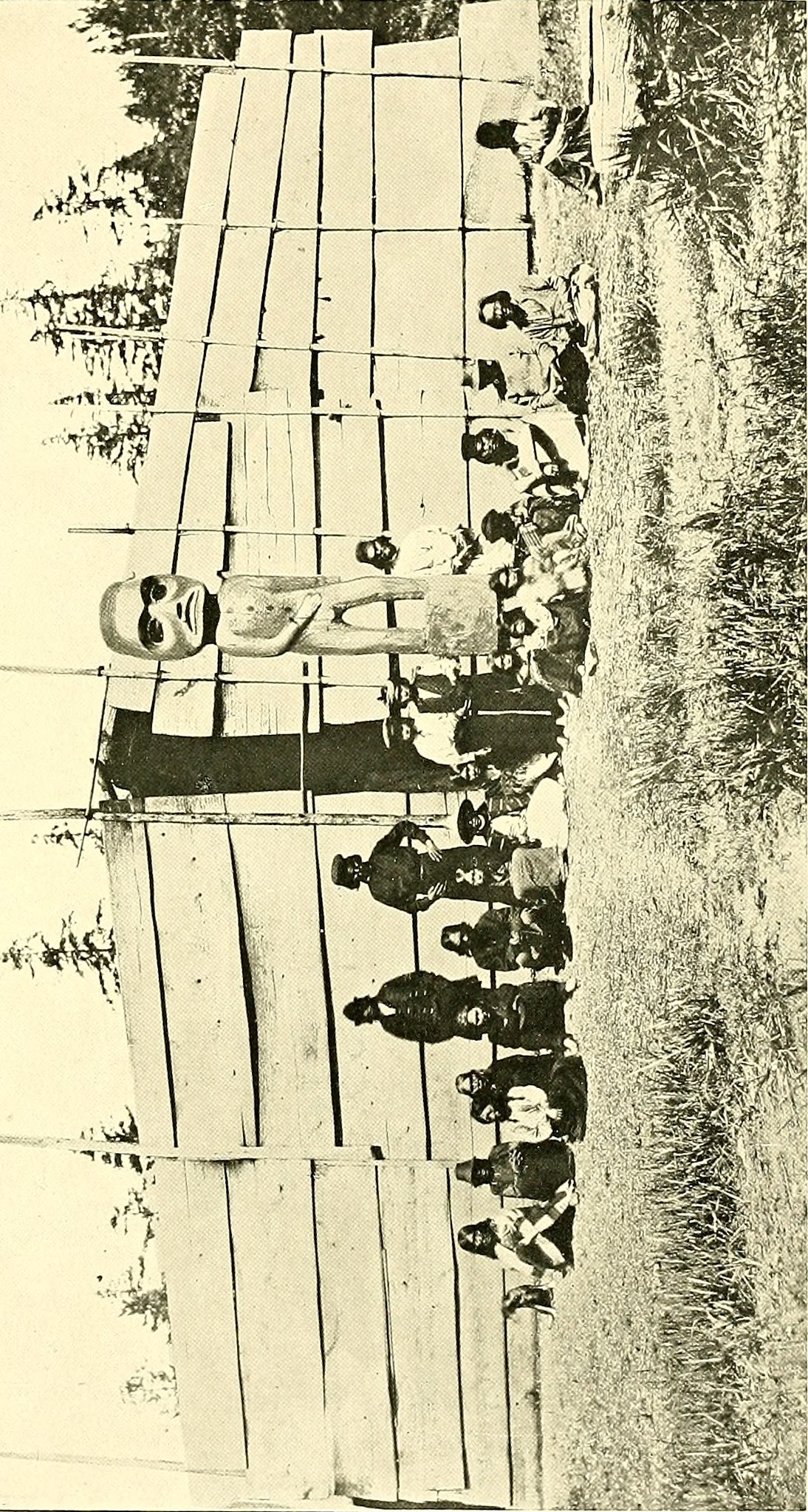
-
Article
Polaris Music Prize
The Polaris Music Prize was founded by Steve Jordan in 2006 and is presented by the CBC. It is awarded annually to the Canadian artist or group who creates the best full-length album of the year. All genres of contemporary music are eligible, and albums are judged on artistic merit rather than commercial success. The winner is announced at the Polaris Music Prize Gala held each September in Toronto. The original cash prize of $20,000 was increased to $30,000 in 2011 and to $50,000 in 2015. It was lowered back to $30,000 in 2025, when a new $10,000 SOCAN Polaris Song Prize was introduced to honour individual songs. The Polaris Festival was also launched in 2025, featuring numerous events throughout September. The cash prize is provided by the Slaight Family Foundation (see Allan Slaight). Other sponsors include Sirius XM, the Government of Canada, Music Canada, FACTOR, and SOCAN. Shortlisted artists often perform at the gala, which is broadcast live on CBC Radio 3 and YouTube.
"https://d3d0lqu00lnqvz.cloudfront.net/media/new_article_images/PolarisMusicPrize/Polaris_Music_Prize_logo.png" // resources/views/front/categories/view.blade.php
https://d3d0lqu00lnqvz.cloudfront.net/media/new_article_images/PolarisMusicPrize/Polaris_Music_Prize_logo.png
-
Article
Police Bands in Canada
The first band affiliated with the North-West Mounted Police was formed in 1876. During the next 30 years, the force had about seven bands. An official RCMP band was formed in 1938 and first performed in 1939, including at the royal visit by King George VI and Queen Elizabeth. Other RCMP bands were also active throughout the 1950s and particularly during Canada’s centennial celebrations in 1967. The RCMP band disbanded in 1994.
"https://d3d0lqu00lnqvz.cloudfront.net/Edmonton-Police-08412.jpg" // resources/views/front/categories/view.blade.php
https://d3d0lqu00lnqvz.cloudfront.net/Edmonton-Police-08412.jpg
-
List
Popular Jewish Dishes in Canada
The roots of the Jewish community in Canada go back to 1760 when Jews began to settle in Canada after the British Conquest of New France. The community remained small until the 1880s when large numbers of Ashkenazi Jews left Eastern Europe and made Canada their new home. The next major cohort of Jewish immigration began in the late 1950s when Jews from Morocco settled in Quebec. Each of these communities brought food from their homelands with them to Canada. They changed the food landscape of cities across the country. Many of these dishes remain an important part of Canada’s culinary identity to this day. (See Jewish Food in Canada.)
"https://d3d0lqu00lnqvz.cloudfront.net/Jewish_dishes/challah.jpg" // resources/views/front/categories/view.blade.php
https://d3d0lqu00lnqvz.cloudfront.net/Jewish_dishes/challah.jpg
-
Article
Sheila Na Geira
According to legend, Sheila Na Geira (also spelled NaGeira and Nagira) was an Irish aristocrat or princess who, 300 or 400 years ago, while travelling between France and Ireland, was captured by a Dutch warship and then rescued by British privateers. She fell in love and was married to one of the privateers, Lieutenant Gilbert Pike. They settled at western Conception Bay. By the early 20th century, the legend was being told as part of Newfoundland’s oral tradition, and has since been popularized by poems, novels, scholarly articles and several plays.
"https://d3d0lqu00lnqvz.cloudfront.net/dreamstime_resize_33120989-2.jpg" // resources/views/front/categories/view.blade.php
https://d3d0lqu00lnqvz.cloudfront.net/dreamstime_resize_33120989-2.jpg
-
Article
Quebec Film History: 1970 to 1989
This entry presents an overview of Québec cinema, from the burgeoning of a distinctly Québec cinema in the 1970s, to the production explosion that followed Denys Arcand’s Le déclin de l’empire américain (1986). It highlights the most important films, whether in terms of box office success or international acclaim, and covers both narrative features and documentaries. It also draws attention to an aspect of filmmaking that still has difficulty finding its place: women's cinema.
"https://d3d0lqu00lnqvz.cloudfront.net/media/media/aa8cc00a-320d-4447-bb88-20c45fede6e0.jpg" // resources/views/front/categories/view.blade.php
https://d3d0lqu00lnqvz.cloudfront.net/media/media/aa8cc00a-320d-4447-bb88-20c45fede6e0.jpg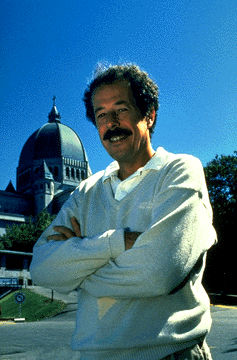
-
Article
Quebec Film History: 1990 to Present
This entry presents an overview of Quebec cinema, from the explosion that followed Denys Arcand’s Le déclin de l’empire américain (1986) to the setback that followed 10 years later and the new wave of filmmaking that emerged at the beginning of the 21st century. It highlights the most important films, whether in terms of box office success or international acclaim, and covers both narrative features and documentaries. It also draws attention to an aspect of filmmaking that still has difficulty finding its place: women's cinema.
"https://d3d0lqu00lnqvz.cloudfront.net/media/media/3fc2649b-c4d7-4fc5-8f8f-d2d67ed75621.jpg" // resources/views/front/categories/view.blade.php
https://d3d0lqu00lnqvz.cloudfront.net/media/media/3fc2649b-c4d7-4fc5-8f8f-d2d67ed75621.jpg