Browse "National parks"
-
List
30 National Parks Bigger than 30 Countries
To celebrate its 30th anniversary, The Canadian Encyclopedia created 30 lists of 30 things that make us proud to be Canadian, from famous people and historic events, to iconic foods and influential artists.
"https://d3d0lqu00lnqvz.cloudfront.net/media/media/a7c708ef-3e7b-4890-a1ad-f637397985a6.jpg" // resources/views/front/categories/view.blade.php
https://d3d0lqu00lnqvz.cloudfront.net/media/media/a7c708ef-3e7b-4890-a1ad-f637397985a6.jpg
-
Article
Banff National Park
Banff National Park (established 1885, 6,641 km2) is Canada's first and most visited National Park. Its eastern gate is located approximately 100 km west of Calgary in the Rocky Mountains, and stretches 240 km along the eastern slope of the Continental Divide. Jasper National Park lies at its northern boundary. Originally set aside to preserve sulphur hot springs for public use, Banff's blend of towering peaks and flower-strewn meadows makes it among Canada's most exhilarating holiday areas.
"https://d3d0lqu00lnqvz.cloudfront.net/media/media/1a727bc0-c154-4802-909f-572644a69db4.jpg" // resources/views/front/categories/view.blade.php
https://d3d0lqu00lnqvz.cloudfront.net/media/media/1a727bc0-c154-4802-909f-572644a69db4.jpg
-
Article
Elk Island National Park
Elk Island National Park (established 1913, 194 km2) is a sanctuary of rolling woodlands and meadows dotted with lakes, bogs and ponds, 48 km east of Edmonton. Public interest in the conservation of rapidly dwindling wildlife led to the establishment of a reserve of elk in 1906, which later became Elk Island National Park.
"https://d3d0lqu00lnqvz.cloudfront.net/media/media/f0d626c8-e7ab-4061-951e-3097fe21e3ad.jpg" // resources/views/front/categories/view.blade.php
https://d3d0lqu00lnqvz.cloudfront.net/media/media/f0d626c8-e7ab-4061-951e-3097fe21e3ad.jpg
-
Article
Glacier National Park
Glacier National Park (established 1886, 1349.3 km2) was carved from the rugged Selkirk and Purcell mountains of BC by more than 400 glaciers. Its sheer valley walls have been scarred by countless avalanches caused by heavy snowfalls. Many glaciers and avalanche slopes can be seen from the Trans-Canada Highway that bisects the park. Underground rivers have created unique cave systems.
"https://d3d0lqu00lnqvz.cloudfront.net/media/media/273ab9b8-fdc5-4d38-9f65-8ec2f751208f.jpg" // resources/views/front/categories/view.blade.php
https://d3d0lqu00lnqvz.cloudfront.net/media/media/273ab9b8-fdc5-4d38-9f65-8ec2f751208f.jpg
-
Article
Kluane National Park and Reserve
Kluane National Park and Reserve (established 1976, 21,980 km2) is an area of unclimbed peaks, vast ice fields, clear lakes, glaciers and spectacular wildlife. Tucked in the southwest corner of the Yukon Territory, 150 km west of Whitehorse, Kluane (pronounced kloo-AH-nee) contains Canada’s highest peak, Mount Logan. It is named after Yukon’s largest lake, which borders the park. The park and park reserve, together with Tatshenshini-Alsek Wilderness Provincial Park in British Columbia and Glacier Bay and Wrangell-St. Elias national parks in Alaska, form an international UNESCO World Heritage Site covering over 98,391 km2.
"https://d3d0lqu00lnqvz.cloudfront.net/media/media/eaf72296-f152-4658-8249-bbf7a8b70296.jpg" // resources/views/front/categories/view.blade.php
https://d3d0lqu00lnqvz.cloudfront.net/media/media/eaf72296-f152-4658-8249-bbf7a8b70296.jpg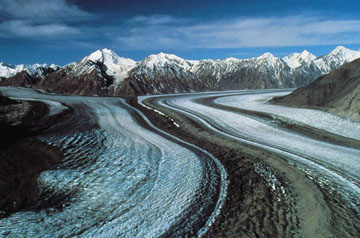
-
Article
Kootenay National Park
Kootenay National Park (established 1920, 1406.4 km2) is located on the west slope of the Continental Divide. The park, stretching north and south for 104 km, is bounded on the east by Banff and Mount Assiniboine Provincial Park on the north by Yoho National Park.
"https://d3d0lqu00lnqvz.cloudfront.net/media/media/1aa8fafc-a0a0-48c9-86a8-6e588b13ecfe.jpg" // resources/views/front/categories/view.blade.php
https://d3d0lqu00lnqvz.cloudfront.net/media/media/1aa8fafc-a0a0-48c9-86a8-6e588b13ecfe.jpg
-
List
Largest National Parks in Canada
Canada has 48 national parks and national park reserves, as well as one national urban park (see also National Parks of Canada). They protect important land and marine habitats, geographical features and sites of cultural significance. National parks also benefit local economies and the tourism industry in Canada. In total, the parks cover more than 340,000 km2, which is over 3 per cent of Canada’s landmass. Nearly all of Canada’s largest national parks are located in the north, and five of them in Nunavut.
"https://d3d0lqu00lnqvz.cloudfront.net/media/new_article_images/LargestNationalParks/WoodBuffaloNationalPark.jpg" // resources/views/front/categories/view.blade.php
https://d3d0lqu00lnqvz.cloudfront.net/media/new_article_images/LargestNationalParks/WoodBuffaloNationalPark.jpg
-
Article
Mount Revelstoke National Park
Mount Revelstoke National Park (est 1914, 259.7 km2) is a place of contrasting landscape, varying from rain forests and lush alpine meadows to barren, rocky ridges and glaciers. The jagged spires of the Selkirk Mountains are the backdrop for this park. Grizzly bear and caribou range throughout, while mountain goats frequent the rocky bluffs. Due to the small size of the park, and extensive clear-cut logging in adjacent lands, the park lacks ecological integrity, and its populations of large mammals, particularly caribou, are threatened. Alpine meadows feature pika, hoary marmot and golden-mantled ground squirrel, often under the gaze of the golden eagle. Between October and June the park is covered in a thick blanket of snow, but in the brief summer, meadows glow with the blossoms of lupine, aster and Indian paintbrush. The Meadows in the Sky Parkway provides road access to lush alpine meadows.
"https://d3d0lqu00lnqvz.cloudfront.net/media/media/d2b11ccd-0a14-4857-aafd-b31bb02c12ec.jpg" // resources/views/front/categories/view.blade.php
https://d3d0lqu00lnqvz.cloudfront.net/media/media/d2b11ccd-0a14-4857-aafd-b31bb02c12ec.jpg
-
Timelines
National Parks
Canada's national parks are protected areas established under federal legislation to preserve Canada's natural heritage.
"https://d3d0lqu00lnqvz.cloudfront.net/media/media/be7a97e5-19d2-4df5-b348-a549dd5b3fe7.jpg" // resources/views/front/categories/view.blade.php
https://d3d0lqu00lnqvz.cloudfront.net/media/media/be7a97e5-19d2-4df5-b348-a549dd5b3fe7.jpg
-
Article
National Parks of Canada
Canada’s national parks are protected areas established under federal legislation to preserve Canada’s natural heritage. They are administered by Parks Canada, a government agency that evolved from the world’s first national parks service, the Dominion Parks Branch, established in 1911. The National Parks System Plan, developed in 1970, divided Canada into 39 natural regions and set the goal of representing each region with at least one national park. Canada now has 48 national parks and national park reserves, and one national urban park, in 30 of these regions. In total, the parks cover more than 340,000 km2, which is over 3 per cent of Canada’s landmass. They protect important land and marine habitats, geographical features and sites of cultural significance. National parks also benefit local economies and the tourism industry in Canada. This is a full-length entry about the national parks of Canada. For a plain-language summary, please see National Parks of Canada (Plain-Language Summary).
"https://d3d0lqu00lnqvz.cloudfront.net/media/media/27f9bb3e-3454-4b12-9aca-ded0299bfe8c.jpg" // resources/views/front/categories/view.blade.php
https://d3d0lqu00lnqvz.cloudfront.net/media/media/27f9bb3e-3454-4b12-9aca-ded0299bfe8c.jpg
-
Article
National Parks of Canada (Plain-Language Summary)
Canada has 48 national parks and one national urban park. They were created and are run by the federal government. The national parks cover a vast amount of land — about 340,000 km2. This is about 3 per cent of Canada’s landmass. National parks serve two purposes. The first purpose is to preserve and protect nature. The second purpose is to give Canadians the chance to enjoy some of the country’s most beautiful and important natural settings. Millions of Canadians visit national parks every year. This article is a plain-language summary of the national parks of Canada. If you are interested in reading about this topic more in depth, please see our full-length entry, National Parks of Canada.
"https://d3d0lqu00lnqvz.cloudfront.net/media/media/27f9bb3e-3454-4b12-9aca-ded0299bfe8c.jpg" // resources/views/front/categories/view.blade.php
https://d3d0lqu00lnqvz.cloudfront.net/media/media/27f9bb3e-3454-4b12-9aca-ded0299bfe8c.jpg
-
Article
Pacific Rim National Park Reserve
Pacific Rim National Park Reserve (285.8 km2) stretches for 105 km along the rugged west coast of Vancouver Island. Established in 1970, the Pacific Rim National Park Reserve comprises three sections: the Long Beach unit, the West Coast Trail unit and the Broken Group islands. Nestled along the southwestern coast of Vancouver Island, the National Park Reserve boasts sandy beaches and temperate rainforests. Pacific Rim National Park Reserve lies in the traditional territories of the Nuu-chah-nulth First Nations and was symbolically twinned with the Hallyo Haesang Sea National Park of Korea in 1997.
"https://d3d0lqu00lnqvz.cloudfront.net/pacificrimnationalparkreserve/Long-Beach_-_Pacific_Rim_National_Park_Reserve.jpg" // resources/views/front/categories/view.blade.php
https://d3d0lqu00lnqvz.cloudfront.net/pacificrimnationalparkreserve/Long-Beach_-_Pacific_Rim_National_Park_Reserve.jpg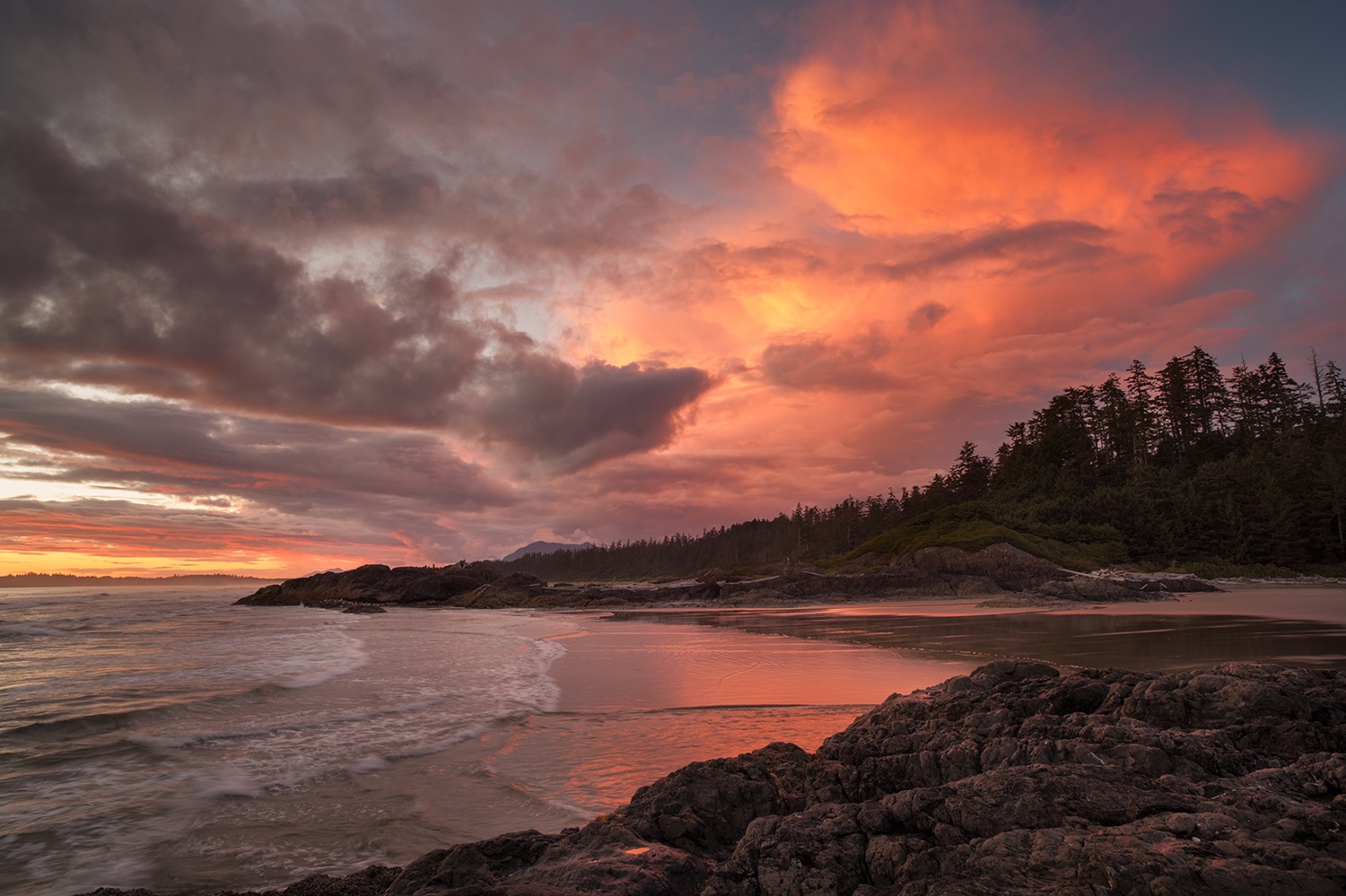
-
Article
Parc national de la Gaspésie
In the heart of the Gaspé Peninsula, 196 km east of Rimouski, is Parc national de la Gaspésie (established 1981, 802 km2). First established in 1937 by means of special legislation, the park has in the past bowed to mining and forestry pressures. It is now completely protected through the park's Act.
"https://thecanadianencyclopedia.ca/images/tce_placeholder.jpg?v=e9dca980c9bdb3aa11e832e7ea94f5d9" // resources/views/front/categories/view.blade.php
https://thecanadianencyclopedia.ca/images/tce_placeholder.jpg?v=e9dca980c9bdb3aa11e832e7ea94f5d9
-
Article
Prince Albert National Park
Prince Albert National Park (est 1927, 3874.3 km2) is located 200 km north of Saskatoon. The cabin and grave of Grey Owl (Archibald Belaney) are located in the park beside Ajawaan Lake, where he spent the last 7 years of his life.
"https://d3d0lqu00lnqvz.cloudfront.net/media/media/f507b630-0ecd-47f8-b3a8-7ef49ed586c9.jpg" // resources/views/front/categories/view.blade.php
https://d3d0lqu00lnqvz.cloudfront.net/media/media/f507b630-0ecd-47f8-b3a8-7ef49ed586c9.jpg
-
Article
Prince Edward Island National Park
Prince Edward Island National Park (est 1937, 21.5 km2) is a narrow strip of coastline stretching over 40 km along the north shore of PEI.
"https://d3d0lqu00lnqvz.cloudfront.net/media/media/43c98966-afd6-46ad-88a3-937937a88fff.jpg" // resources/views/front/categories/view.blade.php
https://d3d0lqu00lnqvz.cloudfront.net/media/media/43c98966-afd6-46ad-88a3-937937a88fff.jpg