Browse "People"
-
Article
Black Enslavement in Canada
In early Canada, the enslavement of African peoples was a legal instrument that helped fuel colonial economic enterprise. The buying, selling and enslavement of Black people was practiced by European traders and colonists in New France in the early 1600s, and lasted until it was abolished throughout British North America in 1834. During that two-century period, settlers in what would eventually become Canada were involved in the transatlantic slave trade. Canada is further linked to the institution of enslavement through its history of international trade. Products such as salted cod and timber were exchanged for slave-produced goods such as rum, molasses, tobacco and sugar from slaveholding colonies in the Caribbean. This article is a full-length entry about Black enslavement in Canada. For a plain language summary, please see Black Enslavement in Canada (Plain Language Summary). (See also Olivier Le Jeune; Sir David Kirke; Chloe Cooley and the Act to Limit Slavery in Upper Canada; Underground Railroad; Fugitive Slave Act of 1850; Slavery Abolition Act, 1833; Slavery of Indigenous People in Canada.)
"https://d3d0lqu00lnqvz.cloudfront.net/media/media/10e1983c-bdbe-4650-9121-50dd7f143f28.jpg" // resources/views/front/categories/view.blade.php
https://d3d0lqu00lnqvz.cloudfront.net/media/media/10e1983c-bdbe-4650-9121-50dd7f143f28.jpg
-
Article
Black Enslavement in Canada (Plain-Language Summary)
The practice of slavery was introduced by colonists in New France in the early 1600s. The practice was continued after the British took control of New France in 1760 (see British North America.) For about two hundred years, thousands of Indigenous and Black African people were bought, sold, traded and inherited like property in early Canada. Slavery was abolished (made illegal) throughout British North America in 1834. This article is a plain-language summary of Black Enslavement in Canada. If you are interested in reading about this topic in more depth, please see our full-length entry, Black Enslavement in Canada.
"https://d3d0lqu00lnqvz.cloudfront.net/media/media/10e1983c-bdbe-4650-9121-50dd7f143f28.jpg" // resources/views/front/categories/view.blade.php
https://d3d0lqu00lnqvz.cloudfront.net/media/media/10e1983c-bdbe-4650-9121-50dd7f143f28.jpg
-
Article
Black Fur Traders in Canada
The role of Black people within the history of the fur trade is rarely considered. Black people were rarely in a position to write their own stories, so often those stories went untold. This owes to a complex set of factors including racism and limited access to literacy. Black people are also not the focus of many historical documents. However, historians have identified several Black fur traders working in different roles, and even an entire family of Black fur traders who left their mark on history.
"https://d3d0lqu00lnqvz.cloudfront.net/media/home-page-images/por-1261-r1.jpg" // resources/views/front/categories/view.blade.php
https://d3d0lqu00lnqvz.cloudfront.net/media/home-page-images/por-1261-r1.jpg
-
Article
Black Hawk
Black Hawk (Black Sparrow Hawk, Makataimeshekiakiak), Sauk War Chief (b at Saukenuk, near Rock Island, Ill, 1767; d near Des Moines, Iowa, 3 Oct 1838).
"https://d3d0lqu00lnqvz.cloudfront.net/media/media/10141ccd-3d95-4eca-96ba-3362cbca9249.jpg" // resources/views/front/categories/view.blade.php
https://d3d0lqu00lnqvz.cloudfront.net/media/media/10141ccd-3d95-4eca-96ba-3362cbca9249.jpg
-
Timelines
Black History
Black history refers to the stories, experiences, and accomplishments of people of African origin. Black history did not begin in recent times in Canada, but in ancient times in Africa. People connected by their common African history and ancestry have created Black history here. The African-Canadian population is made up of individuals from a range of places across the globe including the United States, South America, the Caribbean, Europe, Africa, and Canada.
"https://d3d0lqu00lnqvz.cloudfront.net/media/media/463853c1-2715-4678-80d4-8871c66d6e54.jpg" // resources/views/front/categories/view.blade.php
https://d3d0lqu00lnqvz.cloudfront.net/media/media/463853c1-2715-4678-80d4-8871c66d6e54.jpg
-
Collection
Black History in Canada
"Have we read our own authors such as Dionne Brand, Afua Cooper and George Elliott Clarke? Do we know that the story of African-Canadians spans four hundred years, and includes slavery, abolition, pioneering, urban growth, segregation, the civil rights movement and a long engagement in civic life?" — Lawrence Hill
"https://d3d0lqu00lnqvz.cloudfront.net/media/media/a7755b40-bb18-444f-92ba-f85d7ff7fb17.jpg" // resources/views/front/categories/view.blade.php
https://d3d0lqu00lnqvz.cloudfront.net/media/media/a7755b40-bb18-444f-92ba-f85d7ff7fb17.jpg
-
Article
Black History in Canada: 1960 to Present
Black people have lived in Canada since the 17th century. Some of the earliest arrivals were enslaved persons brought from what we now call the United States of America and from the Caribbean. (See Black Canadians; Caribbean Canadians.) From the 18th century to the 1960s, most Black immigrants to Canada were fleeing enslavement and/or discrimination in the United States. Since then, changes to Canadian immigration policy have led to an influx of immigrants from the Caribbean and Africa. (See African Canadians.) In the 2016 Canadian census, 1.2 million people (3.5 per cent of the Canadian population) reported being Black.. Despite ongoing challenges, including discrimination and systemic racism, Black Canadians have excelled in sectors and industries across the country. See also Black History in Canada until 1900 and Black History in Canada: 1900–1960.
"https://d3d0lqu00lnqvz.cloudfront.net/media/media/95878d01-d5fa-4ee5-b2a4-24d37723a566.jpg" // resources/views/front/categories/view.blade.php
https://d3d0lqu00lnqvz.cloudfront.net/media/media/95878d01-d5fa-4ee5-b2a4-24d37723a566.jpg
-
Article
Black History in Canada until 1900
Black people have lived in Canada since the beginnings of transatlantic settlement. Although historically very few arrived directly from their ancestral homeland in Africa, the term "African Canadian" is used to identify all descendants of Africa regardless of their place of birth. “Black Canadian” is also used as a more general term. The earliest arrivals were enslaved people brought from New England or the West Indies. Between 1763 and 1900, most Black migrants to Canada were fleeing enslavement in the US. (See also Black Enslavement in Canada.) See also Black History in Canada: 1900–1960 and Black History in Canada: 1960 to Present.
"https://d3d0lqu00lnqvz.cloudfront.net/media/media/917b145c-c991-4838-92ef-ab33000e1bdc.jpg" // resources/views/front/categories/view.blade.php
https://d3d0lqu00lnqvz.cloudfront.net/media/media/917b145c-c991-4838-92ef-ab33000e1bdc.jpg
-
Article
Black Lives Matter-Canada
Black Lives Matter (BLM) is a decentralized movement to end anti-Black racism. It was founded as an online community in the United States in 2013 in response to the acquittal of the man who killed Black teenager Trayvon Martin. Its stated mission is to end white supremacy and state-sanctioned violence and to liberate Black people and communities. The Black Lives Matter hashtag (#BlackLivesMatter) has been used to bring attention to discrimination and violence faced by Black people. BLM has chapters in the United States and around the world. There are five chapters in Canada: Toronto (BLM-TO), Vancouver (BLM-VAN), Waterloo Region, Edmonton, and New Brunswick.
"https://d3d0lqu00lnqvz.cloudfront.net/BLM/BlackLivesMatterProtest.jpg" // resources/views/front/categories/view.blade.php
https://d3d0lqu00lnqvz.cloudfront.net/BLM/BlackLivesMatterProtest.jpg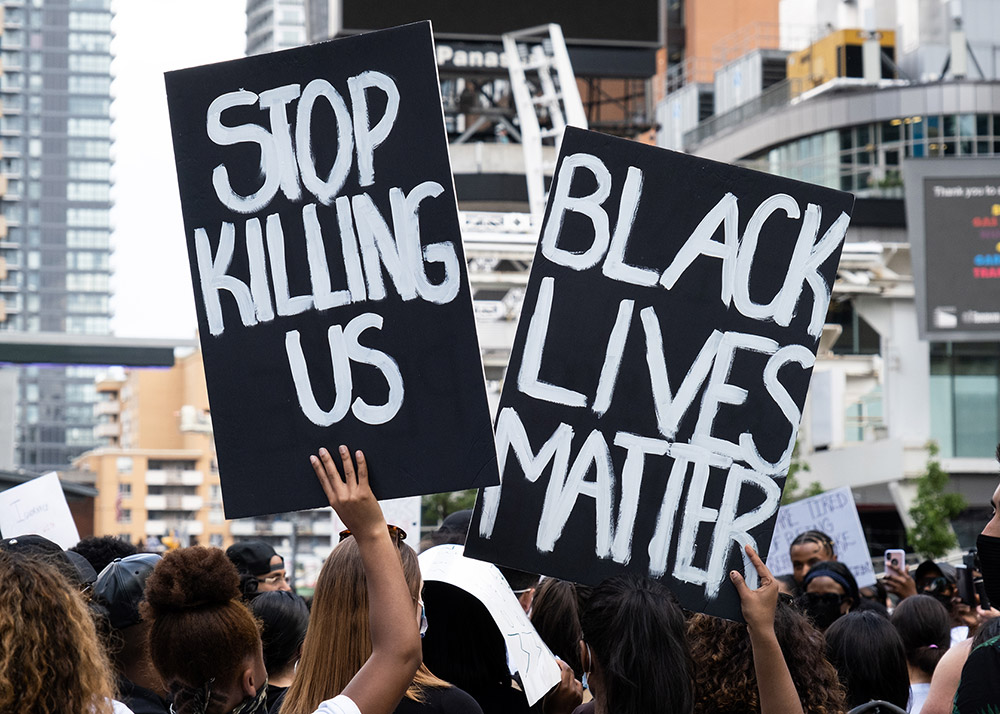
-
Editorial
Editorial: The Arrival of Black Loyalists in Nova Scotia
The following article is an editorial written by The Canadian Encyclopedia staff. Editorials are not usually updated. “Freedom and a Farm.” The promise was exciting to the thousands of African Americans, most seeking to escape enslavement, who fought in British regiments during the American Revolutionary War (1775–83). Following the war, they joined tens of thousands of Loyalists — American refugees who had sided with the British. Between 80,000 and 100,000 Loyalists eventually fled the United States. About half came to British North America. The main waves arrived in 1783 and 1784. The territory that now includes the Maritime provinces became home to more than 30,000 Loyalists. Most of coastal Nova Scotia received Loyalist settlers, as did Cape Breton and Prince Edward Island (then called St. John’s Island).
"https://d3d0lqu00lnqvz.cloudfront.net/media/media/be13527b-b76d-408a-afca-30acbd4f7bfc.png" // resources/views/front/categories/view.blade.php
https://d3d0lqu00lnqvz.cloudfront.net/media/media/be13527b-b76d-408a-afca-30acbd4f7bfc.png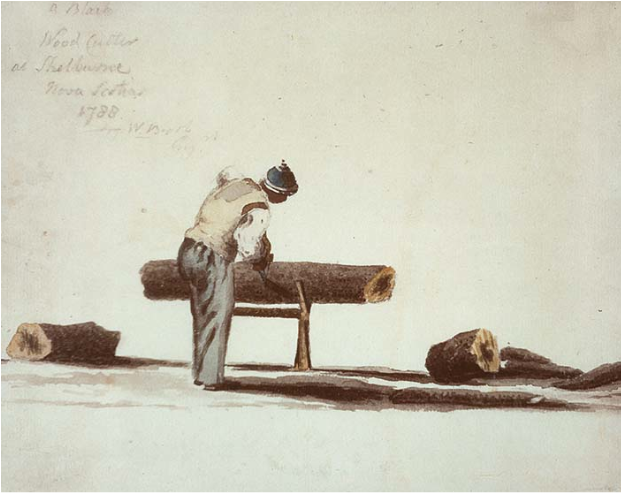
-
Article
Black Loyalists in British North America
During the American Revolutionary War (1775–83), thousands of free or enslaved Black people fought for the British, hoping to gain their freedom along with the promise of land. By 1783, when the Treaty of Paris was signed, British forces and their allies fled to such locations as Europe, the West Indies (the Caribbean) and the Province of Québec (divided in 1791 into Upper Canada and Lower Canada ). Between 1783 and 1785, more than 3,000 free Blacks or former enslaved people settled in Nova Scotia , where they faced hostility, racial segregation, low-paying jobs and inequality (see also Arrival of Black Loyalists in Nova Scotia). This article is a full-length entry about Black Loyalists in British North America. For a plain-language summary, please see Black Loyalists in British North America (Plain-Language Summary).
"https://d3d0lqu00lnqvz.cloudfront.net/media/media/dc264d6d-7df5-4bbb-a9b4-728f34d7ad7f.jpg" // resources/views/front/categories/view.blade.php
https://d3d0lqu00lnqvz.cloudfront.net/media/media/dc264d6d-7df5-4bbb-a9b4-728f34d7ad7f.jpg
-
Article
Black Pioneers of the American Revolution
The Black Pioneers was a provincial (i.e., locally recruited) unit of the British army during the American Revolutionary War. It was the only Black unit on the provincial establishment. Most members of the company were formerly enslaved persons who had fled their Patriot (rebel) owners in response to British promises of freedom. Although some Black soldiers fought in combat during the war, the Pioneers provided construction and engineering support to the British army. After the war, they were among thousands of Black Loyalists who were transported to Nova Scotia.
"https://d3d0lqu00lnqvz.cloudfront.net/media/media/be13527b-b76d-408a-afca-30acbd4f7bfc.png" // resources/views/front/categories/view.blade.php
https://d3d0lqu00lnqvz.cloudfront.net/media/media/be13527b-b76d-408a-afca-30acbd4f7bfc.png
-
Article
Black Soldiers in 19th Century Canada
Black soldiers served in military units throughout the 19th century in Canada. Although some (white) commanding officers rejected Black volunteers, they served in the militia in integrated units and in Black units such as the Coloured Corps in Niagara, the Victoria Pioneer Rifle Corps in British Columbia and the Victoria Rifles in Halifax, Nova Scotia. Black soldiers served in peacetime and in major events such as the War of 1812 and the Rebellions of 1837–38.
"https://d3d0lqu00lnqvz.cloudfront.net/BlackSoldiers/Victoria-Pioneer-Rifles.jpg" // resources/views/front/categories/view.blade.php
https://d3d0lqu00lnqvz.cloudfront.net/BlackSoldiers/Victoria-Pioneer-Rifles.jpg
-
Article
Black Theatre Workshop
The TTA set up a dramatic committee that organized public readings of plays by Earl Lovelace, Errol John and Derek Walcott (Nobel laureate 1993).
"https://d3d0lqu00lnqvz.cloudfront.net/media/media/fb9b2181-e2e6-46e9-b3e7-142ce83d2f11.jpg" // resources/views/front/categories/view.blade.php
https://d3d0lqu00lnqvz.cloudfront.net/media/media/fb9b2181-e2e6-46e9-b3e7-142ce83d2f11.jpg
-
Article
Black Volunteers in the Canadian Expeditionary Force
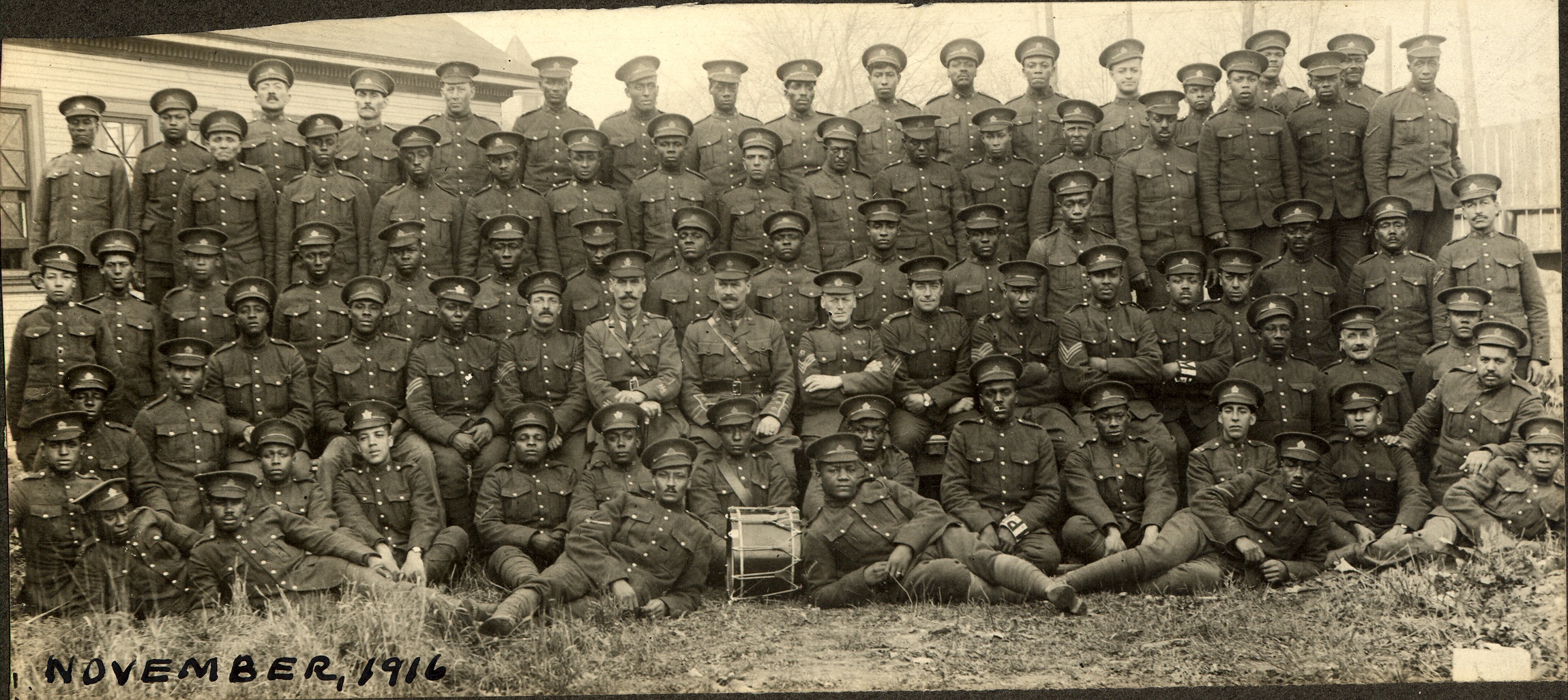
During the First World War, up to 1,300 Black men volunteered for service in the Canadian Expeditionary Force (CEF). While the men of No. 2 Construction Battalion are the best-known example of Black participation in the war, another 300 to 500 enlisted in other units of the CEF. Of these, about 100 served on the front lines. Black soldiers participated in all major battles of the CEF, from its arrival in France until the Armistice. (See also Black Canadians and Conscription in the First World War.)
"https://d3d0lqu00lnqvz.cloudfront.net/media/media/d2114b98-ef0d-4e98-aa49-892b095d77cc.jpg" // resources/views/front/categories/view.blade.php
https://d3d0lqu00lnqvz.cloudfront.net/media/media/d2114b98-ef0d-4e98-aa49-892b095d77cc.jpg