
Browse "People"
-
Article
Inuksuk (Inukshuk)
Inuksuk (also spelled inukshuk, plural inuksuit) is a figure made of piled stones or boulders constructed to communicate with humans throughout the Arctic. Traditionally constructed by the Inuit, inuksuit are integral to Inuit culture and are often intertwined with representations of Canada and the North. A red inuksuk is found on the flag of Nunavut. In Inuktitut, the term inuksuk means "to act in the capacity of a human." It is an extension of the word inuk meaning "a human being." Inuksuit have been found close to archaeological sites dating from 2400 to 1800 BCE in the Mingo Lake region of southwest Baffin Island. (See also Prehistory.) While stone figures resembling human forms are often referred to as inuksuk, such figures are actually known as inunnguaq.
"https://d3d0lqu00lnqvz.cloudfront.net/media/media/fda0c3a3-c613-4196-ba0a-690925ca6c04.jpg" // resources/views/front/categories/view.blade.php
https://d3d0lqu00lnqvz.cloudfront.net/media/media/fda0c3a3-c613-4196-ba0a-690925ca6c04.jpg
-
Article
Inuktitut
Inuktitut is an Indigenous language in North America, spoken in the Canadian Arctic. The 2021 census reported 40,320 people have knowledge of Inuktitut. Inuktitut is part of a larger Inuit language family, stretching from Alaska to Greenland. Inuktitut uses a writing system called syllabics, created originally for the Cree language, which represent combinations of consonants and vowels. The language is also written in the Roman alphabet, and this is the exclusive writing system used in Labrador and parts of Western Nunavut. Inuktitut is a polysynthetic language, meaning that words tend to be longer and structurally more complex than their English or French counterparts. (See also Indigenous Languages in Canada.)
"https://d3d0lqu00lnqvz.cloudfront.net/media/media/26c8ac6d-be78-4acc-9097-9854b0762516.jpg" // resources/views/front/categories/view.blade.php
https://d3d0lqu00lnqvz.cloudfront.net/media/media/26c8ac6d-be78-4acc-9097-9854b0762516.jpg
-
Article
Inuktitut Words for Snow and Ice
It is often said that the Inuit have dozens of words to refer to snow and ice. Anthropologist John Steckley, in his book White Lies about the Inuit (2007), notes that many often cite 52 as the number of different terms in Inuktitut. This belief in a high number of words for snow and ice has been sharply criticized by a large number of linguists and anthropologists.
"https://d3d0lqu00lnqvz.cloudfront.net/media/media/1c4db935-fcf6-4b0d-a8f4-7ab6c8a30a3c.jpg" // resources/views/front/categories/view.blade.php
https://d3d0lqu00lnqvz.cloudfront.net/media/media/1c4db935-fcf6-4b0d-a8f4-7ab6c8a30a3c.jpg
-
Collection
Invention and Innovation in Canada
This collection gathers together articles relating to invention and innovation in Canada. (photograph by Beth A. Robertson, courtesy Canadian Science and Technology Museum)
"https://d3d0lqu00lnqvz.cloudfront.net/media/new_article_images/RolandGalarneau/Convero-Braille.jpg" // resources/views/front/categories/view.blade.php
https://d3d0lqu00lnqvz.cloudfront.net/media/new_article_images/RolandGalarneau/Convero-Braille.jpg
-
Article
Inventors, Inventions and Innovations
Whether they remained in Canada or pursued careers abroad, Canadians have invented or innovated devices, products or processes in various fields, such as medicine, technology and agriculture. In some cases, the government and agencies, like the National Research Council Canada (NRC), have funded research and development. Economic investment and the promotion of science, technology, engineering and mathematics (STEM) skills have been identified as key factors for building Canada’s innovation future.
"https://d3d0lqu00lnqvz.cloudfront.net/inventorsandinnovations/Klien.jpg" // resources/views/front/categories/view.blade.php
https://d3d0lqu00lnqvz.cloudfront.net/inventorsandinnovations/Klien.jpg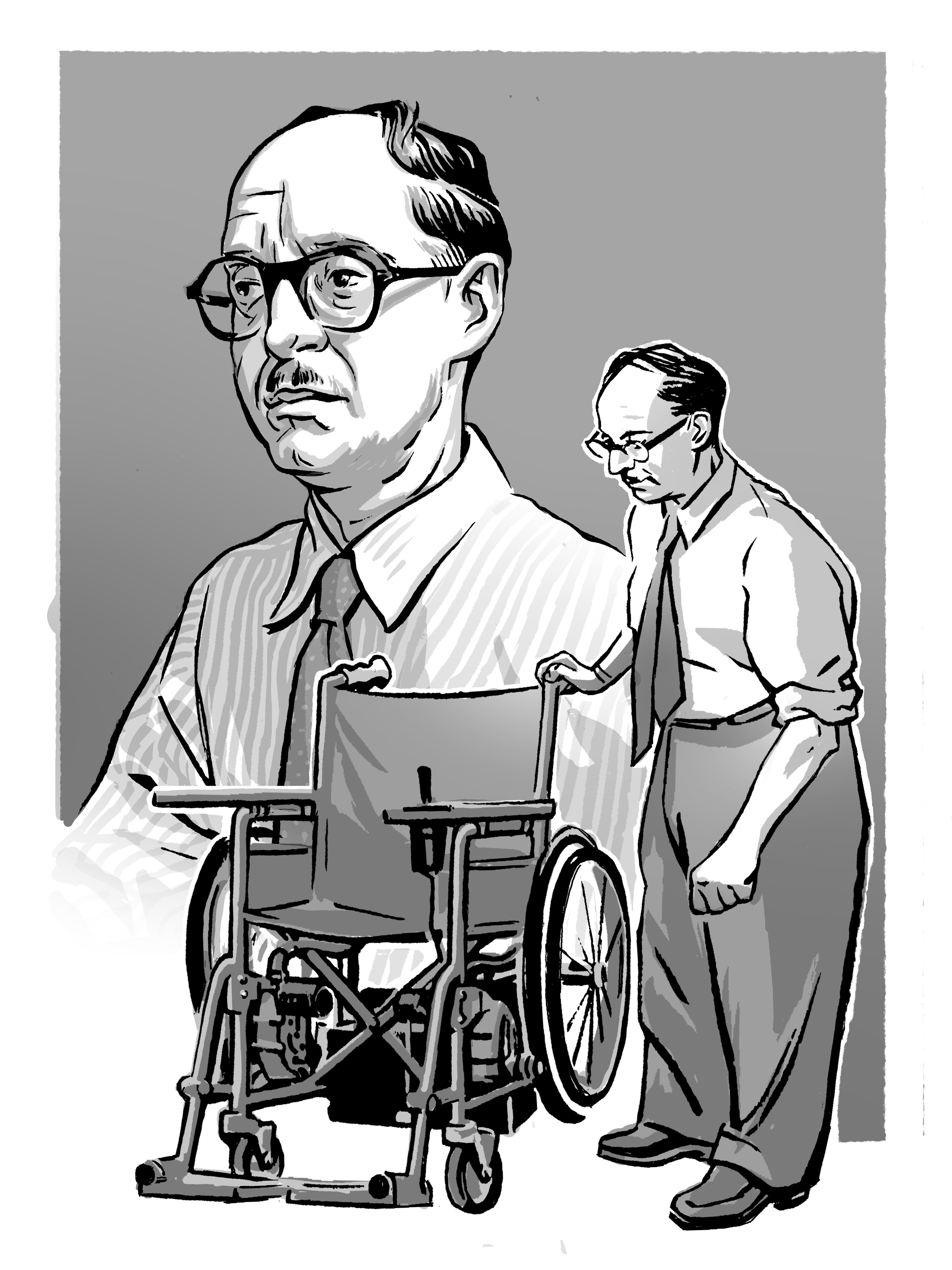
-
Article
Iona Campagnolo
Iona Campagnolo has also had a career as a broadcaster and activist. Beyond Canada, she frequently contributed to current affairs programs on PBS-TV and monitored elections and did human rights work in Africa, Asia and South America.
"https://d3d0lqu00lnqvz.cloudfront.net/media/media/52973536-a4e5-4ded-97e2-356f028a6bf6.jpg" // resources/views/front/categories/view.blade.php
https://d3d0lqu00lnqvz.cloudfront.net/media/media/52973536-a4e5-4ded-97e2-356f028a6bf6.jpg
-
Article
Ira Dilworth
Ira Dilworth. Administrator, teacher, editor, conductor, b High Bluff, near Winnipeg, Man, 25 Mar 1894, d Vancouver 23 Nov 1962; BA (McGill) 1915, MA (Harvard) 1920, honorary LL D (British Columbia) 1948. As a child he moved with his family to the Okanagan Valley and there studied piano.
"https://thecanadianencyclopedia.ca/images/tce_placeholder.jpg?v=e9dca980c9bdb3aa11e832e7ea94f5d9" // resources/views/front/categories/view.blade.php
https://thecanadianencyclopedia.ca/images/tce_placeholder.jpg?v=e9dca980c9bdb3aa11e832e7ea94f5d9
-
Article
Ira Swartz
Ira (Wesley) Swartz. Pianist, teacher, b Walla Walla, Wash, 23 Jul 1902, d Vancouver 29 May 1991. He was a pupil during the l920s of J.D.A.
"https://thecanadianencyclopedia.ca/images/tce_placeholder.jpg?v=e9dca980c9bdb3aa11e832e7ea94f5d9" // resources/views/front/categories/view.blade.php
https://thecanadianencyclopedia.ca/images/tce_placeholder.jpg?v=e9dca980c9bdb3aa11e832e7ea94f5d9
-
Macleans
Iran to Investigate Journalist's Death
Zahra Kazemi was not the first journalist to die for her job in Iran. Nor is she the first to die of beatings while in state custody.This article was originally published in Maclean's Magazine on July 28, 2003
"https://thecanadianencyclopedia.ca/images/tce_placeholder.jpg?v=e9dca980c9bdb3aa11e832e7ea94f5d9" // resources/views/front/categories/view.blade.php
https://thecanadianencyclopedia.ca/images/tce_placeholder.jpg?v=e9dca980c9bdb3aa11e832e7ea94f5d9
-
Article
Iranian Canadians
Iran, formerly known as Persia, is one of the oldest civilizations of the world. Iranians are a relatively new community in Canada and one that continues to grow. Their immigration to the country began in the 1980s, in the wake of the 1979 Iranian Revolution. According to the 2021 census, 200,465 Canadians identified as Iranian while 80,340 identified as Persian (for a total of 280,805). However, Iran is also home to many more national and ethnic groups.
"https://d3d0lqu00lnqvz.cloudfront.net/media/media/49512e3c-b27b-491b-bc3b-37eecdf24a33.jpg" // resources/views/front/categories/view.blade.php
https://d3d0lqu00lnqvz.cloudfront.net/media/media/49512e3c-b27b-491b-bc3b-37eecdf24a33.jpg
-
Article
Irish Music in Canada
The Irish component in the population of Canada is the fourth largest (after English, French, and Scottish) and one of the oldest. Irish fishermen settled in Newfoundland in the early 17th century. By the mid-18th century that island had some 5000 Roman Catholic Irish inhabitants - about one-third of its population. There were Irish among those who founded Halifax in 1749. The United Empire Loyalists who moved to Nova Scotia and New Brunswick after 1776 included many of Irish descent. The famine in Ireland during the early 19th century sent thousands of Irish farmers to Upper Canada (Ontario). By 1871 the Irish were the second largest ethnic group in Canada (after the French); in 1950 there were 1,500,000 Irish, catholic and protestant. In the 1986 census there were 699,685 Canadians of single Irish descent and a further 2,922,605 with some Irish ancestry.
"https://d3d0lqu00lnqvz.cloudfront.net/dreamstime_xxl_22459850.jpg" // resources/views/front/categories/view.blade.php
https://d3d0lqu00lnqvz.cloudfront.net/dreamstime_xxl_22459850.jpg
-
"https://thecanadianencyclopedia.ca/images/tce_placeholder.jpg?v=e9dca980c9bdb3aa11e832e7ea94f5d9" // resources/views/front/categories/view.blade.php
https://thecanadianencyclopedia.ca/images/tce_placeholder.jpg?v=e9dca980c9bdb3aa11e832e7ea94f5d9
-
Article
Irene Bird
Irene (May) Bird (b Jocelyn). Pianist, conductor, b Stratford 6 Feb 1915; ATCM 1933, LTCM 1936, LRSM 1937, studied piano with Cora B. Ahrens in Stratford and Mona Bates and Viggo Kihl in Toronto.
"https://thecanadianencyclopedia.ca/images/tce_placeholder.jpg?v=e9dca980c9bdb3aa11e832e7ea94f5d9" // resources/views/front/categories/view.blade.php
https://thecanadianencyclopedia.ca/images/tce_placeholder.jpg?v=e9dca980c9bdb3aa11e832e7ea94f5d9
-
Article
Irène Brisson
Irène Brisson (b Jourinn). Teacher, musicologist, broadcaster, b Paris 20 Jan 1946, naturalized Canadian 1975; premier prix history (Paris Cons) 1969, premier prix musicology (Paris Cons) 1971.
"https://thecanadianencyclopedia.ca/images/tce_placeholder.jpg?v=e9dca980c9bdb3aa11e832e7ea94f5d9" // resources/views/front/categories/view.blade.php
https://thecanadianencyclopedia.ca/images/tce_placeholder.jpg?v=e9dca980c9bdb3aa11e832e7ea94f5d9
-
Article
Irene F. Whittome
Irene F. Whittome, artist (b at Vancouver on 5 March 1942). Irene Whittome attended the Vancouver School of Art, studying under painter Jack SHADBOLT. In Paris from 1963 to 1967, she studied with the engraver W. Stanley Hayter.
"https://thecanadianencyclopedia.ca/images/tce_placeholder.jpg?v=e9dca980c9bdb3aa11e832e7ea94f5d9" // resources/views/front/categories/view.blade.php
https://thecanadianencyclopedia.ca/images/tce_placeholder.jpg?v=e9dca980c9bdb3aa11e832e7ea94f5d9