
Browse "People"
-
Interview
In Conversation with Mike Weir
On 7 October 2016, the 2003 Masters golf champion Mike Weir of Sarnia, Ontario, spoke to Jeremy Freeborn for The Canadian Encyclopedia.
"https://d3d0lqu00lnqvz.cloudfront.net/media/media/9901d03f-058f-4fde-9df5-2a613c622a6f.jpg" // resources/views/front/categories/view.blade.php
https://d3d0lqu00lnqvz.cloudfront.net/media/media/9901d03f-058f-4fde-9df5-2a613c622a6f.jpg
-
Interview
In Conversation with Rod Matheson
Social Media & Outreach Editor Zach Parrott interviews Rod Matheson for The Canadian Encyclopedia.
"https://d3d0lqu00lnqvz.cloudfront.net/media/media/53376be8-b6de-431d-bf44-315cba10770f.jpg" // resources/views/front/categories/view.blade.php
https://d3d0lqu00lnqvz.cloudfront.net/media/media/53376be8-b6de-431d-bf44-315cba10770f.jpg
-
Article
In Tribute to Peter Lougheed
The following article is an editorial written by The Canadian Encyclopedia staff. Editorials are not usually updated.
"https://thecanadianencyclopedia.ca/images/tce_placeholder.jpg?v=e9dca980c9bdb3aa11e832e7ea94f5d9" // resources/views/front/categories/view.blade.php
https://thecanadianencyclopedia.ca/images/tce_placeholder.jpg?v=e9dca980c9bdb3aa11e832e7ea94f5d9
-
Article
Indian Act
The Indian Act is the primary law the federal government uses to administer Indian status, local First Nations governments and the management of reserve land. It also outlines governmental obligations to First Nations peoples. The Indian Act pertains to people with Indian Status; it does not directly reference non-status First Nations people, the Métis or Inuit. First introduced in 1876, the Act subsumed a number of colonial laws that aimed to eliminate First Nations culture in favour of assimilation into Euro-Canadian society. A new version of the Act was passed in 1951, and since then, has been amended several times, most significantly in 1985, with changes mainly focusing on the removal of discriminatory sections. It is an evolving, paradoxical document that has enabled trauma, human rights violations and social and cultural disruption for generations of Indigenous peoples. This article is a full-length entry about the Indian Act. For a plain-language summary, please see Indian Act (Plain-Language Summary).
"https://d3d0lqu00lnqvz.cloudfront.net/!feature-img-thumbnails/ind-act-feat.png" // resources/views/front/categories/view.blade.php
https://d3d0lqu00lnqvz.cloudfront.net/!feature-img-thumbnails/ind-act-feat.png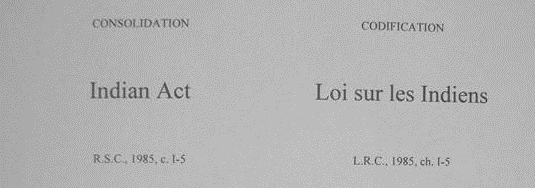
-
Article
Indian Act (Plain-Language Summary)
The Indian Act was first created in 1876. A new version was created in 1951. Since then, the Act has been revised several times. The main goal of the Act was to force First Nations peoples to lose their culture and become like Euro-Canadians. The Indian Act does not affect either the Métis or Inuit. This article is a plain-language summary of the Indian Act. If you are interested in reading about this topic more in depth, please see our full-length entry, Indian Act.
"https://d3d0lqu00lnqvz.cloudfront.net/!feature-img-thumbnails/ind-act-feat.png" // resources/views/front/categories/view.blade.php
https://d3d0lqu00lnqvz.cloudfront.net/!feature-img-thumbnails/ind-act-feat.png
-
Article
Indian Agents in Canada
Indian agents were the Canadian government’s representatives on First Nations reserves from the 1830s to the 1960s. Often working in isolated locations far from settler communities, Indian agents implemented government policy, enforced and administered the provisions of the Indian Act, and managed the day-to-day affairs of Status Indians. Today, the position of Indian agent no longer exists, as First Nations manage their own affairs through modern band councils or self-government.
"https://d3d0lqu00lnqvz.cloudfront.net/media/new_article_images/IndianAgent/indian agent3.jpg" // resources/views/front/categories/view.blade.php
https://d3d0lqu00lnqvz.cloudfront.net/media/new_article_images/IndianAgent/indian agent3.jpg
-
Article
Indian Film Crew
The Indian Film Crew (IFC) was the first entirely Indigenous film crew at the National Film Board of Canada. Operating from 1968 to 1970, the mission of the IFC was to document Canadian history from Indigenous viewpoints for a mass Canadian and international audience.
"https://thecanadianencyclopedia.ca/images/tce_placeholder.jpg?v=e9dca980c9bdb3aa11e832e7ea94f5d9" // resources/views/front/categories/view.blade.php
https://thecanadianencyclopedia.ca/images/tce_placeholder.jpg?v=e9dca980c9bdb3aa11e832e7ea94f5d9
-
Article
Indian Status
Indian Status is a legal identity defined by the Indian Act. It applies to some Indigenous peoples in Canada. People with status, known as Status Indians (or Registered Indians), fit the criteria for status as laid out in the Act. The terms of status — including who is considered Indian under the law — have changed over time. Outside legal contexts, Indian is a term that is now considered outdated and offensive.
"https://d3d0lqu00lnqvz.cloudfront.net/media/media/174cee51-4aca-4a67-ac60-f72697d35862.jpg" // resources/views/front/categories/view.blade.php
https://d3d0lqu00lnqvz.cloudfront.net/media/media/174cee51-4aca-4a67-ac60-f72697d35862.jpg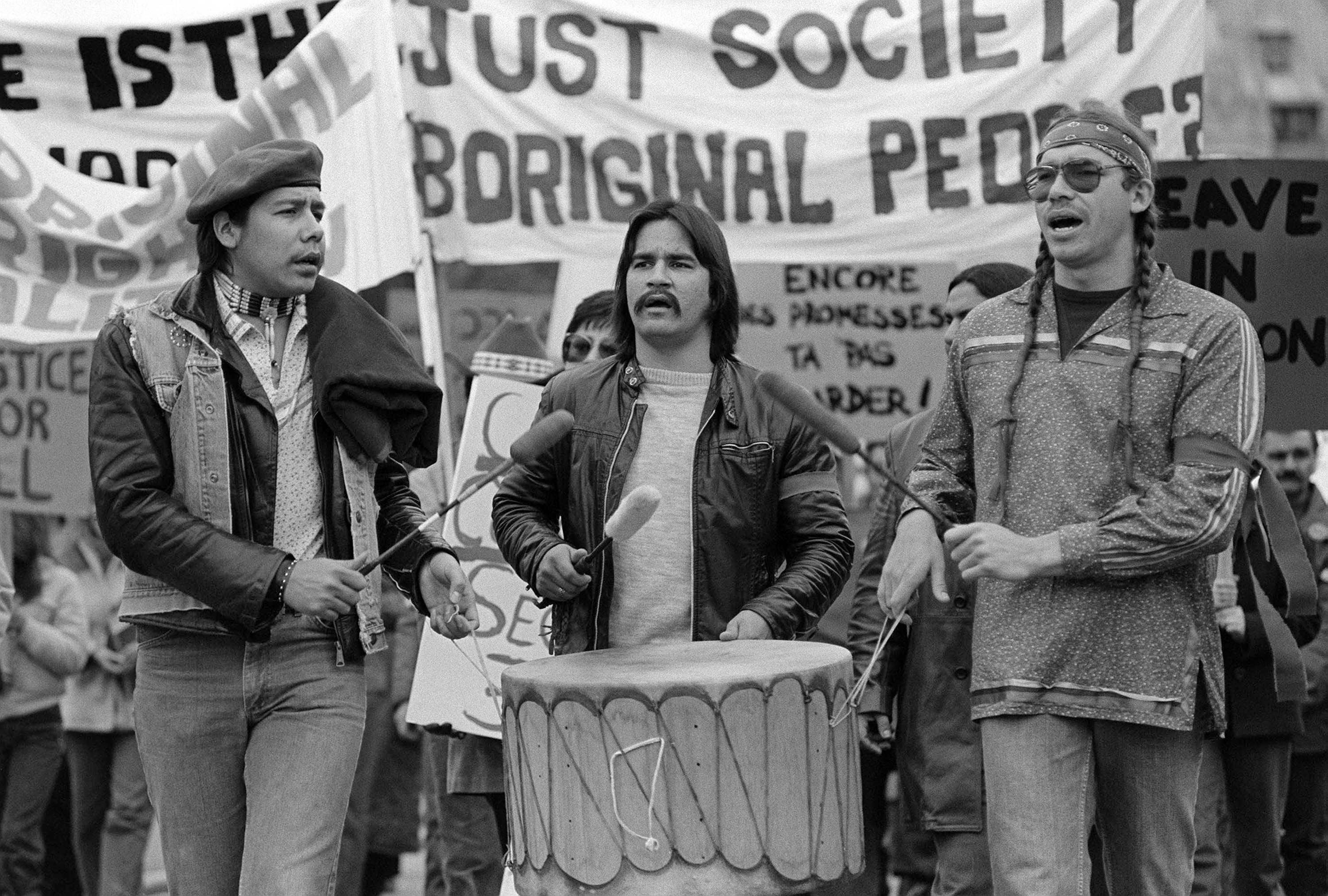
-
Article
Indian
The term Indian, when used to identify Indigenous peoples in South, Central and North America, is considered outdated and offensive. In Canada, the term has been used historically to refer to Indigenous peoples, but it also has modern legal significance. It is used to refer to legally defined identities set out in the Indian Act, such as Indian Status. For some Indigenous peoples, the term Indian confirms their ancestry and protects their historic relationship to the Crown and federal government. For others, the definitions set out in the Indian Act are not affirmations of their identity. (The term Indian in the context of this article does not refer to Indian people of South Asia. For more information on people of that community, please see South Asian Canadians.)
"https://d3d0lqu00lnqvz.cloudfront.net/media/media/174cee51-4aca-4a67-ac60-f72697d35862.jpg" // resources/views/front/categories/view.blade.php
https://d3d0lqu00lnqvz.cloudfront.net/media/media/174cee51-4aca-4a67-ac60-f72697d35862.jpg
-
List
Indigenous Women Activists in Canada
An activist is someone who works to bring about social or political change. Many Indigenous people in Canada have been at the forefront of movements that concern issues like the environment, Indigenous and treaty rights, equal access to education and health care, the rights of women and children, and more. Indigenous women have taken up causes that affect their families and communities. This article names some of the many Indigenous women activists in Canada who have effectively championed important causes. (See also Indigenous Women’s Issues in Canada.)
"https://d3d0lqu00lnqvz.cloudfront.net/media/media/a28fc4c4-7840-4edc-ad7e-7bee27a74e64.jpg" // resources/views/front/categories/view.blade.php
https://d3d0lqu00lnqvz.cloudfront.net/media/media/a28fc4c4-7840-4edc-ad7e-7bee27a74e64.jpg
-
Article
Indigenous Elders in Canada
Elders are respected individuals who play key roles in Indigenous communities. They are important knowledge keepers, and they also help to ensure cultural continuity. As living connections to the past, Elders serve as teachers, healers, advisors and counsellors. Elder knowledge is culturally specific, meaning Anishinaabeg teachings, for example, are not necessarily Haudenosaunee teachings. However, Elders share some commonalities; for instance, spirituality and tradition shape their lives as well as the guidance they provide to others.
"https://d3d0lqu00lnqvz.cloudfront.net/elder2-1.jpg" // resources/views/front/categories/view.blade.php
https://d3d0lqu00lnqvz.cloudfront.net/elder2-1.jpg
-
Article
Indigenous Feminisms in Canada
At their root, Indigenous feminisms examine how gender and conceptions of gender influence the lives of Indigenous peoples, historically and today. Indigenous feminist approaches challenge stereotypes about Indigenous peoples, gender and sexuality, for instance, as they appear in politics, society and the media. Indigenous feminisms offer frameworks for learning about and understanding these, and other issues, regardless of one’s gender or ethnicity.
"https://d3d0lqu00lnqvz.cloudfront.net/media/new_article_images/IndigenousFeminisms/MMIWG activists.jpg" // resources/views/front/categories/view.blade.php
https://d3d0lqu00lnqvz.cloudfront.net/media/new_article_images/IndigenousFeminisms/MMIWG activists.jpg
-
Article
Indigenous Language Revitalization in Canada
Before European settlement in Canada, Indigenous peoples spoke a wide variety of languages. As a means of assimilating Indigenous peoples, colonial policies like the Indian Act and residential schools forbade the speaking of Indigenous languages. These restrictions have led to the ongoing endangerment of Indigenous languages in Canada. Indigenous communities and various educational institutions have taken measures to prevent more language loss and to preserve Indigenous languages.
"https://d3d0lqu00lnqvz.cloudfront.net/media/media/b6607b22-8c55-4f10-86dd-a72dfcb1b740.jpg" // resources/views/front/categories/view.blade.php
https://d3d0lqu00lnqvz.cloudfront.net/media/media/b6607b22-8c55-4f10-86dd-a72dfcb1b740.jpg
-
Collection
Indigenous Material Culture in Canada
Material culture refers to physical forms of culture. This includes art, monuments, buildings, tools, weapons, money, clothing, religious items, and other artifacts. The design and function of these objects directly reflects the society that made them. A society’s history and geography also influence the creation and meaning of such items. The study of material culture helps us to understand human behaviour and the way that people interact with objects. This collection explores Indigenous material culture...
"https://d3d0lqu00lnqvz.cloudfront.net/12312958-dfa5-4132-af16-a075bd3c0165-1.jpg" // resources/views/front/categories/view.blade.php
https://d3d0lqu00lnqvz.cloudfront.net/12312958-dfa5-4132-af16-a075bd3c0165-1.jpg
-
List
Indigenous Names of Rivers and Lakes in Canada
The names of many rivers and lakes in Canada have Indigenous origins. These bodies of water are named for Indigenous people, places, and aspects of Indigenous culture. Some of these lakes and rivers still bear the original name given to them by Indigenous people. Others have been renamed using an Indigenous word as a means of recognizing Indigenous history and working toward reconciliation. This list article explores the Indigenous names of five rivers and five lakes in Canada (see Longest Rivers in Canada and Largest Lakes in Canada).
"https://d3d0lqu00lnqvz.cloudfront.net/media/media/19ec5b64-165b-4f1c-b539-c89700680c09.jpg" // resources/views/front/categories/view.blade.php
https://d3d0lqu00lnqvz.cloudfront.net/media/media/19ec5b64-165b-4f1c-b539-c89700680c09.jpg