
Browse "Science & Technology"
-
Article
Bristow Guy Ballard
Bristow Guy Ballard, research engineer (b at Fort Stewart, Ont 19 June 1902; d at Ottawa 22 Sept 1975). Ballard was educated at Queen's and worked for 5 years on Westinghouse high-speed electric locomotives before joining the National Research Council staff in 1930.
"https://thecanadianencyclopedia.ca/images/tce_placeholder.jpg?v=e9dca980c9bdb3aa11e832e7ea94f5d9" // resources/views/front/categories/view.blade.php
https://thecanadianencyclopedia.ca/images/tce_placeholder.jpg?v=e9dca980c9bdb3aa11e832e7ea94f5d9
-
Article
Brock Chisholm
George Brock Chisholm, CC, CBE, ED, psychiatrist, medical administrator, soldier (born 18 May 1896 in Oakville, ON; died 4 February 1971 in Victoria, BC). Brock Chisholm earned honours for courageous service in the First World War, including a Military Cross (MC) and Bar. He obtained his MD from the University of Toronto in 1924 and became an influential psychiatrist following training at Yale University. He introduced mental health as a component of the recruitment and management of the Canadian Army during the Second World War. He directed the army’s medical services, served in the federal government as deputy minister of health, and became the founding director-general of the World Health Organization (WHO). His vocal attacks on methods of indoctrinating children with societal myths made him a controversial public figure. He was an often provocative advocate of world peace and mental health.
"https://d3d0lqu00lnqvz.cloudfront.net/media/new_article_images/Brock Chisholm.jpg" // resources/views/front/categories/view.blade.php
https://d3d0lqu00lnqvz.cloudfront.net/media/new_article_images/Brock Chisholm.jpg
-
Article
Bruce Graham Trigger
Bruce Graham Trigger, anthropologist, archaeologist (born 18 June 1937 in Preston, ON; died 1 December 2006 in Montréal, QC).
"https://thecanadianencyclopedia.ca/images/tce_placeholder.jpg?v=e9dca980c9bdb3aa11e832e7ea94f5d9" // resources/views/front/categories/view.blade.php
https://thecanadianencyclopedia.ca/images/tce_placeholder.jpg?v=e9dca980c9bdb3aa11e832e7ea94f5d9
-
Article
Calvin Carl Gotlieb
Calvin Carl “Kelly” Gotlieb, CM, FRSC, computer scientist, university professor (born 27 March 1921 in Toronto, ON; died 16 October 2016 in Toronto). Gotlieb has been called the “Father of Computing in Canada.” (See also Computers and Canadian Society.)
"https://d3d0lqu00lnqvz.cloudfront.net/calvincarlgotlieb/calvincarlgotliebbyjewelrandolph.jpg" // resources/views/front/categories/view.blade.php
https://d3d0lqu00lnqvz.cloudfront.net/calvincarlgotlieb/calvincarlgotliebbyjewelrandolph.jpg
-
Collection
Canada During COVID-19
Countries, communities, and individuals around the world are grappling with the COVID-19 pandemic. How will historians remember this time in history? Canada During COVID-19: A Living Archive is meant to capture the experiences of everyday Canadians as they live through this challenging time.
"https://d3d0lqu00lnqvz.cloudfront.net/user_canada_during_covid_submissions_imported/101037588_640061359916207_6879182772136426658_n_17903881852466121.jpg" // resources/views/front/categories/view.blade.php
https://d3d0lqu00lnqvz.cloudfront.net/user_canada_during_covid_submissions_imported/101037588_640061359916207_6879182772136426658_n_17903881852466121.jpg
-
Collection
Canada in the 1930s
From the Great Depression to the outbreak of the Second World War, Canadians faced hardship and disruption. Government responses included work camps, economic and social legislation, and limits to immigration. By 1940, Canada had a national bank, broadcaster, film board and unemployment insurance scheme. But government help was limited and many people struggled in the “Dirty Thirties.” Canadians staged strikes and protests and joined populist political movements. Some embraced radical alternatives like fascism or communism,...
"https://d3d0lqu00lnqvz.cloudfront.net/media/media/4b5beb76-524c-45d8-81fb-a0228fb51abf.jpg" // resources/views/front/categories/view.blade.php
https://d3d0lqu00lnqvz.cloudfront.net/media/media/4b5beb76-524c-45d8-81fb-a0228fb51abf.jpg
-
Article
Canada’s First Medical X-ray
On Christmas Day 1895, a young man was shot in the leg during an altercation in Montreal. His surgeon was unable to locate the bullet by exploring its entry site. When the wound began to cause trouble, the surgeon wondered if a remarkable new discovery, X-ray imaging, might be able to locate the projectile. He turned to physicist John Cox for assistance, leading to the performance of Canada’s first medical X-ray examination on 7 February 1896. This event marked the introduction and subsequent dissemination of a new tool to diagnose and treat patients in Canada.
"https://d3d0lqu00lnqvz.cloudfront.net/xrayincanada/johncoxrobertharris.jpg" // resources/views/front/categories/view.blade.php
https://d3d0lqu00lnqvz.cloudfront.net/xrayincanada/johncoxrobertharris.jpg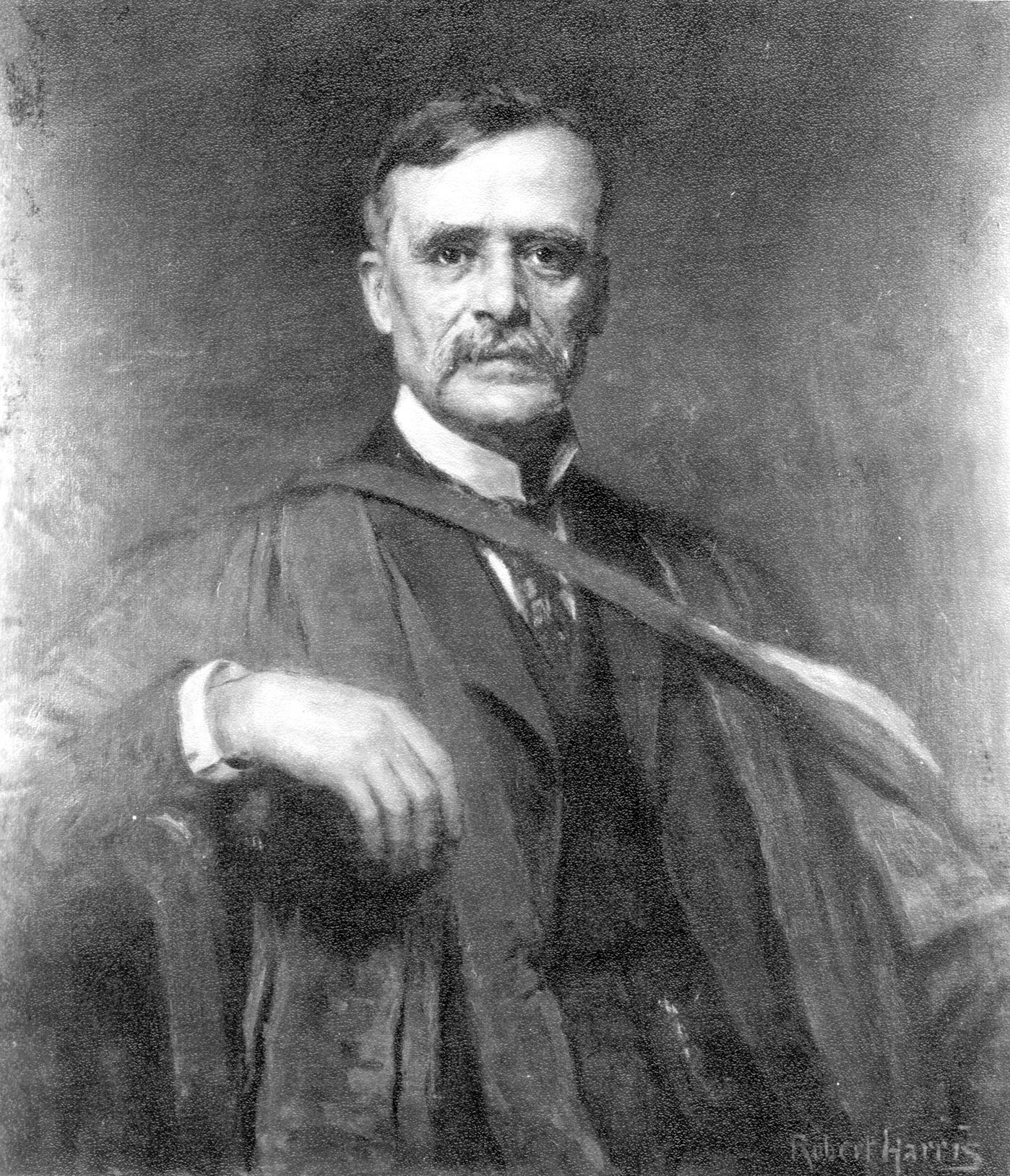
-
Macleans
Canada's Astronomers Doing Stellar Research
CANADIANS ARE masters of the universe. Just look at the numbers. Sure, the U.S. leads the world in spending on space research, laying out roughly US$7 per American each year, while Britain, France and Germany budget between US$4 and US$5 for every citizen.This article was originally published in Maclean's Magazine on September 5, 2005
"https://thecanadianencyclopedia.ca/images/tce_placeholder.jpg?v=e9dca980c9bdb3aa11e832e7ea94f5d9" // resources/views/front/categories/view.blade.php
https://thecanadianencyclopedia.ca/images/tce_placeholder.jpg?v=e9dca980c9bdb3aa11e832e7ea94f5d9
-
Article
Canadian Colleges of Veterinary Medicine
There are five veterinary colleges in Canada: the Ontario and Atlantic Veterinary Colleges; the Western College of Veterinary Medicine; and the faculties of veterinary medicine at the Université de Montréal and the University of Calgary.
"https://thecanadianencyclopedia.ca/images/tce_placeholder.jpg?v=e9dca980c9bdb3aa11e832e7ea94f5d9" // resources/views/front/categories/view.blade.php
https://thecanadianencyclopedia.ca/images/tce_placeholder.jpg?v=e9dca980c9bdb3aa11e832e7ea94f5d9
-
List
Canadian Computer Scientists
Canadians use computers in many aspects of their lives, including education, work and leisure. (See also Computers and Canadian Society.) The presence and significance of computers in everyday life has contributed to the growing field of computer science, which explores how computers work and how they can be used in new ways. The subfield of artificial intelligence (AI) has also inspired new advances and questions about the theory, design and application of technology and society. This list overviews the research and work of five Canadian computer scientists and describes how they have contributed to the field.
"https://d3d0lqu00lnqvz.cloudfront.net/computerscientists/ferutcomputertelegraph.jpg" // resources/views/front/categories/view.blade.php
https://d3d0lqu00lnqvz.cloudfront.net/computerscientists/ferutcomputertelegraph.jpg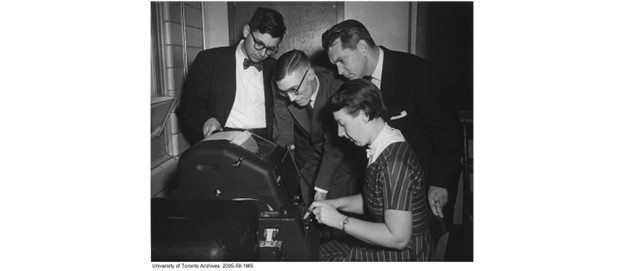
-
Article
Canadian Council of Professional Engineers
The Canadian Council of Professional Engineers (CCPE)/Conseil canadien des ingénieurs (CCI), established in 1936, is the national organization of the provincial and territorial associations that governs the practice of engineering in Canada.
"https://thecanadianencyclopedia.ca/images/tce_placeholder.jpg?v=e9dca980c9bdb3aa11e832e7ea94f5d9" // resources/views/front/categories/view.blade.php
https://thecanadianencyclopedia.ca/images/tce_placeholder.jpg?v=e9dca980c9bdb3aa11e832e7ea94f5d9
-
Article
Canadian Institutes of Health Research
Canadian Institutes of Health Research (CIHR) is the major federal agency responsible for funding health research in Canada.
"https://thecanadianencyclopedia.ca/images/tce_placeholder.jpg?v=e9dca980c9bdb3aa11e832e7ea94f5d9" // resources/views/front/categories/view.blade.php
https://thecanadianencyclopedia.ca/images/tce_placeholder.jpg?v=e9dca980c9bdb3aa11e832e7ea94f5d9
-
Article
Canadian Lipid Nanoparticle Research: The Key to COVID-19 mRNA Vaccines
COVID-19 vaccines were the first vaccines to be developed, tested, produced and delivered amid a global pandemic (see Covid-19 Pandemic in Canada). As the typical vaccine development, testing and regulatory approval process can take anywhere from 10 to 15 years, several distinctive strategies, coupled with previous research work in key areas, combined to expedite the approval of COVID-19 vaccines, especially messenger ribonucleic acid (mRNA)-based vaccines. Among the most significant of this previous work was the research undertaken by the team of Pieter Cullis, Michael Hope and Thomas Madden at the University of British Columbia that began in the early 1980s. Their work, which focused on studying and developing lipid nanoparticles (LNPs), as well as pioneering the technology to produce them, provided the key to making COVID-19 mRNA vaccines possible.
"https://d3d0lqu00lnqvz.cloudfront.net/COVID/covidvirus_eng.jpg" // resources/views/front/categories/view.blade.php
https://d3d0lqu00lnqvz.cloudfront.net/COVID/covidvirus_eng.jpg
-
Article
Canadian Liver Foundation
The Canadian Liver Foundation is the first organization in the world to devote itself exclusively to providing support for education and research into the causes and treatment of diseases of the liver.
"https://thecanadianencyclopedia.ca/images/tce_placeholder.jpg?v=e9dca980c9bdb3aa11e832e7ea94f5d9" // resources/views/front/categories/view.blade.php
https://thecanadianencyclopedia.ca/images/tce_placeholder.jpg?v=e9dca980c9bdb3aa11e832e7ea94f5d9
-
Article
Canadian Lung Association
Canadian Lung Association, Canada's first national voluntary health organization, was founded in 1900. Its roots were in the former Canadian Tuberculosis Association.
"https://thecanadianencyclopedia.ca/images/tce_placeholder.jpg?v=e9dca980c9bdb3aa11e832e7ea94f5d9" // resources/views/front/categories/view.blade.php
https://thecanadianencyclopedia.ca/images/tce_placeholder.jpg?v=e9dca980c9bdb3aa11e832e7ea94f5d9