
Browse "History/Historical Figures"
-
Article
Pierre Le Moyne d'Iberville et d'Ardillières
Pierre Le Moyne d'Iberville et d'Ardillières, soldier, adventurer (baptised 20 July 1661 at Ville Marie [Montréal], New France; died probably on 9 July 1706 in Havana, Cuba). He was the third and most famous of Charles Le Moyne's 12 sons.
"https://d3d0lqu00lnqvz.cloudfront.net/media/media/22f54a67-0b82-4032-a05c-ab1245eb0f3f.jpg" // resources/views/front/categories/view.blade.php
https://d3d0lqu00lnqvz.cloudfront.net/media/media/22f54a67-0b82-4032-a05c-ab1245eb0f3f.jpg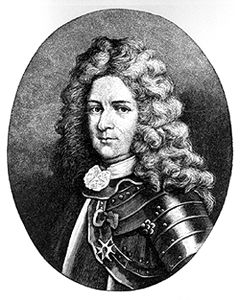
-
Article
Pierre Maillard
Pierre Maillard, priest of the Séminaire des missions étrangères, missionary (b in the diocese of Chartres, France c 1710; d at Halifax 12 Aug 1762). Missionary to the MICMAC, Maillard was a brilliant linguist who perfected a system of written symbols for the Micmac language.
"https://thecanadianencyclopedia.ca/images/tce_placeholder.jpg?v=e9dca980c9bdb3aa11e832e7ea94f5d9" // resources/views/front/categories/view.blade.php
https://thecanadianencyclopedia.ca/images/tce_placeholder.jpg?v=e9dca980c9bdb3aa11e832e7ea94f5d9
-
Article
Planters
The terms of settlement promised religious freedom, except to Roman Catholics, but the Church of England initially had advantages and gave leadership for schooling youths. Most of the settlers were Congregationalists.
"https://d3d0lqu00lnqvz.cloudfront.net/media/media/b025b87d-c65d-40cc-af2a-c487a30e8c2c.jpg" // resources/views/front/categories/view.blade.php
https://d3d0lqu00lnqvz.cloudfront.net/media/media/b025b87d-c65d-40cc-af2a-c487a30e8c2c.jpg
-
Article
Porkeater
Porkeater [French, mangeur de lard ], in the parlance of the fur trade, was a derogatory term for a Voyageur hired by the North West Company who made only the short run between Montréal and Grand Portage (and not into the North-West) and whose staple diet was pork, unlike the Winterer, or homme du nord, who made do with fish and pemmican. Later it came to refer to any voyageur who was a newcomer to...
"https://thecanadianencyclopedia.ca/images/tce_placeholder.jpg?v=e9dca980c9bdb3aa11e832e7ea94f5d9" // resources/views/front/categories/view.blade.php
https://thecanadianencyclopedia.ca/images/tce_placeholder.jpg?v=e9dca980c9bdb3aa11e832e7ea94f5d9
-
Article
Pitikwahanapiwiyin (Poundmaker)
Pitikwahanapiwiyin (Poundmaker), Cree chief (born circa 1842 in central SK; died 4 July 1886 in Blackfoot Crossing, AB). Remembered as a great leader, Pitikwahanapiwiyin strove to protect the interests of his people during the negotiation of Treaty 6. Considered a peacemaker, he did not take up arms in the North-West Resistance. However, a young and militant faction of his band did participate in the conflict, resulting in Pitikwahanapiwiyin’s arrest and imprisonment for treason. His legacy as a peacemaker lives on among many Cree peoples, including the Poundmaker Cree Nation in Saskatchewan.
"https://d3d0lqu00lnqvz.cloudfront.net/!feature-img-thumbnails/poundmaker-th.jpg" // resources/views/front/categories/view.blade.php
https://d3d0lqu00lnqvz.cloudfront.net/!feature-img-thumbnails/poundmaker-th.jpg
-
Article
Pre-Dorset
Based on archaeological evidence, the earliest permanent human habitation in the Eastern North American Arctic began roughly 5,000 years ago. These first humans of the North American Arctic are referred to as the “Palaeo-Inuit.” They likely crossed the Bering Strait from Chukotka (northeastern Siberia). Inuit oral histories call the earliest people of the Arctic “Tuniit”. The Palaeo-Inuit lived for thousands of years until roughly 700 years ago. They are culturally and genetically distinct from early Inuit. Early Inuit are sometimes called “Thule” and are direct ancestors of modern Inuit. However, research on the Palaeo-Inuit and Inuit is ongoing and may change.
"https://d3d0lqu00lnqvz.cloudfront.net/PreDorset/Figure3RaisedBeachRidgeIllustration.jpg" // resources/views/front/categories/view.blade.php
https://d3d0lqu00lnqvz.cloudfront.net/PreDorset/Figure3RaisedBeachRidgeIllustration.jpg
-
Article
Prince Rupert of the Rhine
Prince Rupert of the Rhine, Duke of Cumberland, military commander, privateer, administrator, artist, scientist, first governor of the Hudson’s Bay Company and founding member of the Royal African Company (born 17 December 1619 in Prague, Bohemia [now Czech Republic]; died 29 November 1682 in London, England [now United Kingdom]). A nephew of King Charles I of England, Scotland and Ireland, Rupert was a cavalry general and privateer during the English Civil Wars (1642–51). He was the first close relative of an English monarch to cross the Atlantic Ocean. Following the Restoration of the English monarchy in 1660, Rupert introduced Pierre-Esprit Radisson and Médard Chouart des Grosseilliers to his cousin King Charles II and persuaded the king to grant a royal charter to the Hudson’s Bay Company. Rupert’s Land and Prince Rupert, British Columbia, are named after Prince Rupert of the Rhine.
"https://d3d0lqu00lnqvz.cloudfront.net/PrinceRupert/Peter_Lely_-_Prince_Rupert_of_the_Rhine_-_Google_Art_Project.jpg" // resources/views/front/categories/view.blade.php
https://d3d0lqu00lnqvz.cloudfront.net/PrinceRupert/Peter_Lely_-_Prince_Rupert_of_the_Rhine_-_Google_Art_Project.jpg
-
Article
Sheila Na Geira
According to legend, Sheila Na Geira (also spelled NaGeira and Nagira) was an Irish aristocrat or princess who, 300 or 400 years ago, while travelling between France and Ireland, was captured by a Dutch warship and then rescued by British privateers. She fell in love and was married to one of the privateers, Lieutenant Gilbert Pike. They settled at western Conception Bay. By the early 20th century, the legend was being told as part of Newfoundland’s oral tradition, and has since been popularized by poems, novels, scholarly articles and several plays.
"https://d3d0lqu00lnqvz.cloudfront.net/dreamstime_resize_33120989-2.jpg" // resources/views/front/categories/view.blade.php
https://d3d0lqu00lnqvz.cloudfront.net/dreamstime_resize_33120989-2.jpg
-
Article
Canadian Prisoners of War
Prisoners of War (POWs) are members of the military captured in wartime by the enemy. Since the late 19th century, international rules have governed the treatment of POWs, although these are not always followed. Thousands of Canadians have endured time as POWs in conflicts ranging from the First World War to the Korean War.
"https://d3d0lqu00lnqvz.cloudfront.net/media/media/5be6fdf8-a437-4dbf-9898-d96aa6cd17eb.jpg" // resources/views/front/categories/view.blade.php
https://d3d0lqu00lnqvz.cloudfront.net/media/media/5be6fdf8-a437-4dbf-9898-d96aa6cd17eb.jpg
-
Article
Quebec Film History: 1970 to 1989
This entry presents an overview of Québec cinema, from the burgeoning of a distinctly Québec cinema in the 1970s, to the production explosion that followed Denys Arcand’s Le déclin de l’empire américain (1986). It highlights the most important films, whether in terms of box office success or international acclaim, and covers both narrative features and documentaries. It also draws attention to an aspect of filmmaking that still has difficulty finding its place: women's cinema.
"https://d3d0lqu00lnqvz.cloudfront.net/media/media/aa8cc00a-320d-4447-bb88-20c45fede6e0.jpg" // resources/views/front/categories/view.blade.php
https://d3d0lqu00lnqvz.cloudfront.net/media/media/aa8cc00a-320d-4447-bb88-20c45fede6e0.jpg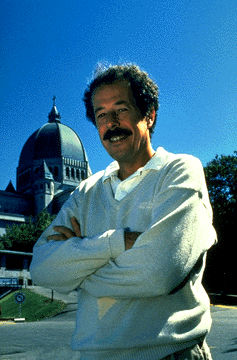
-
Article
Queen Anne
Anne, Queen of England, Scotland and Ireland from 1702 to 1707, Queen of Great Britain and Ireland from 1707 to 1714 (born 6 February 1665; died 1 August 1714 in London, United Kingdom). Anne’s reign was dominated by the War of the Spanish Succession (Queen Anne’s War), which resulted in France ceding the Hudson Bay watershed, Acadia (New Brunswick and Nova Scotia) and Newfoundland to Great Britain under the Treaty of Utrecht. In 1710, Anne received Indigenous leaders known as the Four Kings of Canada, setting precedents for the modern relationship between Indigenous peoples and the Crown. The death of Anne’s last surviving child, William, resulted in the passage of the 1701 of Act of Settlement, which determines the royal line of succession in the United Kingdom, Canada and the other 13 Commonwealth realms to the present day.
"https://d3d0lqu00lnqvz.cloudfront.net/QueenAnne/Queen-Anne-William-Duke-of-Gloucester.jpg" // resources/views/front/categories/view.blade.php
https://d3d0lqu00lnqvz.cloudfront.net/QueenAnne/Queen-Anne-William-Duke-of-Gloucester.jpg
-
Macleans
Queen Elizabeth the Queen Mother (Obituary)
This article was originally published in Maclean’s magazine on April 8, 2002. Partner content is not updated.
"https://thecanadianencyclopedia.ca/images/tce_placeholder.jpg?v=e9dca980c9bdb3aa11e832e7ea94f5d9" // resources/views/front/categories/view.blade.php
https://thecanadianencyclopedia.ca/images/tce_placeholder.jpg?v=e9dca980c9bdb3aa11e832e7ea94f5d9
-
Article
Queen Mother (HM Queen Elizabeth The Queen Mother)
Her Majesty (HM) Queen Elizabeth The Queen Mother, consort of King George VI and mother of Queen Elizabeth II, Queen of Canada, the United Kingdom and 13 other Commonwealth realms (born 4 August 1900 in London, United Kingdom; died 30 March 2002 in Windsor, United Kingdom). In 1939, Queen Elizabeth became the first queen consort to visit Canada with her reigning husband. Her determination to remain in London during the Blitz made her an inspirational figure during the Second World War. Her tours of Canada spanned a 50-year period from 1939 to 1989. She was appointed to the Order of Canada in 2000.
"https://d3d0lqu00lnqvz.cloudfront.net/media/media/cbf87236-d18d-4705-be60-c00a0ec1378a.jpg" // resources/views/front/categories/view.blade.php
https://d3d0lqu00lnqvz.cloudfront.net/media/media/cbf87236-d18d-4705-be60-c00a0ec1378a.jpg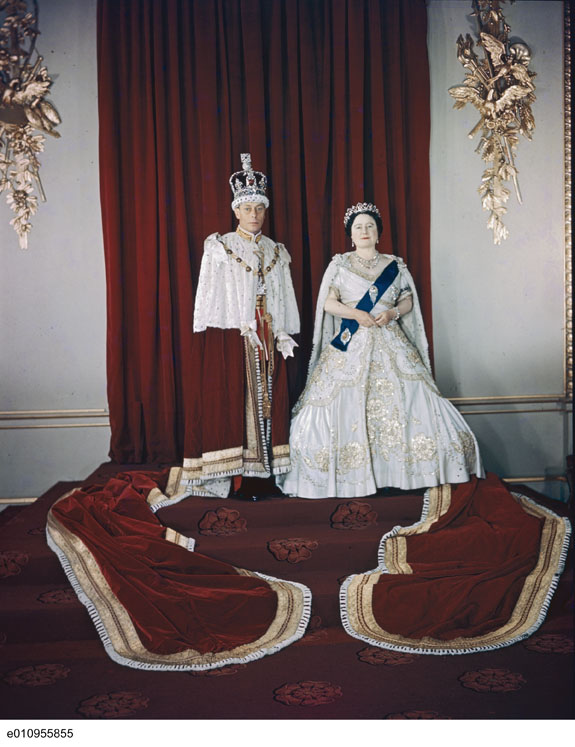
-
Article
Ray Lewis
Raymond Gray (“Rapid Ray”) Lewis, CM, sprinter (born 8 October 1910 in Hamilton, ON; died 14 November 2003 in Hamilton, ON). Ray Lewis was the first Canadian-born Black athlete to earn an Olympic medal. He won a bronze medal in the 4 x 400 m relay at the 1932 Olympic Summer Games in Los Angeles. He was also part of the Canadian team that won the silver medal in the 4 x 400 m event at the 1934 British Empire Games in London, England. Lewis was made a Member of the Order of Canada in 2000.
"https://thecanadianencyclopedia.ca/images/tce_placeholder.jpg?v=e9dca980c9bdb3aa11e832e7ea94f5d9" // resources/views/front/categories/view.blade.php
https://thecanadianencyclopedia.ca/images/tce_placeholder.jpg?v=e9dca980c9bdb3aa11e832e7ea94f5d9
-
Article
RCMP Troop 17
On 16 September 1974, thirty-two women from across Canada made history when they were sworn in as the first female officers in the Royal Canadian Mounted Police (RCMP). Known as Troop 17, they paved the way for equal opportunity in national law enforcement. In 2023, approximately 22 per cent of RCMP officers are women.
"https://d3d0lqu00lnqvz.cloudfront.net/media/media/1703ee6f-bab8-4f7e-9f0d-9ff5c82dfea3.jpg" // resources/views/front/categories/view.blade.php
https://d3d0lqu00lnqvz.cloudfront.net/media/media/1703ee6f-bab8-4f7e-9f0d-9ff5c82dfea3.jpg