
Browse "History/Historical Figures"
-
Article
Jacques de Meulles
Jacques de Meulles, chevalier, INTENDANT of New France 1682-86 (d at Orléans, France May 1703). De Meulles, despite explicit instructions, was embroiled in confrontation with Governor LA BARRE throughout his term.
"https://d3d0lqu00lnqvz.cloudfront.net/media/media/f1733c26-ebb9-45c6-be6b-aecf8c7a9503.jpg" // resources/views/front/categories/view.blade.php
https://d3d0lqu00lnqvz.cloudfront.net/media/media/f1733c26-ebb9-45c6-be6b-aecf8c7a9503.jpg
-
Article
Jacques Duchesneau de la Doussinière et d'Ambault
Jacques Duchesneau de La Doussinière et d'Ambault, chevalier, INTENDANT of New France 1675-82 (d at Ambrant, France 1696).
"https://thecanadianencyclopedia.ca/images/tce_placeholder.jpg?v=e9dca980c9bdb3aa11e832e7ea94f5d9" // resources/views/front/categories/view.blade.php
https://thecanadianencyclopedia.ca/images/tce_placeholder.jpg?v=e9dca980c9bdb3aa11e832e7ea94f5d9
-
Article
Jacques Raudot
Jacques Raudot, intendant of New France from 1705 to 1711 (born 1638 or 1647; died 1728 in Paris, France).
"https://thecanadianencyclopedia.ca/images/tce_placeholder.jpg?v=e9dca980c9bdb3aa11e832e7ea94f5d9" // resources/views/front/categories/view.blade.php
https://thecanadianencyclopedia.ca/images/tce_placeholder.jpg?v=e9dca980c9bdb3aa11e832e7ea94f5d9
-
Article
Jacques-René de Brisay, Marquis de Denonville
Jacques-René de Brisay Denonville, Marquis de, governor general of New France, 1685-89 (b at Denonville, France 10 Dec 1637; d there 22 Sept 1710). He arrived at Québec 1 August 1685 at a dangerous point in the colony's conflict with the IROQUOIS and English.
"https://thecanadianencyclopedia.ca/images/tce_placeholder.jpg?v=e9dca980c9bdb3aa11e832e7ea94f5d9" // resources/views/front/categories/view.blade.php
https://thecanadianencyclopedia.ca/images/tce_placeholder.jpg?v=e9dca980c9bdb3aa11e832e7ea94f5d9
-
Article
James Cook
James Cook, explorer (born 27 October 1728 near Marton, England; died on 14 February 1779 at Kealakekua Bay, Sandwich Islands, Hawaii). The greatest navigator of his era, Cook served as master of the Pembroke at the siege of Louisbourg (1758) during the Seven Years' War.
"https://d3d0lqu00lnqvz.cloudfront.net/media/media/c6b53395-8760-43d0-9b92-e00b9124648e.jpg" // resources/views/front/categories/view.blade.php
https://d3d0lqu00lnqvz.cloudfront.net/media/media/c6b53395-8760-43d0-9b92-e00b9124648e.jpg
-
Article
James Farquharson Macleod
James Farquharson Macleod, police officer, judge (b on Isle of Skye, Scot 25 Sept 1836; d at Calgary 5 Sept 1894).
"https://d3d0lqu00lnqvz.cloudfront.net/media/media/f9dc98d5-ab5b-4c22-a263-d93badedcc89.jpg" // resources/views/front/categories/view.blade.php
https://d3d0lqu00lnqvz.cloudfront.net/media/media/f9dc98d5-ab5b-4c22-a263-d93badedcc89.jpg
-
Article
James FitzGibbon
James FitzGibbon (sometimes spelled Fitzgibbon), soldier, public servant (born 16 November 1780 in Glin, County Limerick, Ireland; died 10 December 1863 in Windsor Castle, England). Lieutenant and hero of the War of 1812, James FitzGibbon is best known for his actions as a guerrilla fighter who harassed the American forces, and for being the soldier whom Laura Secord informed of the American surprise attack after the capture of Fort George in May 1813. (See also Battle of Beaver Dams.) Tough and wily, FitzGibbon was one of the few soldiers who fought both conventional battles and irregular warfare during the War of 1812.
"https://d3d0lqu00lnqvz.cloudfront.net/JamesFitzGibbon.jpg" // resources/views/front/categories/view.blade.php
https://d3d0lqu00lnqvz.cloudfront.net/JamesFitzGibbon.jpg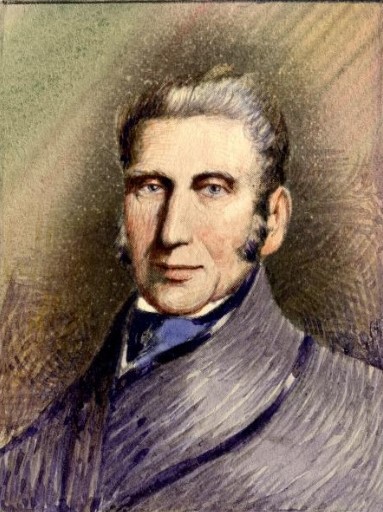
-
Article
James Hamilton Ross
James Hamilton Ross, rancher, politician, commissioner of the Yukon T, MP, senator (b at London, Canada W 12 May 1856; d at Victoria 14 Dec 1932).
"https://thecanadianencyclopedia.ca/images/tce_placeholder.jpg?v=e9dca980c9bdb3aa11e832e7ea94f5d9" // resources/views/front/categories/view.blade.php
https://thecanadianencyclopedia.ca/images/tce_placeholder.jpg?v=e9dca980c9bdb3aa11e832e7ea94f5d9
-
Article
James Kennedy Cornwall
James Kennedy Cornwall, DSO, adventurer, businessman, politician, soldier (born 29 October 1869 in Brantford, ON; died 20 November 1955 in Calgary, AB). Known as “Peace River Jim” and “Apostle of the North”, James K. Cornwall was the most effective ambassador of the Canadian Northwest in the early 20th century. Cornwall promoted development and advocated on behalf of Indigenous peoples in the north. He was a member of the Alberta legislature from 1905 to 1909 and served overseas during the First World War as lieutenant-colonel of the 218th Battalion.
"https://d3d0lqu00lnqvz.cloudfront.net/James-K-Cornwall/Peace-River-Jim-cropped.jpg" // resources/views/front/categories/view.blade.php
https://d3d0lqu00lnqvz.cloudfront.net/James-K-Cornwall/Peace-River-Jim-cropped.jpg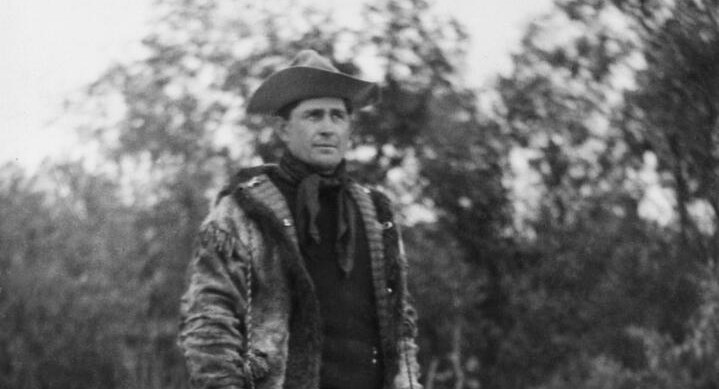
-
Article
James McGill
James McGill, fur trader, merchant, politician, philanthropist (born 6 October 1744 in Glasgow, Scotland; died 19 December 1813 in Montreal, Lower Canada). James McGill was one of Montreal’s most prominent citizens in the 18th and early 19th centuries. He grew a successful career as a fur trader into a business empire. McGill also held various positions in public office, including three terms in Lower Canada’s legislature. His will contained the endowment for McGill University. James McGill’s achievements cannot be separated from the fact that he enslaved Black and Indigenous people and profited from this practice.
"https://d3d0lqu00lnqvz.cloudfront.net/media/new_article_images/JamesMcGill/James_McGill_portrait.jpg" // resources/views/front/categories/view.blade.php
https://d3d0lqu00lnqvz.cloudfront.net/media/new_article_images/JamesMcGill/James_McGill_portrait.jpg
-
Article
James McKay
James McKay, Manitoba Métis politician, interpreter, guide, fur trader, Hudson’s Bay Company clerk and postmaster (born 5 February 1828 in Edmonton House, Alberta; died 2 December 1879 at St. James, Manitoba). A member of the Council of Assiniboia (1868–69), James McKay played a moderating role during the Red River Rebellion. He also served Manitoba as president of the Executive Council, Speaker of the Legislative Council and Minister of Agriculture, and was on the Council of the North-West Territories from 1873–75. Fluent in various Indigenous languages, McKay helped negotiate Treaties 1, 2 and 3 in the early 1870s. As a treaty commissioner for Treaties 5 and 6, he added provisions to help Indigenous peoples with medical supplies in the event of an epidemic, with famine relief and with their new life on reserves. McKay’s life and career exemplified attempts by Métis leaders, both in commerce and politics, to adapt to rapid changes after Confederation.
"https://d3d0lqu00lnqvz.cloudfront.net/media/media/4faeec48-9d29-469f-9f7d-5459415b67b6.jpg" // resources/views/front/categories/view.blade.php
https://d3d0lqu00lnqvz.cloudfront.net/media/media/4faeec48-9d29-469f-9f7d-5459415b67b6.jpg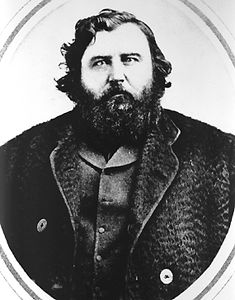
-
Editorial
Japanese Canadian Internment: Prisoners in their own Country
Beginning in early 1942, the Canadian government detained and dispossessed more than 90 per cent of Japanese Canadians, some 21,000 people, living in British Columbia. They were detained under the War Measures Act and were interned for the rest of the Second World War. Their homes and businesses were sold by the government to pay for their detention. In 1988, Prime Minister Brian Mulroney apologized on behalf of the Canadian government for the wrongs it committed against Japanese Canadians. The government also made symbolic redress payments and repealed the War Measures Act.
"https://d3d0lqu00lnqvz.cloudfront.net/media/media/c61c85b5-d92f-44a0-8602-7e2c38458873.jpg" // resources/views/front/categories/view.blade.php
https://d3d0lqu00lnqvz.cloudfront.net/media/media/c61c85b5-d92f-44a0-8602-7e2c38458873.jpg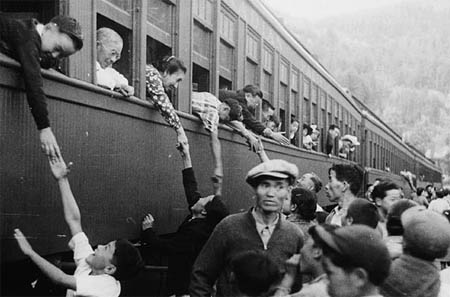
-
Article
Jean-Baptiste Colbert
Jean-Baptiste Colbert, French statesman, comptroller general of finances during the reign of Louis XIV (born 29 August 1619 in Reims, France; died 6 September 1683 in Paris, France). He was the king’s right-hand man and his work led to an unprecedented boost for commerce, industry, financial organization, justice, and royal navy forces. He greatly contributed to the rise of France on the international landscape and had a major influence on the development and settlement of New France. He was also involved in writing the Code Noir which codified slavery, notably in the West Indies and Louisiana. (See also Black Enslavement in Canada.)
"https://d3d0lqu00lnqvz.cloudfront.net/media/media/e010947298-v8.jpg" // resources/views/front/categories/view.blade.php
https://d3d0lqu00lnqvz.cloudfront.net/media/media/e010947298-v8.jpg
-
Article
Jean-Baptiste de La Croix de Chevrières de Saint-Vallier
Jean-Baptiste de La Croix de Chevrières de Saint-Vallier, second bishop of Québec, founder of the Hôpital Général at Québec (b at Grenoble, France 14 Nov 1653; d at Québec City 26 Dec 1727). Saint-Vallier was bishop of Québec 1688-1727.
"https://thecanadianencyclopedia.ca/images/tce_placeholder.jpg?v=e9dca980c9bdb3aa11e832e7ea94f5d9" // resources/views/front/categories/view.blade.php
https://thecanadianencyclopedia.ca/images/tce_placeholder.jpg?v=e9dca980c9bdb3aa11e832e7ea94f5d9
-
Article
Jean-Baptiste Gaultier de La Vérendrye
Jean-Baptiste Gaultier de La Vérendrye, fur trader, explorer, son of Pierre Gaultier de Varennes et de La Vérendrye (born 3 September 1713 on Île Dupas, Quebec; died 6 June 1736 at Lake of the Woods.) In 1731, Jean-Baptiste was a member of the first group to head west under his father's command. In autumn of 1731 he completed the building of Fort Saint-Pierre at Rainy Lake. His role in the construction of Fort Maurepas in 1734 establishes him one of the founders of present-day Manitoba (see also Francophones of Manitoba .)
"https://d3d0lqu00lnqvz.cloudfront.net/media/La Vérendrye/La_Vérendrye.jpg" // resources/views/front/categories/view.blade.php
https://d3d0lqu00lnqvz.cloudfront.net/media/La Vérendrye/La_Vérendrye.jpg