
Browse "Communities & Sociology"
-
Article
Peter Vasilevich Verigin
Peter Vasilevich Verigin, Doukhobor leader (born 1859 in Slavianka, Russia; died October 1924 near Grand Forks, British Columbia). Exiled in Russia, Verigin immigrated to Canada in 1902. There, he became a powerful and controversial Doukhobor leader in Western Canada. Verigin died when the train in which he was travelling exploded, leading some to believe he was assassinated.
"https://d3d0lqu00lnqvz.cloudfront.net/PeterVeregin.jpg" // resources/views/front/categories/view.blade.php
https://d3d0lqu00lnqvz.cloudfront.net/PeterVeregin.jpg
-
Article
Tionontati (Petun)
Tionontati (also known as Petun) are an Iroquoian-speaking Indigenous people, closely related to the Huron-Wendat. The French called them Petun because they were known for cultivating tobacco or petún. The people call themselves Tionontati. After war with the Haudenosaunee in the mid-1600s, Tionontati and some other survivors, including the Attignawantan (a Huron-Wendat people) and the Wenrohronon (or Wenro), joined to become the Wendat, now known as the Wyandotte (or Wyandot) Nation. Today, the Wyandotte Nation is a federally recognized tribe of Oklahoma in the United States. There are also Wyandotte communities in Michigan (Wyandot of Anderdon Nation) and Kansas (Wyandot Nation of Kansas).
"https://d3d0lqu00lnqvz.cloudfront.net/petun1.jpg" // resources/views/front/categories/view.blade.php
https://d3d0lqu00lnqvz.cloudfront.net/petun1.jpg
-
Article
Phil Fontaine
Larry Phillip (Phil) Fontaine, OC, OM, National Chief of AFN, activist, advisor on Indigenous relations (born 20 September 1944 in Sagkeeng First Nation on the Fort Alexander Reserve, MB). Phil Fontaine served as National Chief of the Assembly of First Nations (AFN) for an unprecedented three terms. Under his leadership the AFN negotiated both the Kelowna Accord and the Indian Residential Schools Settlement Agreement. Fontaine has received many honours and awards, including the National Aboriginal Achievement Award, the Order of Canada, and numerous honorary doctorates. In 2017, he launched Recognition2Action, a campaign to legally recognize Indigenous peoples as Founding Nations of Canada.
"https://d3d0lqu00lnqvz.cloudfront.net/media/media/60649c93-5cc7-46e5-8577-1d5cbb6f68ce.jpg" // resources/views/front/categories/view.blade.php
https://d3d0lqu00lnqvz.cloudfront.net/media/media/60649c93-5cc7-46e5-8577-1d5cbb6f68ce.jpg
-
Article
Piapot
Piapot (also spelled Payipwat, meaning “One Who Knows the Secrets of the Sioux,” originally named Kisikawasan, meaning “Flash in the Sky”), Cree chief (born in 1816 on the southern prairies; died in 1908 on the Piapot Reserve, SK). During Piapot’s 92 years, he witnessed great changes on the Canadian prairies, including the disappearance of the bison and the settlement of non-Indigenous peoples on Indigenous lands. As chief, Piapot resisted assimilation and strove to uphold Cree customs and traditions.
"https://d3d0lqu00lnqvz.cloudfront.net/media/media/a066547-v8.jpg" // resources/views/front/categories/view.blade.php
https://d3d0lqu00lnqvz.cloudfront.net/media/media/a066547-v8.jpg
-
Article
Pierre Biard
Pierre Biard, Jesuit missionary (b at Grenoble, France 1567 or 1568; d at Avignon, France 17 Nov 1622). After long preparation for missionary work, Biard left for ACADIA in early 1611.
"https://thecanadianencyclopedia.ca/images/tce_placeholder.jpg?v=e9dca980c9bdb3aa11e832e7ea94f5d9" // resources/views/front/categories/view.blade.php
https://thecanadianencyclopedia.ca/images/tce_placeholder.jpg?v=e9dca980c9bdb3aa11e832e7ea94f5d9
-
Article
Pierre Cossette
Pierre Maurice Joseph Cossette, talent agent, producer, record label executive (born 15 December 1923 in Valleyfield, QC; died 11 September 2009 in Ormstown, QC). Pierre Cossette was an influential talent agent, manager, music mogul and producer for television and Broadway. He is best known for bringing the Grammy Awards to TV. He served as executive producer of the telecast from 1971 until his retirement in 2005. He also launched the Latin Grammy Awards broadcast and produced the Broadway hit The Will Rogers Follies. It won six Tony Awards, including Best Musical. Cossette has a star on both Canada’s Walk of Fame and the Hollywood Walk of Fame.
"https://d3d0lqu00lnqvz.cloudfront.net/Pierre_Cossette_star_on_Walk_of_Fame.jpg" // resources/views/front/categories/view.blade.php
https://d3d0lqu00lnqvz.cloudfront.net/Pierre_Cossette_star_on_Walk_of_Fame.jpg
-
Article
Pierre Maillard
Pierre Maillard, priest of the Séminaire des missions étrangères, missionary (b in the diocese of Chartres, France c 1710; d at Halifax 12 Aug 1762). Missionary to the MICMAC, Maillard was a brilliant linguist who perfected a system of written symbols for the Micmac language.
"https://thecanadianencyclopedia.ca/images/tce_placeholder.jpg?v=e9dca980c9bdb3aa11e832e7ea94f5d9" // resources/views/front/categories/view.blade.php
https://thecanadianencyclopedia.ca/images/tce_placeholder.jpg?v=e9dca980c9bdb3aa11e832e7ea94f5d9
-
Article
Pierre Perrault
Pierre Perrault, OQ, film director, poet, writer (born 29 June 1927 in Montréal, QC; died 23 June 1999 in Montréal). Pierre Perrault was one of Quebec’s most significant and celebrated artists. His collective work in radio, film, television and print explores the genesis and nature of French Canadian culture and identity. A pioneer of direct cinema, his elegiac 1963 documentary Pour la suite du monde, co-directed with Michel Brault, is a landmark in Canadian cinema. His writing received three Governor General’s Literary Awards: for poetry, theatre and non-fiction. An Officer of the Ordre national du Québec, Perrault received the Prix Ludger-Duvernay, Prix Albert-Tessier, Prix Victor-Barbeau, the Médaille des Arts et des Lettres from the Government of France, and the Médaille d’argent du Mouvement national des Québécois et Québécoises.
"https://d3d0lqu00lnqvz.cloudfront.net/media/media/54f7c577-9c15-47b1-878a-402d98c926b3.jpg" // resources/views/front/categories/view.blade.php
https://d3d0lqu00lnqvz.cloudfront.net/media/media/54f7c577-9c15-47b1-878a-402d98c926b3.jpg
-
Article
Pit House
A pit house is a type of dwelling historically used by various Indigenous peoples living in the Plateau region of Canada. Partially built into the ground, pit houses provided warmth and shelter during the winter season. While pit houses no longer serve as common dwellings, they retain cultural significance for many Indigenous peoples. Archeological remains and replicas of pit houses can be found in various parts of Canada. (See also Architectural History of Indigenous Peoples in Canada.)
"https://d3d0lqu00lnqvz.cloudfront.net/media/media/f78eb160-4435-47f0-b8d4-d0694aa6ac55.jpg" // resources/views/front/categories/view.blade.php
https://d3d0lqu00lnqvz.cloudfront.net/media/media/f78eb160-4435-47f0-b8d4-d0694aa6ac55.jpg
-
Article
Plamondon Libel Case
The Plamondon Libel Case was a landmark legal case lasting from 1910 until 1914. The case was likely the first attempt to fight antisemitism in court in Canada. Two Jewish residents of Quebec City, Louis Lazarovitch and Benjamin Ortenberg, initiated the libel suit against Jacques-Édouard Plamondon. The latter had given an antisemitic speech, which caused a wave of antisemitic violence directed at Quebec City’s small Jewish community. The events occurred during a period of strong, often nationalistic, antisemitism in Quebec.
"https://d3d0lqu00lnqvz.cloudfront.net/Samuel-William-Jacobs-cropped.jpg" // resources/views/front/categories/view.blade.php
https://d3d0lqu00lnqvz.cloudfront.net/Samuel-William-Jacobs-cropped.jpg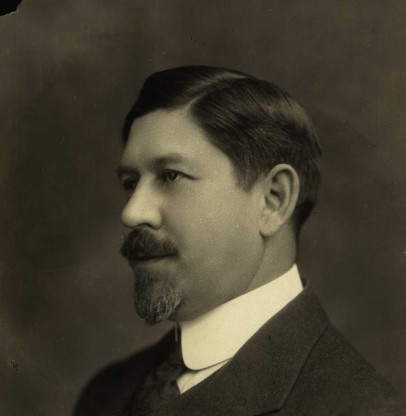
-
Article
Plank House
Historically, plank houses were structures built by various Indigenous peoples on the Northwest Coast of Canada, such as the Coast Salish, Kwakwaka’wakw, Nuu-chah-nulth, Nuxalk, Haida, Tsimshian, Gitxsan and Nisga'a. Plank houses varied in size and design, depending on the community. Plank houses still exist in some communities and are used mainly for community and ceremonial purposes. (See also Architectural History of Indigenous Peoples in Canada.)
"https://d3d0lqu00lnqvz.cloudfront.net/PlankHouse/SalishPlankHouse1907.jpg" // resources/views/front/categories/view.blade.php
https://d3d0lqu00lnqvz.cloudfront.net/PlankHouse/SalishPlankHouse1907.jpg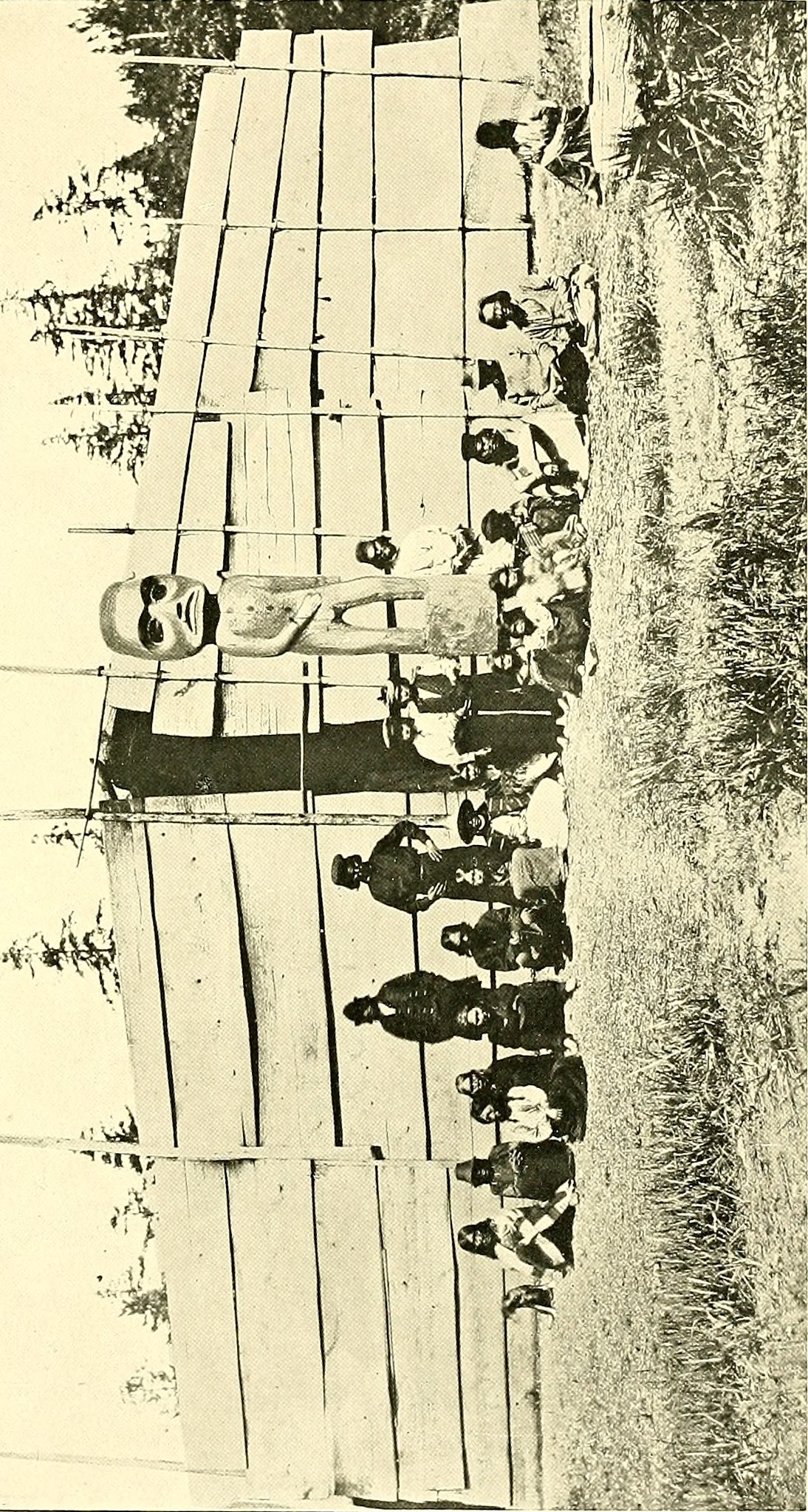
-
Article
Polish Canadians
Polish immigrants began to arrive in Canada shortly after the First Partition of Poland in the late 1700s. According to the 2021 census, in Canada, 982,820 people claimed full or partial Polish ancestry, and 176,010 people speak Polish as a mother tongue language.
"https://d3d0lqu00lnqvz.cloudfront.net/media/media/cce4c6dc-8b1d-48bb-b285-3ebf65f0bad0.jpg" // resources/views/front/categories/view.blade.php
https://d3d0lqu00lnqvz.cloudfront.net/media/media/cce4c6dc-8b1d-48bb-b285-3ebf65f0bad0.jpg
-
Article
Obwandiyag (Pontiac)
Obwandiyag (Pontiac), Odawa chief (born c. 1720 along the Detroit River; died 20 April 1769 in Cahokia, Illinois Country). Obwandiyag was the leader of a loose coalition of Indigenous nations that opposed British rule in what became known as Pontiac’s War (1763–66). The uprising is regarded by many as a historical antecedent to more contemporary Indigenous rights movements.
"https://d3d0lqu00lnqvz.cloudfront.net/media/media/f3d5c6d6-8340-49cb-84e9-433b460ee3a5.jpg" // resources/views/front/categories/view.blade.php
https://d3d0lqu00lnqvz.cloudfront.net/media/media/f3d5c6d6-8340-49cb-84e9-433b460ee3a5.jpg
-
Article
Portuguese Canadians
Portuguese explorers were among the first Europeans to lay eyes on what is now Canadian soil. Some early Portuguese settlers also lived on the Atlantic coast and in New France. In the 20th century, Portuguese immigration intensified in the 1950s and into the 1980s. In the 2021 Canadian census, 448,305 people reported being of Portuguese origin. In 2021, 266,555 people reported having Portuguese as their mother tongue language.
"https://d3d0lqu00lnqvz.cloudfront.net/media/new_article_images/PortugueseCanadians/Combined Portuguese_Canadian_Flag.jpg" // resources/views/front/categories/view.blade.php
https://d3d0lqu00lnqvz.cloudfront.net/media/new_article_images/PortugueseCanadians/Combined Portuguese_Canadian_Flag.jpg
-
Article
Pitikwahanapiwiyin (Poundmaker)
Pitikwahanapiwiyin (Poundmaker), Cree chief (born circa 1842 in central SK; died 4 July 1886 in Blackfoot Crossing, AB). Remembered as a great leader, Pitikwahanapiwiyin strove to protect the interests of his people during the negotiation of Treaty 6. Considered a peacemaker, he did not take up arms in the North-West Resistance. However, a young and militant faction of his band did participate in the conflict, resulting in Pitikwahanapiwiyin’s arrest and imprisonment for treason. His legacy as a peacemaker lives on among many Cree peoples, including the Poundmaker Cree Nation in Saskatchewan.
"https://d3d0lqu00lnqvz.cloudfront.net/!feature-img-thumbnails/poundmaker-th.jpg" // resources/views/front/categories/view.blade.php
https://d3d0lqu00lnqvz.cloudfront.net/!feature-img-thumbnails/poundmaker-th.jpg