
Browse "Communities & Sociology"
-
Article
Onye Nnorom
Onyenyechukwu (Onye) Nnorom, family physician, specialist in public health and preventive medicine (born 27 February 1981 in Montreal, Quebec). Dr. Nnorom is an assistant professor at the University of Toronto and the first Black associate chief medical officer of health for the province of Ontario. In addition to safeguarding public health her portfolio includes a focus on Black health. Throughout her career, Nnorom’s work has addressed the health inequities that racialized and immigrant communities face in Canada.
"https://d3d0lqu00lnqvz.cloudfront.net/media/new_article_images/OnyeNnorom/Onye_Nnorom2.JPG" // resources/views/front/categories/view.blade.php
https://d3d0lqu00lnqvz.cloudfront.net/media/new_article_images/OnyeNnorom/Onye_Nnorom2.JPG
-
Article
Orange Order in Canada
The Orange Order was a political and religious fraternal society in Canada. From the early 19th century, members proudly defended Protestantism and the British connection while providing mutual aid. The Order had a strong influence in politics, particularly through patronage at the municipal level, and developed a reputation for sectarianism and rioting.
"https://d3d0lqu00lnqvz.cloudfront.net/media/media/d5c87930-81f5-4775-8e06-bdef546856e2.jpg" // resources/views/front/categories/view.blade.php
https://d3d0lqu00lnqvz.cloudfront.net/media/media/d5c87930-81f5-4775-8e06-bdef546856e2.jpg
-
Article
Order-in-Council P.C. 1911-1324 — the Proposed Ban on Black Immigration to Canada
Order-in-Council P.C. 1324 was approved on 12 August 1911 by the Cabinet of Prime Minister Sir Wilfrid Laurier. The purpose of the order was to ban Black persons from entering Canada for a period of one year because, it read, “the Negro race…is deemed unsuitable to the climate and requirements of Canada.” The order-in-council was the culmination of what researcher R. Bruce Shepard has called Canada’s “campaign of diplomatic racism.” Though the order never became law, the actions of government officials made it clear that Black immigrants were not wanted in Canada (see Immigration).
"https://d3d0lqu00lnqvz.cloudfront.net/media/media/9d43e9db-d903-4447-a4a6-ad497d99685f.jpg" // resources/views/front/categories/view.blade.php
https://d3d0lqu00lnqvz.cloudfront.net/media/media/9d43e9db-d903-4447-a4a6-ad497d99685f.jpg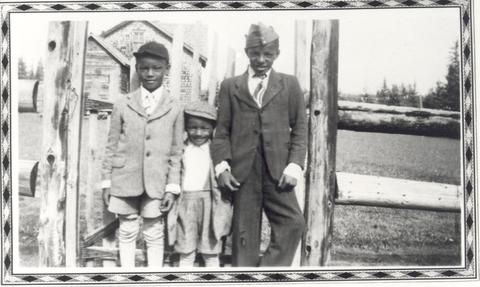
-
Article
Ordre de Bon Temps
Ordre de Bon Temps ("Order of Good Cheer"), was founded at Port-Royal in 1606 by Samuel de Champlain .
"https://d3d0lqu00lnqvz.cloudfront.net/media/media/eae4b142-cd6b-4c86-a303-32da3140b207.jpg" // resources/views/front/categories/view.blade.php
https://d3d0lqu00lnqvz.cloudfront.net/media/media/eae4b142-cd6b-4c86-a303-32da3140b207.jpg
-
Article
Ordre de Jacques-Cartier
The Ordre de Jacques-Cartier (OJC), commonly known as “La Patente,” was a secret society founded in 1926 in Vanier (now Ottawa), Ontario, to further the religious, social and economic interests of French Canadians. At the forefront of the conflicts over language and nationalism until the 1960s, it discreetly wielded its influence by infiltrating various associations, and it mobilized its members within a strict authoritarian structure. The rise of Québécois nationalism and internal tensions led to its dissolution in 1965.
"https://d3d0lqu00lnqvz.cloudfront.net/media/media/4b2db646-824c-461d-acf7-30a5d5095b35.jpg" // resources/views/front/categories/view.blade.php
https://d3d0lqu00lnqvz.cloudfront.net/media/media/4b2db646-824c-461d-acf7-30a5d5095b35.jpg
-
Article
Orkneymen
The first Orkneymen were brought out in the first decade of the 18th century, but the practice did not become regular until the 1730s. At the peak of their involvement with the HBC in 1800, Orkneymen comprised 80% of a labour force of almost 500.
"https://d3d0lqu00lnqvz.cloudfront.net/media/media/95512382-eee8-4a7d-a54c-492b588099a8.jpg" // resources/views/front/categories/view.blade.php
https://d3d0lqu00lnqvz.cloudfront.net/media/media/95512382-eee8-4a7d-a54c-492b588099a8.jpg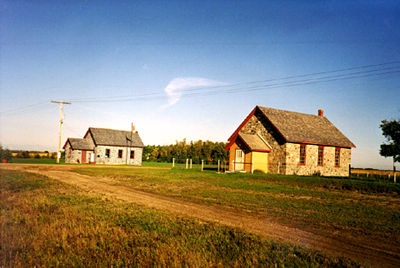
-
Article
Oronhyatekha
Oronhyatekha (pronounced O-RON-ya-day-ga, meaning "Burning Sky" or “Burning Cloud”), also known as Peter Martin, a Kanyen'kehà:ka (Mohawk) medical doctor and businessman (born 10 August 1841 on the Six Nations of the Grand River reserve near Brantford, Canada West [now Ontario]; died 3 March 1907 in Savannah, Georgia, US). In 1867, Oronhyatekha became the second Indigenous person in Canada to earn a medical degree. Passionate about Indigenous issues, he was elected to the Grand General Indian Council of Ontario and Quebec in 1872, where he fought against the restrictive measures of the Indian Act. Oronhyatekha was also a businessman and, in 1881, headed the Independent Order of Foresters.
"https://d3d0lqu00lnqvz.cloudfront.net/oronhyatekha_tweetonly2.jpg" // resources/views/front/categories/view.blade.php
https://d3d0lqu00lnqvz.cloudfront.net/oronhyatekha_tweetonly2.jpg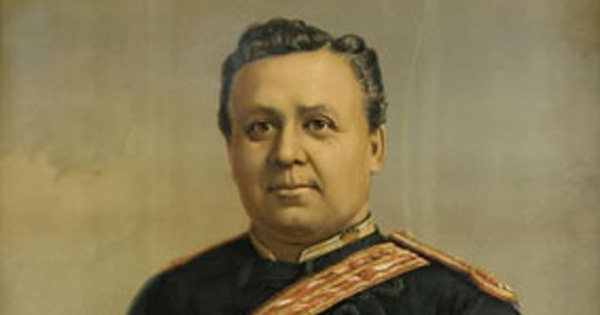
-
Article
Orval Prophet
Orval (William) Prophet. Singer, guitarist, songwriter, b Edwards, near Ottawa, 31 Aug 1922, d there 4 Jan 1984.
"https://thecanadianencyclopedia.ca/images/tce_placeholder.jpg?v=e9dca980c9bdb3aa11e832e7ea94f5d9" // resources/views/front/categories/view.blade.php
https://thecanadianencyclopedia.ca/images/tce_placeholder.jpg?v=e9dca980c9bdb3aa11e832e7ea94f5d9
-
Article
Otto Donald Rogers
Otto Donald Rogers, painter, sculptor (born 19 November 1935 in Kerrobert, SK; died 28 April 2019 in Picton, ON).
"https://d3d0lqu00lnqvz.cloudfront.net/media/media/f6db4a6d-7333-4584-9277-c373f3b68b95.jpg" // resources/views/front/categories/view.blade.php
https://d3d0lqu00lnqvz.cloudfront.net/media/media/f6db4a6d-7333-4584-9277-c373f3b68b95.jpg
-
Article
Ovide Mercredi
Ovide William Mercredi, O.C., O.M., lawyer, Indigenous leader (born 30 January 1946 in Grand Rapids, MB). Ovide Mercredi is a lawyer and Cree leader. He worked for the recognition of Indigenous Rights.
"https://d3d0lqu00lnqvz.cloudfront.net/OvideMercredi/Ovide_Mercredi_web.jpg" // resources/views/front/categories/view.blade.php
https://d3d0lqu00lnqvz.cloudfront.net/OvideMercredi/Ovide_Mercredi_web.jpg
-
Article
Culture of Early Indigenous Peoples in Canada
The arrival of early Indigenous peoples in Canada has varying explanations both outside of and within the field of archaeology (see History of Early Indigenous Peoples in Canada). Many Indigenous Oral Traditions state that Indigenous peoples have been on the land that is now known as North America since time immemorial. There is a debate within the field of archaeology on the first arrival of early Indigenous peoples, with dates ranging from as recently as 12,000 years ago to as long ago as 130,000 years ago.
"https://d3d0lqu00lnqvz.cloudfront.net/media/media/f28e80bc-14da-4c69-b71c-6e16f91ed72d.jpg" // resources/views/front/categories/view.blade.php
https://d3d0lqu00lnqvz.cloudfront.net/media/media/f28e80bc-14da-4c69-b71c-6e16f91ed72d.jpg
-
Article
Palbinder Kaur Shergill
Palbinder Kaur Shergill, QC, judge of the Supreme Court of British Columbia in New Westminster (born in Rurka Kalan, Punjab, India). Shergill spent 26 years practising law before she was appointed to the Supreme Court of British Columbia. She was the first turbaned Sikh woman to be appointed as a judge in Canada.
"https://d3d0lqu00lnqvz.cloudfront.net/media/new_article_images/PalbinderKaurShergill/Palbinder_Kaur_Shergill_Tweetonly.jpg" // resources/views/front/categories/view.blade.php
https://d3d0lqu00lnqvz.cloudfront.net/media/new_article_images/PalbinderKaurShergill/Palbinder_Kaur_Shergill_Tweetonly.jpg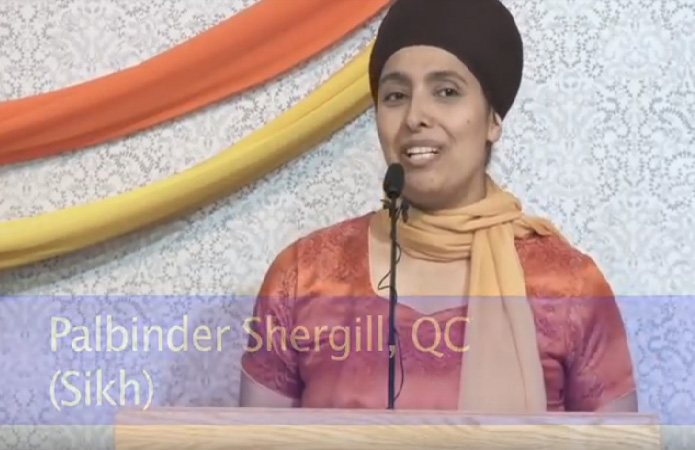
-
Article
Panet Family
Established in Quebec City by Jean-Claude Panet (1719–78) in 1740, and in Montreal by his brother, Pierre-Méru Panet (1731–1804) in 1746, for generations the Panet family has made a remarkable contribution to Canadian legal, political, religious and above all, military life.
"https://thecanadianencyclopedia.ca/images/tce_placeholder.jpg?v=e9dca980c9bdb3aa11e832e7ea94f5d9" // resources/views/front/categories/view.blade.php
https://thecanadianencyclopedia.ca/images/tce_placeholder.jpg?v=e9dca980c9bdb3aa11e832e7ea94f5d9
-
Article
Pat Patterson
Pat Patterson (born Pierre Clermont), wrestler, promoter, executive (born 19 January 1941 in Montreal, QC; died 2 December 2020 in Miami Beach, Florida). Pat Patterson was one of the biggest stars in professional wrestling in the late 1970s and early 1980s. He was also the first openly gay professional wrestler. He came out publicly in 2014 when he was an executive with the WWE, but he never made a secret of his sexuality behind the scenes. He was released from WWE following sexual harassment allegations in 1992 but was rehired after the charges were dropped. He was inducted into the World Wrestling Entertainment (WWE) Hall of Fame in 1996.
"https://d3d0lqu00lnqvz.cloudfront.net/media/new_article_images/PatPatterson/Pat_Patterson_April_2014_crop.jpg" // resources/views/front/categories/view.blade.php
https://d3d0lqu00lnqvz.cloudfront.net/media/new_article_images/PatPatterson/Pat_Patterson_April_2014_crop.jpg
-
Article
Patriation of the Constitution
In 1982, Canada “patriated” its Constitution. It transferred the country’s highest law, the British North America Act (which was renamed the Constitution Act, 1867), from the authority of the British Parliament to Canada’s federal and provincial legislatures. The Constitution was also updated with a new amending formula and a Charter of Rights and Freedoms. These changes occurred after a fierce, 18-month political and legal struggle that dominated headlines and the agendas of every government in the country.
"https://thecanadianencyclopedia.ca/images/tce_placeholder.jpg?v=e9dca980c9bdb3aa11e832e7ea94f5d9" // resources/views/front/categories/view.blade.php
https://thecanadianencyclopedia.ca/images/tce_placeholder.jpg?v=e9dca980c9bdb3aa11e832e7ea94f5d9