Browse "Communities & Sociology"
-
Article
La Dernière heure et la première
La Dernière Heure et la première (1970) is a theoretical essay by Pierre Vadeboncoeur arguing that the French Canadian people have paradoxically been excluded from history in their successful pursuit of "la survivance"
"https://thecanadianencyclopedia.ca/images/tce_placeholder.jpg?v=e9dca980c9bdb3aa11e832e7ea94f5d9" // resources/views/front/categories/view.blade.php
https://thecanadianencyclopedia.ca/images/tce_placeholder.jpg?v=e9dca980c9bdb3aa11e832e7ea94f5d9
-
Article
Louis Laberge
Louis Laberge, aircraft mechanic, labour leader (born at Ste-Martine, Qué 18 Feb 1924, died at L'Assomption, 19 Jul 2002). At age 22, after working 2 years for Canadair, Laberge became shop steward of his union.
"https://thecanadianencyclopedia.ca/images/tce_placeholder.jpg?v=e9dca980c9bdb3aa11e832e7ea94f5d9" // resources/views/front/categories/view.blade.php
https://thecanadianencyclopedia.ca/images/tce_placeholder.jpg?v=e9dca980c9bdb3aa11e832e7ea94f5d9
-
Article
Labrador Archaic
The distinctive tools and weapons of the Labrador Archaic people included narrow spear or dart points with a stemmed base for hafting, flaked stone knives and, in some cases, small scrapers for preparing hides.
"https://thecanadianencyclopedia.ca/images/tce_placeholder.jpg?v=e9dca980c9bdb3aa11e832e7ea94f5d9" // resources/views/front/categories/view.blade.php
https://thecanadianencyclopedia.ca/images/tce_placeholder.jpg?v=e9dca980c9bdb3aa11e832e7ea94f5d9
-
Article
Labrador Inuit (Labradormiut)
Labrador Inuit (Labradormiut) are descendants of the Early Inuit (Thule) people and have historically occupied most of the Atlantic coast of Northern Labrador. In 2005, the Labrador Inuit celebrated the enactment of the first Nunatsiavut Government, a self-governing Inuit regional government, the product of three decades of land claims negotiations with the federal government.
"https://d3d0lqu00lnqvz.cloudfront.net/media/media/8cfbeb31-b9b9-4783-a639-4cee826bec5b.jpg" // resources/views/front/categories/view.blade.php
https://d3d0lqu00lnqvz.cloudfront.net/media/media/8cfbeb31-b9b9-4783-a639-4cee826bec5b.jpg
-
Article
Indigenous Land Claims in Canada
Land claims seek to address wrongs made against Indigenous peoples, their rights and lands, by the federal and provincial or territorial governments. There are different types of land claims. Comprehensive claims (also known as modern treaties) deal with Indigenous rights, while specific claims concern the government’s outstanding obligations under historic treaties or the Indian Act. There are many ongoing comprehensive and specific claims negotiations in Canada.
"https://d3d0lqu00lnqvz.cloudfront.net/media/media/174cee51-4aca-4a67-ac60-f72697d35862.jpg" // resources/views/front/categories/view.blade.php
https://d3d0lqu00lnqvz.cloudfront.net/media/media/174cee51-4aca-4a67-ac60-f72697d35862.jpg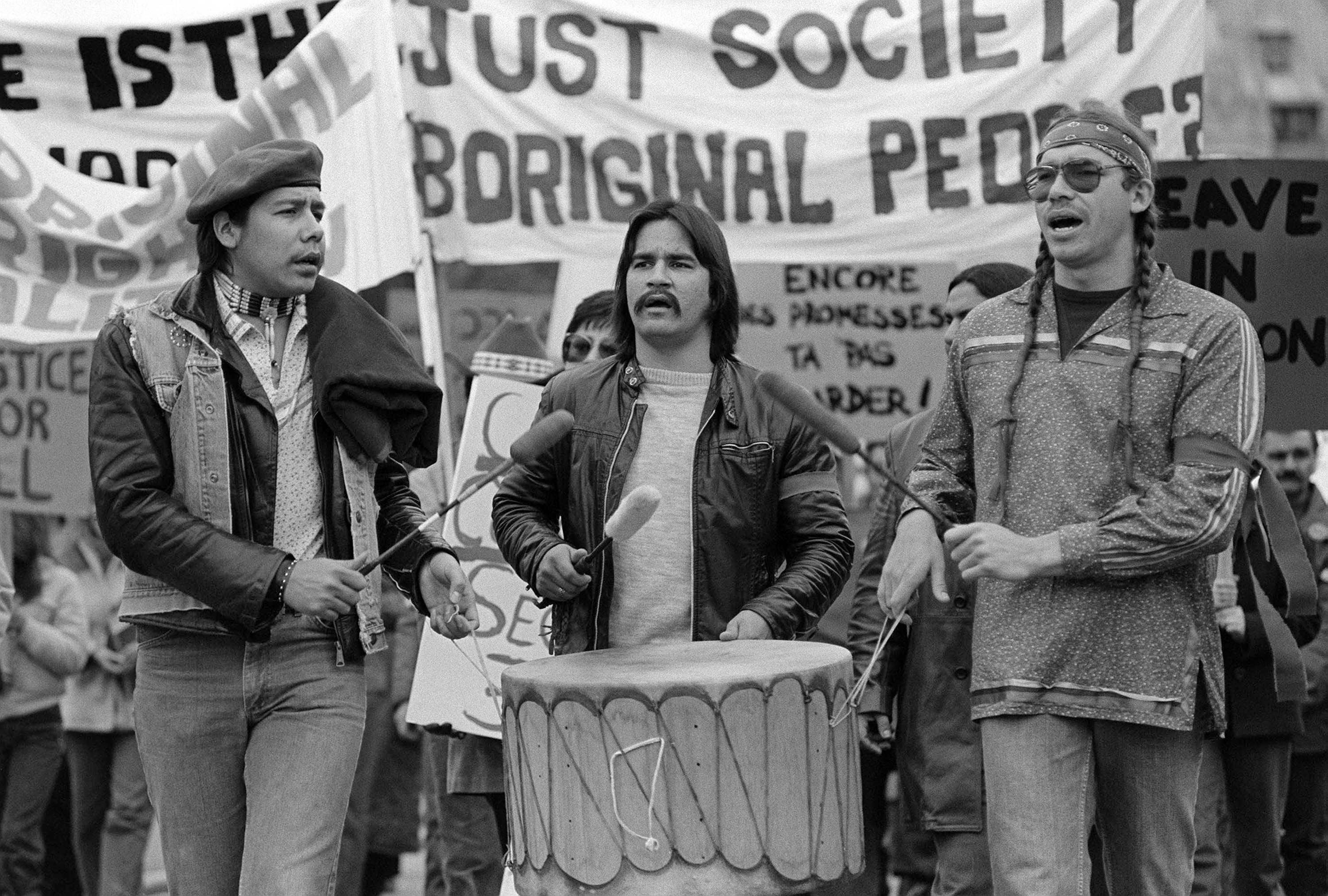
-
Article
Laotian Canadians
The immigration of Laotian nationals to Canada is relatively recent, having begun in earnest in the late 1970s. After the withdrawal of American troops from Vietnam in March 1973, mainland Southeast Asia (former Indochina) was left at the mercy of revolutionary forces in the region. In 1975, at the end of a 20-year-long civil war, communist revolutionaries of the Pathet Lao (Lao State) movement took power, abolished the monarchy and proclaimed the Lao People’s Democratic Republic. Living conditions deteriorated in Laos, as they did in Vietnam and Cambodia. Former civil and military officials were sent to labour camps and their families were denied access to employment and education. These difficult economic conditions, combined with an increasingly forceful communist regime and violations of human rights, sparked a mass migration in the region. Like Vietnamese, Laotians left their country in makeshift vessels, facing perilous conditions on the Mekong River and then the China Sea. This is the origin of the name often used to refer to these migrants: “boat people.” From 1979 to 1982, Canada welcomed nearly 8,000 Laotians. Approximately 20 per cent were of Chinese origin. Supported by the federal government and private sponsor groups, they resettled in various parts of Canada. Today, however, the Laotian population is concentrated in Québec and Ontario. In the 2016 Census of Canada, 24,590 people reported being of Laotian origin.
"https://d3d0lqu00lnqvz.cloudfront.net/media/media/4866c1e9-0222-4e6f-91c6-0b8cdf3182dd.jpg" // resources/views/front/categories/view.blade.php
https://d3d0lqu00lnqvz.cloudfront.net/media/media/4866c1e9-0222-4e6f-91c6-0b8cdf3182dd.jpg
-
Article
Larry Grant (sʔəyəɬəq)
Larry Grant (also known as sʔəyəɬəq (suh-yuh-shl-uck) and Hong Lai Hing), storyteller, Musqueam Elder, educator of endangered First Nation language hən̓q̓əmin̓əm̓ (born 1 September 1936 in Agassiz, BC). Grant is of Musqueam and Chinese ancestry, raised on the Musqueam territory at the mouth of the Fraser River. The unceded territory of the Musqueam peoples encompasses what is known today as Vancouver, extending up to Harvey Creek in the north and Fraser River to the east. After retiring as a longshoreman, Grant dedicated his life to promoting knowledge of the hən̓q̓əmin̓əm̓ language and its cultural value. He is also an adjunct professor and an Elder-In-Residence at the University of British Columbia. Grant is recognized as a community leader who fosters dialogue and understanding of Musqueam history and language in British Columbia.
"https://d3d0lqu00lnqvz.cloudfront.net/LarryGrant/Elder_Larry_Grant_web.jpeg" // resources/views/front/categories/view.blade.php
https://d3d0lqu00lnqvz.cloudfront.net/LarryGrant/Elder_Larry_Grant_web.jpeg
-
Article
Latin American Canadians
Latin America refers to a group of republics in Central and South America. These countries include Argentina, Bolivia, Brazil, Chile, Colombia, Costa Rica, Cuba, Dominican Republic, Ecuador, El Salvador, Guatemala, Haiti, Honduras, Mexico, Nicaragua, Panama, Paraguay, Peru, Uruguay and Venezuela. Puerto Rico, the French West Indies and other islands of the West Indies may also be considered part of “Latin America.” The broader use of the term can also refer to countries where Romance languages, such as Spanish and Portuguese, prevail. According to Statistics Canada, there were upward of 674,640 residents with a Latin American background in Canada in 2016.
"https://d3d0lqu00lnqvz.cloudfront.net/LatinDanceEdmontonResized.png" // resources/views/front/categories/view.blade.php
https://d3d0lqu00lnqvz.cloudfront.net/LatinDanceEdmontonResized.png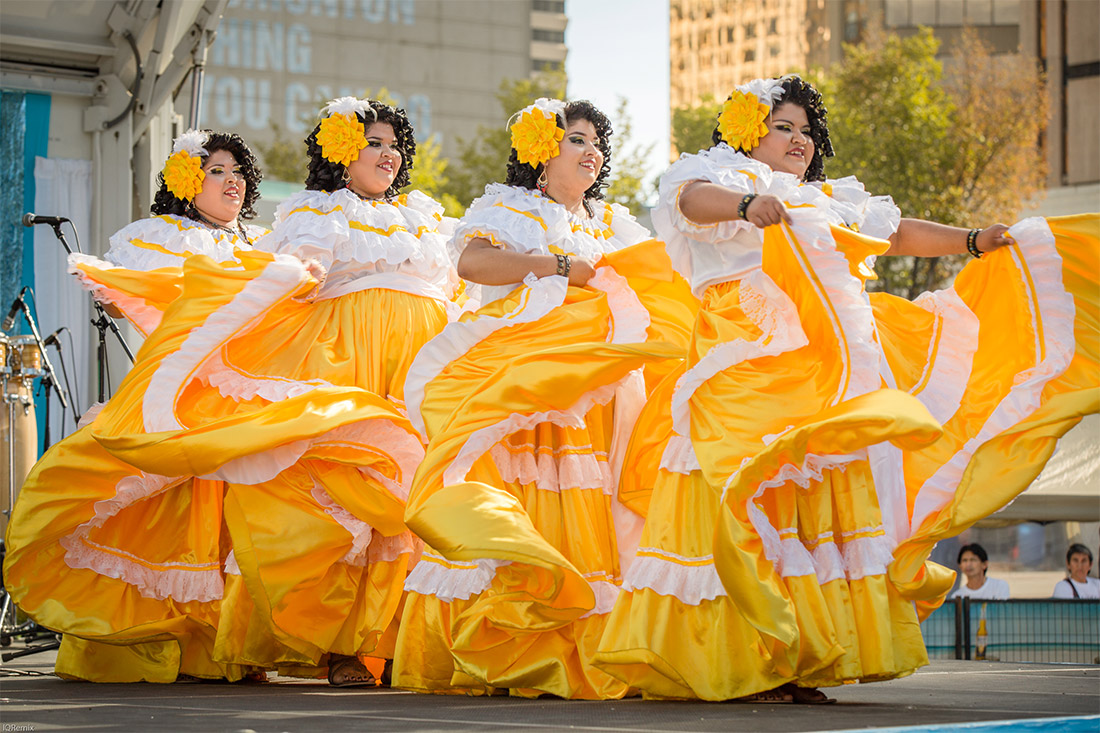
-
Article
Latvian Canadians
Latvia is a small country situated on the eastern shore of the Baltic Sea. It shares borders with Russia, Lithuania, Belarus and Estonia. Established as an independent state after the First World War (WWI), Latvia was occupied by the Soviet Union in 1940, by the Nazis from 1941 to 1944, and then again by the Soviet Union. In 1945, 110 000 Latvians who had fled to western Europe were classified as displaced persons. Of these, 14 911 eventually immigrated to Canada. The 2016 census reported 30, 725 people of Latvian origin in Canada (7040 single and 23, 685 multiple responses).
"https://thecanadianencyclopedia.ca/images/tce_placeholder.jpg?v=e9dca980c9bdb3aa11e832e7ea94f5d9" // resources/views/front/categories/view.blade.php
https://thecanadianencyclopedia.ca/images/tce_placeholder.jpg?v=e9dca980c9bdb3aa11e832e7ea94f5d9
-
Article
Laure Waridel
Laure Waridel, CM, CQ, social activist, author, environmentalist, lecturer and columnist (born 10 January 1973 in Chesalles-sur-Oron, Switzerland). Regarded as one of the 25 most influential political personalities in Québec, Laure Waridel holds an honorary doctorate from the Université du Québec à Rimouski, the Insigne du mérite from the Université de Montréal, and the rank of Knight of the Order of La Pléiade. She is a co-founder of Équiterre, a Québec organization that encourages individuals and governments to make choices that are fair, ecological and consistent with the principles of solidarity. The author of a number of books and essays on environmental issues, Waridel has contributed to many magazines, such as Voir and Reader’s Digest, in addition to hosting the radio show Acheter, c’est voter on Radio-Canada. She is currently strategic advisor for CIRODD, an interdisciplinary centre for research on operationalization of sustainable development. This centre is based at Polytechnique Montréal, and its membership includes over 80 researchers.
"https://d3d0lqu00lnqvz.cloudfront.net/media/media/062cbfee-3533-42a8-b375-d39b8bb8bb6e.jpg" // resources/views/front/categories/view.blade.php
https://d3d0lqu00lnqvz.cloudfront.net/media/media/062cbfee-3533-42a8-b375-d39b8bb8bb6e.jpg
-
Article
Laurence Decore
Laurence George Decore (born Lavrentiy Dikur), CM, lawyer, entrepreneur, community activist, alderman and mayor of Edmonton, Alberta MLA, leader of the Alberta Liberal Party, Alberta’s opposition leader (born 18 June 1940 in Vegreville, AB; died 6 November 1999 in Edmonton, AB). Laurence Decore was a Ukrainian Canadian community activist and politician. He served as an Edmonton alderman (1974–77) and mayor (1983–88) and chaired the Canadian Consultative Council on Multiculturalism. In this role, he led the drafting of section 27 of the Charter of Rights and Freedoms. It entrenched multiculturalism in Canada’s Constitution. Decore also served as an Alberta MLA (1989–97). He led the Alberta Liberal Party (1988–94) and was leader of the Opposition (1993–94).
"https://d3d0lqu00lnqvz.cloudfront.net/DCI-images/1982-Decore-final-rescale.jpg" // resources/views/front/categories/view.blade.php
https://d3d0lqu00lnqvz.cloudfront.net/DCI-images/1982-Decore-final-rescale.jpg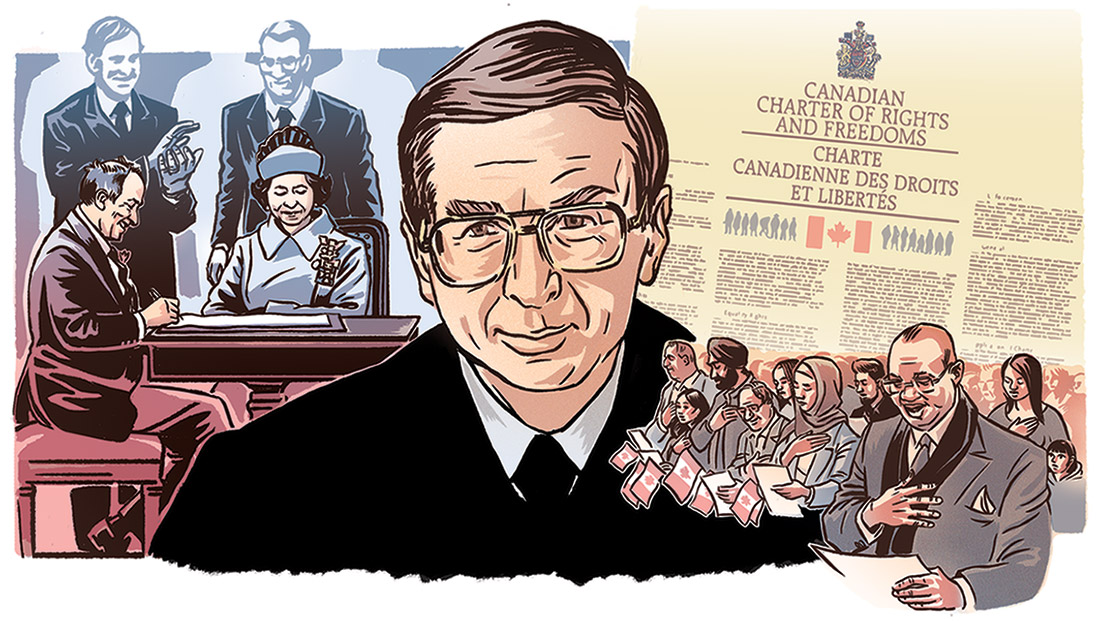
-
Article
Laurent Duvernay-Tardif
Laurent “Dr. Kill” Duvernay-Tardif, CQ, football player, doctor (born 11 February 1991 in Saint-Jean-Baptiste, QC). Laurent Duvernay-Tardif is an offensive lineman with the New York Jets of the National Football League (NFL). He was the 10th player ever drafted into the NFL from Canadian college and university football, and is the first Quebec-born football player to win a Super Bowl championship. Duvernay-Tardif is also the first active NFL player to become a doctor. He opted out of the 2020 season to work at a Montreal long-term care facility during the COVID-19 pandemic. He was made a Chevalier of the Ordre national du Québec in 2019. In 2020, he was named a Sportsperson of the Year by Sports Illustrated, as well as co-winner (with soccer player Alphonso Davies) of the Lou Marsh Trophy as Canada’s athlete of the year.
"https://d3d0lqu00lnqvz.cloudfront.net/media/new_article_images/LaurentDuvernayTardif/Laurent_Duvernay-Tardif_2017.jpg" // resources/views/front/categories/view.blade.php
https://d3d0lqu00lnqvz.cloudfront.net/media/new_article_images/LaurentDuvernayTardif/Laurent_Duvernay-Tardif_2017.jpg
-
Article
Léa Roback
Léa Roback, CQ, bookseller, trade union activist, feminist and pacifist (born 3 November 1903 in Montreal, Quebec; died 28 August 2000 in Montréal). Léa Roback, a woman of Jewish-Polish descent, was an ardent, vocal and tireless activist who fought social inequality in all its forms.
"https://d3d0lqu00lnqvz.cloudfront.net/learoback/learobackcanadapost.png" // resources/views/front/categories/view.blade.php
https://d3d0lqu00lnqvz.cloudfront.net/learoback/learobackcanadapost.png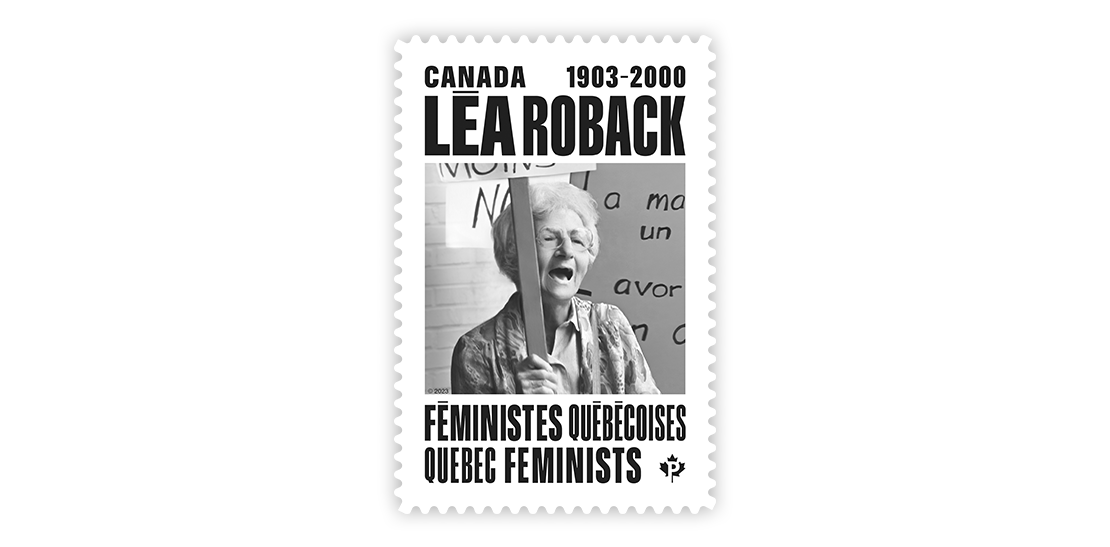
-
Article
Lee Cremo
Lee (Harvey) Cremo, fiddler, composer (born on 30 December 1938 in Barra Head (now Potlotek Mi’kmaw Nation) NS; died 10 October 1999 in Eskasoni, NS). Lee Cremo was a renowned Mi’kmaw fiddler who was recognized for his fiddling prowess. Throughout his career, he competed in and won over 80 fiddling competitions, including being named Best Bow Arm in the World at the Grand Master Fiddling Championships in Nashville, Tennessee.
"https://thecanadianencyclopedia.ca/images/tce_placeholder.jpg?v=e9dca980c9bdb3aa11e832e7ea94f5d9" // resources/views/front/categories/view.blade.php
https://thecanadianencyclopedia.ca/images/tce_placeholder.jpg?v=e9dca980c9bdb3aa11e832e7ea94f5d9
-
Article
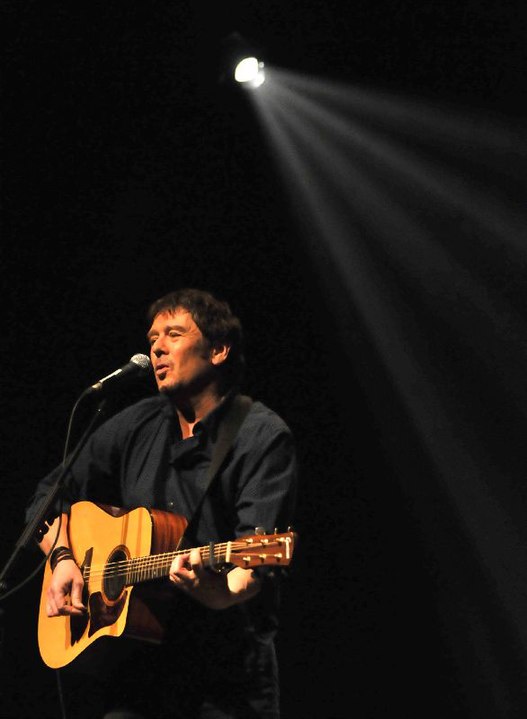
Lennie Gallant
Lennie Gallant, CM, folk musician (born 1955 in Rustico, PEI). Lennie Gallant is an Acadian singer-songwriter who has released 13 albums, ten in English and three in French. He has toured extensively in North America and has won numerous awards and prizes. He has won 18 East Coast Music Awards (ECMA) and was named the Fan’s Choice Entertainer of the Year in 2017. His 1994 song “Peter’s Dream” was inducted into the Canadian Songwriters Hall of Fame in 2019. Gallant was made a Member of the Order of Canada in 2003.
"https://d3d0lqu00lnqvz.cloudfront.net/media/new_article_images/LennieGallant/527px-Lennie_Gallant.jpg" // resources/views/front/categories/view.blade.php
https://d3d0lqu00lnqvz.cloudfront.net/media/new_article_images/LennieGallant/527px-Lennie_Gallant.jpg