
Browse "Communities & Sociology"
-
Article
Eleazer Williams
Eleazer Williams, Protestant Episcopalian minister, pretender to the French throne (b at Lake George, NY, about 1788; d at St Regis Reservation, NY 28 Aug 1858). Williams was of mixed Haudenosaunee and white ancestry from the Caughnawaga (now Kahnawake) Reserve near Montréal.
"https://d3d0lqu00lnqvz.cloudfront.net/media/media/c7d3d69f-dfad-4218-8852-35763443c2c9.JPG" // resources/views/front/categories/view.blade.php
https://d3d0lqu00lnqvz.cloudfront.net/media/media/c7d3d69f-dfad-4218-8852-35763443c2c9.JPG
-
Article
Elijah Harper
Elijah Harper, OM, Oji-Cree politician, consultant, policy analyst (born 3 March 1949 at Red Sucker Lake, MB; died 17 May 2013 in Ottawa, ON). Elijah Harper is best known for the role he played in scuttling the Meech Lake Accord, for which he was named the Canadian Press newsmaker of the year in 1990. Harper also served as the Minister for Northern Affairs. From 1993 to 1997 he represented the riding of Churchill in the federal parliament.
"https://d3d0lqu00lnqvz.cloudfront.net/media/media/73c1f655-bfcc-4aa6-9251-c0d5c550fde4.jpg" // resources/views/front/categories/view.blade.php
https://d3d0lqu00lnqvz.cloudfront.net/media/media/73c1f655-bfcc-4aa6-9251-c0d5c550fde4.jpg
-
Article
Elsie Knott
Elsie Marie Knott (née Taylor), Ojibwe chief, community leader, entrepreneur (born 20 September 1922 on Mud Lake Reserve [now Curve Lake First Nation], ON; died there on 3 December 1995). Knott was the first elected female First Nations chief in Canada, after a 1951 amendment to the Indian Act permitted Indigenous women to vote and participate in band governments. She was also chief of her First Nation for 14 years, from 1954 to 1962 and from 1970 to 1976. Knott was dedicated to preserving the Ojibwe language and was known for her community activism and support of education.
"https://d3d0lqu00lnqvz.cloudfront.net/media/new_article_images/curvelake/curve lake.JPG" // resources/views/front/categories/view.blade.php
https://d3d0lqu00lnqvz.cloudfront.net/media/new_article_images/curvelake/curve lake.JPG
-
Article
Emil Fackenheim
Emil Ludwig Fackenheim, philosopher, theologian (b at Halle, Germany 22 June 1916; d at Jerusalem 19 September 2003). Educated at the University of Halle, and ordained a rabbi in 1939, he fled Germany after a short imprisonment in a concentration camp.
"https://thecanadianencyclopedia.ca/images/tce_placeholder.jpg?v=e9dca980c9bdb3aa11e832e7ea94f5d9" // resources/views/front/categories/view.blade.php
https://thecanadianencyclopedia.ca/images/tce_placeholder.jpg?v=e9dca980c9bdb3aa11e832e7ea94f5d9
-
Article
Emily Murphy's Famous Triumph
The following article is an editorial written by The Canadian Encyclopedia staff. Editorials are not usually updated. “I feel equal,” wrote Emily Murphy in 1927, “to high and splendid braveries.” By that point in her life, the 59-year-old native of Cookstown, Ontario, had earned the right to big ambitions: her achievements included turns as a successful writer (under the name “Janey Canuck”), social activist, self-taught legal expert and, as of 1916, the first woman magistrate in the British Empire. She was also a wife and mother.
"https://d3d0lqu00lnqvz.cloudfront.net/media/media/f2df0151-1333-440b-ae34-65430693183c.jpg" // resources/views/front/categories/view.blade.php
https://d3d0lqu00lnqvz.cloudfront.net/media/media/f2df0151-1333-440b-ae34-65430693183c.jpg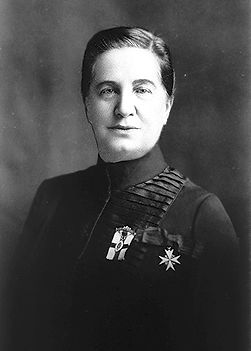
-
Article
English Canadians
The English were among the first Europeans to reach Canadian shores. Alongside the French, they were one of two groups who negotiated Confederation. The expression “English Canadians” refers to both immigrants from England and the Loyalists in exile after the American Revolution and their descendants. According to the 2021 census of Canada, about 14.7 per cent of Canadians (5,322,830 respondents) consider themselves to be of English origin.
"https://d3d0lqu00lnqvz.cloudfront.net/media/media/99b475a0-4821-4f9d-89e1-dff3464ef8e9.jpg" // resources/views/front/categories/view.blade.php
https://d3d0lqu00lnqvz.cloudfront.net/media/media/99b475a0-4821-4f9d-89e1-dff3464ef8e9.jpg
-
Article
English-Speaking Quebecers
English-speakers in Québec form a linguistic minority from a wide range of ethnic, religious, and socio-economic backgrounds and with many regional differences. The presence of this minority dates back to the French Regime, but coherent communities developed only after the British Conquest. The proportion of English-speakers increased in the years leading up to Confederation , followed by a gradual decline, particularly in the regions outside Montréal.
"https://d3d0lqu00lnqvz.cloudfront.net/media/media/0dff2beb-2eb0-417d-85cf-2760a0f94e09.jpg" // resources/views/front/categories/view.blade.php
https://d3d0lqu00lnqvz.cloudfront.net/media/media/0dff2beb-2eb0-417d-85cf-2760a0f94e09.jpg
-
Article
Ernest Kaientaronkwen Benedict
Ernest M. Kaientaronkwen Benedict, Kanyen’kehá:ka (Mohawk) educator, activist, chief (born 14 July 1918 in Hogansburg, NY; died 8 January 2011 in Cornwall, ON). Elder Ernest Benedict was renowned for a lifetime of advancing Indigenous sovereignty, cultural preservation and Indigenous-controlled education. He did this through various initiatives he started or supported.
"https://d3d0lqu00lnqvz.cloudfront.net/ErnestBenedict/Ernest-Benedict.jpg" // resources/views/front/categories/view.blade.php
https://d3d0lqu00lnqvz.cloudfront.net/ErnestBenedict/Ernest-Benedict.jpg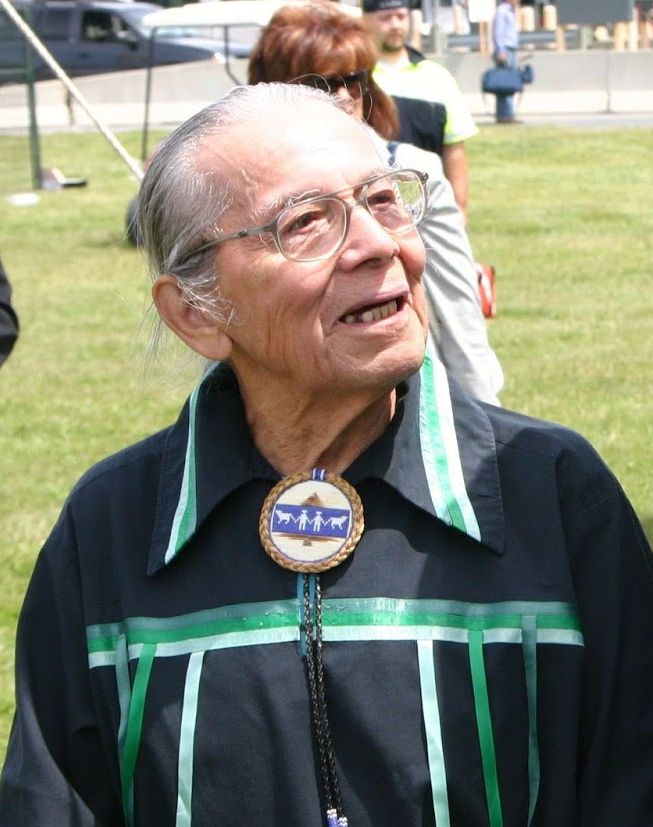
-
Article
Ernest Lepage
Ernest Lepage, priest and botanist (b near Rimouski, Qué 1 June 1905; d there 4 Jan 1981). Lepage was an assistant parish priest until 1933 and then taught at the École moyenne d'agriculture in Rimouski 1936-61.
"https://thecanadianencyclopedia.ca/images/tce_placeholder.jpg?v=e9dca980c9bdb3aa11e832e7ea94f5d9" // resources/views/front/categories/view.blade.php
https://thecanadianencyclopedia.ca/images/tce_placeholder.jpg?v=e9dca980c9bdb3aa11e832e7ea94f5d9
-
Article
Errol Bouchette
Robert-Errol Bouchette, MSRC, lawyer, journalist, Quebec civil servant and intellectual (born 2 June 1863 in Quebec City, QC; died 13 August 1912 in Ottawa, ON). He is best known for two works: a 1901 essay entitled Emparons-nous de l’industrie (Let’s Take Over the Industry), the title of which already foreshadows the topic, and a 1903 novel, Robert Lozé, which sets his ideas in fiction. Through his ideas, he sought to ensure the economic independence of French Canada.
"https://d3d0lqu00lnqvz.cloudfront.net/errolbouchette/errolbouchette.jpg" // resources/views/front/categories/view.blade.php
https://d3d0lqu00lnqvz.cloudfront.net/errolbouchette/errolbouchette.jpg
-
Article
Estonian Canadians
The Republic of Estonia is a northern European country, located in the Baltic region. It is bordered by Finland, Sweden, Latvia, and the Russian Federation. The first Estonian settlement in Canada was established in 1899, near Sylvan Lake in central Alberta. The 2016 census reported 24, 530 people of Estonian origin in Canada (6155 single and 18, 375 multiple responses).
"https://thecanadianencyclopedia.ca/images/tce_placeholder.jpg?v=e9dca980c9bdb3aa11e832e7ea94f5d9" // resources/views/front/categories/view.blade.php
https://thecanadianencyclopedia.ca/images/tce_placeholder.jpg?v=e9dca980c9bdb3aa11e832e7ea94f5d9
-
Article
Eugene Rathbone Fairweather
Eugene Rathbone Fairweather, theologian, ecumenist (b at Ottawa 2 Nov 1920). An ordained priest of the Anglican Church of Canada, Fairweather was a member of the theological faculty of Trinity College, University of Toronto, from 1944 until his retirement in 1986. He was dean of divinity 1983-85.
"https://thecanadianencyclopedia.ca/images/tce_placeholder.jpg?v=e9dca980c9bdb3aa11e832e7ea94f5d9" // resources/views/front/categories/view.blade.php
https://thecanadianencyclopedia.ca/images/tce_placeholder.jpg?v=e9dca980c9bdb3aa11e832e7ea94f5d9
-
Article
False Face Society
Curing, the restoration of well-being for the community and health for the individual, was a vital part of Indigenous religious practice. The best known of several curing societies among the Haudenosaunee (Iroquois) of the lower Great Lakes was the False Face Society.
"https://d3d0lqu00lnqvz.cloudfront.net/media/media/52de6e51-1e15-479d-a990-01bee3bcc255.jpg" // resources/views/front/categories/view.blade.php
https://d3d0lqu00lnqvz.cloudfront.net/media/media/52de6e51-1e15-479d-a990-01bee3bcc255.jpg
-
Article
Famous Five
Alberta’s “Famous Five” were petitioners in the groundbreaking Persons Case. The case was brought before the Supreme Court of Canada in 1927. It was decided in 1929 by the Judicial Committee of the Privy Council, Canada’s highest appeals court at the time. The group was led by judge Emily Murphy. It also included Henrietta Edwards, Nellie McClung, Louise McKinney and Irene Parlby. Together, the five women had many years of active work in various campaigns for women’s rights dating back to the 1880s and 1890s. They enjoyed a national — and in the case of McClung, an international — reputation among reformers.
"https://d3d0lqu00lnqvz.cloudfront.net/media/media/65699b89-06c0-4518-aa06-4eea43f2ec74.jpg" // resources/views/front/categories/view.blade.php
https://d3d0lqu00lnqvz.cloudfront.net/media/media/65699b89-06c0-4518-aa06-4eea43f2ec74.jpg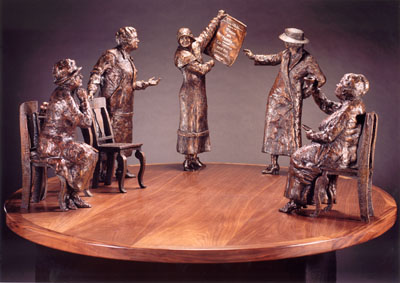
-
Article
Father Adrien Gabriel Morice
Father Adrien Gabriel Morice, Oblate missionary (b in Mayenne Départment, France 27 Aug 1859; d at St-Boniface, Man 21 Apr 1938). He joined the Oblate Order in 1879 before coming to Victoria, BC, in 1880.
"https://thecanadianencyclopedia.ca/images/tce_placeholder.jpg?v=e9dca980c9bdb3aa11e832e7ea94f5d9" // resources/views/front/categories/view.blade.php
https://thecanadianencyclopedia.ca/images/tce_placeholder.jpg?v=e9dca980c9bdb3aa11e832e7ea94f5d9