Share on Facebook
 Share on X
 Share by Email
 Share on Google Classroom
Newroz (Kurdish: نەورۆز) or Nowruz (Persian: نوروز) means “new day.” It is a cultural festival which comes from Southwest Asia and Central Asia. Nowruz marks the start of the new year and the beginning of spring, usually on 20 or 21 March. The festival symbolizes renewal, rebirth and the strength of community. In Canada, members of Kurdish, Iranian, Baloch, Afghan and other diasporas continue to celebrate Nowruz. The celebrations include traditional food, music, dance and rituals such as bonfires and the Haft-Seen table. Over time, Nowruz has grown from a regional custom into an international event. It brings people together to enjoy cultural performances, community spirit and the joy of new beginnings. The United Nations recognizes Nowruz as the International Day of Nowruz. This highlights its importance as a celebration of peace, resilience and cultural heritage.
Historical Origins of Nowruz
Celebrations of the New Year during the spring equinox may have begun in ancient Mesopotamia. Babylonian records mention similar festivities around 2000 BCE. The tradition later spread across the Persian Empire. It became part of the religion of Zoroastrianism. The celebration symbolized renewal, balance and the triumph of light over darkness. According to Persian mythology, King Jamshid established Nowruz as the start of the ancient Iranian calendar. Some believe that, during the Achaemenid period, King Darius I of Persia (reigned 522 to 486 BCE) built parts of Persepolis for Nowruz ceremonies. The festival was important as both a cultural and spiritual celebration.
Eventually, Nowruz spread across regions with new borders, languages and traditions. Over the centuries, especially in the last millennium, the festival has grown and changed. It took in new social, religious and cultural influences.
Myths and Symbols of Nowruz
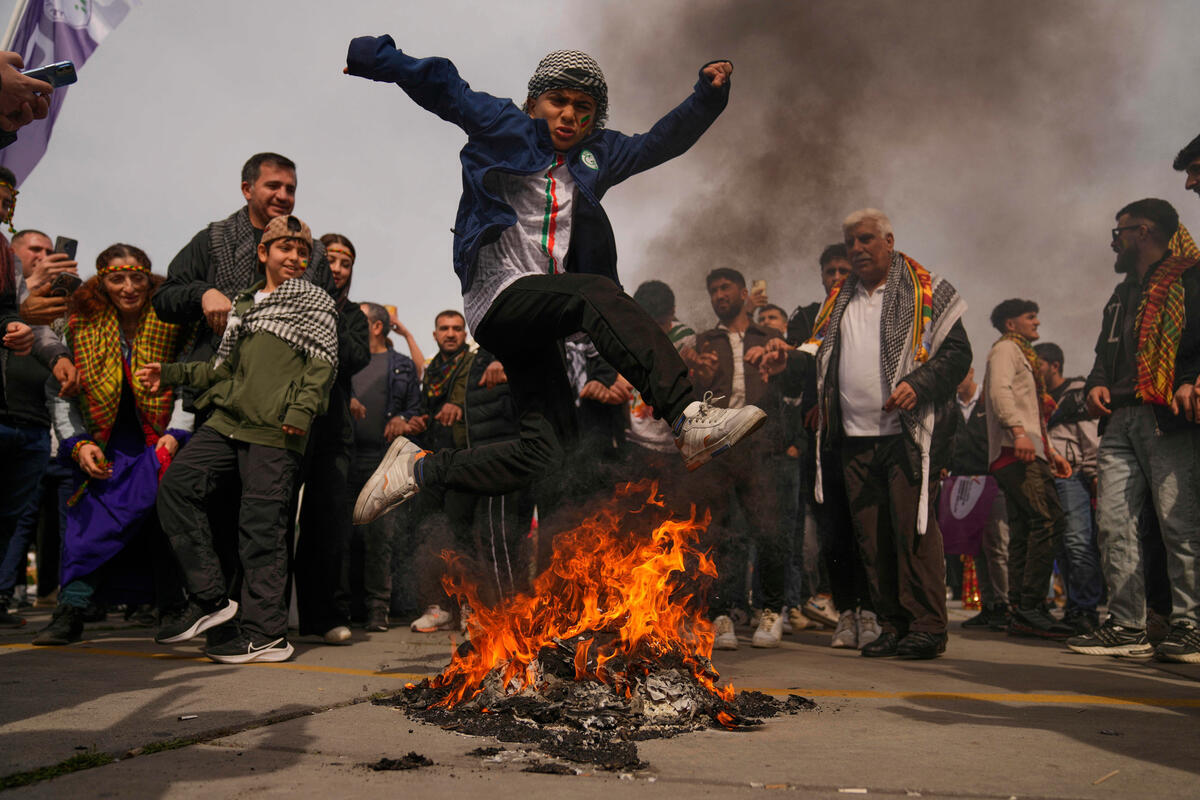
Nowruz is rooted in myths and legends. Different ethnic groups and cultures attribute the festival’s beginnings to a variety of stories and traditions. In Kurdish mythology, Newroz marks the day Kawa the Blacksmith led a rebellion against the tyrant King Zahhak. According to the legend, Zahhak was a cruel ruler with snakes growing from his shoulders that fed on the brains of young people. Kawa, whose own children had been taken by the king, rose up with his hammer. He rallied the people and defeated the tyrant, freeing the land from darkness. To commemorate their victory, the Kurds lit bonfires on mountaintops. These symbolized freedom, light and the arrival of spring. Over time, Newroz has become a powerful symbol of resistance, renewal and hope for the Kurdish people.
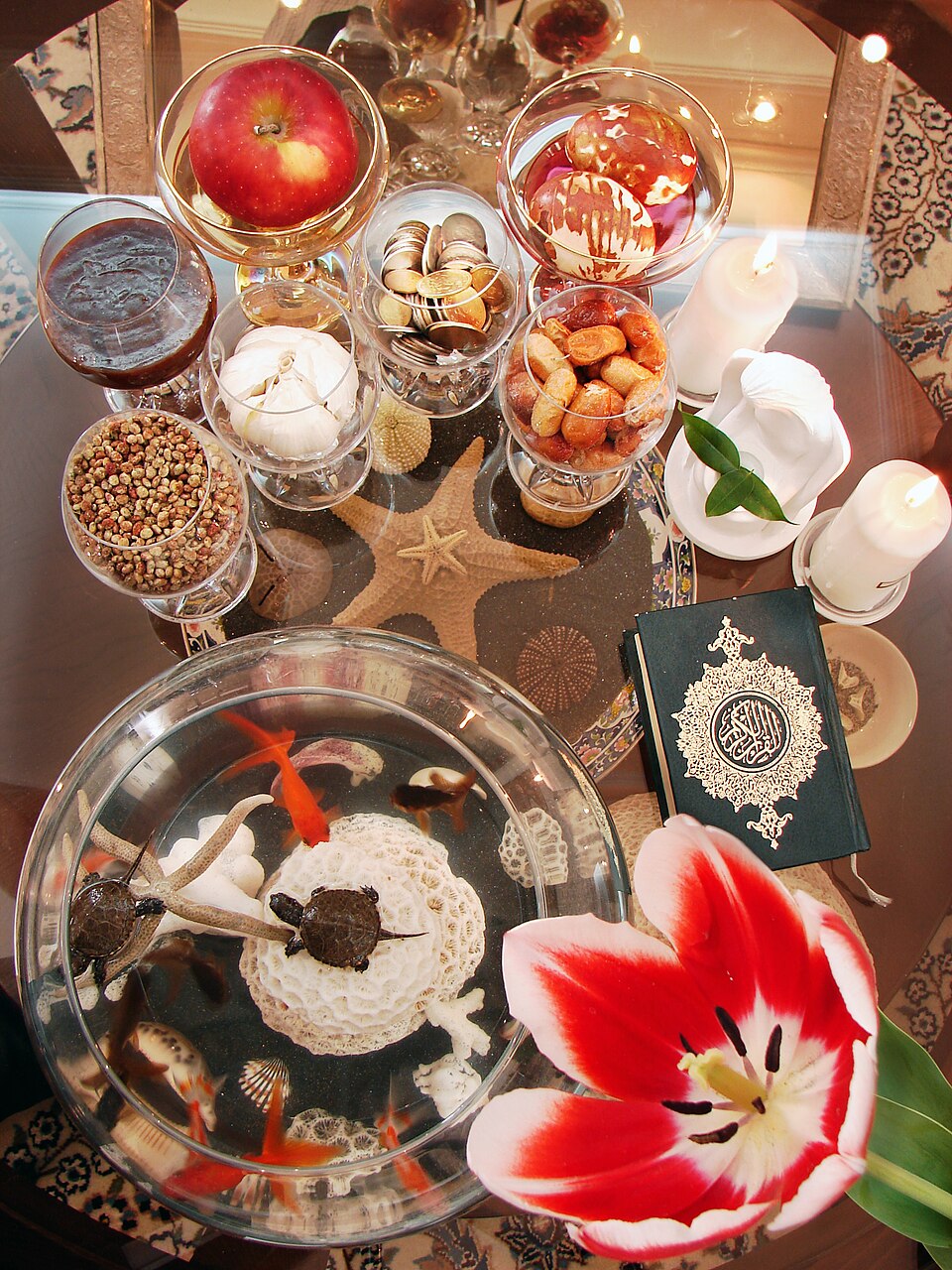
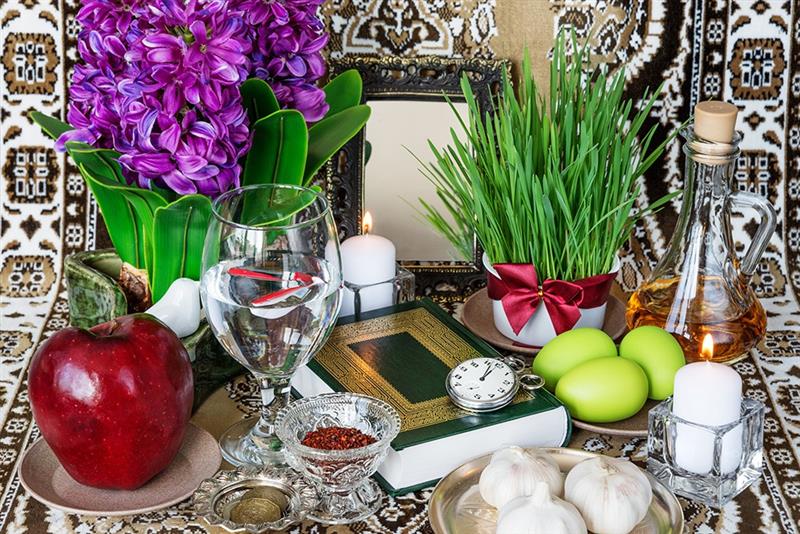
Some common symbols of Nowruz, especially in Iran, include the Haft-Seen, or “Seven S’s”. People display items like garlic and sprouts to symbolize renewal and the arrival of spring. Other items like painted eggs represent fertility, a mirror symbolizes self-reflection, candles signify enlightenment, a goldfish stands for life or progress and a book can reflect wisdom.
Other traditions emphasize renewal and letting go of the past: wearing new clothes, cleaning homes and lighting fires. These fires are often lit in threes, symbolizing good thoughts, good words and good deeds.
Additionally, people visit relatives and go door-to-door banging spoons to chase away bad luck and evil spirits.
Nowruz Celebrations in Contemporary Times
Today, nearly 300 million people celebrate Nowruz across what used to be the Silk Roads. Ethnic groups and communities in Iran, Azerbaijan, Afghanistan, Central Asia and Southwest Asia, as well as Kurds and Turkic Uyghurs, celebrate Nowruz. (See also: Iranian Canadians; Afghan Canadians; Kurdish Canadians.) Nowruz is usually observed on 20 or 21 March ― the day of the spring equinox ― when day and night are equal. Celebrations usually last 13 days. The festival marks the arrival of spring and the renewal of nature. It symbolizes the triumph of warmth, growth and life over the cold stillness of winter.
Festivities during Nowruz include gatherings of family and friends. There are also street celebrations, bonfires, poetry and folk music performances. Food plays a central role in Nowruz across all regions. Traditional dishes can symbolize renewal, prosperity, health and rebirth.
In Afghanistan and Central Asia, traditional games reflect the region’s nomadic heritage. Meanwhile, in Iran, spring cleaning, known as khane tekani, marks the beginning of the celebrations. Kurdish communities celebrate with bonfires, traditional circle dances, colourful clothing and special dishes such as kebabs and dolma.
Beyond marking the new year, Nowruz provides a platform for cultural affirmation and resistance. Nowruz can be a form of political expression. For Central Asians, the festival has historically been used to reclaim national identity and distance themselves from Soviet legacies. (See also Canada and the Cold War.)
For Kurds, Nowruz is also a political festival. It’s a symbol of resistance and the struggle for freedom against tyranny. Moreover, Kurdish women have used Newroz as an opportunity to challenge restrictive norms, dancing publicly to assert their identity. In Southwest Asia, notably in Syria and Iran, some governments have aimed to suppress Nowruz. The celebration is seen as an expression of Kurdish identity and potential dissent. Some Kurds have historically faced torture and even death during Nowruz.
Traditions and Customs of Nowruz
The celebrations of Nowruz are not limited to 20 and 21 March. A week before, activities like house cleaning, gift exchanges, family visits, meals, egg painting, wearing new clothes and charitable deeds often start taking place. Festivities may also include wrestling and horse racing in Central Asian countries. In Iran and Afghanistan, for instance, the holiday concludes with Sizdah Bedar — literally “getting rid of thirteen.” It’s observed on the 13th day of Nowruz. The day is often marked by picnics and outdoor gatherings.
A central tradition is the Haft-Seen table. This involves displaying seven items that start with the Persian letter “S.” Items include sprouts, garlic and sweet pudding. They each symbolize values like health, prosperity and renewal for the new year.
In Uzbekistan and Turkmenistan, communities gather to prepare sumalak, a sweet dish cooked in large communal pots. In Azerbaijan, Nowruz is celebrated with kebabs, dolma and sweets such as baklava and shekerbura (half-moon-shaped pastries). For Kazakhs, the holiday features nauryz kozhe ― a soup made from barley, horse meat and milk. In both Uzbekistan and Kazakhstan, there are displays of traditional horsemanship, like horse racing, during festivities.
Among Kurds, Newroz is the most important annual celebration. It marks the arrival of spring and reflects the spirit and aspirations of the Kurdish people. Customs vary across different regions of Kurdistan. However, common traditions include wearing colourful traditional clothing, sharing festive meals, listening to music, dancing and reciting poetry. On the evening of 20 March, Kurds light large fires on hills at sunset to signal the start of the new year. These fires are visible across towns and surrounding mountains.
Nowruz Celebrations in Canada
Nowruz has become a celebrated cultural tradition in Canada. Many diverse communities celebrate it. These include Afghans, Iranians, Kurds, Baloch, Ismaili Muslims, Tajiks and Azerbaijanis. Nowruz serves to unite people through shared traditions and heritage.
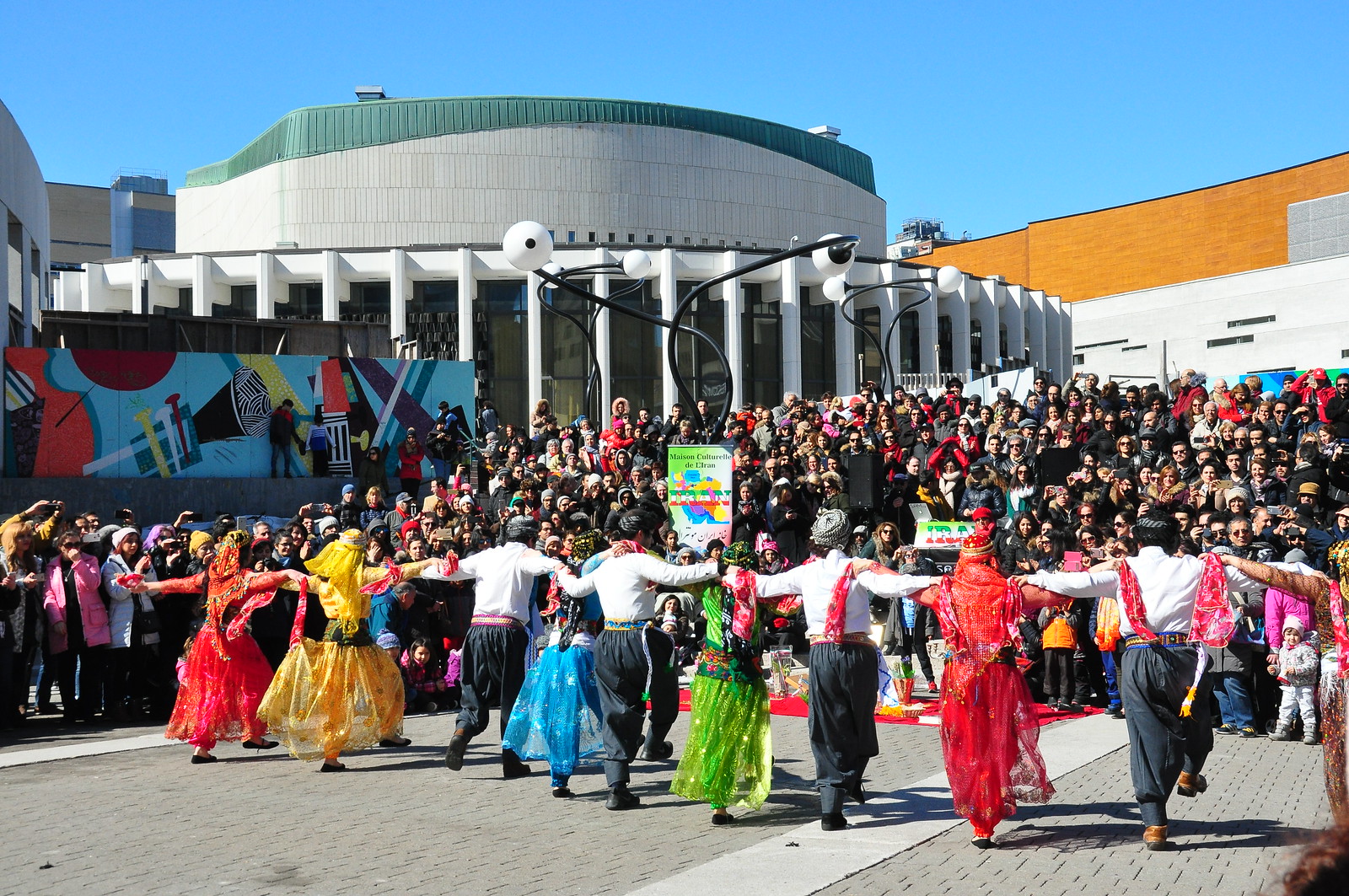
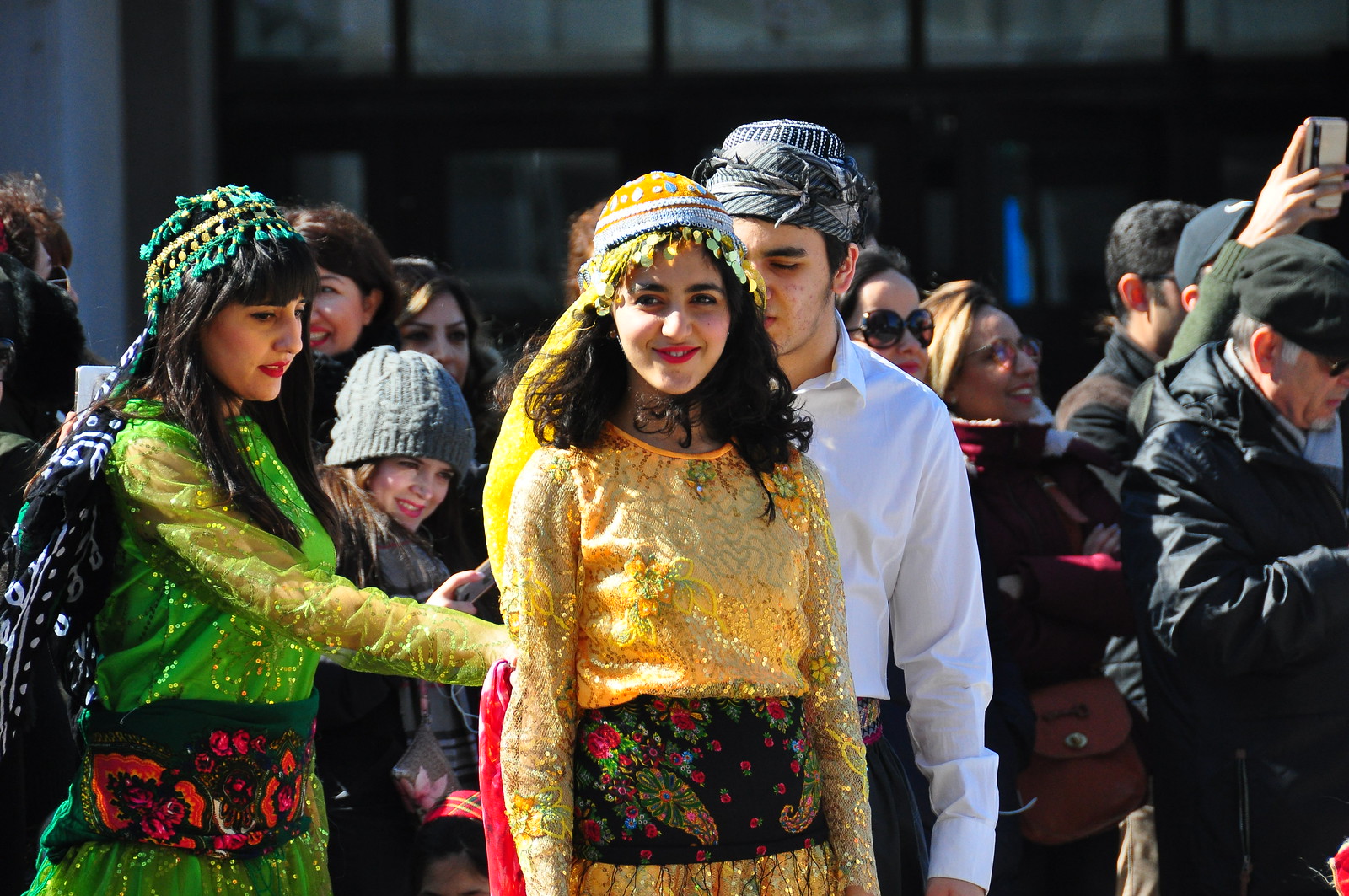
For the Afghan diaspora, the community celebrates Nowruz with traditional music, food and gatherings. In doing so, Afghan Canadians are keeping their cultural heritage alive despite Taliban repression in Afghanistan. (See also Canada and the War in Afghanistan.) The celebrations are used to affirm their identity and freedom as well as to protect traditions.
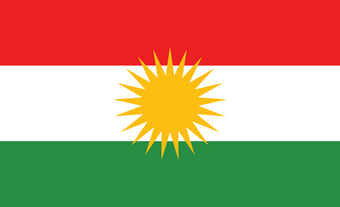
Canadian Kurds who migrated from Turkey and Syria celebrate Newroz. (See also Turkish Canadians.) Many cherish a tradition that was banned in their home countries for decades. These gatherings also serve to maintain cultural identity, resist oppression in the traditional homeland and promote community solidarity. During Nowruz celebrations in Canada, many Kurdish participants display Kurdish flags and photos of imprisoned political leaders. This is a way to honour their identity and express solidarity. Alongside music and dance, they often speak about democracy, freedom and Kurdish rights. During the dancing, it is common to hear chants such as “Bijî Kurdistan” (“Long live Kurdistan”) and to sing well-known Kurdish national songs.