Share on Facebook
 Share on X
 Share by Email
 Share on Google Classroom
Donald Hibbs served with 2nd Battalion, Princess Patricia's Canadian Light Infantry during the Korean War. He discusses the first Canadian Army infantry unit's actions during the early stages of the war, how items were bought from the Americans for whiskey, and the lack of positive responses to Canadians returning from Korea.
See his other story: Donald Hibbs
Please be advised that Memory Project primary sources may deal with personal testimony that reflect the speaker’s recollections and interpretations of events. Individual testimony does not necessarily reflect the views of the Memory Project and Historica Canada.

 aims a gun at his friends in jest. From left to right, also pictured: Dennis Moore, Romuald (Ron) Bourgon, and Scott Moore.","creator":"Memory Project Image #14794 - Veteran #5241","source":"Donald Hibbs","conversion_urls":{"original":"https:\/\/d3d0lqu00lnqvz.cloudfront.net\/The-Memory-Project\/image\/14794_600.jpg"},"url":"https:\/\/d3d0lqu00lnqvz.cloudfront.net\/The-Memory-Project\/image\/14794_600.jpg","credit":"Donald Hibbs","pivot":{"mediable_type":"App\\Models\\Article","mediable_id":"74d2df4a-113b-4e2e-830c-fc8e4723dd58","media_id":"7a14136b-41ef-4661-a30b-c849b1490ce6","tag":"gallery","order":2},"translations":[{"id":"46932de1-8b69-464f-8112-7b143be31738","media_id":"7a14136b-41ef-4661-a30b-c849b1490ce6","title":"Memory Project Image #14794","alt":"Donald Hibbs","caption":"Donald Hibbs (far right) aims a gun at his friends in jest. From left to right, also pictured: Dennis Moore, Romuald (Ron) Bourgon, and Scott Moore.","creator":"Memory Project Image #14794 - Veteran #5241","source":"Donald Hibbs","locale":"en","credit":"Donald Hibbs"},{"id":"d7a8d8e3-55f2-4d5e-9373-b889079b05ce","media_id":"7a14136b-41ef-4661-a30b-c849b1490ce6","title":"Memory Project Image #14794","alt":"Donald Hibbs","caption":"","creator":"Memory Project Image #14794 - Veteran #5241","source":"Donald Hibbs","locale":"fr","credit":"Donald Hibbs"}]} "Memory Project Image #14794")


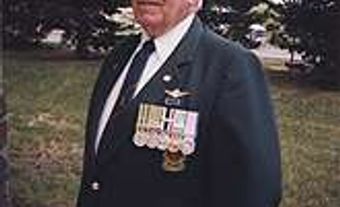
: Korean War Service Medal, British Korea Medal, Ambassador for Peace Medal, Five Year Medal with Bar, Merit Medal with bars, Distinguished Service Star.","creator":"Memory Project Image #14796 - Veteran #5241","source":"Donald Hibbs","conversion_urls":{"original":"https:\/\/d3d0lqu00lnqvz.cloudfront.net\/The-Memory-Project\/image\/14796_600.jpg"},"url":"https:\/\/d3d0lqu00lnqvz.cloudfront.net\/The-Memory-Project\/image\/14796_600.jpg","credit":"Donald Hibbs","pivot":{"mediable_type":"App\\Models\\Article","mediable_id":"74d2df4a-113b-4e2e-830c-fc8e4723dd58","media_id":"4aae6dd4-9158-47da-a8e7-bcb89a7ccc68","tag":"gallery","order":5},"translations":[{"id":"db54d03f-6ed1-4b74-a166-b9b14af78940","media_id":"4aae6dd4-9158-47da-a8e7-bcb89a7ccc68","title":"Memory Project Image #14796","alt":"Donald Hibbs","caption":"Donald Hibbs' medals awarded by the government of South Korea and the Korea Veterans Association (left to right): Korean War Service Medal, British Korea Medal, Ambassador for Peace Medal, Five Year Medal with Bar, Merit Medal with bars, Distinguished Service Star.","creator":"Memory Project Image #14796 - Veteran #5241","source":"Donald Hibbs","locale":"en","credit":"Donald Hibbs"},{"id":"935e171c-8ed6-44be-af01-d20a8f0d3df0","media_id":"4aae6dd4-9158-47da-a8e7-bcb89a7ccc68","title":"Memory Project Image #14796","alt":"Donald Hibbs","caption":"","creator":"Memory Project Image #14796 - Veteran #5241","source":"Donald Hibbs","locale":"fr","credit":"Donald Hibbs"}]} "Memory Project Image #14796")
: Canada Korea Medal, Canadian Volunteer Service Medal for Korea, Special Service Medal (NATO), United Nations Korea Medal, 125th Anniversary of Confederation Medal.","creator":"Memory Project Image #14795 - Veteran #5241","source":"Donald Hibbs","conversion_urls":{"original":"https:\/\/d3d0lqu00lnqvz.cloudfront.net\/The-Memory-Project\/image\/14795_600.jpg"},"url":"https:\/\/d3d0lqu00lnqvz.cloudfront.net\/The-Memory-Project\/image\/14795_600.jpg","credit":"Donald Hibbs","pivot":{"mediable_type":"App\\Models\\Article","mediable_id":"74d2df4a-113b-4e2e-830c-fc8e4723dd58","media_id":"4d211d44-53e2-4641-988b-8b2ff94961ae","tag":"gallery","order":6},"translations":[{"id":"6f41e180-eccf-480a-9de8-6c2027b56410","media_id":"4d211d44-53e2-4641-988b-8b2ff94961ae","title":"Memory Project Image #14795","alt":"Donald Hibbs","caption":"Donald Hibbs' service medals (left to right): Canada Korea Medal, Canadian Volunteer Service Medal for Korea, Special Service Medal (NATO), United Nations Korea Medal, 125th Anniversary of Confederation Medal.","creator":"Memory Project Image #14795 - Veteran #5241","source":"Donald Hibbs","locale":"en","credit":"Donald Hibbs"},{"id":"6dee7dc7-dc81-459a-a381-e0597810d506","media_id":"4d211d44-53e2-4641-988b-8b2ff94961ae","title":"Memory Project Image #14795","alt":"Donald Hibbs","caption":"","creator":"Memory Project Image #14795 - Veteran #5241","source":"Donald Hibbs","locale":"fr","credit":"Donald Hibbs"}]} "Memory Project Image #14795")
Transcript
When we came into the area, there was 80 or more bodies. There were Americans laying everywhere. And [Lieutenant-Colonel Jim] Stone* said, "Everybody have lunch, we're moving out after lunch." I wrote a letter to my mom and said, "Dear Mom, I'm sitting here amongst 80 or 90 dead guys. I don't know what's going to happen when I go on the hill. These guys never had a chance, I don't know what my chances are so I'll say goodbye to you now.” I said goodbye to her. I think my brother might have the letter but I had to say farewell in my letter because I didn't think at that time we had a chance.
You could anything with a bottle of whiskey. You could buy anything. You could buy a jeep with a bottle of whiskey. The Americans would pay anything for a bottle of whiskey. So I went in to see this [American] sergeant and I said, "I need a jeep trailer." He says, "We don't have any." I looked out the door, I says, "What are you talking about? You've got a million pieces of equipment here." And he said, "I haven't got a jeep trailer." I says, "Well, I really need one badly and I brought a bottle of whiskey along just in case I got this order." He said, "A bottle of whiskey? What do you want?” And I said, "Two walkie-talkies and two 45s**." He says, "No problem." He gave them to me. I got the bottle of whiskey out of the jeep and the lieutenant wouldn't come in. I gave him the bottle, and he says, "I'll get your trailer for you." "Thank you!" He drove up with a three-quarter tonne truck with a trailer in the back and says, "There you are!" I says, "You're kidding!" He says, "No, take it away."
I came out the next day and the truck's painted green, Canadian signs, Canadian flags, Canadian maple leafs all over the truck, so I said, “Oh, you're doing all right.” But that was one of the more comical things that happened when I was in Korea.
I remember coming up the road and we were moving up the lines, and you could always tell where the enemy was because the people were coming down the roads by the thousands. And I remember coming up, they were marching up the side of the road. It was hard to get vehicles through there were so many refugees coming down because they knew the enemy was moving. They had better radar than we did! And I remember this lady was carrying a baby on her back and then she just – or her front or something – and she just put it down on the side of the ride. It couldn't have been any more than three, and left it there. And I saw this, and I grabbed some lady and I handed it to her and I said, "You take care of her!" She didn't want to. I said, "Take this baby!" So she watched me as we walked up and kept looking, looking, then she set it down. I don't know what ever happened to that little child. It was just too much baggage and I guess these people felt that way because they had nothing. Absolutely nothing! They lived in mud huts, and it was just nothing and I felt so sorry for them after a while.
I came home on the 1st of December [1951]. And then I had to go to the jump course and then I got my leave to come back home. And I went downtown to my favourite pub, and I went in there and sure enough the same guys are sitting around the table having a beer. And I walked in and I wasn't in uniform. I had put civvies on. And I sat down and they said, "Donny, where you been?" I says, "I was in Korea." "Playing hockey?" I says, "Yeah, it was a good year." That's their attitude – “You playing hockey there?” I says, "Yeah." "Oh, great." Nobody knew anything about nothing.
I was so disappointed in the civilian [response]. Nobody greeted us, nobody knew us, nobody did nothing. No bands, no banners, no nothing. Nothing. And when I, when we talked about the Presidential [Unit] Citation,*** the government of Canada said we couldn't wear it.
And when they called the war over, first it was a “police action.” And somebody tried to change it to an involvement, and they wouldn't call it a war for years and years when finally, we were at a Stratford reunion [of the Korea Veterans Association] and the Minister of National Defence called it the Korean War and [us] war veterans. And that's the first time they said that word because they were afraid to say it. And we were treated very badly, I believe terribly bad by the government of Canada. Terribly bad.
*Commanding officer, 2nd Battalion, Princess Patricia’s Canadian Light Infantry
**M1911 pistol
***For their actions during the Battle of Kap’yong (22-25 April 1951), 2nd Battalion, Princess Patricia’s Canadian Light Infantry was awarded the U.S. Presidential Unit Citation, the only Canadian unit to have received the honour until Joint Task Force 2 was awarded the citation on 7 December 2004, for the Canadian special operations unit’s actions in Afghanistan