Share on Facebook
 Share on X
 Share by Email
 Share on Google Classroom
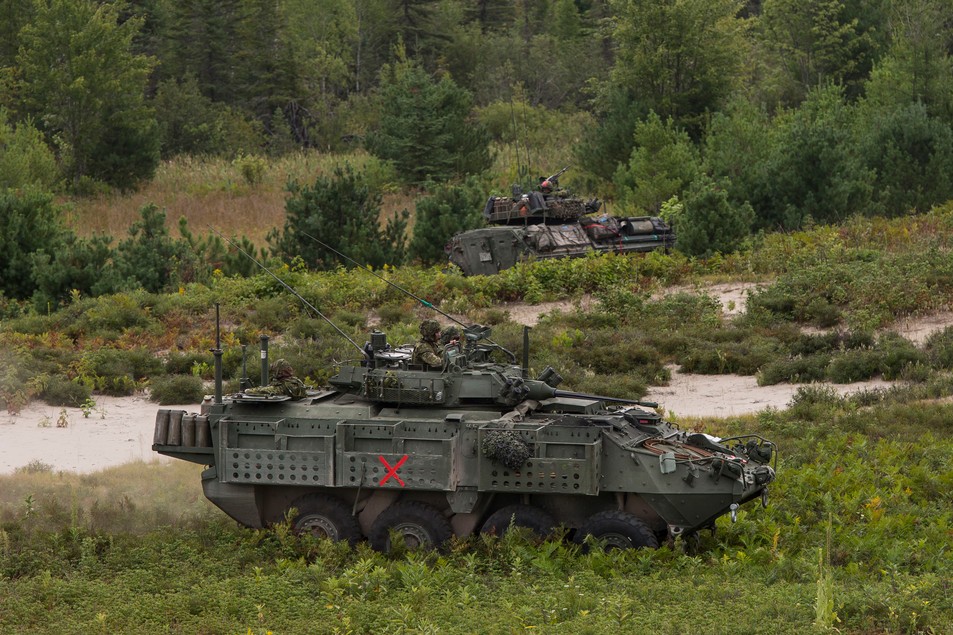
The Light Armoured Vehicle (LAV) III is an eight-wheeled, moderately well-protected combat vehicle capable of movement on most types of terrain. It was designed and manufactured by General Motors Defense (General Dynamics Land Systems–Canada since 2002) at the company’s plant in London, Ontario. The LAV III entered service in 1999. The vehicle notably saw service in the War in Afghanistan as well as in many UN missions. Between 2011 and 2019, LAV III vehicles went through an upgrade process to the new LAV 6.0 standard.
Background
The LAV III evolved in stages. It began with the Swiss-designed MOWAG Piranha 1 vehicle, which became the LAV I. The LAV I was produced as the six-wheeled Armoured Vehicle General Purpose (AVGP) family of vehicles. This included the armoured (Cougar), infantry (Grizzly) and recovery and maintenance (Husky) versions. General Motors - Diesel Division in London, Ontario, built the AVGPs under licence from MOWAG.
The LAV II followed as an eight-wheeled vehicle in two main versions for Canada. The Bison was originally designed as an infantry section carrier. However, it is used in a number of variants to support the LAV III. Versions include command post, ambulance, mobile repair team and recovery vehicles. The Coyote, meanwhile, was an armoured reconnaissance vehicle equipped with advanced surveillance suites.
The LAV III is the third generation of the Canadian light armoured vehicle family. At an early stage of its development, it was called the Kodiak, but the name was never officially adopted.
Did you know?
Other countries also use the LAV III, including New Zealand and Saudi Arabia.
Specifications
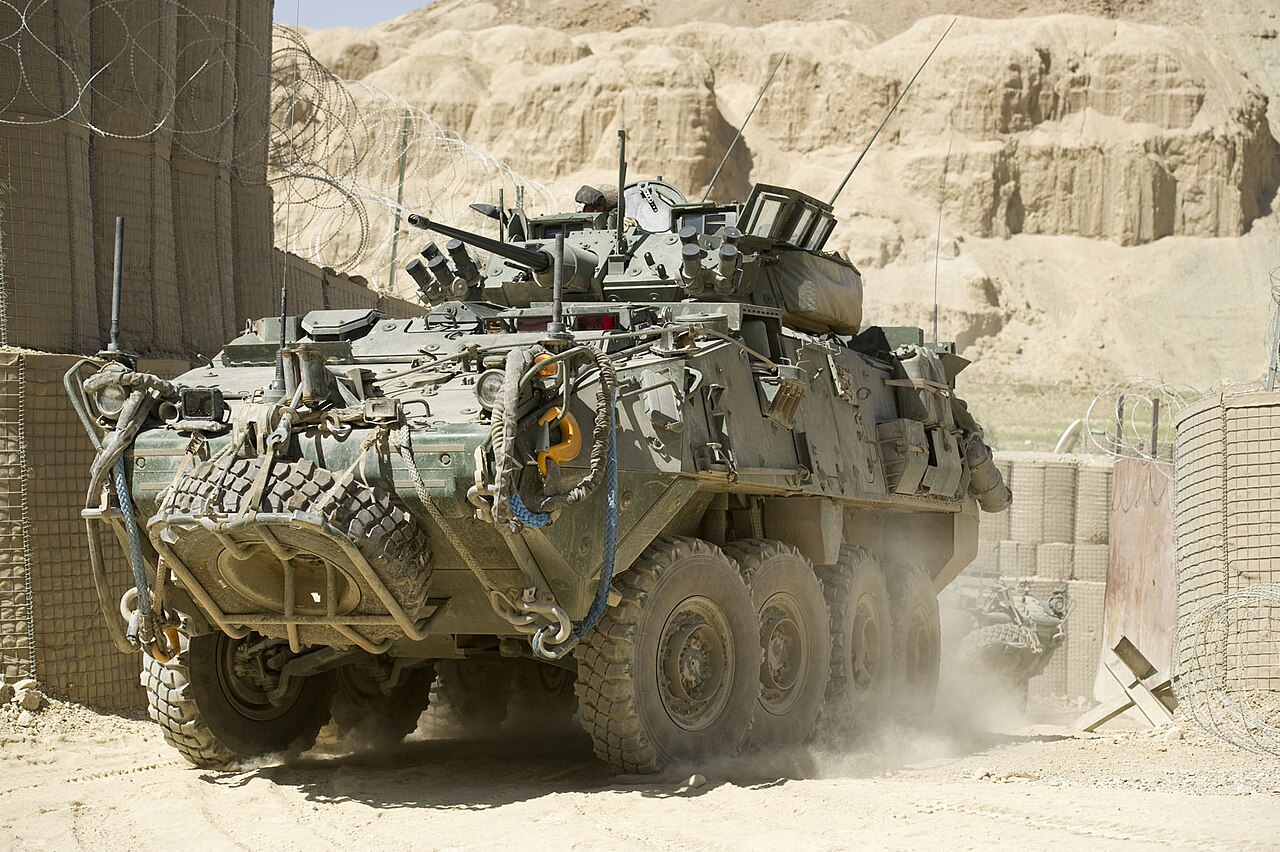
The LAV III is powered by a water-cooled, six-cylinder, 350-horsepower, turbo-charged diesel engine with an automatic transmission. The driver can select either four- or eight-wheel drive. The vehicle is capable of speeds of up to 100 km/h on roads and 70 km/h cross-country. On-road range is 450 km and 350 km off-road. The LAV III can ford water to a depth of 1.5 m, provided the bottom is hard. It can also ascend a slope of up to 60 per cent and cross a 2 m wide ditch.
The LAV III’s basic weight is 13,702 kg. Its combat load, with ammunition, passengers and their personal kit, is 16,958 kg. The LAV III is 6.98 m long, 2.71 m wide and 2.81 m high.
The LAV III is capable of accepting ad-on armour for additional protection. The vehicle uses a Modular Expandable Armour System (MEXAS) of ceramic composite tiles. This upgrades the vehicle’s resistance from 7.62 mm medium machine gun fire to 14.5 mm heavy machine gun fire.
The main armament is a stabilized 25 mm Bushmaster chain gun, augmented by a 7.62 mm coaxial machine gun (i.e., firing on the same plane as the Bushmaster). A 5.56 mm light machine gun or 7.62 mm medium machine gun is mounted on top of the turret. (See C6 General Purpose Machine Gun.) A bank of four 76 mm grenade dispensers is mounted on each side of the turret. These fire smoke grenades to create an instant smoke screen for local protection.
LAV III in Operations
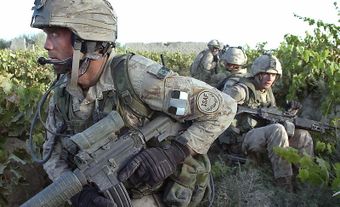
The LAV III served as the primary mechanized infantry combat vehicle for the Canadian Army in Afghanistan between 2001 and 2014. (See Canada and the War in Afghanistan.) Its mobility, firepower and troop protection were vital in the harsh combat environment during the early stages of the war. Experiences with mines and improvised explosive devices, however, led to significant upgrades for increased protection.
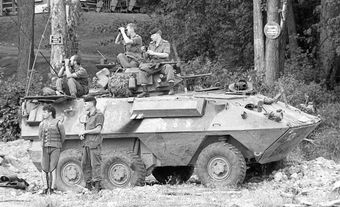
The LAV III has also served on a number of United Nations operations. These include UN missions in Ethiopia and Eritrea, Kosovo, Bosnia-Herzegovina, and Haiti. (See Canadian Peacekeepers in the Balkans; Canadian Peacekeepers in Haiti.)
Variants
Canada received 651 LAV III vehicles, which were produced in a number of variants. The most common is the infantry section carrier vehicle, of which 313 were produced. It carried 10 personnel: three crew (commander, driver, gunner) and seven infantry soldiers.
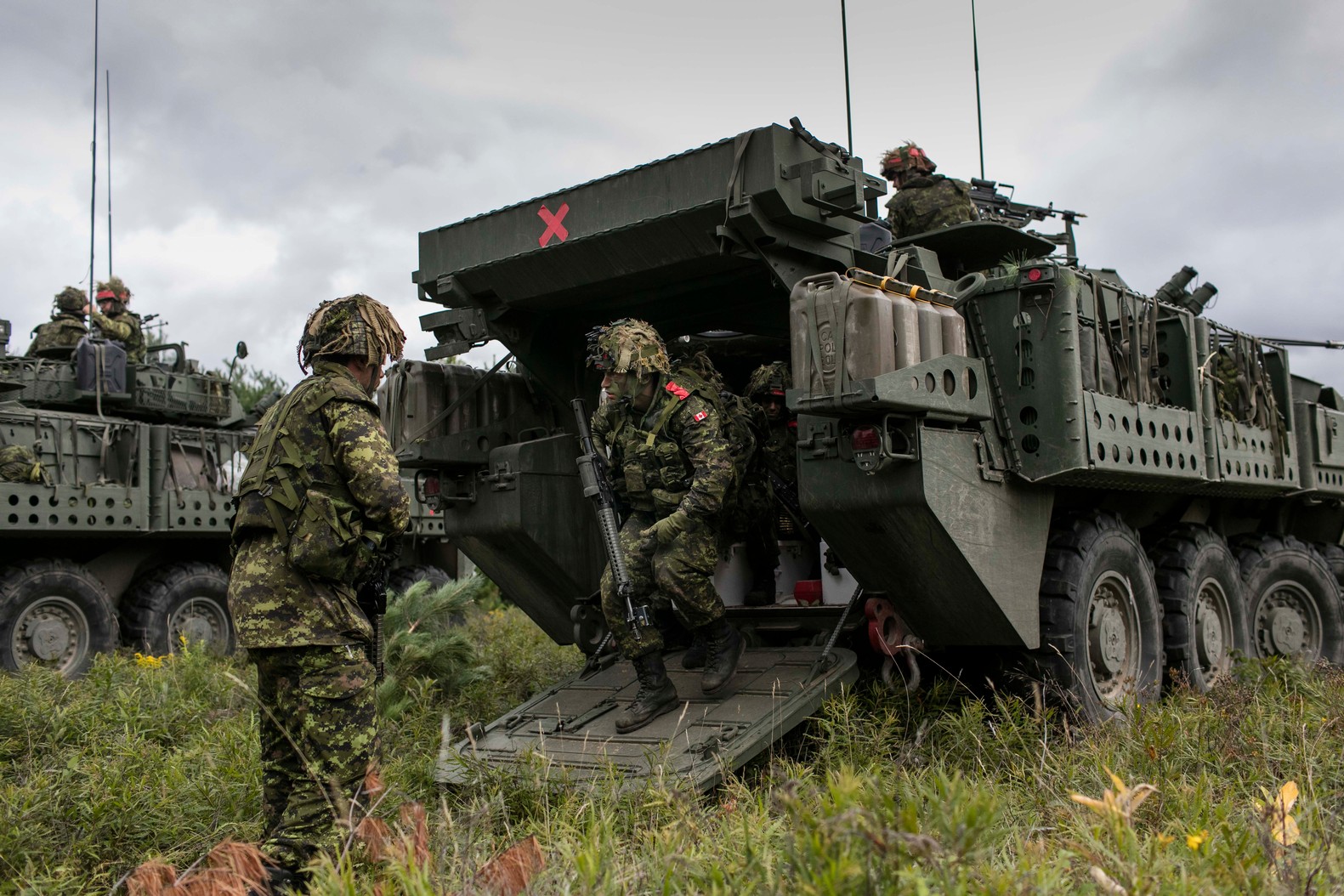
The 181 command post vehicles were outfitted with advanced communication and control systems. These vehicles provide a mobile headquarters for commanders to direct tactical operations.
The 47 observation post variants were used by artillery Forward Observation Officers and their fire support teams to coordinate artillery fire, including battlefield reconnaissance and target acquisition.
The 44 engineer variants were fitted with a dozer blade, crane and other engineering equipment. These LAVs assist combat engineers to clear obstacles, build defensive earthworks and support operations.
The 71 TUA (TOW Under Armour) vehicles had a turret with two launchers for TOW anti-tank missiles.
In September 2005, Canada ordered 33 multi-mission effects vehicles utilizing the existing ADATS (Air Defence Anti-Tank System) weapons station, which could engage both air and ground targets. The government subsequently cancelled the contract in November 2006.
Did you know?
The United States’ Stryker family of vehicles, including infantry, command post, counter-drone and air defence versions, is based on the LAV III.
Upgrades
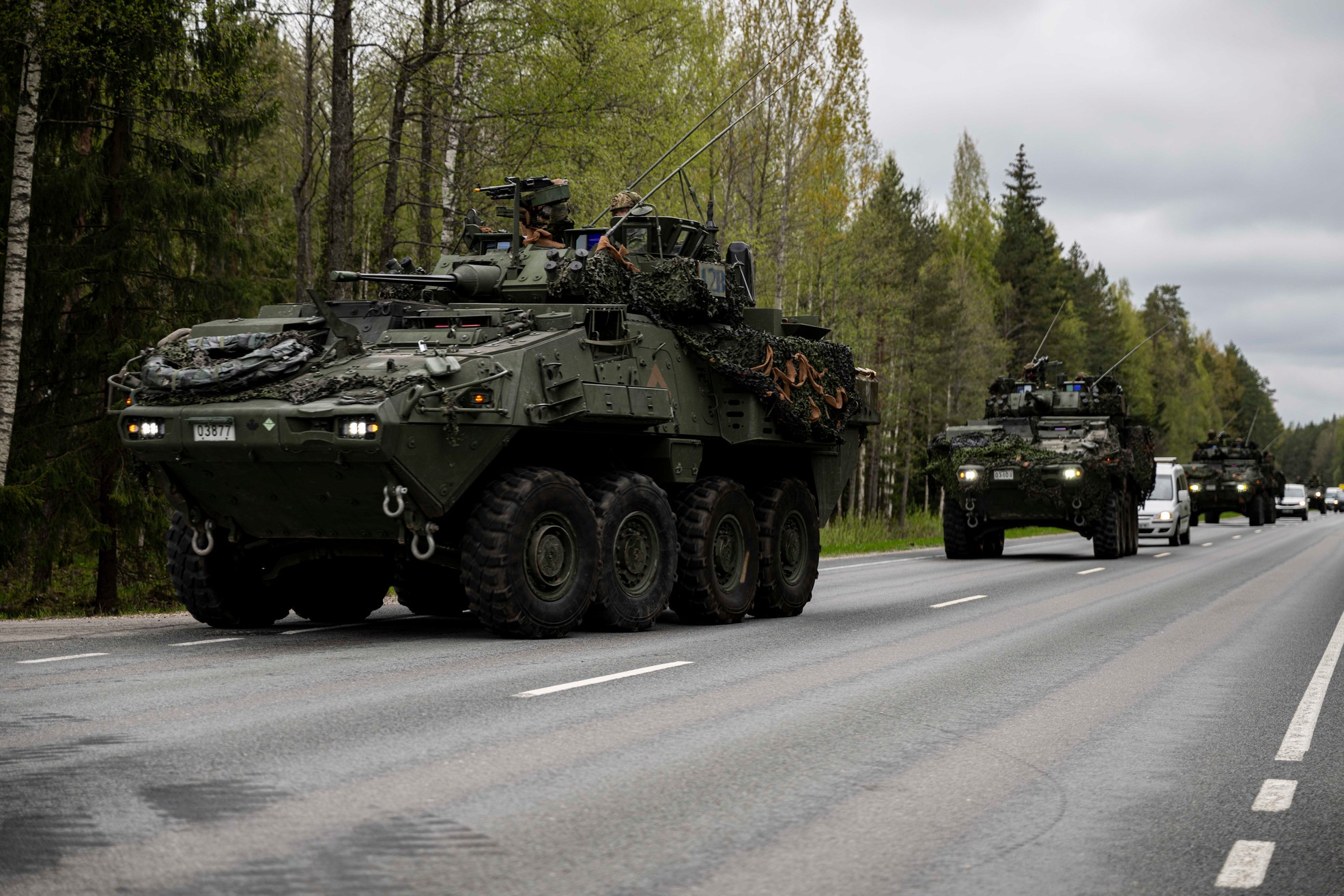
Between 2011 and 2019, in a project known as LAVUP, 550 of the 651 LAV III vehicles received extensive turret and chassis upgrades. The resulting vehicle is known as the LAV 6.0. An additional 66 LAV IIIs had a Reconnaissance Surveillance System installed in them to replace the Coyote reconnaissance vehicle.
LAV III Monument Program
On 5 November 2014, the Canadian government launched the Light Armoured Vehicle (LAV) III Monument Program. Its aim was to recognize the 40,000 CAF members who served in Afghanistan and to commemorate the 158 military personnel and four Canadian civilians who lost their lives there. (See Canada and the War in Afghanistan.) The program provided 33 decommissioned and demilitarized LAV IIIs to communities across Canada to convert them into monuments.