Share on Facebook
 Share on X
 Share by Email
 Share on Google Classroom
The Inuit Circumpolar Council (ICC) is an international, non-profit, non-governmental organization. It represents the 180,000 Inuit living in the circumpolar regions of Alaska (United States), Inuit Nunangat (Canada), Kalaallit Nunaat (Greenland) and Chukotka (Russia). The ICC is committed to advancing and advocating for Inuit rights, language, education, culture, self-determination, land management, environmental stewardship and economic and social development (see also Rights of Indigenous Peoples in Canada; Inuktitut). There are nine executive members on the council. Each circumpolar region is represented by a vice-chair and an elected member. The executive also includes an international chair. Every four years, delegates convene at a general assembly. During this assembly, they discuss and find solutions to issues affecting Inuit and the Arctic.
Beginnings
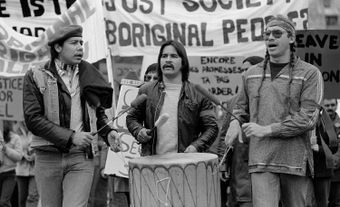
The first Inuit Circumpolar Conference was held in Utqiaġvik (formerly Barrow), Alaska, in June 1977. Alaskan Inupiat leader Eben Hopson organized the conference in response to shared concerns about oil and gas development in the Arctic (see also Oil and Gas Policy in Canada, 1947-80). He invited Inuit leaders from Alaska, Canada and Greenland (Kalaallit Nunaat) to discuss their shared cultural, environmental and political challenges.
At that first assembly, the delegates unanimously agreed to establish the conference as an international organization. It would serve as the united voice of Inuit around the world. The motto of the conference was “Inupiat Under Four Flags.” However, Inuit from the USSR (now Russia) could not attend because of its restrictions on travel and communication with the other three countries.
Hopson died in June 1980. At the general assembly that July in Nuuk, Greenland, the delegates adopted an official charter and by-laws. Hans-Pavia Rosing from Greenland was chosen as president. Mary Simon, a Canadian executive council member during 1980–83, took over as international president from 1986 to 1992. During her time as president, Simon assisted in obtaining permission from the Russian government for Inuit from the Chukotka region to participate in the general assemblies. In 1989, Chukotkan external delegates attended. They gained full voting membership in 1992, forming ICC Chukotka. For the years when the Chukotkans were absent from the assemblies, they were represented by an empty chair at the delegation table.
The Arctic: Our Common Responsibility, Miki Siegstad, provided by the National Film Board of Canada
During the 1977 meeting, delegates decided to reject the colonial term Eskimo. They adopted Inuit as a common designation for all Indigenous circumpolar peoples (see also Arctic Indigenous Peoples in Canada). The term Inuit was formally accepted at the conference in 1980. Inuit, as defined by the Inuit Circumpolar Conference’s charter, includes Inupiat and Yupik in Alaska, Inuit and Inuvialuit in Canada, Kalaallit in Greenland and Yupik in Russia.
In 2006, the Inuit Circumpolar Conference changed its name to the Inuit Circumpolar Council.
Organizational Structure
The Inuit Circumpolar Council (ICC) has four separate offices, one in each of the four regions. In addition to the ICC’s overarching charter, each national office has its own charter under its national rules. Each regional office has a chair who is represented as a vice-chair on the council. The vice-chairs of ICC Chukotka, ICC Alaska, ICC Canada and ICC Greenland, along with one executive council member elected from each region, make up the eight-member ICC executive council. The executive council is presided over by an international chair.
Every four years, the ICC holds a general assembly. These general assemblies bring together 66 Inuit delegates, 18 from three of the circumpolar regions and 12 from Chukotka, to discuss issues of importance to their communities. The assembly develops policies and resolutions and provides direction for the organization’s ongoing work for the coming four-year term. It divides responsibilities for this work between the four national offices. The assembly location has rotated between Canada, Greenland and Alaska. At the conference, delegates appoint members of the executive council and elect an international chair from the general assembly host country. The ICC’s international office stays with the country of the international chair.
The ICC has promoted issues such as Arctic sovereignty, self-determination and climate change on the international stage (see also Canadian Arctic Sovereignty). In 1983, the ICC gained Consultative Status II at the United Nations Economic and Social Council. It has continued to be active within the United Nations and regularly consults with it on issues concerning the Arctic and Indigenous human rights (see also Rights of Indigenous Peoples in Canada).
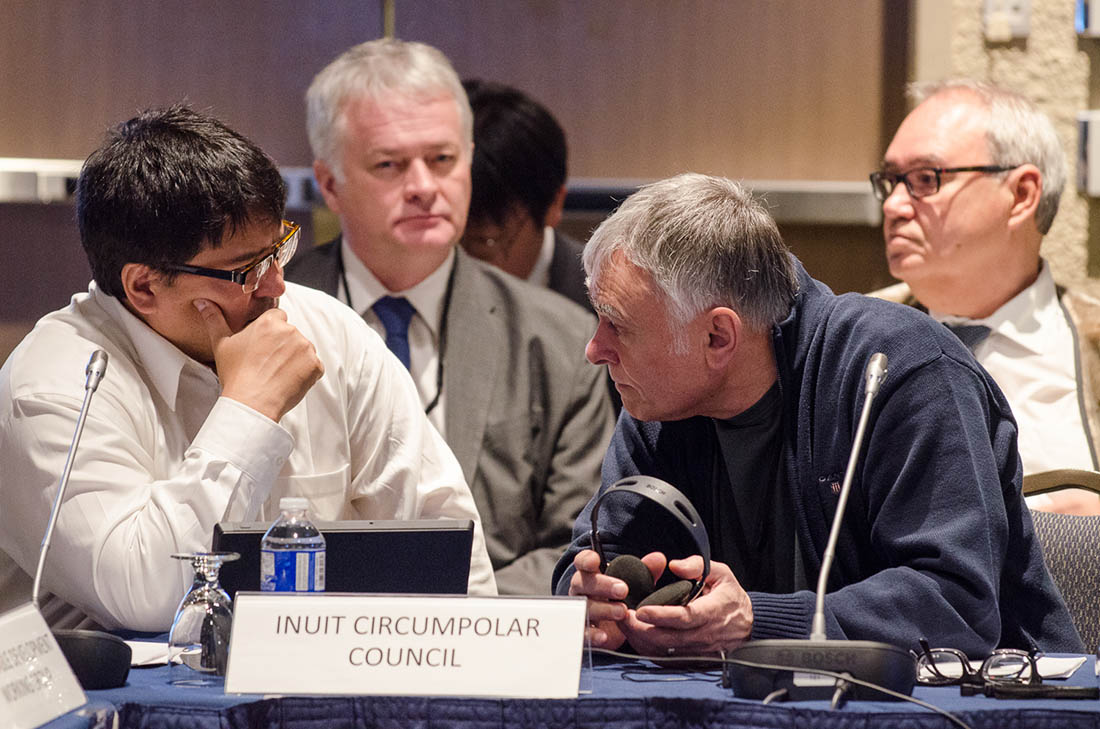
The ICC was one of the initial three Indigenous peoples’ organizations involved in the 1991 Arctic Environmental Protection Strategy (AEPS). The AEPS laid out a comprehensive plan for environmental protection in the Arctic. In 1996, the AEPS became the Arctic Council, now an eight-country intergovernmental forum with six Indigenous peoples’ organizations that focuses on dealing with Arctic policy issues. The ICC continues to be a permanent participant in the Arctic Council. It plays a formal consultative role in decision-making and participates in its various working groups and projects. The ICC is also involved in senior Arctic officials’ meetings and government ministerial meetings.
ICC Canada
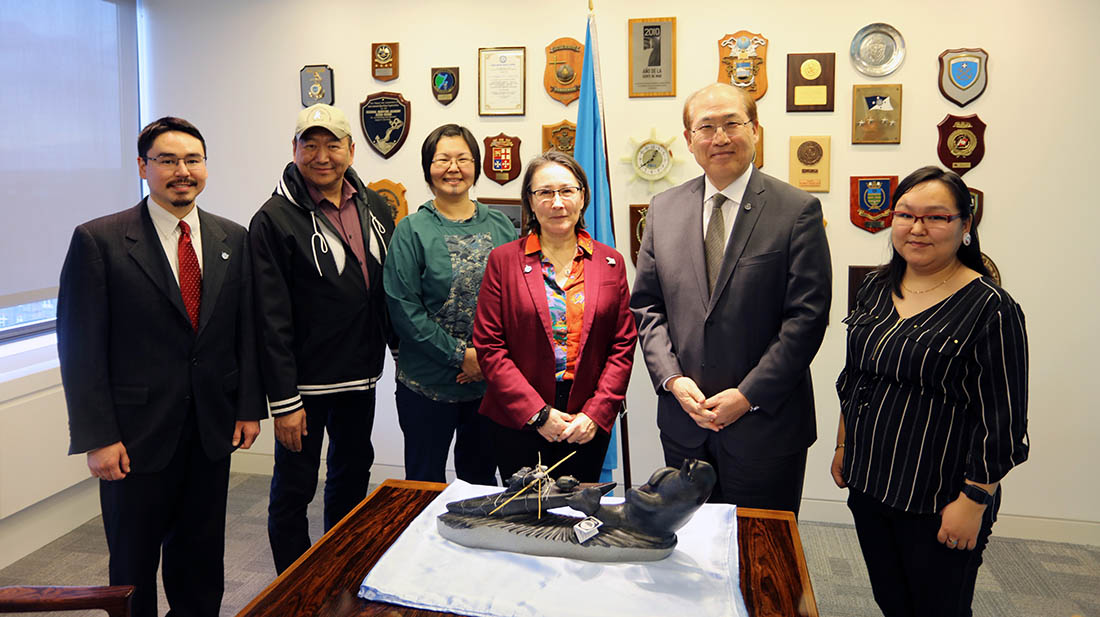
In Canada, the national office plays an active role in connecting Inuit from across Inuit Nunangat with Inuit across the circumpolar regions in Alaska, Greenland (Kalaallit Nunaat) and Chukotka. It represents Inuit in Canada on the international stage and advocates for their collective rights, culture and environment.
ICC Canada’s national office is in Ottawa, Ontario, providing easier access to liaise and work with the Canadian government and other Inuit groups in Canada with shared priorities. Inuit organizations Nunavut Tunngavik Incorporated, Inuit Tapiriit Kanatami and Makivvik Corporation are also members of the ICC. The ICC has played a significant role in strengthening unity among Inuit, promoting their rights and interests as Indigenous peoples and ensuring the development of Inuit culture.
ICC Canada also maintains an archive on behalf of all circumpolar Inuit. It preserves the organization’s official records as well as a collection of documents, photographs, films, books, fine art, and cultural tools and objects created by other Inuit or relating to Inuit interests. The archive is an important resource for future generations across the circumpolar region.
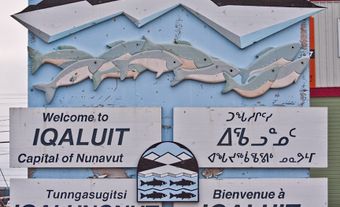
At the general assembly in Iqaluit in July 2026, Canada took over the chair from Greenland. Aluki Kotierk from Canada became the international chair for a four-year term.
International Chairs from Canada:
- Mary Simon (1986 to 1992)
- Rosemarie Kuptana (1995 to 1997)
- Sheila Watt-Cloutier (2002 to 2006)
- Okalik Eegeesiak (2014 to 2018)
- Aluki Kotierk (2026–)