Share on Facebook
 Share on X
 Share by Email
 Share on Google Classroom
According to the 2021 census, there were over 925,000 Filipino Canadians in Canada. That year, the Philippines was also the second most common country of birth among people who moved to Canada. (See Immigration to Canada.) As a result, Filipino food is an emerging cuisine in Canada. However, it’s underrepresented in Canada’s diverse food landscape compared to other Asian cuisines. (See also: Chinese Food in Canada; Indian Food in Canada.)
Filipino cuisine is made up of multiple food traditions. It combines Indigenous Austronesian food practices with other overseas traditions. Notably, the Philippines' colonial past led to Spanish and American culinary influences. Mexican, Chinese and other international influences also shaped Filipino food because of trade or as indirect results of colonialism. The Philippines is a very diverse country, which is also reflected in Filipino cuisine.
See also Popular Filipino Dishes in Canada.
Lutong Bahay
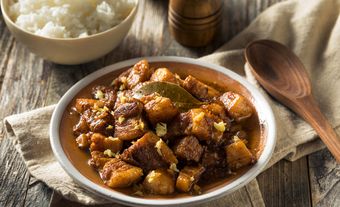
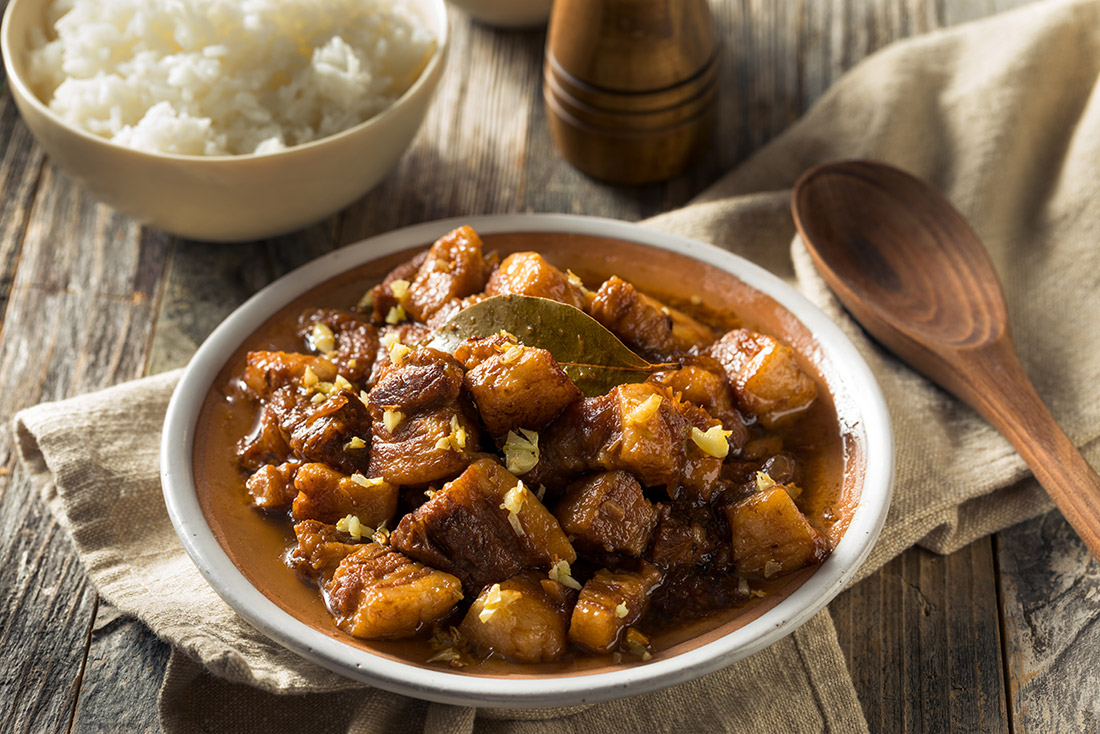
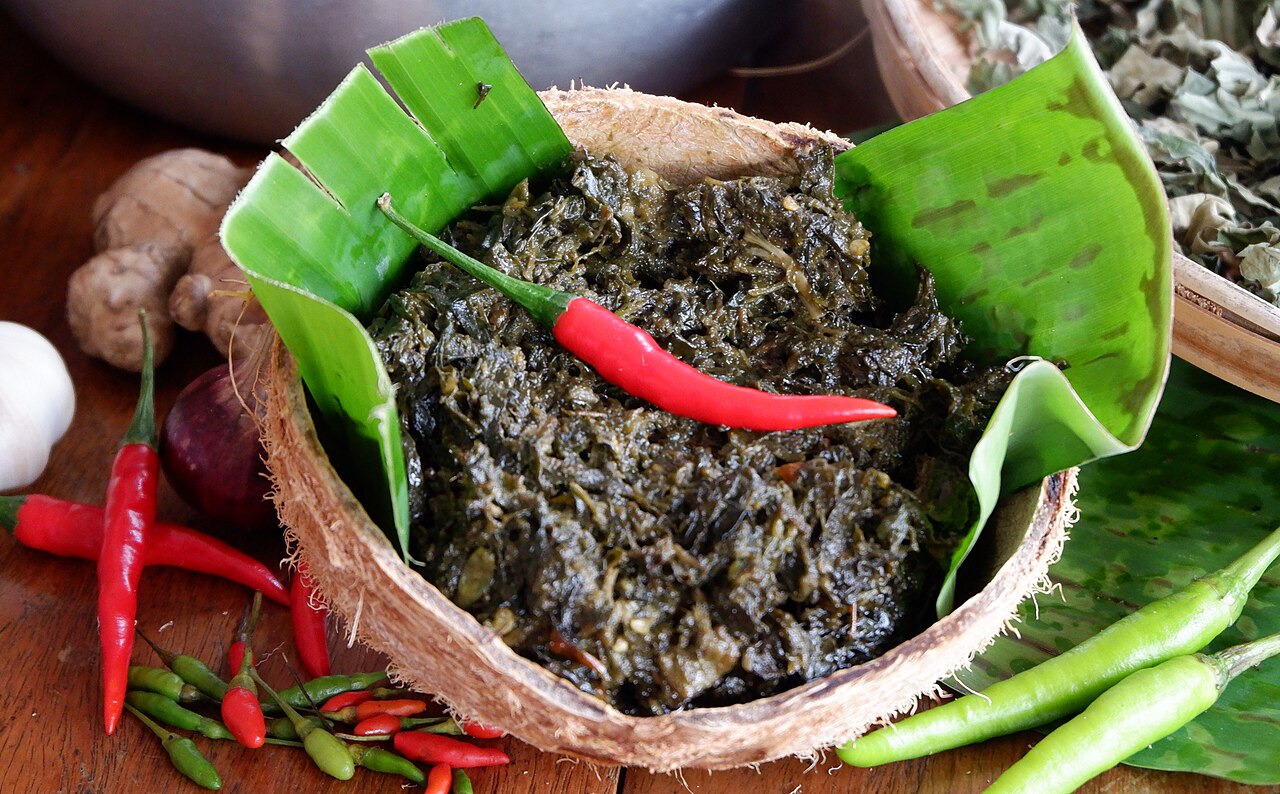
Lutong bahay (home-style cooking) is a cornerstone of Filipino cuisine. It is often vegetable heavy and prioritizes ingredient freshness. Dishes like ilocano pinakbet (vegetable stew with fermented fish paste), bicolano laing (stewed taro leaves with coconut milk and chilies), adobo (meat or vegetable stew with garlic, soy sauce and vinegar) and tortang talong (eggplant omelette) fall into this category. Many rice-based dishes, including lugaw (rice porridge), are also considered lutong bahay.
In Canada, finding certain key ingredients can sometimes prove difficult. Filipino Canadian immigrants often adapt traditional recipes by using local substitutes. Sinigang (a savoury-sour soup) is a helpful example to understand how flexible Filipino cuisine can be. Traditionally, the soup’s souring agents, vegetables and proteins can vary a lot. As a result, it is easy to substitute the popular souring agent of tamarind with, for example, locally available rhubarb.
Another culinary adaptation is that some Filipino Canadians grow their own produce. Like many immigrants, some Filipinos plant vegetables like ampalaya (bitter melon) and saluyot (jute leaves) in pots or home gardens. This solution is especially popular among immigrants from rural settings, where subsistence gardening is a way of life. Several entrepreneurs have also developed small-scale commercial tropical farms to meet the demand of local communities.
Fiesta Foods
Another important category of Filipino cuisine is fiesta foods. These dishes are served in abundant quantities to feed a crowd. They usually require a lot of work to prepare.
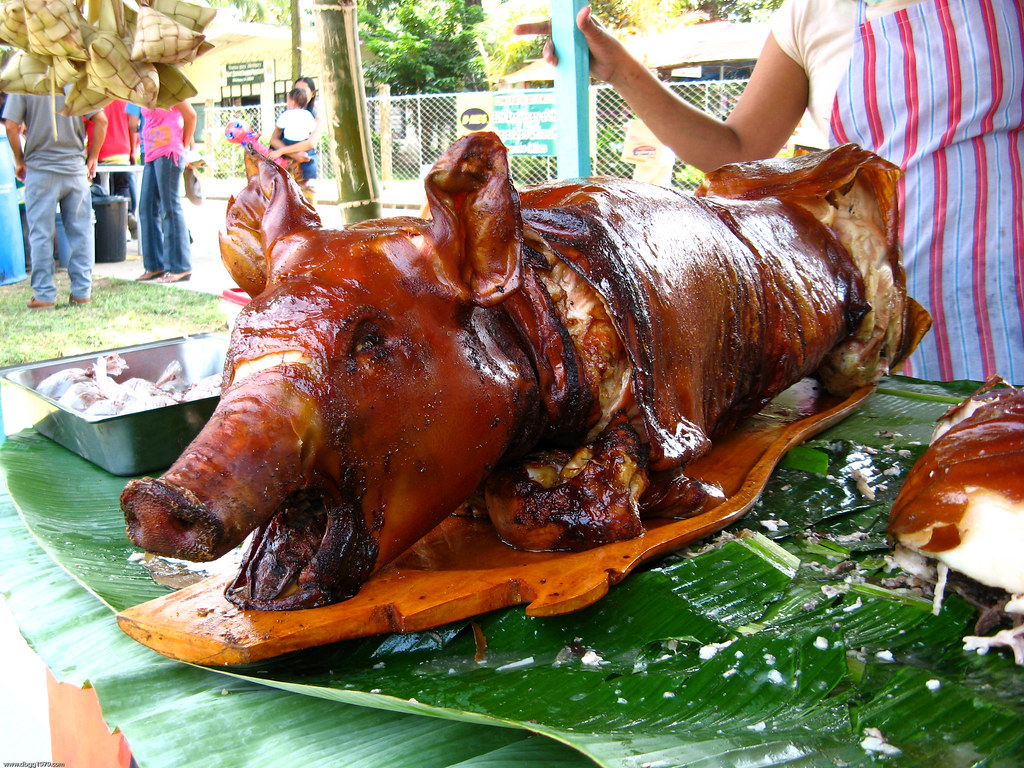
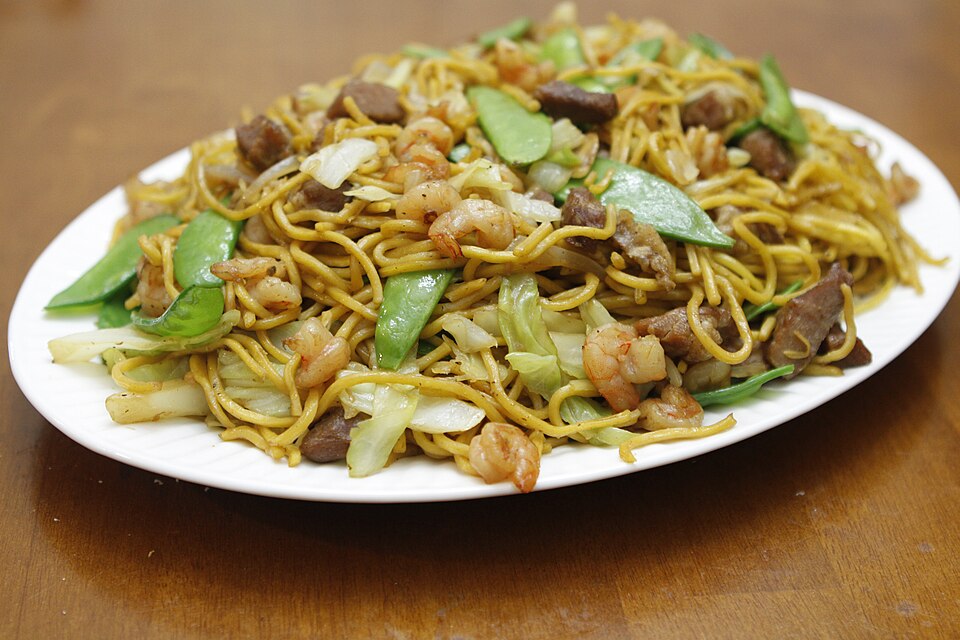
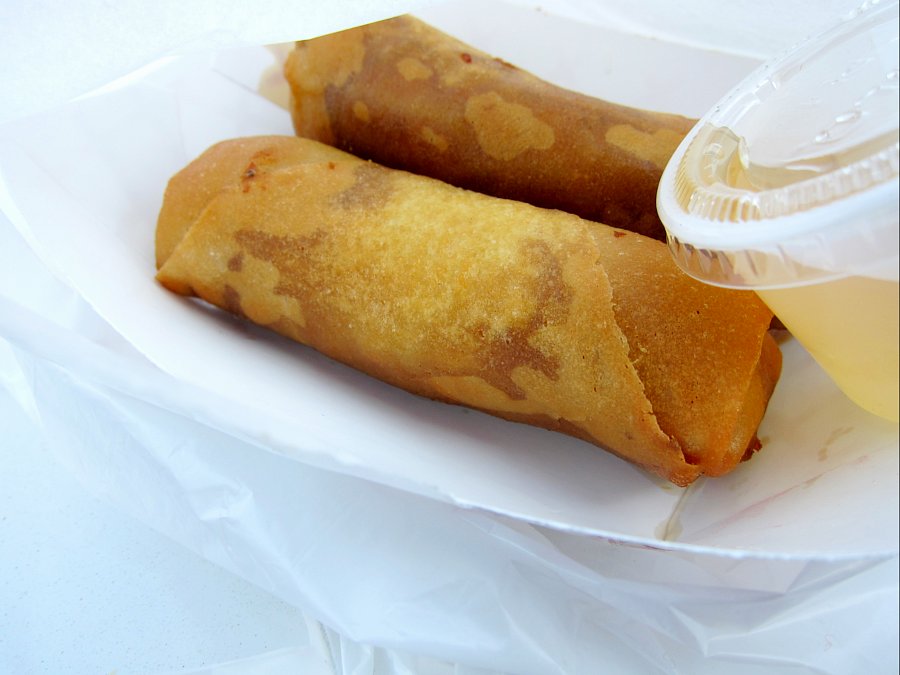
Filipino Canadians typically serve fiesta foods on holidays, family celebrations and community gatherings. Popular dishes include lechon (roast pig), pancit (various noodle dishes) and lumpiang shanghai (fried spring rolls with meat). Sticky rice-based snacks and desserts called kakanin are also popular. Preparing fiesta foods is frequently a collective effort. The work sometimes even involves extended family and community members.
Food and Cultural Festivals
In cities with large Filipino Canadian populations, festivals featuring Filipino food usually take place in the summer or to celebrate holidays. Festivals typically offer fiesta food, street food vendors, musical performances and traditional dance demonstrations, like tinikling.
Toronto’s Taste of Manila describes itself as the “largest Filipino food festival outside of the Philippines.” In Winnipeg, the Manitoba Filipino Street Festival is a prominent festival, and in Calgary, Fiesta Filipino is also a popular event. In Vancouver, Lapu-Lapu Day is celebrated with an annual festival. The Lapu-Lapu Day Festival is an anti-colonial celebration of Philippine identity. It commemorates the folk hero, Datu Lapu-Lapu, who defeated Ferdinand Magellan in 1521. There are also festivals in major cities like Montreal, Burnaby, Ottawa, Kingston and Halifax.
Food and cultural festivals in Canada have emerged as vibrant expressions of diasporic identity. They show how important food is in Filipino cultural celebrations. They also allow for community cohesion and cultural continuity by bringing Filipino Canadians together.
Moreover, festivals create important spaces for cultural education. These benefit Canadians from different backgrounds, including Filipino Canadians themselves. Second- and third-generation Filipino Canadians get to engage with their food traditions. These might otherwise feel distant to them. Many Filipino Canadians also get to learn about regional dishes unfamiliar to them. Canada’s Filipino festivals use cuisine to create a united identity and cultural memory.
Restaurants
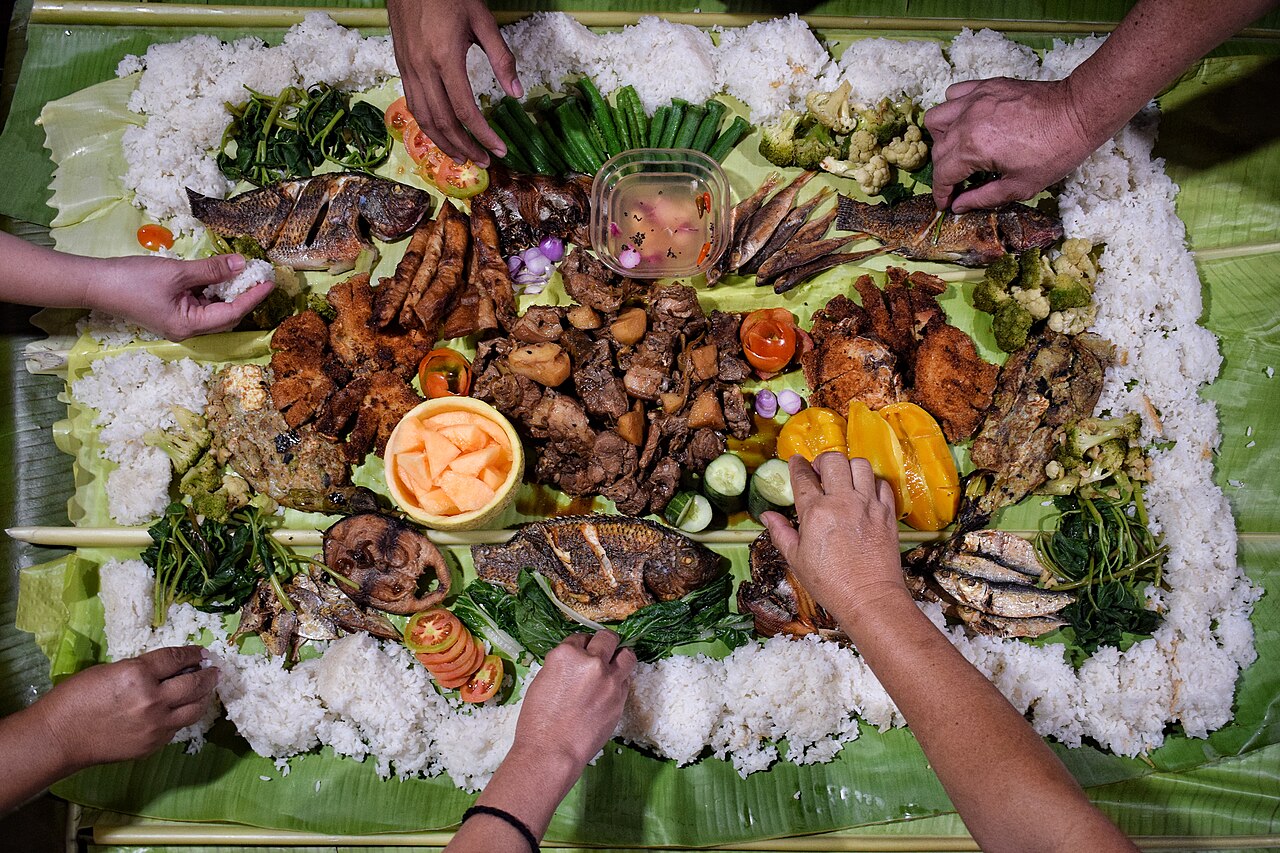
Filipino restaurants typically offer a mix of fiesta foods and select lutong bahay dishes. This approach offers a taste of home for Filipino Canadians, but it also caters to diverse clients. Many local restaurants offer kamayan services. Kamayan is a traditional hands-on group meal served on banana leaves. As a form of communal eating, kamayan is tied to cultural values of sharing and togetherness.
A few fast-food chains from the Philippines have a limited presence in Canada. These include Jollibee, a fried chicken chain that carries nostalgia for many people who have lived in the Philippines. Jollibee is particularly well-known for their fried chicken. They also offer popular menu items like Filipino spaghetti and peach-mango pie, which are unique in the Canadian fast-food landscape.
Potato Corner is another fast-food chain with several Canadian locations. They serve shaker fries, a popular mall snack in the Philippines. The fries are made fresh to order and their seasoning options include sour cream, cheese and barbeque flavours. Like Jollibee, Potato Corner is also a nostalgic childhood experience for many.
Filipino food has increased in popularity in recent years. There is a growing demand for diverse culinary experiences, especially Southeast Asian flavours. (See also Southeast Asian Canadians.) As a result, Filipino food in Canada has gained increased visibility and recognition. As Filipino food grows in popularity, chefs are creating a greater variety of restaurants and shops. These include traditional, fusion and some regional restaurants. Dessert shops and fine dining experiences are also appearing.
In 2023, the Michelin Guide awarded the Bib Gourmand status to Toronto’s BB’s (chef Robbie Hojilla). The restaurant became the first Filipino restaurant in Canada to receive this distinction. Another notable restaurant is Mineral (chef Danny Cancino), which opened in Toronto in 2019. Mineral is likely the country’s first Filipino fine dining restaurant. Critics praised the restaurant for its innovative tasting menus. The Night Baker in Toronto also received attention in 2026 for their cookies featuring Filipino-inspired flavours like ube (Filipino purple yam) and pandan (a green aromatic plant).
Several prominent Canadian chefs use Filipino flavours and techniques in their work. Jamaican Filipino Top Chef finalist Andrea Alridge brought Filipino influences into Italian cuisine. She married the two culinary traditions when she was the head chef of Savio Volpe in Vancouver and the executive chef at Janevca Kitchen & Lounge in Esquimalt, British Columbia. Meanwhile, popular Toronto Thai chef Nonglak “Nuit” Regular also opened a Filipino restaurant, Makilala, in 2025.