Share on Facebook
 Share on X
 Share by Email
 Share on Google Classroom
In 1923, Canada passed a law called the Chinese Immigration Act. It banned almost all Chinese people from coming to Canada. At the time, Canada controlled immigration tightly. But Canada targeted Chinese immigrants particularly harshly.
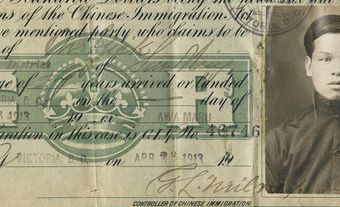
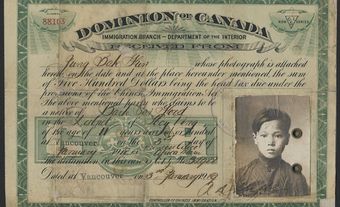
There were some exceptions to the law. This was for students and diplomats. Some merchants were also exempted. But only if they didn’t operate laundries, restaurants or retail shops. Chinese people who left Canada had to come back within two years. If not, they lost their right to return. In Canada, Chinese people needed to register for an identity certificate or face punishment.
The ban lasted for 24 years, until the law was repealed in 1947.
This article is a plain-language summary of Chinese Immigration Act. If you are interested in reading about this topic more in depth, please see our full-length entry, Chinese Immigration Act.

Background
Chinese people came to British Columbia during the gold rush of 1858. Later, some came to build the Canadian Pacific Railway (CPR).
However, many Canadians were very anti-Chinese. They did not want Chinese people in Canada. They wanted a Canada only for white people. Some racists saw Chinese and Japanese people as a “yellow peril” against Canada. (See Anti-Asian Racism in Canada.)
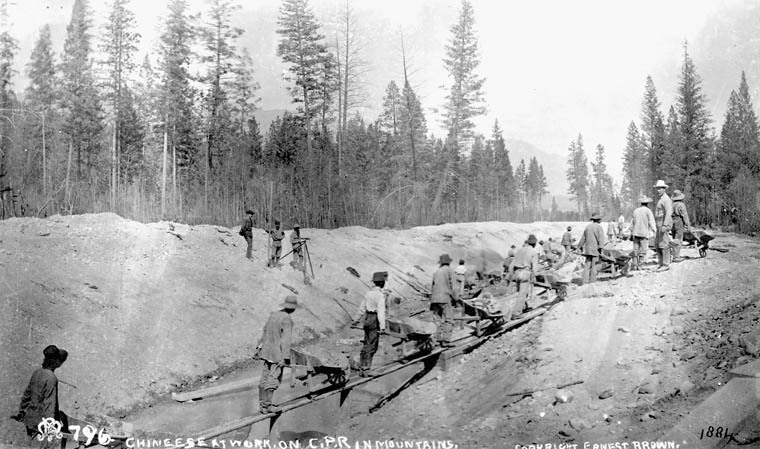
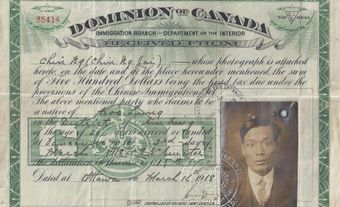
In 1885, the CPR was finished. Canadians made more policies against East Asian people. That same year, Canada adopted the Chinese Immigration Act of 1885. This implemented the Chinese head tax. Every Chinese immigrant had to pay $50 to enter the country. In 1900, this went up to $100. In 1903, it increased to $500. This was a lot of money at the time. But Chinese people still wanted to come. The Chinese community continued to grow in size.
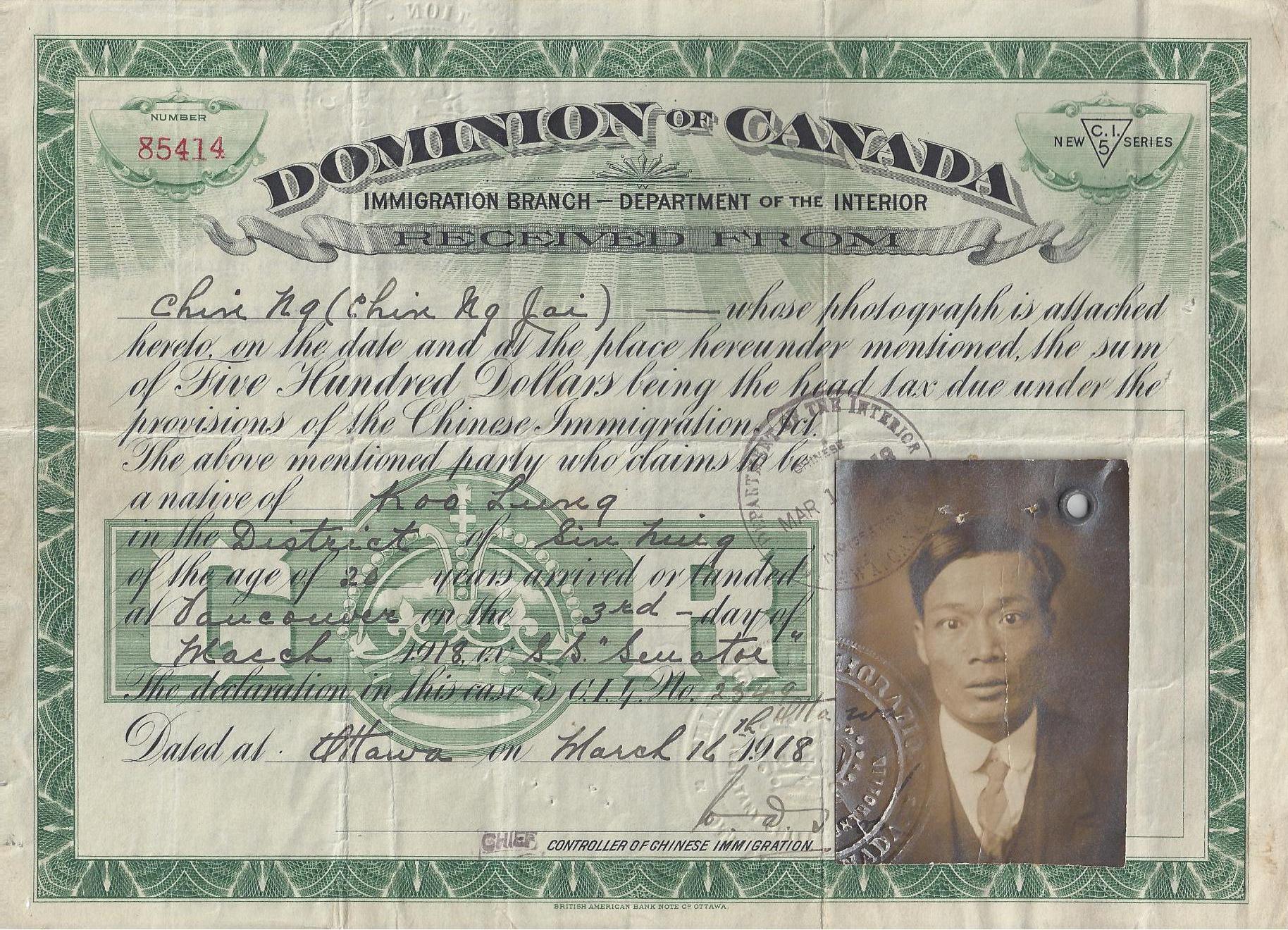
Canada passed the Immigration Act of 1910. The law restricted some races of people from coming to Canada. Canadians thought that some races did not fit Canada’s climate or needs. This allowed racial discrimination in immigration policies until 1967.
To stop Chinese migrants, Canada opted for a harsher solution. This was to exclude Chinese immigrants. On 1 July 1923, Canada passed a new Chinese Immigration Act. The new law effectively banned all Chinese immigration to Canada.
The day coincided with Dominion Day. Today, it’s called Canada Day. Chinese people called it “Humiliation Day.” Many refused to join Dominion Day celebrations for years.
Community Life
The Chinese Immigration Act limited community growth. Very few Chinese immigrants could come to Canada. The community began to decrease in size.
The new law disrupted family life. In 1941, there were 29,033 Chinese men in Canada. Eighty per cent had wives and children back in China. People called these men “married bachelors.” A small number could afford to visit China a few times. Some went back to visit family. Some men travelled back to marry. The law kept families separated. The men could not bring their families over.
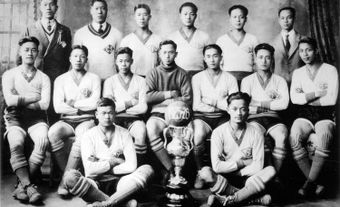
Without family, the men needed their own support groups. They formed traditional associations. Some associations united people with shared family names or places of origin in China. These groups offered help with money, finding jobs and housing. Associations also provided social services and social spaces.
Chinese people also formed political associations. They were often divided by different opinions on Chinese politics. However, they came together to fight the Chinese Immigration Act. Chinese organizations tried to use legal and political means to stop the Act. But they failed.
Economic Life
For a very long time, Chinese people had second-class status in Canada. There was a lot of anti-Asian racism. Chinese people could not vote. They could not hold public office. They also had few job and housing opportunities. White workers and unions did not want them to have some jobs.
Many Chinese people had debts because of the head tax. They turned to opening small businesses. These were Chinese laundries, restaurants and grocery stores. Chinese workers also took on jobs others did not want. These included being a cook or a servant. Chinese immigrants preferred to do hard work than to leave Canada. Some needed the money to support their families in China.
Some people were desperate enough that they came to Canada illegally. Some claimed fake identities to be able to immigrate. They were called “paper sons.” They often lived in fear of being found out and sent back to China.
The Great Depression (1929–39) made things even worse. Chinese unemployment was very high. Much higher than for white Canadians. Chinese people also received less government support.
Second World War
The Second World War was a big turning point for Chinese Canadian history. Canada was allied with China against Japan. A few hundred Chinese volunteers fought with Canadian forces. They wanted to prove that they were patriotic. By doing so, they thought that they would then get the right to vote. (See Chinese Canadians of Force 136.)
After the war, Canada helped create the United Nations (UN). However, Canada’s anti-Chinese policies went against UN values. The Chinese community also pushed for their rights.
In 1947, Canada repealed the Chinese Immigration Act. There were still some restrictions, however. Only Chinese Canadians with citizenship could bring their family members over. At the time, most Chinese people in Canada did not have citizenship. The community kept pushing for changes.
In 1967, immigration restrictions based on race and national origin were finally removed.
Apology and Redress
For 20 years, Chinese Canadians pressured the government to apologize. They wanted an apology for how unfair immigration policies were toward Chinese people.
On 22 June 2006, Prime Minister Stephen Harper apologized. Canada also made reparation payments. Living head tax payers or their surviving spouses could get the payment.
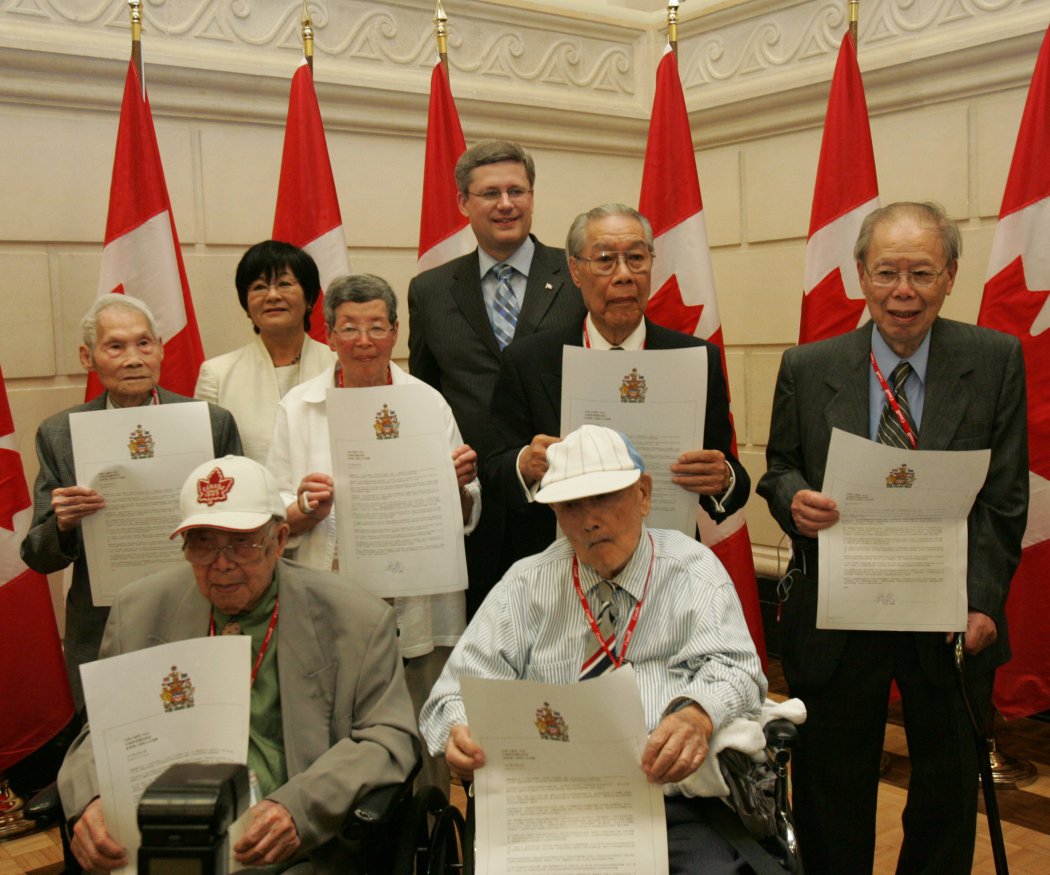
On 15 May 2014, the premier of British Columbia, Christy Clark, apologized.
In 2023, Canada recognized the exclusion of Chinese immigrants as an event of historical significance.