Share on Facebook
 Share on X
 Share by Email
 Share on Google Classroom
Breadalbane is a ghost ship, a three-masted barque lying beneath the ice of the Northwest Passage off Beechey Island, Nunavut. It is the world's northernmost known shipwreck and the best-preserved wooden ship yet found in the ocean. Breadalbane was involved in the search for Sir John Franklin’s lost expedition. It was designated a national historic site in 1983.
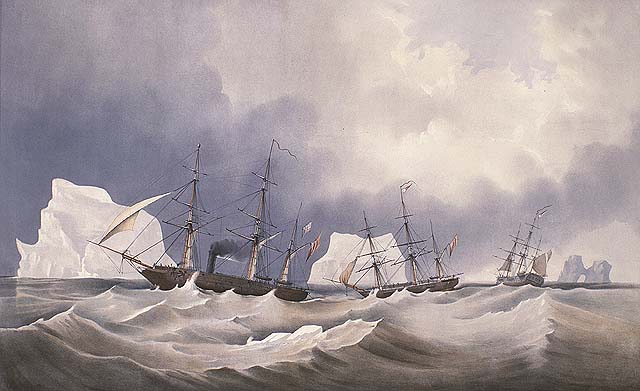
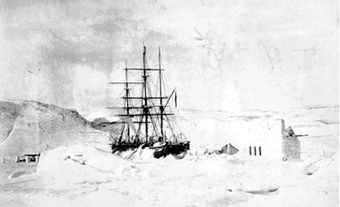
The Breadalbane, built in Scotland in 1843, was a merchant ship that sailed to Europe's great seaports carrying wine, wool and grain. In spring 1853, Breadalbane was called into service by the Royal Navy and sent to the high Arctic area of Resolute Bay (now in Nunavut). Its mission was to carry supplies to Sir Edward Belcher's expedition, which since 1852 had been searching for the ships and men of the Franklin Expedition. Franklin disappeared searching for a navigable passage through the Arctic. Belcher's squadron was the Royal Navy's last and largest search expedition.
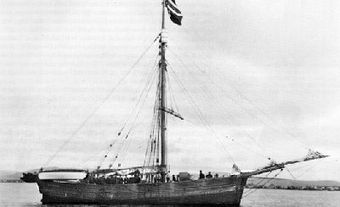
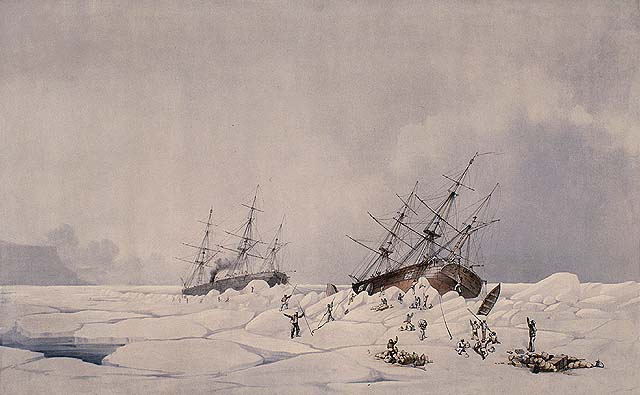
The Breadalbane was about 40 m long and generously built, a square-rigged ship typical of the hundreds that linked the great oceans during the reign of Queen Victoria. But the ship was no match for the Arctic. In spite of its sturdy wooden hull and the skill of its crew, Breadalbane was trapped in polar ice.
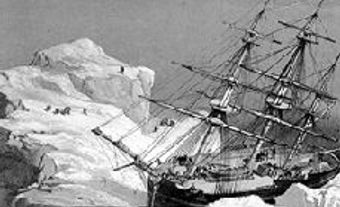
Just after midnight on 21 August 1853, half a mile south of Beechey Island, a slab of ice knifed through the starboard bow. The 21-man crew scrambled over the side to safety. Within 15 minutes Breadalbane sank. The crew was picked up by the surviving sister ship, the Phoenix. For 127 years, Breadalbane remained hidden below the grinding polar ice pack, hard on its keel, its broken bowsprit pointing eastward, towards home and England.
Joseph B. MacInnis' first expedition to find the ship (August 1978) was prompted by the research of arctic marine historians Stuart Hodgson and Maurice Haycock. Available documents included eyewitness accounts from the archive of the Scott Polar Research Institute, Cambridge, England. MacInnis’ team spent three years searching the waters south of Beechey Island. They finally found the ship in 1980, using a side-scan sonar system towed by Canadian Coast Guard icebreaker CCGS Sir John A. Macdonald.On 13 August, Breadalbane ghosted onto the system’s screen — her hull intact, two of her masts still standing.
In 1981, the expedition went back for a more detailed look, this time on CCGS Pierre Radisson. The team was also supported by the National Geographic Society and other institutions. A remotely piloted submersible was lowered into the lethally cold water. One hundred metres down, colour photographs were taken with still and video cameras. The Breadalbane's bow, masts, rudder and anchor could be seen; the green copper sheathing that still protected the hull looked like new. In a small cabinet hanging on the deckhouse were her compass and a signal light; nearby was the big wooden wheel that had guided her across the stormy North Atlantic.
Yet Breadalbane lies far below the depths at which marine archaeologists can work. To unlock its secrets, new diving and photographic techniques specific to the Arctic were developed, including the Sea-Otter submersible, a lock-out diving system and WASP, a physiologically protective diving suit. In 1983, this technology was used to thoroughly study the shipwreck and to recover the ship’s wheel, which is now kept by Parks Canada.
Breadalbane is unique among shipwrecks, being beautifully preserved by arctic waters. For scientists, she is a drowned benchmark, an opportunity to learn more about arctic biology and geology and about the sea ice that floats above its masts. Historically, it is a time capsule: some of the cargo and working tools and personal effects of the crew are still on board. Diving down to her and studying her remains, is an excursion into Canada's past and into our future.