Share on Facebook
 Share on X
 Share by Email
 Share on Google Classroom
On 8 February 2007, Liberal Premier Jean Charest established the Bouchard-Taylor Commission, officially called the Commission de consultation sur les pratiques d'accommodement reliées aux différences culturelles au Québec. A commission is a group of people who come together to discuss issues for the general public. The Bouchard-Taylor Commission explored the subject of "reasonable accommodation," i.e. ensuring equality and respect for the rights of religious minorities and preventing discrimination. All this, without undermining the mainstream public culture in place. In Quebec, religious minorities include Muslims, Sikhs and Jews.
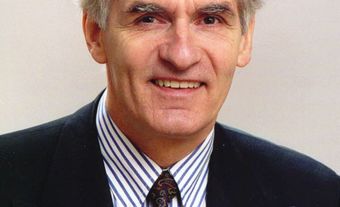
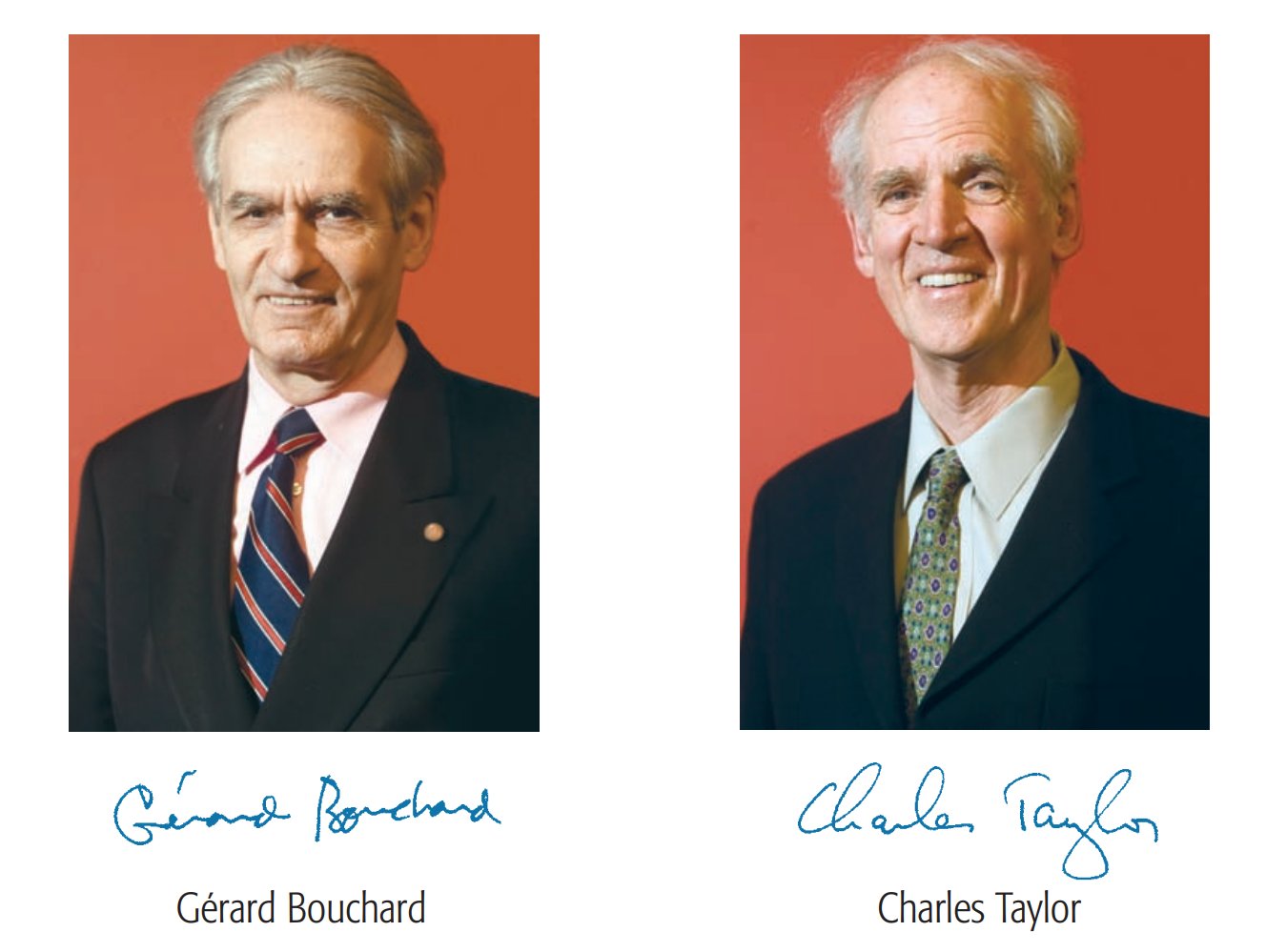
Two experts led the commission. One was Gérard Bouchard, a professor of sociology at the Université du Québec à Chicoutimi. The other expert was Charles Taylor, a professor of philosophy at McGill University.
This article is a plain-language summary of Bouchard-Taylor Commission on Reasonable Accommodation in Quebec. If you are interested in reading about this topic more in depth, please see our full-length entry, Bouchard-Taylor Commission on Reasonable Accommodation in Quebec.
Background
In 1985, the Supreme Court of Canada introduced the concept of reasonable accommodation. Reasonable accommodation prohibits discrimination based on disability, sex, religion and belief. The Canadian government and society must therefore consider and tolerate certain beliefs and practices of cultural and religious minorities. In practice, employers and the government must make compromises to adapt (accommodate) to different customs.
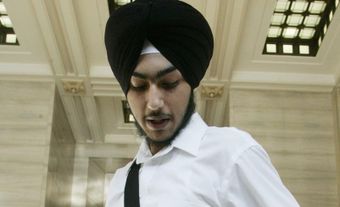
In 2006, attitudes in Quebec towards the cultural practices of minorities toughened. This was because the Supreme Court of Canada overturned the ban on Gurbaj Singh Multani, a Sikh student, wearing his kirpan to school. The kirpan is a ceremonial dagger of the Sikh religion. (See Multani v. Commission scolaire Marguerite-Bourgeoys (Plain-Language Summary).)
This case sparked public debates in Quebec. Supreme Court of Canada Justice Louise Charron wrote that the ban does not respect Sikh people and does not take into account Canadian multiculturalism.
A series of other events made headlines in the media.
- A sugar shack dance hall was being used for a Muslim prayer session.
- Pork was removed from the menus of some sugar shacks to meet the dietary needs of Muslim people.
- In Outremont, the Hasidic Jewish community asked that the ground-floor windows of a YMCA gym next to their synagogue be frosted.
- In the village ofHérouxville, a five-page "code of conduct" has been created for immigrants.
Several Quebec political parties have engaged in the debates on reasonable accommodations.
In February 2007, Liberal Premier Jean Charest set up the Bouchard-Taylor Commission. A team of experts was tasked with examining the issue of reasonable accommodation.
In March 2007, an election was held in Quebec. The political party Action démocratique du Québec (ADQ) won 41 seats and became the official opposition of the governing Liberal government. The ADQ was adamantly opposed to reasonable accommodations.
In October 2007, the Parti Québécois (PQ) proposed Bill 195. The PQ wished to limit accommodations. According to the bill, accommodates were to take into account certain characteristics of the majority society, including Quebec heritage, values and culture. Bill 195 was not passed.
Mandate
The Bouchard-Taylor Commission had several objectives:
- Make a list ofreasonable accommodation practices in Quebec.
- Consider the experiences ofother societies.
- Consult Quebec society.
- Prepare a document containing a series of recommendations. The goal was to find as "pluralistic, democratic and egalitarian" compromise between the values of Quebec society and the practices of minority communities.
To prepare their study, the two experts studied the integration of communities into the economic and social life of Quebec society. They addressed several subjects including interculturalism, immigration, secularism and Quebec identity.
Final Report
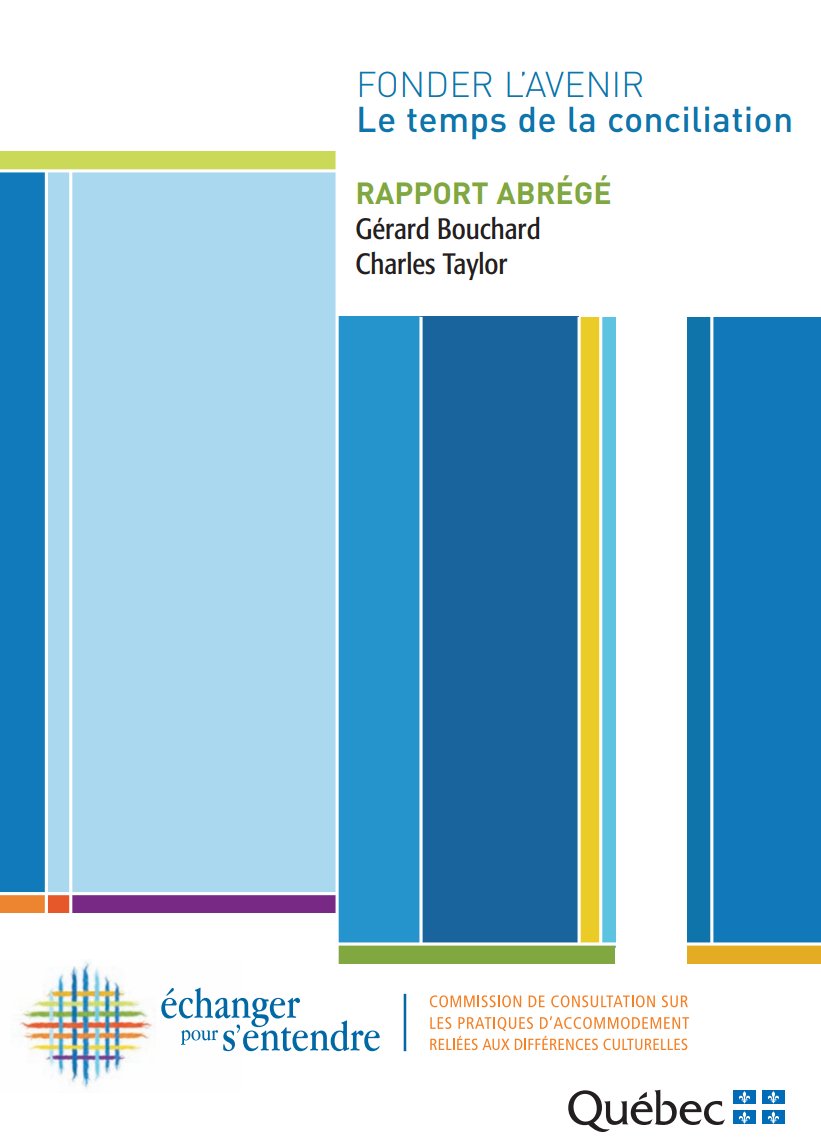
In 2008, the Commission published its report entitled "Building the Future: A Time for Reconciliation". The document contained 37 recommendations.
The document indicated that reasonable accommodation practices in Quebec were not excessive. Ethnocultural and religious minority communities respect Quebec culture.
Experts blamed the media, who are alleged to have exaggerated and distorted the reality of accommodation practices.
Experts note that Franco-Quebec society suffers from an identity crisis. This has influenced reactions towards minorities in Quebec. This crisis is linked to the fact that francophones are in the majority in Quebec. However, they are a minority in Canada and North America.
The report recommended a limited ban on the wearing of religious symbols. Only government personnel with coercive power should not wear religious symbols. Coercive means the use of force or punishment, such as the power of judges, prosecutors and the police over the public.
The authors expressed concern about the lack of policies to manage requests for accommodation and suggested officially implementing a model for coexistence in Quebec. Known as "interculturalism", this model is intended to address issues of ethnocultural diversity. (See also Quebec Immigration Policy.)
Long-term influence
On 29 January 2017, a terrorist attack targeted the Quebec City mosque. In response, Charles Taylor explained that he had changed his mind. He no longer recommended banning government employees from wearing religious symbols.
Quebec governments have tabled several bills relating to reasonable accommodation.
In 2017, the Quebec Liberal Party government passed Bill 62. This law prohibits anyone from covering their face under a cloth when providing or receiving public services.
In 2019, the Coalition Avenir Québec introduced Bill 21. The Act Respecting the Laicity of the State was passed the same year. This act implemented one of the recommendations of the Bouchard-Taylor Commission. In particular, the recommendation that government employees in positions of coercive authority be banned from wearing religious symbols. The act goes further by also prohibiting teaching staff from wearing religious symbols.
In 2025, Bill 21 was amended to include more restrictions on religious accommodations. No school staff can wear religious symbols. Religious accommodations for meals and celebrations are also prohibited.