
Browse "Things"
-
Article
Calvinism
A Protestant Christian theological system constructed by religious reformer John Calvin (Jean Cauvin, 1509-64) and made more stringent and narrower in focus by his successors. It is considered to have been widely influential in Canadian life.
"https://thecanadianencyclopedia.ca/images/tce_placeholder.jpg?v=e9dca980c9bdb3aa11e832e7ea94f5d9" // resources/views/front/categories/view.blade.php
https://thecanadianencyclopedia.ca/images/tce_placeholder.jpg?v=e9dca980c9bdb3aa11e832e7ea94f5d9
-
Article
Cameras in the Court
Canadian courts are open to any member of the public if there is the space, if the court is near enough to them and if they can find the time to attend. For years Canadian media have argued for television camera access to court proceedings.
"https://thecanadianencyclopedia.ca/images/tce_placeholder.jpg?v=e9dca980c9bdb3aa11e832e7ea94f5d9" // resources/views/front/categories/view.blade.php
https://thecanadianencyclopedia.ca/images/tce_placeholder.jpg?v=e9dca980c9bdb3aa11e832e7ea94f5d9
-
Article
Camp X
Camp X — a popular name that reflects the secrecy surrounding its activities — was a training school for covert agents and a radio communications centre that operated close to Whitby, Ontario, during the Second World War. It was the first such purpose-built facility constructed in North America. Known officially as STS (Special Training School) 103, Camp X was one of several dozen around the world that served the needs of the Special Operations Executive (SOE), the British agency created in 1940 to “set Europe ablaze” by promoting sabotage and subversion behind enemy lines. The radio communications centre, with its high-speed transmitter known as Hydra, was closely linked with British Security Co-Ordination (BSC), the New York-based agency directed by the Winnipeg-born businessman William Stephenson. Soviet defector Igor Gouzenko was hidden there after his defection in September 1945.
"https://d3d0lqu00lnqvz.cloudfront.net/media/media/29e7f4d4-b408-4532-8c5f-c3aa1874cc0c.jpg" // resources/views/front/categories/view.blade.php
https://d3d0lqu00lnqvz.cloudfront.net/media/media/29e7f4d4-b408-4532-8c5f-c3aa1874cc0c.jpg
-
Article
Camping
Camping may be defined as living in a temporary or mobile shelter in the outdoors, whether a lean-to, tent or camper van.
"https://thecanadianencyclopedia.ca/images/tce_placeholder.jpg?v=e9dca980c9bdb3aa11e832e7ea94f5d9" // resources/views/front/categories/view.blade.php
https://thecanadianencyclopedia.ca/images/tce_placeholder.jpg?v=e9dca980c9bdb3aa11e832e7ea94f5d9
-
Article
Canada
The name “Canada,” is derived from the Iroquoian word kanata, meaning a village or settlement. On 13 August 1535, as Jacques Cartier was nearing Île d'Anticosti, two Indigenous youths he was bringing back from France informed him that the route to Canada (“chemin de Canada”) lay to the south of the island. By Canada they meant the village of Stadacona, on the future site of Quebec City. Cartier used the word in that sense, but also referred to “the province of Canada,” meaning the area subject to Donnacona, chief at Stadacona. The name was soon applied to a much larger region. The “Harleian” world map of c. 1547, the first to show the discoveries made on Cartier's second voyage, applied it to an area north of the gulf and river St. Lawrence. By 1550 maps were also placing the name south of the river. (See also Cartography in Canada: 1500s.)
"https://d3d0lqu00lnqvz.cloudfront.net/media/new_article_images/CartographyInCanada1500s/DesceliersMap1546.jpg" // resources/views/front/categories/view.blade.php
https://d3d0lqu00lnqvz.cloudfront.net/media/new_article_images/CartographyInCanada1500s/DesceliersMap1546.jpg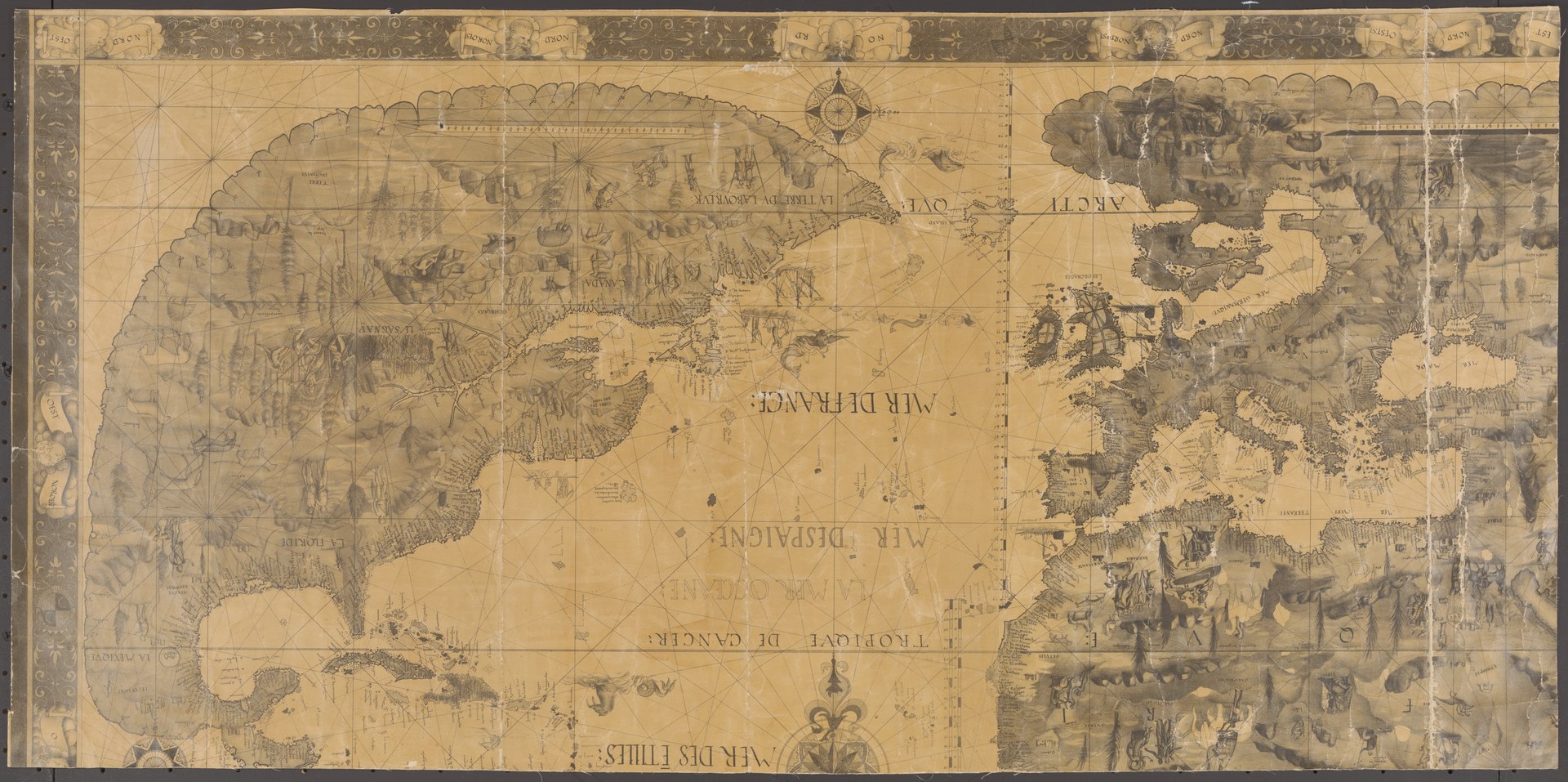
-
Collection
Canada and the War in Afghanistan
The war in Afghanistan (2001–14) was Canada’s longest war and its first significant combat engagement since the Korean War (1950–53). After the 2001 terror attacks on the United States, Canada joined an international coalition to destroy the al-Qaeda terrorist network and the Taliban regime that sheltered it in Afghanistan. (See 9/11 and Canada). Although the Taliban were removed from power and the al-Qaeda network was disrupted, Canada and its allies failed to destroy either group,...
"https://d3d0lqu00lnqvz.cloudfront.net/media/media/553ab440-c0e6-4662-a19d-fca316914feb.jpg" // resources/views/front/categories/view.blade.php
https://d3d0lqu00lnqvz.cloudfront.net/media/media/553ab440-c0e6-4662-a19d-fca316914feb.jpg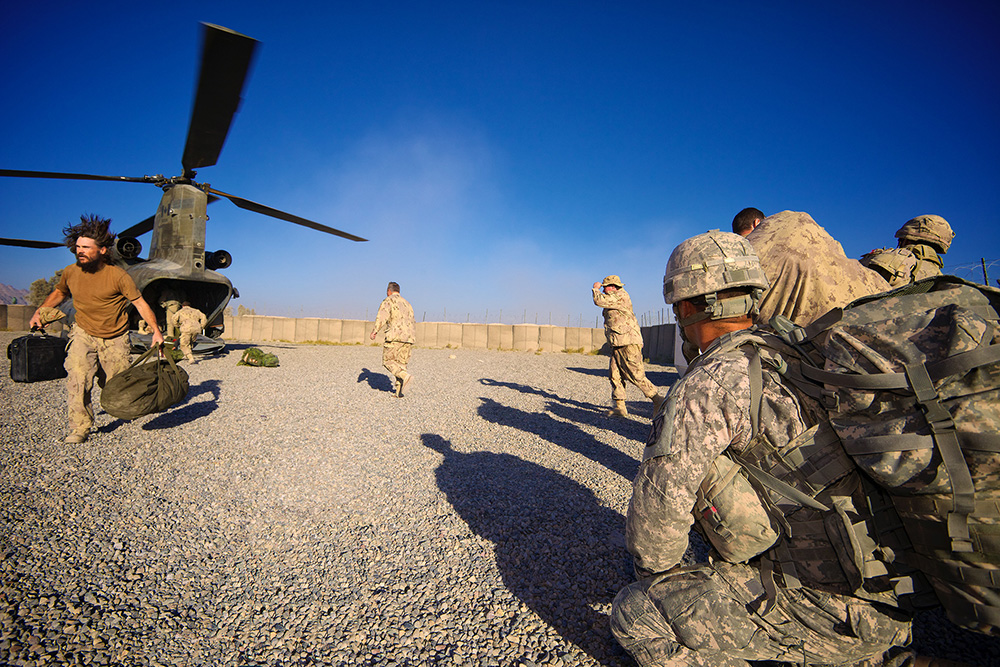
-
Article
9/11 and Canada
The terrorist attacks in the United States on 11 September 2001 had an immediate and profound impact on Canada. Twenty-four Canadians died in what became known as the "9/11" attacks. When the US closed its airspace, hundreds of planes carrying thousands of passengers were diverted to Canadian airports. In the weeks following, Canada passed controversial anti-terrorism laws and sent its first troops to Afghanistan as part of the “War on Terror.”
"https://d3d0lqu00lnqvz.cloudfront.net/media/media/e924ba5e-1db8-4d44-9110-b2187f89724a.jpg" // resources/views/front/categories/view.blade.php
https://d3d0lqu00lnqvz.cloudfront.net/media/media/e924ba5e-1db8-4d44-9110-b2187f89724a.jpg
-
Article
Canada and Antisubmarine Warfare during the Cold War
During the Cold War, the Canadian Navy played a crucial role in antisubmarine warfare (ASW), working closely with its allies to patrol and monitor the North Atlantic and Pacific Oceans for Soviet submarine activity. Canada invested in new technology and continually modernized its fleet of ships and aircraft to better detect and counter Soviet submarines. It also operated strategic warning systems with its allies, particularly the United States. By the end of the Cold War, Canada had developed a very high reputation in the field.
"https://d3d0lqu00lnqvz.cloudfront.net/media/media/9f869e07-d522-4293-927d-787f3be65104.jpg" // resources/views/front/categories/view.blade.php
https://d3d0lqu00lnqvz.cloudfront.net/media/media/9f869e07-d522-4293-927d-787f3be65104.jpg
-
Article
Canada and Antisubmarine Warfare in the First World War
When the First World War began in August 1914, the Royal Canadian Navy (RCN) was unprepared to fight a war at sea. Founded only in 1910, it consisted of two obsolete cruisers, HMCS Niobe and HMCS Rainbow, and about 350 regular sailors, augmented by 250 reservists. During the war, it was assigned a growing number of tasks, which it was ill-equipped to perform. This included protecting Canadian coastal waters against German U-boats. The RCN scrambled to find ships and sailors but was ill-equipped to fight enemy submarines, which sank several vessels in Canadian waters in 1918.
"https://d3d0lqu00lnqvz.cloudfront.net/ASW/VictoryBondsPosterLlandoveryCastle1918.jpg" // resources/views/front/categories/view.blade.php
https://d3d0lqu00lnqvz.cloudfront.net/ASW/VictoryBondsPosterLlandoveryCastle1918.jpg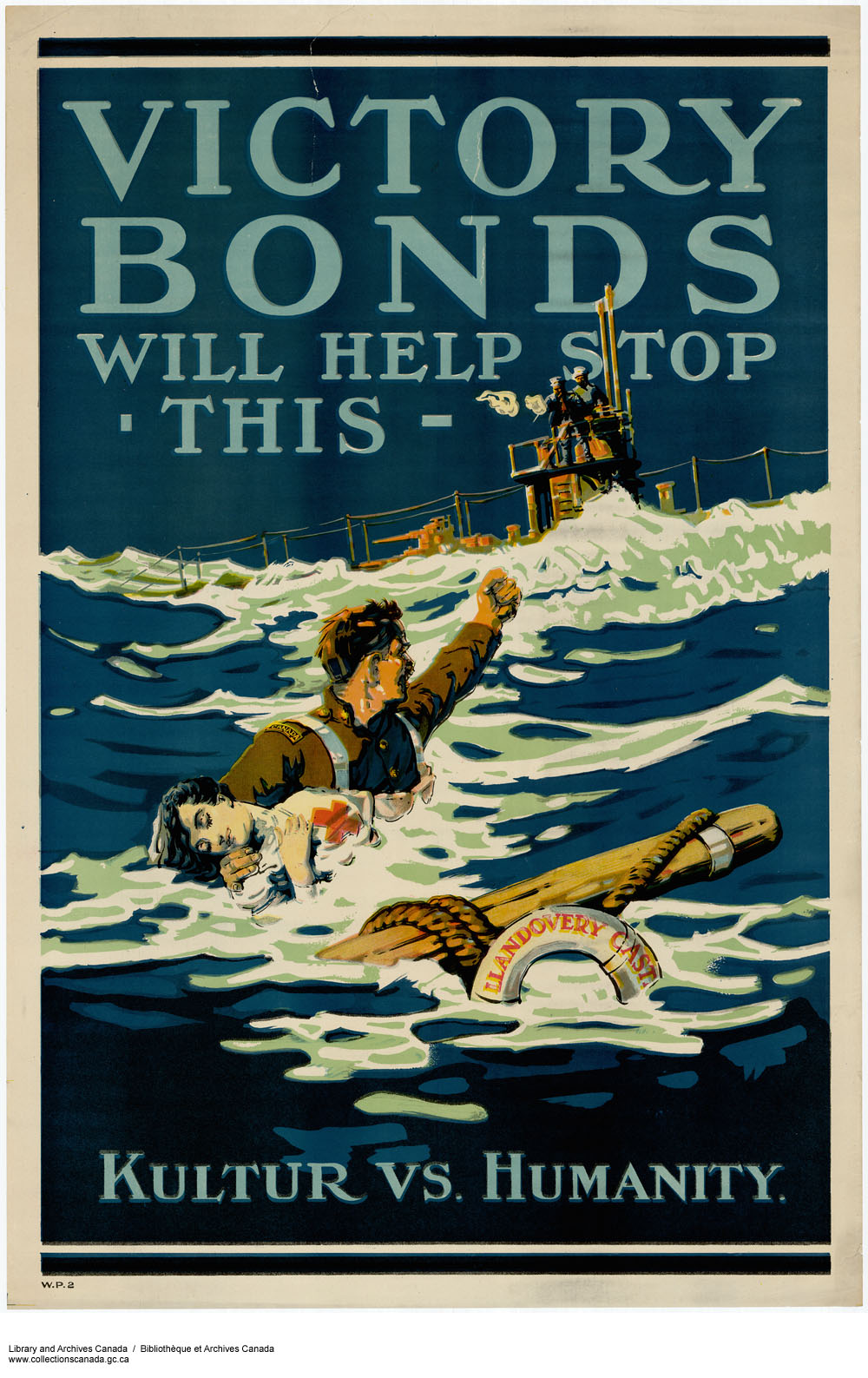
-
Article
Canada and Gas Warfare
Poison gas was used throughout the First World War by almost all armies. Its widespread use was unique in the history of warfare. The various types of gas, delivered by canisters, projectors, or shell, killed, maimed, and wore down morale. By 1918, soldiers of all armies encountered gas frequently while serving at the Western Front. Canadian soldiers were among the first to face the death clouds, at the Second Battle of Ypres in April 1915. At least 11,572 Canadian soldiers were casualties of poison gas, yet many were denied pensions after the war. During the Second World War, chemical weapons were not used on the battlefield; however, the Suffield Experimental Station in Alberta developed and tested chemical and biological weapons beginning in 1941. From about the middle of the 20th century, Canadian officials worked on the global stage to ban chemical weapons, and in the 1990s, Canada signed the Chemical Weapons Convention (see Arms Control and Disarmament.)
"https://d3d0lqu00lnqvz.cloudfront.net/media/new_article_images/GasWarfare/a002897-v8.jpg" // resources/views/front/categories/view.blade.php
https://d3d0lqu00lnqvz.cloudfront.net/media/new_article_images/GasWarfare/a002897-v8.jpg
-
Article
Canada and SOSUS
The Sound Surveillance System (SOSUS) was a network of passive sonar stations established by the United States Navy (USN) in the early 1950s to “listen” for Soviet submarines. SOSUS was a core element of antisubmarine warfare (ASW) during the Cold War. It developed out of intense postwar oceanographic research into how sound is propagated under water. Given Canada’s shared responsibility for the defence of North America, the Royal Canadian Navy (RCN) was actively engaged in this research and mission and helped operate SOSUS. The mission was highly classified throughout the Cold War and only declassified in 1991. SOSUS became part of the Integrated Undersea Surveillance System (IUSS), a broader network of fixed and towed sensors that remains operational.
"https://d3d0lqu00lnqvz.cloudfront.net/ASW/Atlantic Canada w-markers_EN Final.jpg" // resources/views/front/categories/view.blade.php
https://d3d0lqu00lnqvz.cloudfront.net/ASW/Atlantic Canada w-markers_EN Final.jpg
-
Collection
Canada and the American Revolution
The American Revolution (1775–83) was a rebellion of 13 British colonies along the eastern seaboard of North America. The revolutionaries attempted to gain support from colonists in Quebec and Nova Scotia but were unsuccessful. In 1775, rebel armies invaded Canada, occupying Montreal and attacking Quebec City, but they withdrew the following year. American privateers also raided Atlantic ports, and revolutionary sympathizers in Nova Scotia attempted a rebellion in that colony. The American Revolution greatly influenced...
"https://d3d0lqu00lnqvz.cloudfront.net/American-Revolution/1783-Map.jpg" // resources/views/front/categories/view.blade.php
https://d3d0lqu00lnqvz.cloudfront.net/American-Revolution/1783-Map.jpg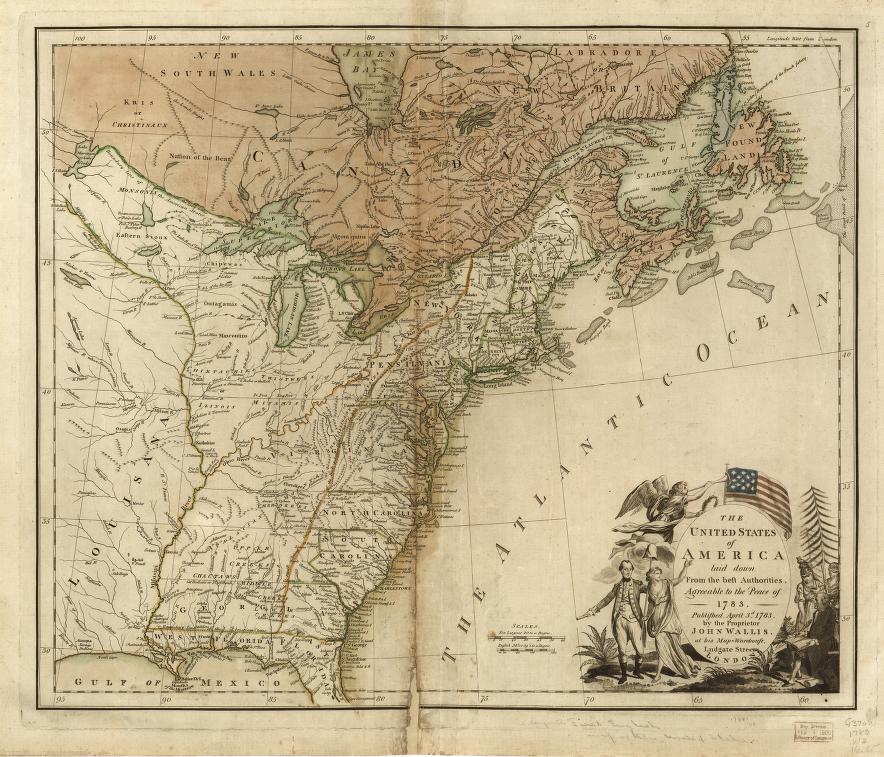
-
Article
Canada and the Asia-Pacific War
Canadian forces were involved in the Asia-Pacific theatre of the Second World War from its outset. At the same time as the Japanese surprise attack on Pearl Harbor on 7 December 1941, other Japanese forces attacked Hong Kong and several other British and Allied bases in the region. Although the main Canadian war effort was against Germany and Italy in the North Atlantic and Western Europe, all three services also employed limited resources in the Asia-Pacific Theatre.
"https://d3d0lqu00lnqvz.cloudfront.net/media/media/4b3a73ba-8620-4c26-88ed-3a3bb499e2ca.jpg" // resources/views/front/categories/view.blade.php
https://d3d0lqu00lnqvz.cloudfront.net/media/media/4b3a73ba-8620-4c26-88ed-3a3bb499e2ca.jpg
-
Article
Canada and the Battle of the Atlantic (Plain-Language Summary)
The Battle of the Atlantic was the longest battle of the Second World War. It lasted between 3 September 1939 and 8 May 1945. The Atlantic Ocean was important for the Allies because they needed to send supplies and people by ship from North America to Europe. German U-boats (submarines) attacked and sank many of these ships. Canada played an important role in the Battle of the Atlantic. The Canadian navy and air force protected convoys of supply ships and hunted U-boats. The Canadian merchant navy transported troops, food and other supplies. (This is a plain-language summary of the Battle of the Atlantic. If you are interested in reading about this topic in more depth, please see our full-length entry, Canada and the Battle of the Atlantic.)
"https://d3d0lqu00lnqvz.cloudfront.net/media/media/8cb80cb6-7ee5-4b1d-b742-922466dbc5f3.jpg" // resources/views/front/categories/view.blade.php
https://d3d0lqu00lnqvz.cloudfront.net/media/media/8cb80cb6-7ee5-4b1d-b742-922466dbc5f3.jpg
-
Article
Canada and the Battle of the Scheldt
The Battle of the Scheldt was fought in northern Belgium and southwestern Netherlands in 1944 during the Second World War. It was part of the Allied campaign to liberate northwestern Europe and defeat Nazi Germany. The First Canadian Army played a crucial role in clearing the Scheldt of German forces, opening crucial supply lines via the port of Antwerp. However, this victory came at a cost. The Allies suffered nearly 13,000 casualties during the battle, including more than 6,300 Canadians.
"https://d3d0lqu00lnqvz.cloudfront.net/BattleScheldt/Graves_Battle_Scheldt.jpg" // resources/views/front/categories/view.blade.php
https://d3d0lqu00lnqvz.cloudfront.net/BattleScheldt/Graves_Battle_Scheldt.jpg