
Browse "Things"
-
Article
First Special Service Force
The First Special Service Force was a unique American-Canadian commando-type unit formed during the Second World War. Although it only existed from July 1942 to December 1944, it participated in operations in the Aleutian Islands, Italy and France and earned a fearsome reputation among German troops. Many of today’s American and Canadian special forces units base their heritage on the First Special Service Force.
"https://d3d0lqu00lnqvz.cloudfront.net/FSSF/Kostelec-FSSF.jpg" // resources/views/front/categories/view.blade.php
https://d3d0lqu00lnqvz.cloudfront.net/FSSF/Kostelec-FSSF.jpg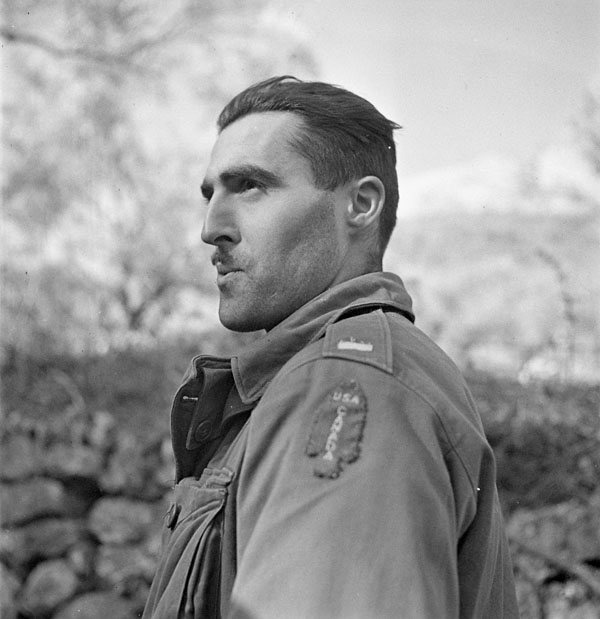
-
Collection
First World War
The First World War of 1914–1918 was the bloodiest conflict in Canadian history, taking the lives of more than 60,000 Canadians. This collection brings together a number of our resources on the First World War. Image above: Canadians soldiers advancing through German wire entanglements at Vimy Ridge. April, 1917. Canadian Department of National Defence/Library and Archives Canada/PA-001087.
"https://d3d0lqu00lnqvz.cloudfront.net/media/media/a9aa6aaf-406d-4a4d-89a3-95d86d7359ca.jpg" // resources/views/front/categories/view.blade.php
https://d3d0lqu00lnqvz.cloudfront.net/media/media/a9aa6aaf-406d-4a4d-89a3-95d86d7359ca.jpg
-
Article
First World War (Plain-Language Summary)
The First World War occurred between 1914 and 1918. Approximately 425,000 Canadians served overseas in Europe. More than 60,000 Canadians died. Over 170,000 were seriously wounded. Canadians suffered more casualties in the First World War than the Second World War. (See Second World War (Plain-Language Summary).) This article is a plain-language summary of the First World War. If you are interested in reading about this topic more in depth, please see our full-length entry, First World War.
"https://d3d0lqu00lnqvz.cloudfront.net/media/media/11751af0-ec83-4753-8f2b-bb38ed576b7f.jpg" // resources/views/front/categories/view.blade.php
https://d3d0lqu00lnqvz.cloudfront.net/media/media/11751af0-ec83-4753-8f2b-bb38ed576b7f.jpg
-
Timelines
First World War Timeline
The First World War of 1914–1918 was the bloodiest conflict in Canadian history, taking the lives of more than 60,000 Canadians. It erased romantic notions of war, introducing slaughter on a massive scale, and instilled a fear of foreign military involvement that would last until the Second World War.
"https://d3d0lqu00lnqvz.cloudfront.net/media/media/49ecd1bd-bb99-4a20-8dc8-7278c9a5518c.jpg" // resources/views/front/categories/view.blade.php
https://d3d0lqu00lnqvz.cloudfront.net/media/media/49ecd1bd-bb99-4a20-8dc8-7278c9a5518c.jpg
-
Article
First World War (WWI)
The First World War of 1914–18 was the bloodiest conflict in Canadian history, taking the lives of nearly 61,000 Canadians. It erased romantic notions of war, introducing slaughter on a massive scale, and instilled a fear of foreign military involvement that would last until the Second World War. The great achievements of Canadian soldiers on battlefields such as Ypres, Vimy and Passchendaele, however, ignited a sense of national pride and a confidence that Canada could stand on its own, apart from the British Empire, on the world stage. The war also deepened the divide between French and English Canada and marked the beginning of widespread state intervention in society and the economy. This article is a full-length entry about the First World War. For a plain-language summary, please see First World War (Plain-Language Summary).
"https://d3d0lqu00lnqvz.cloudfront.net/media/media/11751af0-ec83-4753-8f2b-bb38ed576b7f.jpg" // resources/views/front/categories/view.blade.php
https://d3d0lqu00lnqvz.cloudfront.net/media/media/11751af0-ec83-4753-8f2b-bb38ed576b7f.jpg
-
Article
Fiscal Policy
Fiscal policy is the use of government taxing and spending powers to manage the behaviour of the economy. Most fiscal policy is a balancing act between taxes, which tend to reduce economic activity, and spending, which tends to increase it — although there is debate among economists about the effectiveness of fiscal measures.
"https://thecanadianencyclopedia.ca/images/tce_placeholder.jpg?v=e9dca980c9bdb3aa11e832e7ea94f5d9" // resources/views/front/categories/view.blade.php
https://thecanadianencyclopedia.ca/images/tce_placeholder.jpg?v=e9dca980c9bdb3aa11e832e7ea94f5d9
-
Article
Fish Classification
The classification of fishes has undergone much change over the last few decades, and further changes are expected, partly because so many groups are poorly known.
"https://thecanadianencyclopedia.ca/images/tce_placeholder.jpg?v=e9dca980c9bdb3aa11e832e7ea94f5d9" // resources/views/front/categories/view.blade.php
https://thecanadianencyclopedia.ca/images/tce_placeholder.jpg?v=e9dca980c9bdb3aa11e832e7ea94f5d9
-
Macleans
Fish War Ends
This article was originally published in Maclean’s magazine on April 24, 1995. Partner content is not updated. Even for a fish tale, the story had started to strain the bounds of credulity. Victory is at hand, federal Fisheries Minister Brian Tobin repeated like a mantra last week.
"https://thecanadianencyclopedia.ca/images/tce_placeholder.jpg?v=e9dca980c9bdb3aa11e832e7ea94f5d9" // resources/views/front/categories/view.blade.php
https://thecanadianencyclopedia.ca/images/tce_placeholder.jpg?v=e9dca980c9bdb3aa11e832e7ea94f5d9
-
Article
Fisher
The fisher (Pekania pennanti) is a member of the weasel family, with a typically pointed face and rounded ears. In Canada, fishers live in the boreal and temperate forests of almost all the provinces and territories, with the exception of Newfoundland and Labrador and Prince Edward Island.
"https://d3d0lqu00lnqvz.cloudfront.net/fisher/Fisher-Pekania-pennanti.jpg" // resources/views/front/categories/view.blade.php
https://d3d0lqu00lnqvz.cloudfront.net/fisher/Fisher-Pekania-pennanti.jpg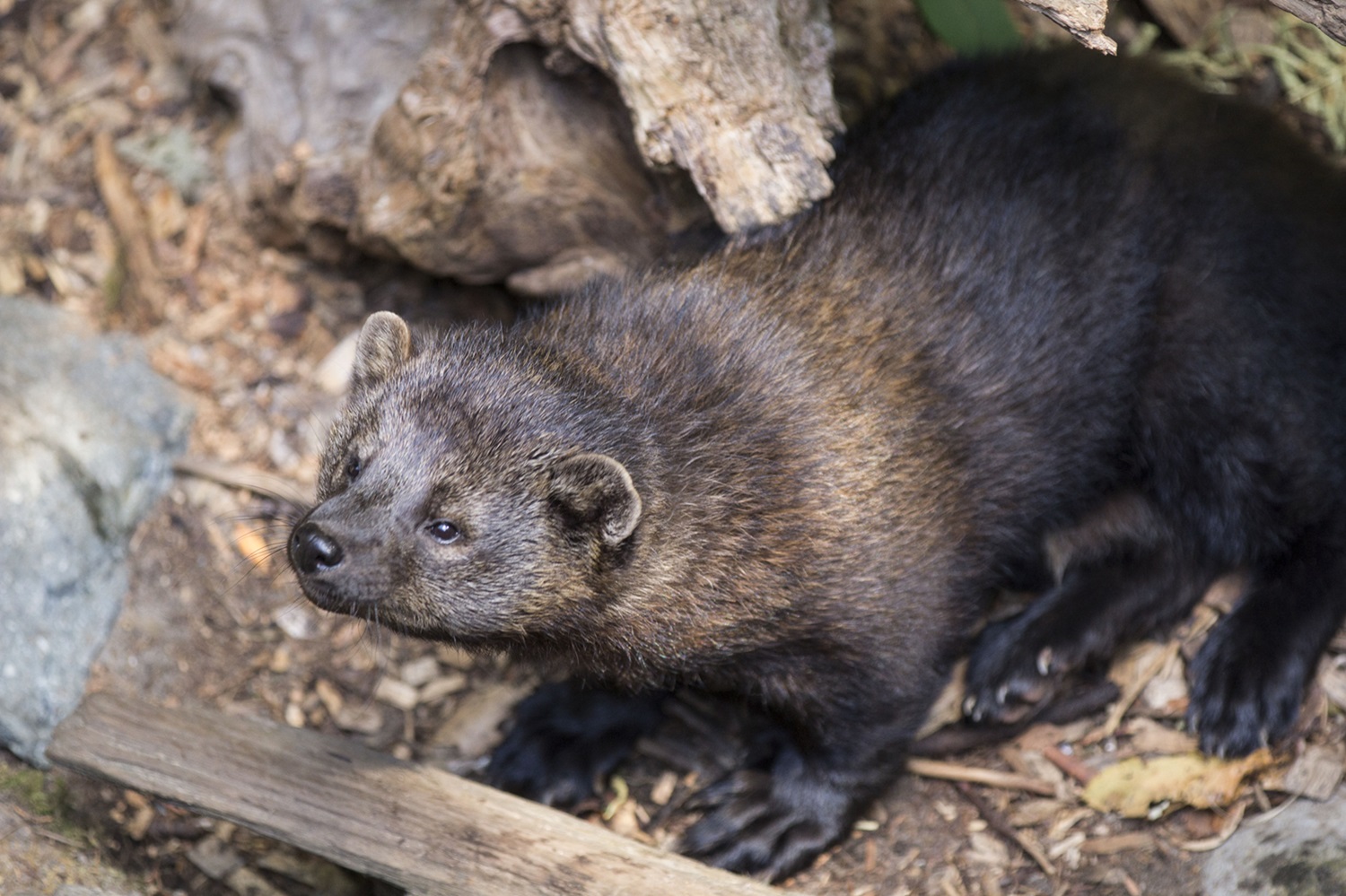
-
Macleans
Fisher Charged in Milgaard Case
For Larry Fisher, being on the move was nothing new. Since his release from prison in 1994, the convicted serial rapist had been hounded out of Dawson Creek, B.C., Calgary and North Battleford, Sask. Last week, Saskatoon joined the list.This article was originally published in Maclean's Magazine on August 4, 1997
"https://thecanadianencyclopedia.ca/images/tce_placeholder.jpg?v=e9dca980c9bdb3aa11e832e7ea94f5d9" // resources/views/front/categories/view.blade.php
https://thecanadianencyclopedia.ca/images/tce_placeholder.jpg?v=e9dca980c9bdb3aa11e832e7ea94f5d9
-
Article
Fisheries Policy
The challenge of fisheries policy is to preserve fish stocks while maximizing economic benefit to the people involved in the industry, to the communities that depend on it, and to the nation as a whole.
"https://d3d0lqu00lnqvz.cloudfront.net/media/media/95f664b6-17a9-42a0-b2e3-7fe66880c221.jpg" // resources/views/front/categories/view.blade.php
https://d3d0lqu00lnqvz.cloudfront.net/media/media/95f664b6-17a9-42a0-b2e3-7fe66880c221.jpg
-
Article
Fisheries Research Board
Until the transfer of its staff to the Department of the Environment in 1973 and its demise in 1979, the FRB was the principal federal research organization working on aquatic science and fisheries.
"https://thecanadianencyclopedia.ca/images/tce_placeholder.jpg?v=e9dca980c9bdb3aa11e832e7ea94f5d9" // resources/views/front/categories/view.blade.php
https://thecanadianencyclopedia.ca/images/tce_placeholder.jpg?v=e9dca980c9bdb3aa11e832e7ea94f5d9
-
Article
Fish in Canada
Fishes are members of a large, heterogeneous group of vertebrates living in a wide variety of aquatic habitats. There are slightly more species of fishes than of all other vertebrates combined. About 1,200 species of native fishes are found in Canadian waters, the majority of which (990) live in marine waters.
"https://d3d0lqu00lnqvz.cloudfront.net/media/media/e9b9b391-1dc4-48d3-bdb1-36e27a35cf6d.jpg" // resources/views/front/categories/view.blade.php
https://d3d0lqu00lnqvz.cloudfront.net/media/media/e9b9b391-1dc4-48d3-bdb1-36e27a35cf6d.jpg
-
Article
Fishing, Ice
Ice provides a seasonal platform for fishing by netting, spearing and angling. Net, spear and hook were in use winter and summer in northern Europe and North America long before the dawn of history.
"https://d3d0lqu00lnqvz.cloudfront.net/media/media/78087a02-2481-4050-8210-7417a8aa7183.jpg" // resources/views/front/categories/view.blade.php
https://d3d0lqu00lnqvz.cloudfront.net/media/media/78087a02-2481-4050-8210-7417a8aa7183.jpg
-
Article
Fitness
The Canada Fitness Survey (1981 with a longitudinal follow-up in 1989), involved nearly 12 000 households in 80 urban and rural communities across Canada. Approximately 16 000 people, aged 7 to 69 years, participated in a fitness test, and 22 000 completed a questionnaire.
"https://d3d0lqu00lnqvz.cloudfront.net/media/media/9cc69107-f030-44d5-ade0-b76956474ce4.jpg" // resources/views/front/categories/view.blade.php
https://d3d0lqu00lnqvz.cloudfront.net/media/media/9cc69107-f030-44d5-ade0-b76956474ce4.jpg