Share on Facebook
 Share on X
 Share by Email
 Share on Google Classroom
Thomas Carleton, British army officer, first lieutenant-governor of New Brunswick (born circa 1735 in Ireland; died 2 February 1817 in Ramsgate, England). After military service in Europe and America, Carleton was appointed lieutenant-governor of the newly created colony of New Brunswick on 28 July 1784. He held this position until his death in 1817, although he resided in England from 1803 on. He was the brother of Guy Carleton, Baron Dorchester.
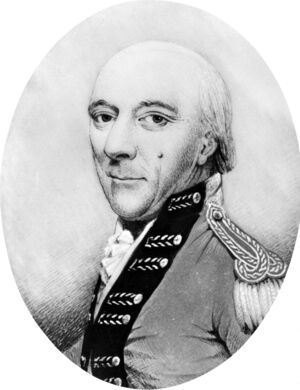
Because of his Anglo-Irish and military background, Thomas Carleton sympathized with the aspirations of the Loyalist elite in New Brunswick. Hence the early development of New Brunswick was shaped by Carleton and the Loyalist leaders, with the choice of capital, appointments, religious, political, educational and even economic decisions reflecting this alliance.
Carleton had originally hoped his New Brunswick posting would lead to a more substantial military command. Disappointed in this and in the slow growth of the colony, along with an increasingly assertive Assembly-rights party by 1795, Carleton tired of his office. He took a leave of absence in 1803, which became permanent. After 1807 there is little evidence that he played any role in New Brunswick affairs and no evidence that he intended to take up residence in the province again.
Carleton had many critics during his lifetime and among historical observers, but he deserves to be acknowledged as a founding father of New Brunswick.