Share on Facebook
 Share on X
 Share by Email
 Share on Google Classroom
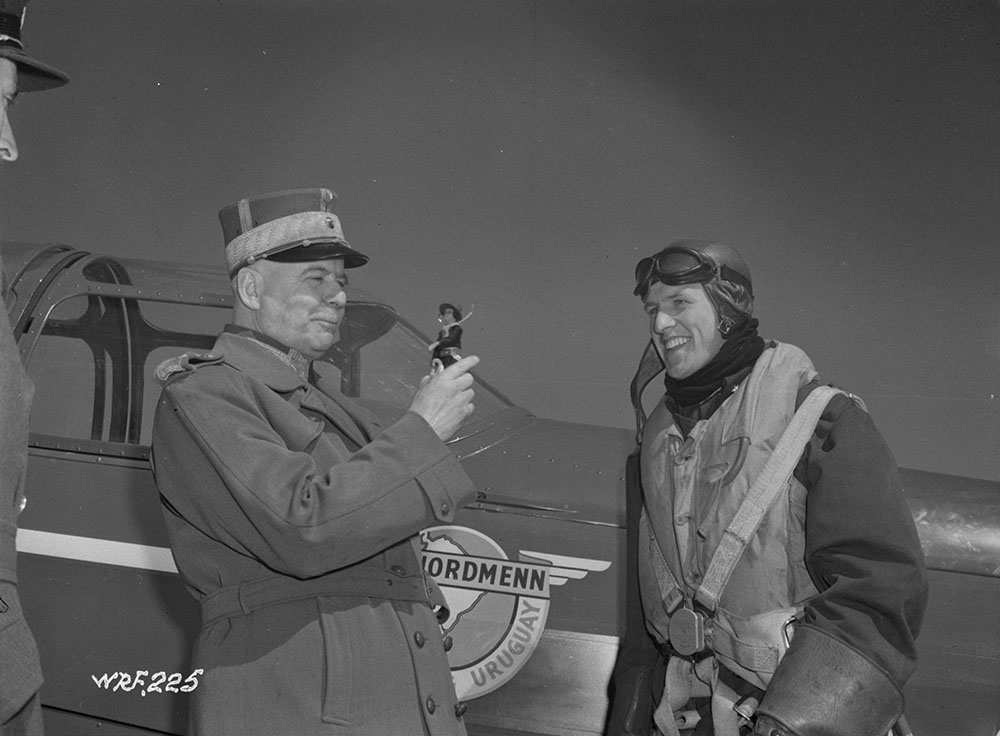
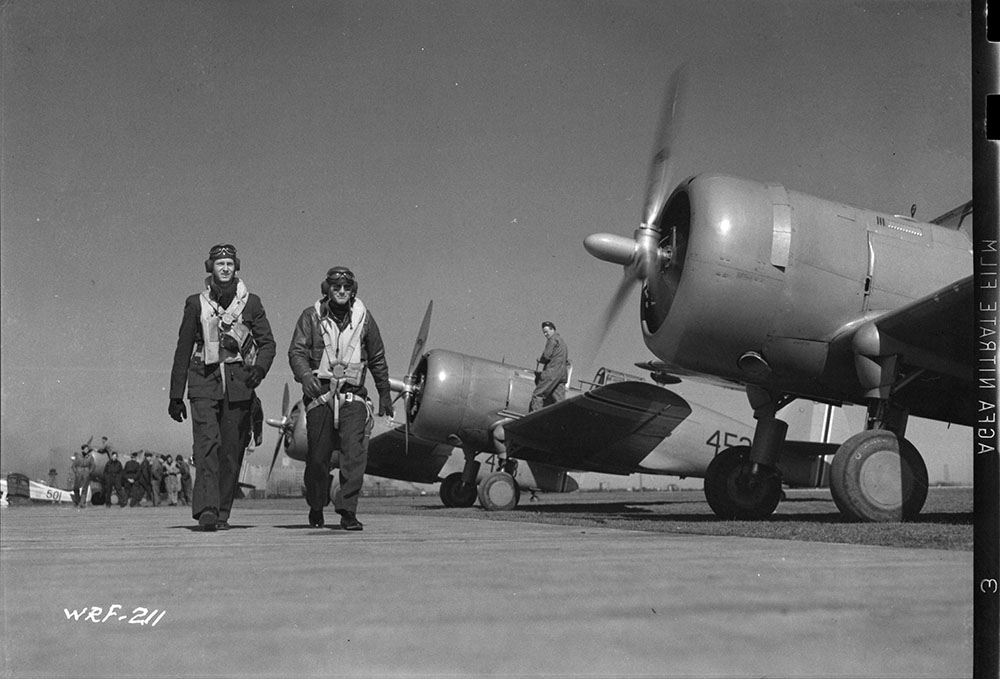
Little Norway was a Royal Norwegian Air Force (RNAF) training centre in Canada that operated in Toronto and Muskoka from 1940 to 1945, training more than 3,000 personnel for the Norwegian resistance to German occupation during the Second World War. Little Norway strengthened a lasting diplomatic bond between Norway and Canada that continues to the present day. (See also Norwegian Canadians.)
Second World War
When Nazi Germany invaded Norway in April 1940, King Haakon VII and his government refused to surrender. In June 1940, however, Allied forces withdrew from Norway and the country was occupied by Nazi Germany. The Royal Navy evacuated the king, his son, Crown Prince Olav, and their ministers to the United Kingdom, where the king proclaimed that the resistance would continue under the direction of a government-in-exile based in London. The British cruiser HMS Enterprise evacuated the Norwegian treasury. Its gold reserves were deposited at the Federal Reserve Bank of New York and the Bank of Canada in Ottawa.
Canada
The United Kingdom and the Norwegian government-in-exile agreed that Norwegian forces-in-exile would be organized under British command. In June 1940, all Norwegians living in the United Kingdom between the ages of 21 and 35 were called up for military service by the government-in-exile. The United Kingdom, however, did not have space available at its own training facilities for Norwegian aircraft. Canada was an ideal setting for training a Norwegian resistance air force. Pilots from the United Kingdom were already training in Canada as part of the British Commonwealth Air Training Plan (BCATP). Moreover, American aircraft that had been ordered by the Norwegian government could also be easily delivered to Canada.
Toronto
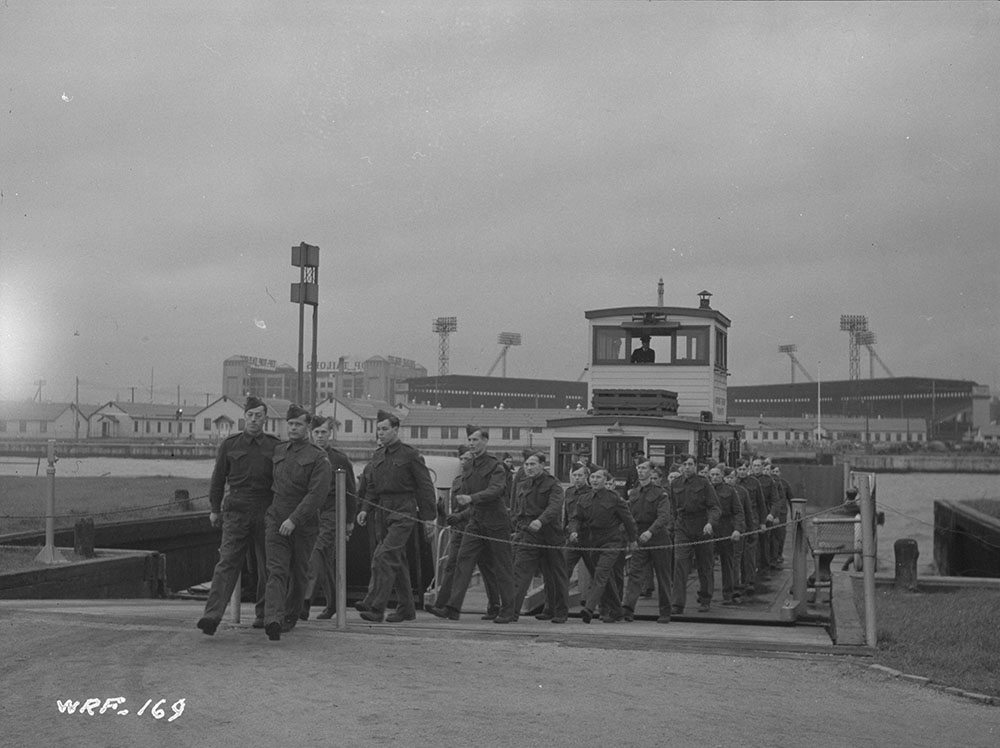
The British government and Canada’s Department of National Defence authorized a Toronto training school for Norwegian pilots, gunners, navigators, aircraft mechanics and air bombers at the Toronto Island Airport. The Toronto Flying Club, based at Malton Airport, provided training aircraft and instructors until the American planes arrived. Norwegian officers stayed at the Royal York Hotel and recruits stayed at the Prince George Hotel (on the site of the present-day Toronto-Dominion Centre) while barracks for 200 men were under construction.
On 10 November 1940, the Little Norway air force training camp opened officially in Toronto in the presence of hundreds of guests, including Toronto-born actress Mary Pickford, lieutenant governor of Ontario Albert Matthews and Toronto mayor Ralph Day. The crowd witnessed 11 Norwegian aircraft flying within 25 feet of the new barracks in tight formation. In January 1941, Crown Prince Olav and Crown Princess Märtha visited Toronto, inspecting the Little Norway air force base. In February of that year, the couple visited Camp Norway in Lunenburg, Nova Scotia.
Norwegian air-services recruits began attending BCATP courses in February 1941. In July 1941, overseas duties began with the establishment of the No.331 (Norwegian) Squadron, the first Norwegian fighter unit in the Royal Air Force (RAF).
On 20 August 1941, Prince George, Duke of Kent, visited Little Norway during a tour of air force training facilities in Canada. Little Norway became part of the social and cultural life of Toronto during the Second World War. Karl Pintz, the Norwegian Vice Consulate in Toronto, organized the Norwegian War Aid Fund Association of Toronto. The YMCA ran an annual campaign encouraging Toronto households to invite military, naval and air personnel for Christmas dinner, and Little Norway recruits were welcomed into many Canadian homes. More than 10 per cent of the airmen who trained at Little Norway married Canadian women. (See also Norwegian Canadians.)
Financing
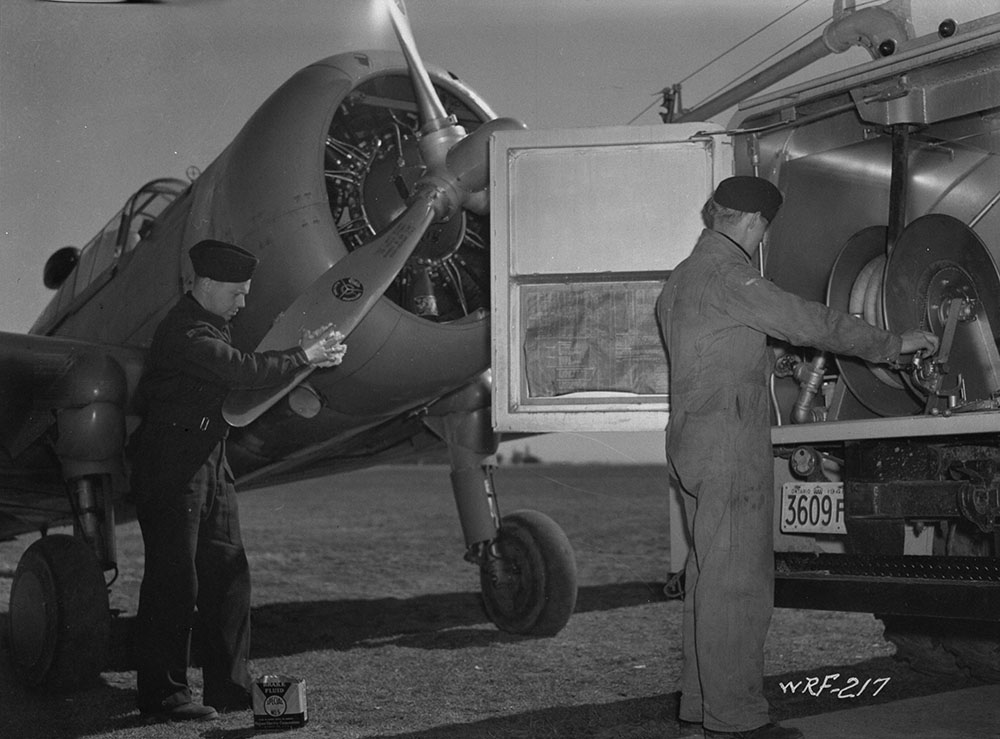
The opening of Little Norway attracted some controversy among Canadians because of remarks by Colonel Oscar Klingenberg, military attaché to the Royal Norwegian Embassy in Washington, D.C. Klingenberg stated to the press that the mayor of Toronto and Oscar Skelton, Canada’s undersecretary of state for external affairs, “have given us everything we asked for and more.” Little Norway was leasing the Toronto Island Airport on the same terms as the Royal Canadian Air Force (RCAF), paying the Toronto Harbour Commission for oil, gas and hangar storage. Klingenberg’s remarks created the lasting impression that the Canadian government was paying all expenses for Little Norway. In fact, Little Norway was financed by Norway leasing its merchant marine — the third largest in the world — to Allied forces. Camp Norway in Lunenburg, Nova Scotia, served as a base for these ships.
Camp Norway
Following the German invasion of Norway, King Haakon ordered Norwegian vessels to return to Allied ports rather than occupied Norway. On 29 November 1940, Camp Norway opened in Lunenburg, Nova Scotia, after more than 20 Norwegian whaling ships anchored in Bedford Basin. Camp Norway became a training facility for members of the Norwegian resistance. Seventeen Norwegian sailors, soldiers and merchant seamen are buried at Camp Hill Cemetery in Halifax, Nova Scotia.
Muskoka
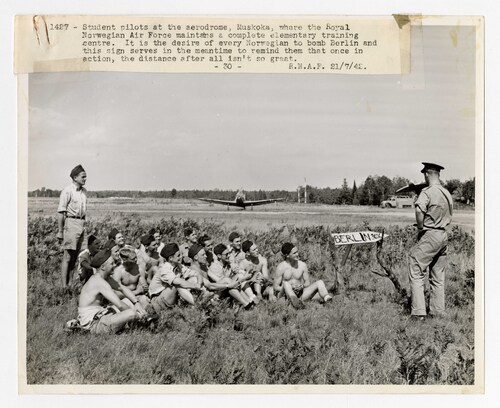
By 1941, Little Norway was outgrowing the Toronto Island Airport (which was shared with civilian flight school and privately owned aircraft) and surrounding facilities with around 800 personnel and 90 Norwegian aircraft. While the advanced flying school continued to be based at the Toronto Island Airport, the Norwegian government-in-exile sought a new facility outside the city for the elementary training program. In addition to revenue from the Norwegian merchant marine, the new facility was financed by donations from Norwegian Canadians and Norwegian Americans, as well as funds provided by American president Franklin D. Roosevelt under The Lend-Lease Program.
In the early 1940s, Olav and Märtha opened the Muskoka facility, which was named Vesle Skaugum after their home near Oslo. In January 1942, the RNAF leased Muskoka Airport and purchased the adjacent lands. In May 1942, the royal couple opened the new Little Norway air force base at Muskoka Airport. Märtha visited again in September 1942 with her three children, Princess Ragnhild, Princess Astrid and the future King Harald V of Norway. The Toronto facility was eventually transferred to the RCAF by April 1943, and all Norwegian operations moved to Muskoka.
Did you know?
In his memoirs, Norwegian explorer and ethnologist Thor Heyerdahl described his military training at Camp Norway in Lunenburg, wireless training in Toronto and equipment testing in Muskoka. “We rushed around the Muskoka woods with specially constructed megaphones, shouting, ‘One, two, three, can you hear me?’ so loudly that people in Huntsville wrote us letters saying, ‘Sure we hear you, and they hear you all the way down in Gravenhurst too!’” Another prominent trainee at Little Norway was Prince Jacques of Bourbon-Parma, a nephew of Grand Duchess Charlotte of Luxembourg and former Empress Zita of Austria-Hungary, who both spent the Second World War in Quebec.
As in Toronto, Muskoka’s Little Norway became part of local social and cultural life as Norwegian personnel entered skiing competitions and attended social events. Norwegian airmen married Canadian women and sought accommodation for their new families, contributing to housing shortages in Huntsville, Gravenhurst and Bracebridge. Women also trained at Muskoka. In late 1943, the Norwegian Women’s Auxiliary Air Force (NWAAF) started recruitment, with the first course beginning on 29 September. By the end of the war, 27 women had enlisted in the NWAAF in Canada. They did not live at Little Norway but instead commuted to the air force base.
Following the D-Day landings in Europe, the BCATP began to wrap up its training programs and the RNAF prepared to return to Norway. On 17 February 1945, Little Norway formally closed in Muskoka in the presence of hundreds of guests, including Olav and Märtha, Matthews and the mayors of Toronto, Gravenhurst, Bracebridge and Huntsville. On 8 May, Victory in Europe Day, Norway was liberated by Allied forces.
Legacy
Between 1940 and 1945, more than 3,000 Norwegian airmen, sailors and soldiers and up to 3,000 merchant seamen and civilians trained in Canada for the Norwegian resistance. Canada’s support of the Norwegian resistance strengthened the diplomatic relationship between Norway and Canada, developing a rapport that exists to the present day. On 20 November 1987, King Olav V of Norway attended a formal dedication of Little Norway Park in Toronto on his first visit to Canada since the closure of Little Norway in Muskoka in 1945. Crown Prince Haakon and Crown Princess Mette-Marit visited Little Norway Park on their visit to Canada in 2016.
In 2002, King Harald V of Norway, who had visited Little Norway in Muskoka as a child, unveiled a commemorative plaque at a ceremony at Muskoka Airport. In 2007, Little Norway Memorial was established at Muskoka Airport in the presence of Norwegian prime minister Jens Stoltenberg, other Norwegian officials and approximately 60 Norwegian veterans. A historical plaque outside the Air Terminal building at Muskoka Airport states, “The strong bond between the two countries, forged in the experience of those years, has become a symbol of Canada’s continuing friendship with its wartime allies.”