Share on Facebook
 Share on X
 Share by Email
 Share on Google Classroom
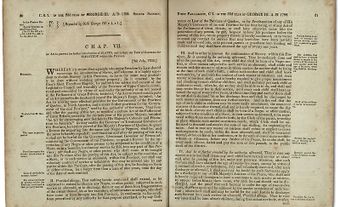
King William IV (born Prince William Henry on 21 August 1765 in London, United Kingdom; died 20 June 1837 in Berkshire, United Kingdom), King of the United Kingdom of Great Britain and Ireland and King of Hanover from 1830 until 1837. William IV was the first member of the royal family to visit Canada, spending time in Newfoundland, Nova Scotia and Quebec in the late 1780s during his naval career. As king, William IV gave royal assent to the Representation of the People Act of 1832 (also known as the Great Reform Act), which inspired the 1837 rebellions in Canada, and the Slavery Abolition Act of 1833, which came into force in the British Empire on 1 August 1834.
Early Life
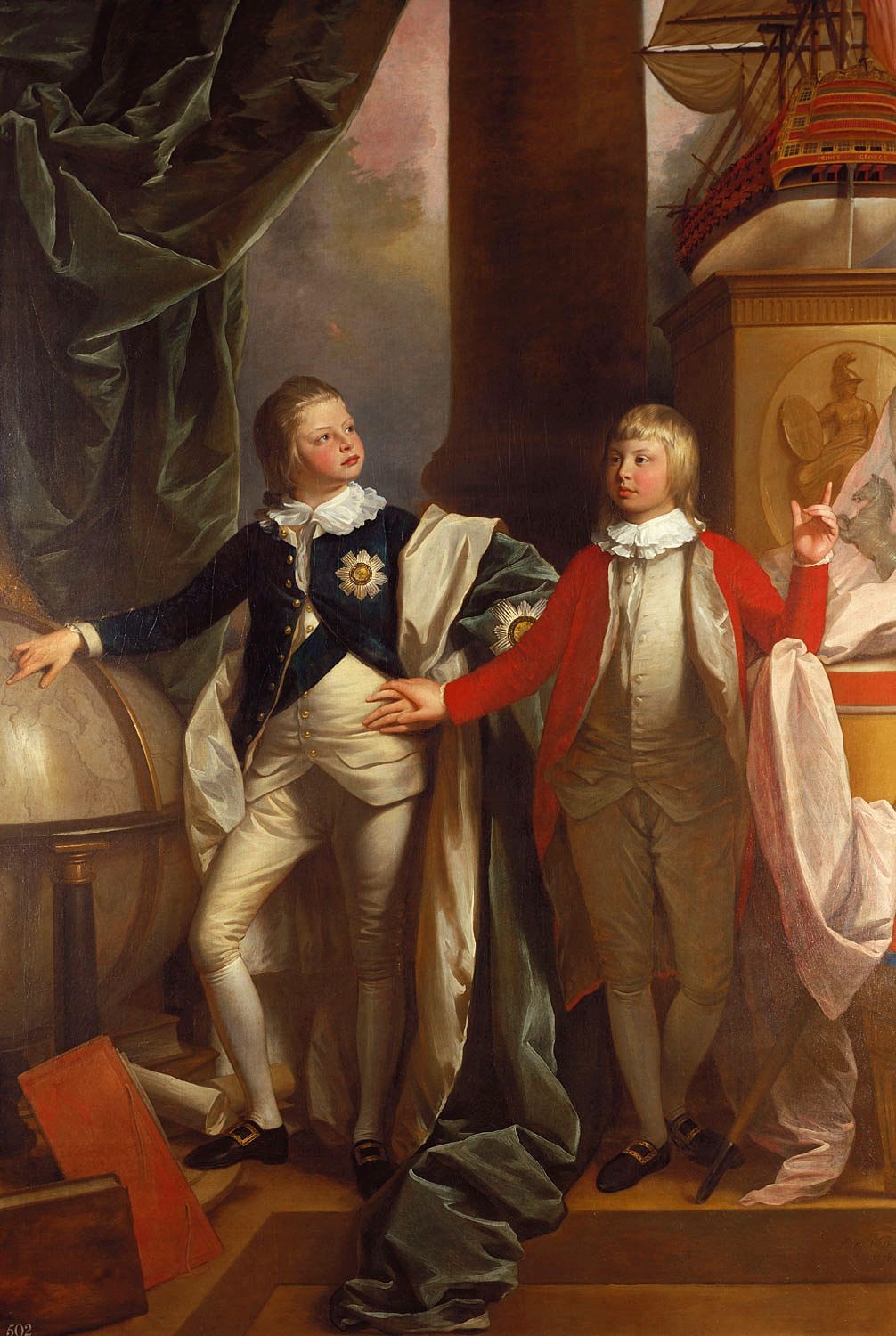
Prince William Henry was born at Buckingham House (later Buckingham Palace), the third of the 15 children of King George III and Charlotte of Mecklenburg-Strelitz. He spent his early childhood at Richmond Lodge and then lived with his younger brother Prince Edward and their tutors at Kew from the age of seven, until he began his naval service.
American Revolutionary War
As a third son, William was not expected to inherit the throne and instead pursued a career in the Royal Navy. At 13, he went to sea as a midshipman in the squadron of Admiral Robert Digby (the namesake of Digby, Nova Scotia) and served in the American Revolutionary War. He was present at the Battle of Cape St. Vincent off the coast in Portugal in 1780, then was stationed in New York in 1781 where future American President George Washington approved a plot to kidnap him. William was closely guarded, and the kidnapping plot was unsuccessful.
Newfoundland
After spending two years in Hanover, William became a naval lieutenant in 1785. He received his first command on 10 April 1786, becoming captain of the HMS Pegasus, sailing to Placentia Bay, Newfoundland. From 1 July to 5 September 1786, William served as a surrogate court judge in Placentia, the first member of the royal family to visit a future province of Canada. William took his responsibilities as judge seriously, presiding over court sessions two to three times per week, resolving property disputes and maintaining the rights of the seasonal fishing fleet. During his time in Placentia, William sponsored the construction of old St. Luke’s Anglican church, and he provided a silver communion service and coat of arms in 1787.
Quebec
In 1787, William sailed up the St. Lawrence River, visiting Quebec City and Montreal. On 9 October 1787, William wrote to George III:
As for the Province of Canada it vastly surpasses all the accounts I can give to Your Majesty of its magnitude, beauty and fertility: the Province in extent is larger than all Europe: the views in summer are magnificent, and where in England the eye commands a view of ten miles, in Canada for many leagues the corn and the sky appear to meet.
William was impressed by the Indigenous peoples he met during his time in Quebec, praising their loyalty to the Crown, but dismissed French-Canadians as “lazy” and favoured the distribution of land to British settlers. William traveled as far as Cornwall in what is now Ontario to welcome Loyalist settlers.
Nova Scotia
William sailed to Halifax, Nova Scotia, the site of the British Royal Navy’s North American station, in 1786, 1787 and 1788. William described Halifax as “a very gay and lively place full of women and those of the most obliging kind,” and returned there from the Caribbean without the permission of the admiralty in 1787. William was rumoured to have had an affair with Lady Frances Wentworth (1745–1813), wife of Sir John Wentworth, Surveyor General of the King’s Woods and future lieutenant governor of Nova Scotia from 1792 to 1808. According to John Wentworth’s biographer, Brian C. Cuthbertson, William planned to elope with Anne Delesdernier, the sister-in-law of Richard John Uniacke, the solicitor-general of Nova Scotia, until she was sent away from Halifax by her family.
Return to Britain
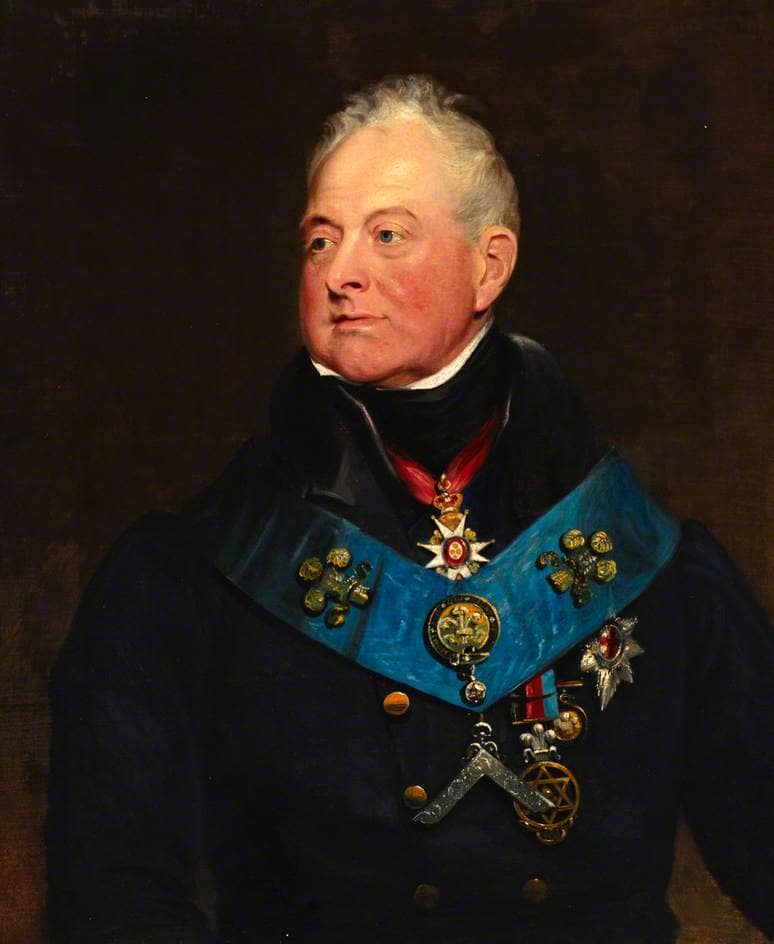
William returned to Britain in 1788 when his father King George III suffered from his first extended period of mental illness. On 19 May 1789, the king granted William the titles of Duke of Clarence and St. Andrews and Earl of Munster. In 1790, William received the honorary title of rear admiral, but his active naval career came to an end.
Dorothea Jordan
In 1790, William began a relationship with an Irish actress, Dorothea Jordan (1761–1816). The couple were together for more than 20 years. Dorothea continued to work as an actress during their relationship because William’s spending exceeded his stipend from the Civil List. William and Dorothea separated in 1811, and she later moved to France, where she died in 1816.
Children
In Halifax, William fathered a son, William Henry Courtney (1788–1807). William and Dorothea had 10 children who received the surname FitzClarence in honour of their father’s dukedom: George 1st Earl of Munster (1794–1842), Henry (1795–1817), Sophia (1796–1837), Mary (1798–1864), Frederick (1799–1854), Elizabeth (1801–56), Adolphus (1802–56), Augusta (1803–65), Augustus (1805–54) and Amelia (1807–58).
Mary lived in Nova Scotia in 1830 when her husband, Colonel Charles Richard Fox, commanded the 34th regiment. The couple were summoned back to Britain when William became king. Amelia married Lucius Carey 10th Viscount Falkland, who served as governor of Nova Scotia from 1840 to 1846. The communities of Falkland in Halifax County and Falkland Ridge in Annapolis County are named for them. During her time in Nova Scotia, Amelia engaged in charitable work, sketched and painted watercolours, including portraits of Mi’kmaq people.
Marriage
On 11 July 1818, 52-year-old William married 26-year-old Princess Adelaide of Saxe-Meiningen (1792–1849) in a double wedding ceremony at Kew Palace with his brother Prince Edward, Duke of Kent and Strathearn (1767–1820) and Princess Victoire of Saxe-Leiningen (1786–1861). The royal marriages were necessary to ensure the succession, since George III’s only legitimate grandchild, Princess Charlotte of Wales, had died giving birth to a stillborn son in 1817. William and Adelaide had three stillborn children and two daughters who died in infancy, Charlotte (1819) and Elizabeth (1820–21).
Clarence House
In 1820, George III died and was succeeded by William’s eldest brother, who became King George IV. During George IV’s reign, William commissioned the construction of Clarence House, which is now the London residence of King Charles III and Queen Camilla. In 1827, William became George IV’s heir presumptive upon the death of George III’s second son, Prince Frederick Duke of York and Albany. As heir, William briefly served as Lord High Admiral from 1827 to 1828.
Accession
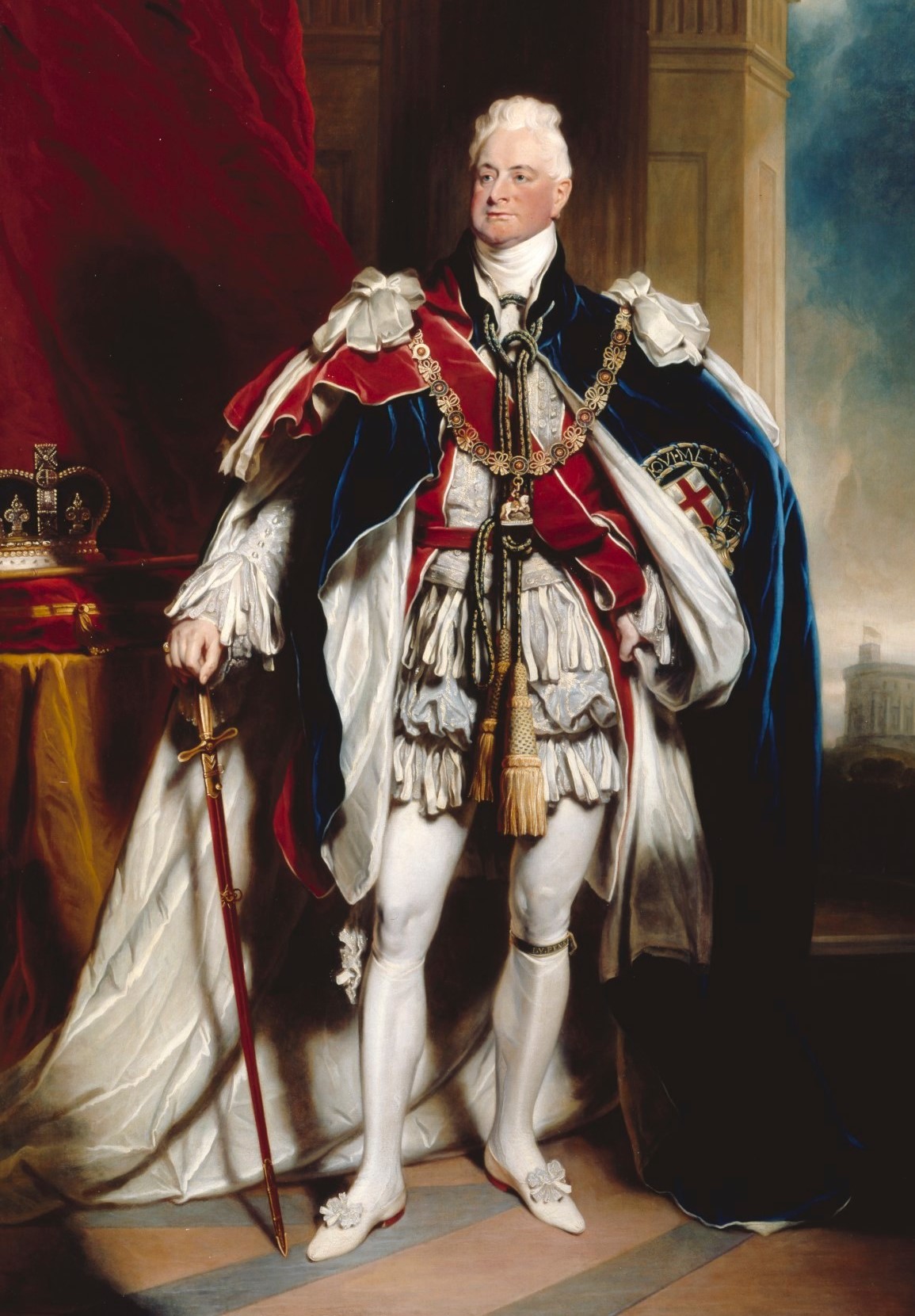
King William IV succeeded to the throne on 26 June 1830, upon the death of his brother George IV. At 64, William was the oldest British monarch at the time of his accession until King Charles III became King at the age of 73 upon the death of Queen Elizabeth II in 2022. William’s coronation took place at Westminster Abbey on 8 September 1831.
Great Reform Act, 1832
William IV was a constitutional monarch who recognized that he reigned according to the advice of his ministers, stating, “I have my view of things, and I tell them to my ministers. If they do not adopt them, I cannot help it. I have done my duty.”
The king did, however, exercise his royal prerogative to create new peers in the House of Lords. This was central to the passing of the Representation of the People Act, 1832 (known as the Great Reform Act). The Great Reform Bill extended voting rights to middle class men, abolished rotten boroughs and granted electoral representation to rapidly growing industrial cities. British Prime Minister Earl Grey (the grandfather of future governor general of Canada Earl Grey) advised the king to create new Whig peers if the Tory-dominated House of Lords would not pass the Reform Bill. The king and the legislation became known as “The Two Bills.”
William Lyon Mackenzie, the future leader of the 1837 Upper Canada Rebellion, was present in the House of Lords on 4 June 1832 for the final reading of the 1832 Reform Bill. He wrote that “the reformers in England, and their brilliant success should teach the Upper Canadians to be united as one man in defence of their rights as British freemen.”
Slavery Abolition Act
As Duke of Clarence, William was a vocal defender of the trans-Atlantic slave trade, opposing the 1793 Slave Trade Bill introduced to limit the slave trade in the British Empire. In a 1799 speech in the House of Lords, William denounced the abolitionist petition of the Sierra Leone Company, stating,
On the ill-founded plea of humanity, they desire you to relinquish your colonial wealth, the sinews of our commercial existence, and sink into insignificance and contempt in the eyes of Europe and the world, by the adoption of their new system of philosophy and humanity.
As king, however, William IV granted royal assent to the Slavery Abolition Act, 1833 on the advice of Prime Minister Earl Grey. The Slavery Abolition Act came into force on 1 August 1834, which is celebrated in Canada as Emancipation Day.
Queen Victoria
William IV suffered from health problems in his later years, including asthma, heart disease and an enlarged liver and spleen. He died at Windsor Castle one month after the 18th birthday of his niece, Victoria. Queen Victoria remembered him fondly, writing to her uncle King Leopold I of the Belgians, “Poor old man…he was always personally kind to me.”