Share on Facebook
 Share on X
 Share by Email
 Share on Google Classroom
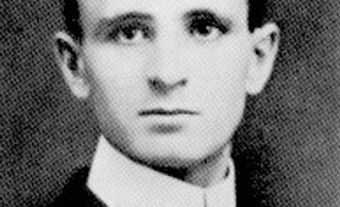
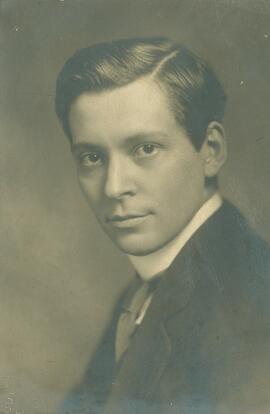
Jules Fournier, journalist, pamphleteer, translator (born 23 August 1884 in Coteau-du-Lac, QC; died 16 April 1918 in Ottawa, ON). Fournier began his classical studies at the Collège de Valleyfield before embarking on a career as a journalist (see Journalism). In 1903 he began his career at La Presse, then moved to Le Canada, Le Nationaliste and Le Devoir, making a name for himself as one of the most scathing columnists of his time (see Newspapers in Canada). In 1911, he founded his own weekly newspaper, L'Action. He became a French translator for the Senate in Ottawa in 1917.
Education and Early Career
Born in Coteau-du-Lac (in the county of Soulanges), Jules Fournier was the son of farmers.
He showed an aptitude for studies at the village school and was sent to the classical college of Valleyfield at the age of 13. Father Lionel Groulx was his professor of rhetoric. Fournier left the college in December 1902, without completing his first year of philosophy, likely because he no longer had the energy to respect the institution’s strict discipline and eager to pursue journalism, a profession for which he felt an "overwhelming calling."
In 1912, Fournier married Thérèse Surveyer, daughter of L. J. A. Surveyer, a prosperous merchant.
Journalism Career
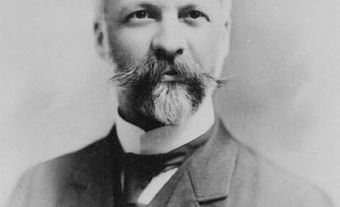
Around July 1903, a few months after leaving college, Jules Fournier joined La Presse where he met news director Olivar Asselin.
In the summer of 1904 Fournier found himself at Le Canada as an assistant editor (see Newspapers in Canada). He was sent to Ottawa, where he was able to hear Henri Bourassa's public speeches.
In May 1908, he became editor of Le Nationaliste (the newspaper of the Canadian Nationalist League), after the departure of Asselin.
As soon as Le Devoir was launched in January 1910, Fournier became its editor. However, he left the newspaper almost immediately, after a falling out with Bourassa, who disapproved of his verbal outbursts.
Between March 1910 and February 1911, he was in Europe as an overseas correspondent for La Patrie.
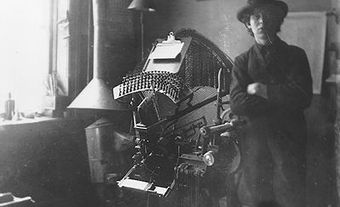
After returning to Montreal, in April 1911 he founded his own weekly newspaper, L'Action. In April 1916, faced with financial difficulties, L'Action published its last issue.
This was the end of Fournier's career as a journalist. In 1917, he accepted a position as a French translator at the Senate in Ottawa.
Political ideas and actions
Jules Fournier was influenced by the ideas of the nationalist movement that emerged at the beginning of the 20th century. He supported the ideas of the Canadian Nationalist League, founded by Olivar Asselin in 1903, and joined those who criticized Canada's participation in the Empire’s wars, the federal government's immigration policy, and the wasteful exploitation of the country's resources (forests, mines, rivers). (See also: Natural Resources in Canada; Canada and the South African War (Boer War.)
Fournier also fought to help the most disadvantaged, believing that the best way to curb the rise of socialism was to acknowledge the legitimate demands of the workers. In 1908, for example, he supported the candidacy of Albert Saint-Martin, secretary of the Parti ouvrier de Montréal (Montreal Labour Party).
Most notably, in his writings, Fournier became known as a fierce critic of those who exploited the public good. For example, in January 1916, when he was elected for three months to represent Saint-Jacques neighbourhood on the Montreal city council (he was defeated in the municipal election on 3 April), he promised to crack down on municipal corruption everywhere. His supporters’ battle cry was: "Let's send Fournier to City Hall to unmask the boodlers [crooked politicians]."
The Pamphleteer
Jules Fournier is known for his talents as a pamphleteer. He constantly condemned greed, favouritism and corruption, and did not hesitate to name his targets. His direct and biting accusations led to several run-ins with the law.
The most famous trial was the one prompted by the publication of an article entitled "The Prostitution of Justice." On 12 June 1909 Fournier was sentenced to three months in prison for libel (see Defamation in Canada). He drew inspiration from this experience for one of his finest works: Souvenirs de prison ; la cellule no 14 (Memories of Prison; Cell No. 14).
His time behind bars failed to tame his combative nature. On 10 January 1910, in the first of his articles written for "Mon Encrier" in Le Devoir, he declared: "Libeller I am, libeller, I will remain."
Death
On 16 April 1918, he died as a result of pneumonia or the Spanish flu.
Legacy
Combining elements of columns, reviews, polemics and essays, Jules Fournier's works bear witness to the golden age of adversarial journalism and muckraking (a word which, from 1906 onwards, referred to journalism that thrives on scandals).
Today, Fournier is remembered more for his unbridled verve than his struggles. He embodied a language full of flair, at the service of thought and a sense of justice.
In response to the remarks by the French critic Charles ab der Halden, Fournier was convinced that French-Canadian literature did not exist. (See also French language literature.) It is ironic that he wrote this in a style that reflected a genuine development of French-Canadian literature.
The Jules-Fournier Prize was created in his honour in1980 to promote the quality of written language in the media.