Share on Facebook
 Share on X
 Share by Email
 Share on Google Classroom
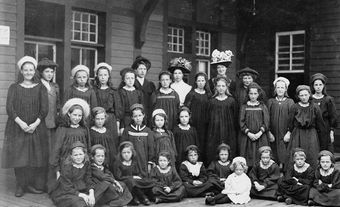
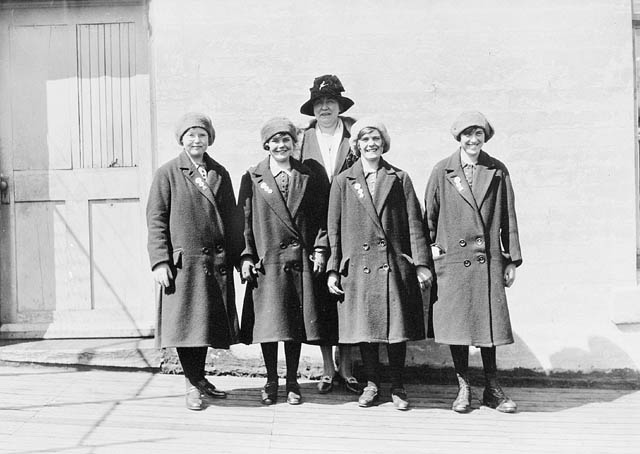
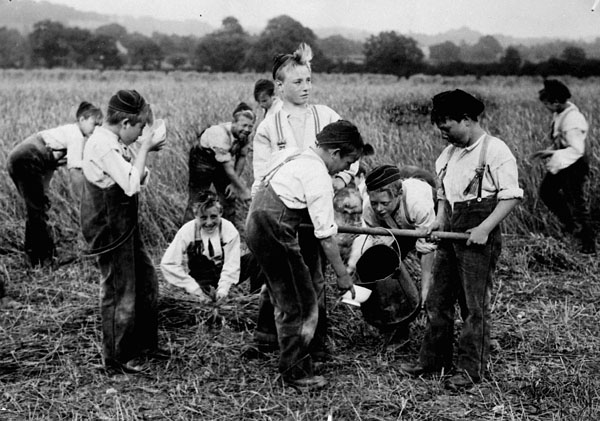
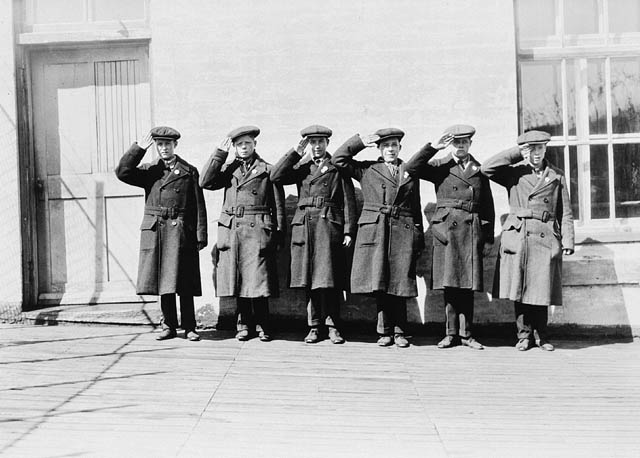
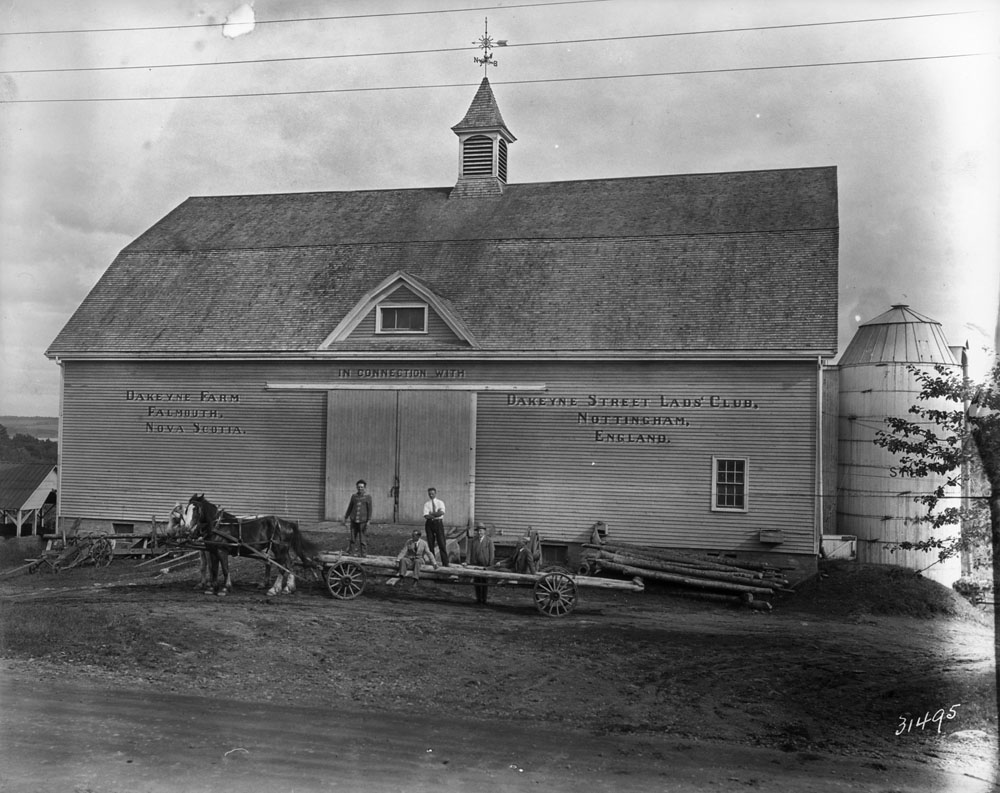
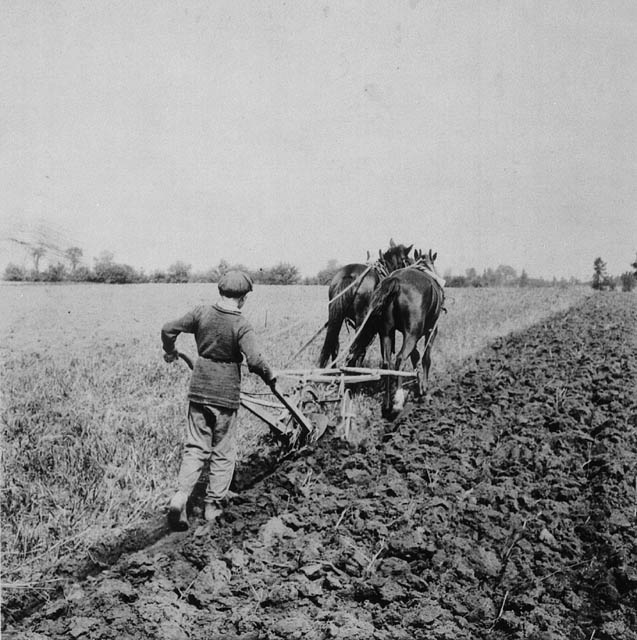
More than 100,000 boys and girls immigrated to Canada from the United Kingdom between the 1860s and the 1940s. Known as the “British Home Children,” these young people were orphans or came from poor families. Charitable organizations like The Salvation Army believed that these children would have greater opportunities in British dominions and colonies than in the United Kingdom. Many ended up working on farms or in domestic service. While some were treated well, others were abused or neglected. It is estimated that over 10 per cent of the Canadian population is descended from the British Home Children.

Background
On 14 April 1826, an obscure police magistrate in London, England, Robert Chambers, told a committee of the British Parliament dealing with emigration: "I conceive that London has got too full of children." Chambers was alarmed at the number of youngsters, victims of east-end London's chronic poverty, who were begging in the streets and sleeping in the gutters. He had a recommendation which may well have been in the minds of others and which was to become reality several decades later in one of the most Draconian movements in the history of emigration. Chambers recommended that Britain's surplus children be sent to Canada as farm labour.
“Social Visionaries” and Child Emigration
Four decades later, in 1859, four women — regarded as social visionaries of the day — were poised to do just that, setting up refuges in London and Liverpool which were, in effect, way stations from which the children were shipped across the sea to the supposed bright promises of Canada.
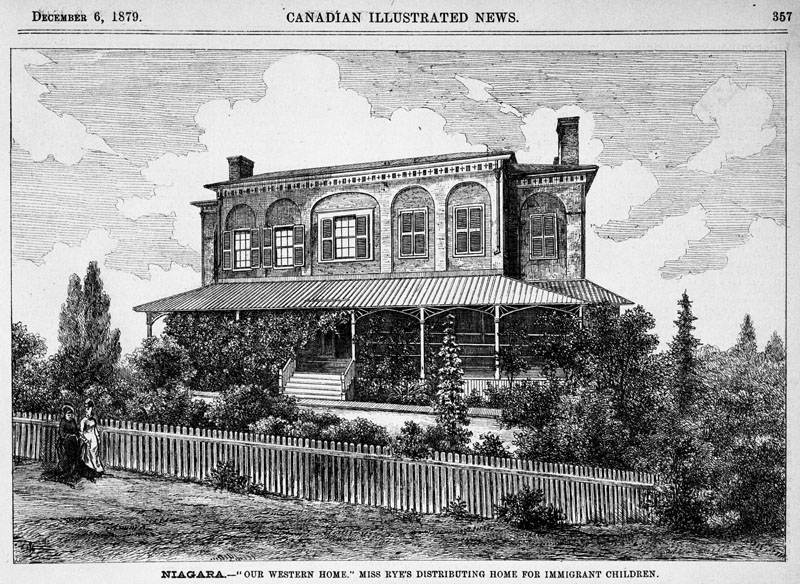
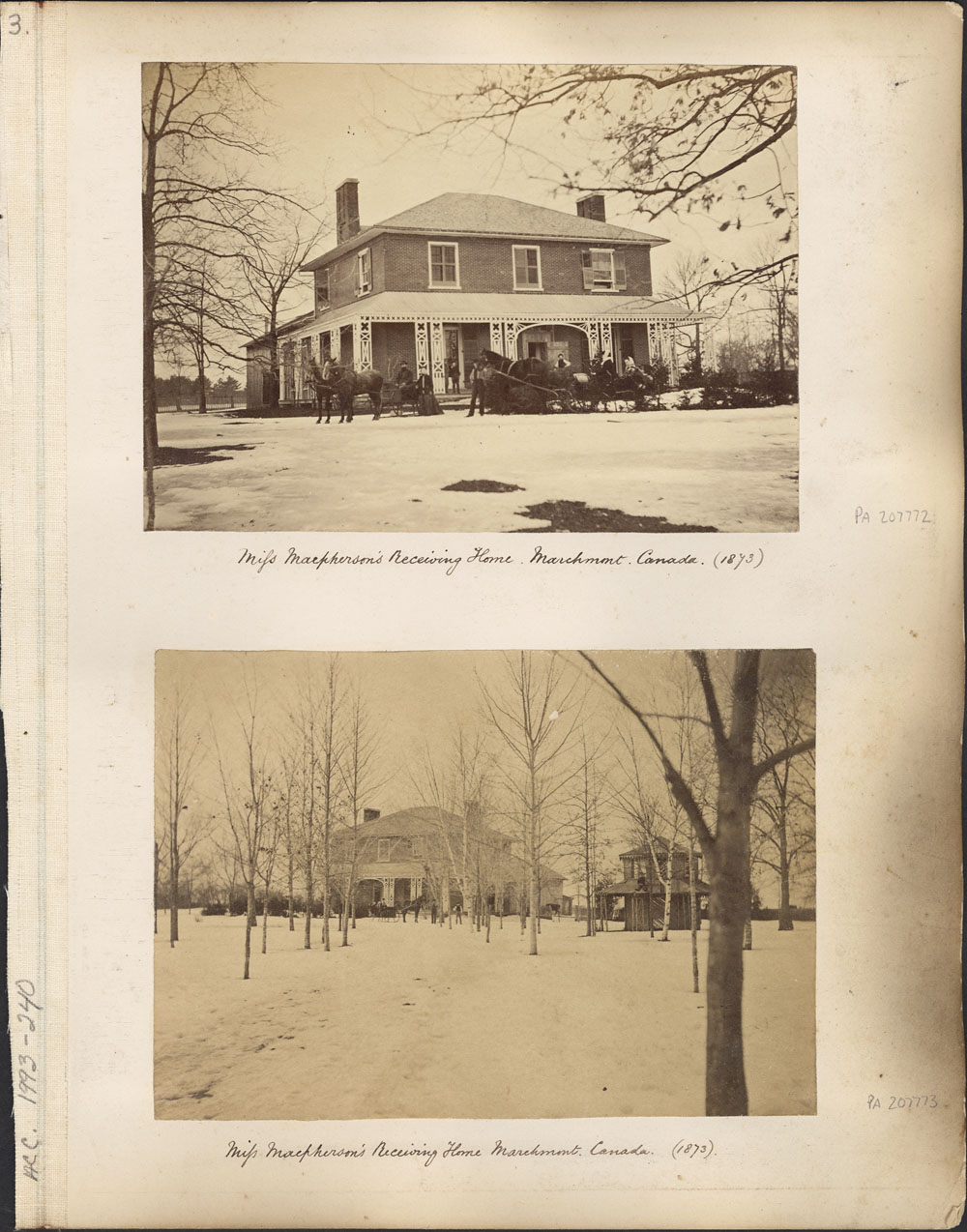
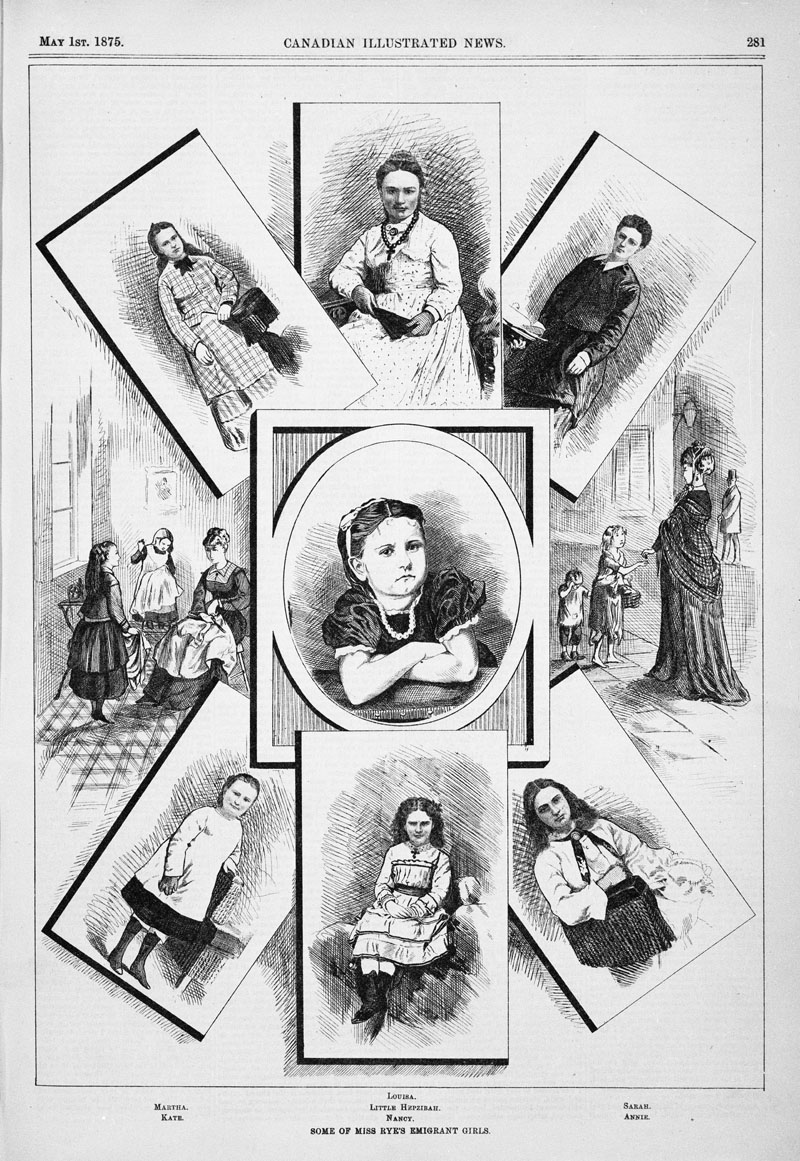
The most prominent of these women was Annie Macpherson, who along with her sisters Rachel and Louisa sent almost 14,000 children to Canada over many decades. Another of these women was Maria Rye, a strong-willed woman whose children, all girls, were sent from London to "Our Western Home" in Niagara-on-the-Lake, Ontario, from which they were subsequently distributed as household help but usually ended up as labourers in the farms of southern Ontario.
At its peak, in the years immediately before and after 1900, dozens of individuals and small organizations were sending children to Canada, mostly youngsters whose parents lived in poverty, or else waifs found where they were left — in blankets or baskets in the hope someone else would care for them.
The most famed figure of child emigration was Thomas John Barnardo, whose work, begun in 1870, grew to large proportion under his zeal. He trained in medicine and theology and, after an aborted plan to go to China as a missionary, he set up several refuges for children in London's east end. Over the history of the movement, Barnardo's organization sent roughly 30,000 children to Canada, to homes he established in Peterborough and Toronto and, for a time, to a farm he set up in Russell, Manitoba.


Indentured Labour
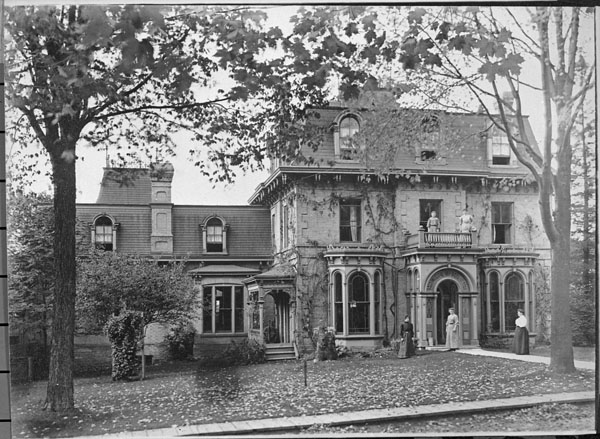
The children (most of whom were age 8 to 16 though there were many who came at 4 and 5 years of age) were almost always taken first to Ontario receiving homes in Belleville, Stratford, Niagara-on-the-Lake and Toronto. Advertisements were usually placed in local papers announcing the arrival of another shipment of children and inviting farmers to visit the home for a prospective "home boy" or "home girl."
The child was only rarely adopted but was indentured, the farmer in return providing lodging, a modest allowance (to be placed in a bank account ostensibly in trust until the child reached maturity) and schooling. Very often, few of these obligations were met. There were, as might be expected, a great many cases of abuse of all kinds, physical, emotional and mental. Children were often returned to the home as being unsuitable — too small, too slow, too difficult.
Investigation and Controversy
In many cases those who sent the children and those in Canada who oversaw their placement had high motives. They believed that life in the clean air of the new land, along with hard work and healthy discipline, would assure them of a wholesome development. Often, too often, this was simply a naive dream, with no understanding of the needs of a child and no awareness of the conditions in which they were placed.
From its very early years, the practice of sending children from Britain to Canada was the subject of investigation and high controversy. Only four years after it began, a British commissioner spent several weeks in Canada visiting the homes in which the children were received and the farms on which they were placed; he was severely critical of the random nature of the entire operation, both in the selection of farm families receiving the children and the later supervision of their placement — which in the case of Maria Rye's was virtually nonexistent. It is testimony to the influence of market demand for cheap labour that despite this early and severe criticism, the schemes were to continue well into the 20th century.
Some youngsters fared reasonably well. These were in most cases, very young children who, being too young to work, were taken into families simply as children, not as workers. But many youngsters suffered great physical or emotional abuse - isolated on farms with virtually no supervision and where adult farm labourers were often undesirable wanderers. The very practice of child emigration uprooted children at the most crucial period of their lives, shipped them like commodities, placed them in a foreign environment and set them to work; they were robbed of childhood.
Did you know?
An estimated 10,000 of the British Home Children volunteered for military service in the Canadian Expeditionary Force during the First World War. Two were awarded the Victoria Cross for their bravery: Claude Nunney and Walter Rayfield.
Criticism and Change
By the 1920s, serious voices in Canada were questioning the principle of child emigration. In the summer of 1924, Charlotte Whitton, the director of the Canadian Welfare Council, said that the schemes were inhumane. James S. Woodsworth, the respected Member of Parliament and later first leader of the Co-operative Commonwealth Federation, added his opinion in the House of Commons:"We are bringing children into Canada in the guise of philanthropy, and turning them into cheap labourers."
Also in 1924, the Bondfield Commission came from Britain with the same purpose that a one-man British Commission had in the earliest years of child emigration: to inspect the homes and examine the welfare of the children. That November it offered the opinion that only children over 14 (school-leaving age) should be permitted to emigrate.
For the remainder of the 1920s, only older teenagers came to Canada. Then as the economy of the country began its downturn, and the labour movement stepped up its longtime opposition to the programs, the number began to dwindle. In the end, while child emigration was questioned by men and women in Canada who saw its numerous flaws, it was not enlightened understanding which drew the curtain upon this long career of Canadian history. It was the Great Depression.
Legacy and Apology
In 2009, Australian prime minister Kevin Rudd formally apologized for the country’s role in the British Home Children program; British prime minister Gordon Brown followed suit in 2010. In January 2010, the Canadian government designated 2010 as the Year of the British Home Child, “recogniz[ing] the hardships suffered by British Home Children and their perseverance and courage in overcoming those hardships.” Canada Post issued a commemorative stamp in September 2010.
After extensive lobbying by Home Children Canada and politicians of all parties, as well as former Bloc Québécois leader Gilles Duceppe (himself a descendant of a British Home Child), the Canadian House of Commons issued an apology on 16 February 2017:
[T]he House recognize[s] the injustice, abuse and suffering endured by the British Home Children as well as the efforts, participation and contribution of these children and their descendants within our communities; and offer[s] its sincere apology to the former British Home Children who are still living and to the descendants of these 100,000 individuals who were shipped from Great Britain to Canada between 1869 and 1948, and torn from their families to serve mainly as cheap labour once they arrived in Canada.
On 7 February 2018, the House of Commons passed a motion declaring 28 September of every year as British Home Child Day in Canada. As of 2025, a formal apology has not been issued by a Canadian prime minister.