Share on Facebook
 Share on X
 Share by Email
 Share on Google Classroom
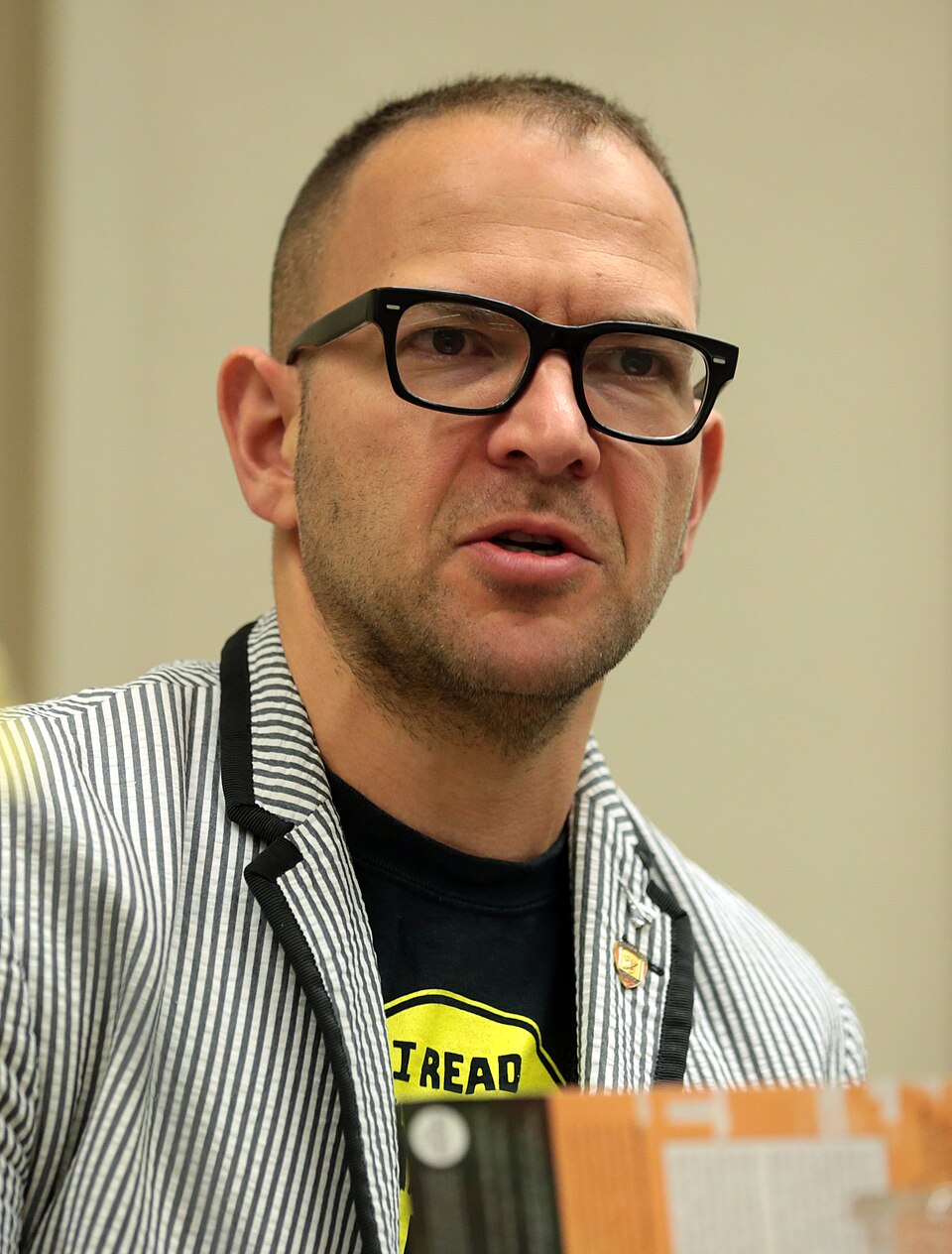
Cory Doctorow, author, journalist, blogger, activist (born 17 July 1971 in Toronto, ON). Cory Doctorow is a science fiction author and technology journalist. He has published 15 novels, several non-fiction books and short story collections, as well as numerous short stories. His works have been translated into several languages, including German, French and Portuguese. He also served as an editor of the popular blog Boing Boing. Doctorow is known for his opposition to Digital Rights Management, technology designed to control online access to copyrighted content. He is a proponent of Creative Commons, a more accessible form of licensing for creative works. Doctorow is also known for popularizing the term “enshittification” to describe the decay in quality of Internet platforms.
Early Life
Born in Toronto, Cory Doctorow was raised by left-leaning Trotskyist schoolteachers. According to him, his grandparents were Eastern European Jews who often wintered in Florida. (See also Jewish Canadians.)
Early on, Doctorow’s childhood was marked by science and technology. During visits to Disney World, his grandfather would tell him about the magic behind the park’s robotics. Meanwhile, his father focused Cory’s attention on the power of the computers that ran the automatons. He also spent considerable time using computers and learning programming through magazines. Doctorow struggled academically, taking seven years to finish high school. He later dropped out of four universities without a degree.
Works
From 2001 to 2020, Cory Doctorow worked as an editor of Boing Boing, an online blog that covers technology, science, politics and other topics. Cory Doctorow contributed numerous articles on tech security, Internet legislation, politics, culture and science fiction.
From 2002 to 2006, Doctorow was director of European Affairs for the Electronic Frontier Foundation (EFF). The EFF is a non-profit that defends online privacy and free speech. As of 2026, he continues to work as a special adviser for the organization.
Despite struggling in school, Doctorow had started selling short fiction works as early as the age of 17. In 2003, he published his first novel, Down and Out in the Magic Kingdom. The story is set in Disney World, in a post-scarcity economy with a reputation-based currency. The book was successful and was nominated for a Nebula Award.
His bibliography has grown ever since. Notably, Little Brother was published in 2008. A young adult novel, it follows the story of teenagers under interrogation by the United States Department of Homeland Security in the wake of a terrorist attack. (See also 9/11 and Canada.) The first of a three-book series, Little Brother won the Sunburst Award. It was also nominated for the Nebula and Hugo awards.
Doctorow’s works of fiction often pit technology users against overreaching governments or corporations. Characters often employ hacking or do-it-yourself solutions to overcome obstacles. In the novella “Unauthorized Bread” (published in the collection Radicalized in 2019), the lead character learns to hack her appliances when her toaster, which only accepts bread from an authorized supplier, stops working because the manufacturer goes bankrupt. Meanwhile, in Makers (2009), two inventors use 3-D printing and junkyard scrap to create a carnival ride. This ends up making them a target for a corporate spinoff of Disney.
Personal life
Around the time he was working for the Electronic Frontier Foundation (2002–06), Cory Doctorow moved to the United Kingdom. In 2008, he married entrepreneur Alice Taylor, with whom he has one daughter.
In 2015, Doctorow left the United Kingdom and moved to California. He was concerned with London’s liveability. He also expected that the newly elected Conservative government would cut services and increase state surveillance.
Digital Rights Management and Creative Commons
Cory Doctorow opposes Digital Rights Management (DRM). DRM is a system that companies use to control access to digital content. As part of his thinking, he proposed “Doctorow’s Law.”
Doctorow's Law:
“Anytime someone puts a lock on something you own, against your wishes, and doesn't give you the key, they're not doing it for your benefit.”
Doctorow believes that DRM prevents legitimate uses of works that customers have purchased, such as transferring e-books or music between devices. He argues that DRM is mainly designed to protect companies’ profits.
Doctorow was involved in the creation of the Creative Commons (CC) licensing system. The system allows creators to encourage others to use and share their work. CC licences lay out how the work must be attributed, and whether it can be modified or used for commercial purposes. His book Down and Out in the Magic Kingdom was the first commercial work released under a CC licence. The digital versions of Doctorow’s early novels were also released under CC licences. However, he was unable to release later books this way due to publisher concerns.
Enshittification
In 2022, Cory Doctorow popularized the term “enshittification.” It describes the slow decline of Internet platforms’ value to their users. At the beginning of the cycle, platforms provide a valuable service to users. They then reduce the quality of these services to benefit business customers. Once business customers are reliant on them, they in turn reduce the quality of services to increase their own profitability. Eventually, customers and users leave, and platforms die.
In 2023, the American Dialect Society chose enshittification as the Word of the Year. The term was also added to the Merriam-Webster dictionary.
In 2025, Doctorow released Enshittification: Why Everything Suddenly Got Worse and What to Do About It, a non-fiction book that delves into the problem and proposes solutions.
Interview is conducted in English