Share on Facebook
 Share on X
 Share by Email
 Share on Google Classroom
Centralization of Mi’kmaq in Nova Scotia was a federal government policy in operation in the 1940s. Under the policy, the government aimed to relocate all Mi’kmaw people living in Nova Scotia to two isolated reserves (see also Reserves in Nova Scotia). The policy failed, though not before the forced removal uprooted half of the Mi’kmaw population and disrupted Mi’kmaw society. In the 1970s, Mi’kmaw leaders called centralization “a phase of cultural genocide.”
Mi’kmaw Life Prior to Centralization
Despite a long history of European contact, Mi’kmaq maintained their traditional governance and cultural way of life into the early 20th century. They were largely ignored as Canada focused on westward expansion.
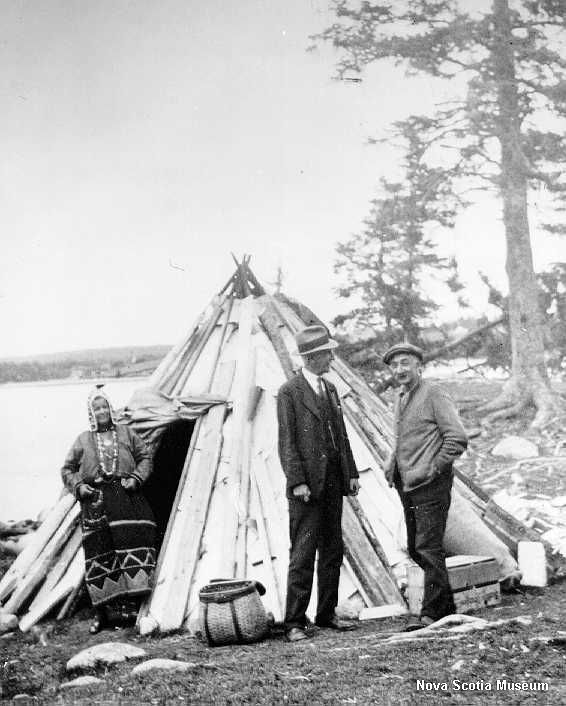
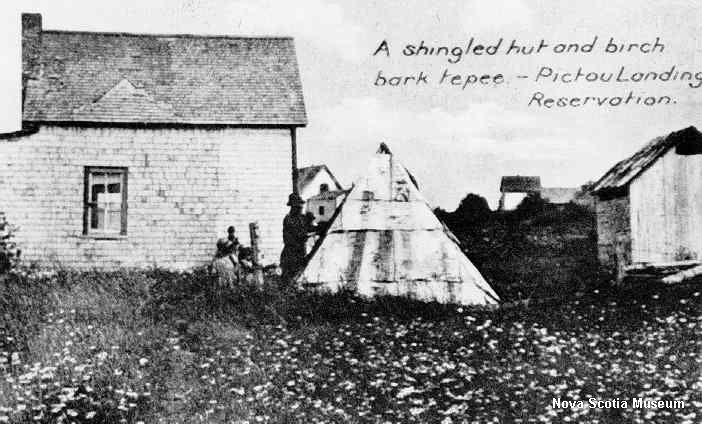
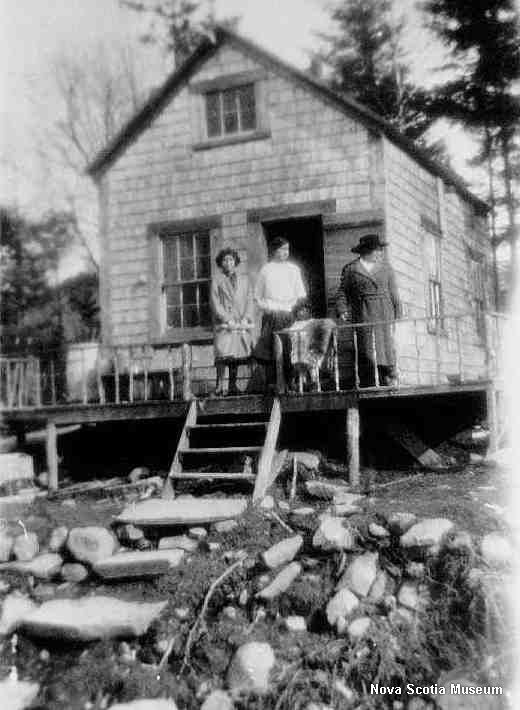
In the early 1900s, some Mi’kmaw families in Nova Scotia lived seasonally in a wikuom (wigwam). By 1926, most Mi’kmaq lived in houses on- and off-reserve, often near railways and cities so they could travel and work easily (see also Reserves in Nova Scotia). Men and women hunted and fished. They also engaged in wage-labour and sold crafts like basketry at markets. Mobility patterns, essential to the Mi’kmaw way of life for millennia, remained important.
The Plan for Relocation
Between 1917 and 1930, several Mi’kmaw communities faced relocation, largely in response to complaints from local property and business owners. Many Mi’kmaq resisted, often in the form of petitions. This ensured relocation efforts dragged on for years.
Beginning in 1918, a timber inspector with the Department of Indian Affairs proposed a plan for centralizing all Mi’kmaq in Nova Scotia (see also Federal Departments of Indigenous and Northern Affairs). In a series of memos over nearly two decades, H.J. Bury cited unoccupied reserves and their isolated locations, rising welfare costs and the ineffectiveness and cost of the 19 part-time Indian agents as his rationale for centralization (see also Reserves in Nova Scotia). He argued three full-time agents could focus more fully on their work and save the department money.
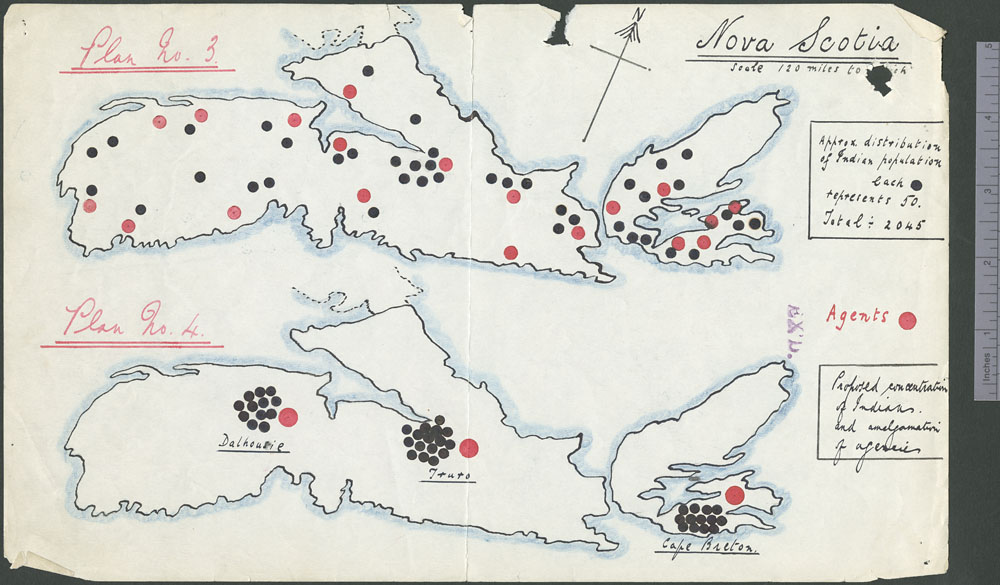
The plan gained departmental interest but little traction until the federal government, facing the financial strain of the Second World War, was keen to cut costs.
During this time, morality also became a key focus. In his 1941 report promoting centralization as a government policy, Inspector W.S. Arneil recommended close supervision for the “group of Indians we are seeking to rehabilitate.” Arneil perceived Mi’kmaq as morally inferior and promoted centralization to address this through instruction by parish priests.
Centralization
The Department of Indian Affairs officially launched its centralization policy in Nova Scotia in 1942 (see also Federal Departments of Indigenous and Northern Affairs). Officials promised Mi’kmaw families housing, education, healthcare and jobs if they moved to one of two target reserves known today as Sipekne’katik and Eskasoni (see also First Nations in Nova Scotia; Reserves in Nova Scotia).
The promises fell short. While the Department of Indian Affairs did not track the state of houses built in centralized communities, Mi’kmaw oral history indicates Mi’kmaq moved into unfinished houses or lived through the first winter in army tents. The Department’s only plan for employment was lumber mills which were short-lived; they were wracked by mechanical problems and a lack of timber supply. Additionally, employees at the lumber mills were paid low wages.
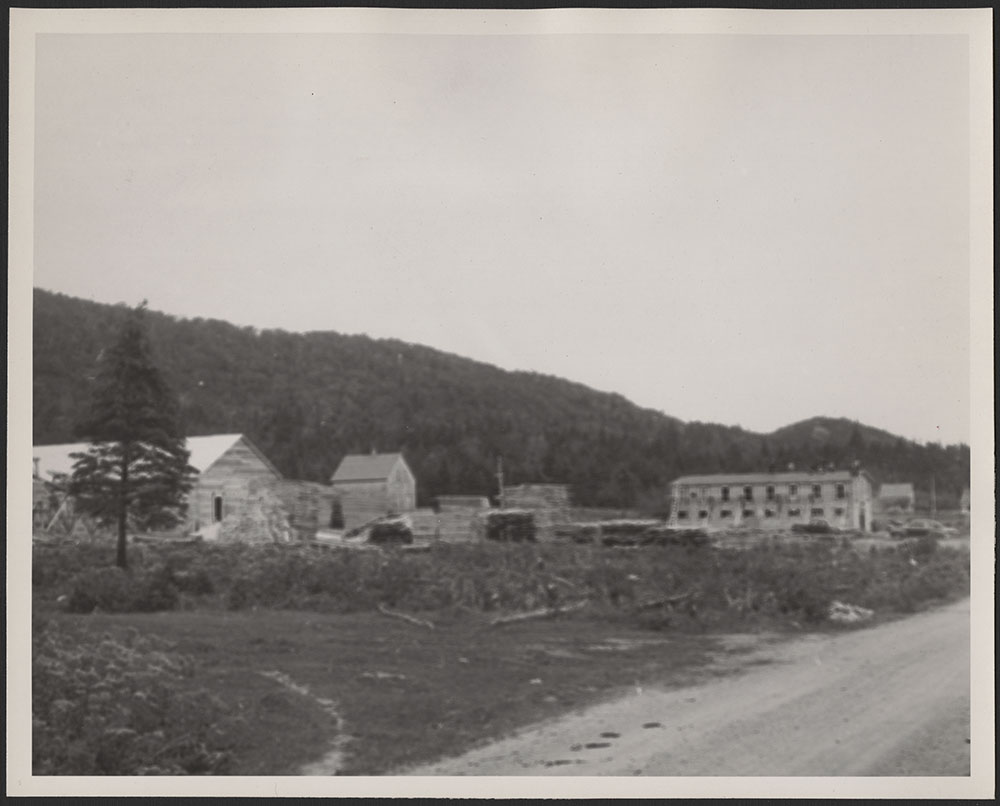
Roughly half of the estimated 2,100 to over 2,700 Mi’kmaq in Nova Scotia relocated during the 1940s. Some people moved voluntarily. In other cases, Indian Affairs’ officials loaded Mi’kmaw families and their belongings in trucks and burned the majority of homes once they left.
In his testimony before the Special Joint Committee on Indian Affairs in 1947, Director Robert A. Hoey admitted the Department used its “powers of persuasion.” Indian agents threatened Mi’kmaq with the loss of their Indian status through enfranchisement and withholding education and health services unless Mi’kmaq relocated.
Mi’kmaw Response
Centralization left a decades-long paper trail in the Department of Indian Affairs, but Mi’kmaq were largely unaware of the plan until its eve (see also Federal Departments of Indigenous and Northern Affairs).
In May 1942, 56 Mi’kmaw men and women from the Wa’qmitkuk, or Wagmatcook, reserve in Cape Breton sent a petition to the Department, protesting removal from their homes: “We feel that it is most unfair and that it will not benefit anyone” (see also First Nations in Nova Scotia; Reserves in Nova Scotia).
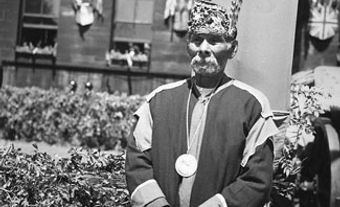
Ben Christmas, a long-time chief of the Membertou community, was an outspoken critic of centralization. In a paper in 1942, he called it “a great instrument to beat the Indians to submission.”
Half of the Mi’kmaq who moved to Sipekne’katik or Eskasoni moved away again. Mi’kmaw advocacy, skyrocketing costs and the increasing social awareness of Canadians after the Second World War contributed to Indian Affairs abandoning its centralization policy in 1949, but the damage was done.
Impacts of Centralization
In May 1947, a local newspaper, the Sydney Post Record, ran a two-page spread on centralization in Eskasoni with the headline, “Village turned into model community.” In reality, relocation led to a steep rise in unemployment, welfare costs, numbers of children in foster homes, addictions and mental health issues.
Political power became concentrated in the hands of two full-time Indian agents. Mi’kmaw people reported a sense of powerlessness, loss of independence and disruption of cultural practices.
Malikewe’j, or Malagwatch, an ancient gathering place along the Bras d’Or Lake was emptied entirely during centralization. In later years, Mi’kmaw people would return to spend summers, but Indian Affairs destroyed the houses and school in the 1940s.
In an assertion of Aboriginal title and land claims first published in Micmac News in 1974, Mi’kmaw leaders called this forced relocation a “cultural genocide.” Despite colonial policies like centralization, residential schools and the Indian Act that aimed to assimilate Indigenous peoples, Mi’kmaq have held onto language, values and tradition, which continue to thrive today.
While Nova Scotia is home to 13 Mi’kmaw First Nations in 2026, the largest populations still reside in the centralized reserves, Sipekne’katik and Eskasoni (see also First Nations in Nova Scotia; Reserves in Nova Scotia).