Share on Facebook
 Share on X
 Share by Email
 Share on Google Classroom
The Birks Group Inc. is a Canadian luxury brand jeweller, goldsmith and silversmith, known as a designer, manufacturer and retailer of fine jewellery, silverware, timepieces, and other assorted gifts. (See also Jewellery and Silverware Industry; Clocks and Watches.) The company is identified by its distinctive blue boxes and packaging.
Birks Window Display
Birks window display in Toronto, Ontario, 20 June 2013.
(photographer Galit Rodan/Bloomberg via Getty Images)
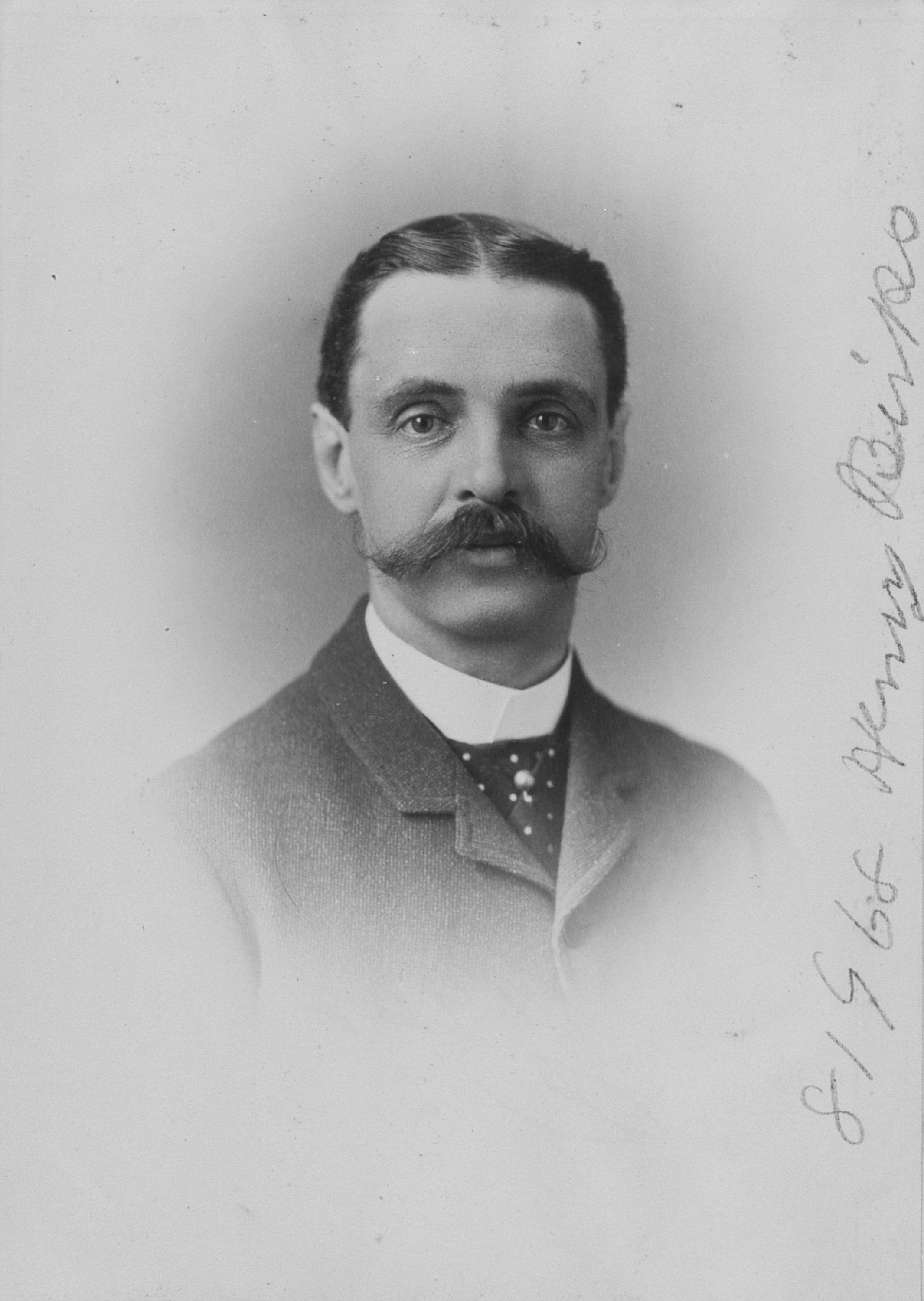
Henry Birks
The Birks company and brand was founded by Henry Birks, a businessman, silversmith, goldsmith and philanthropist. The Birks family had a very long tradition of silversmithing dating back to the 17th century, when they were master silversmiths in Sheffield, England. Henry Birks studied at the High School of Montreal, where he specialized in commercial studies. He completed high school in 1856, and then spent a winter in Saint-Antoine-de-la-Rivière-du-Loup, Quebec, in order to perfect his French. Upon his return to Montreal in 1857 he began working for the firm of Savage & Lyman, which at the time had a large and well-respected jewellery and watchmaking business located on Montreal’s rue Notre-Dame. (See also Domestic Silver; Clocks and Watches.)
Founding
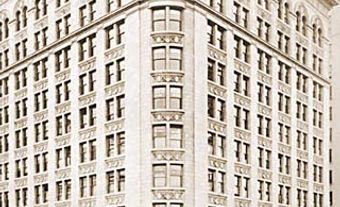
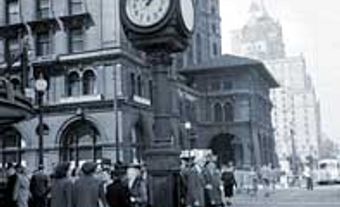
In February 1879, Henry Birks opened his own jewellery and watchmaking shop on St. James Street (today rue Saint-Jacques), which in the mid to late 19th century was the financial centre of Canada. The business succeeded and rapidly grew, requiring a move to a larger premises on the same street in 1885, and then, in 1893, a partnership between Henry and his three sons — John, William and Gerald. The company name was then changed from Henry Birks & Co. to Henry Birks & Sons. This was followed by a move to a much larger premises located on Montreal’s rue Sainte-Catherine, which had become the city’s principal retail commercial artery in the late 19th century. Henry Birks was friends with Henry Morgan, the owner of the Colonial House department store. Both men decided to move to Phillips Square. The Birks flagship store and corporate headquarters stands in the same location, facing Phillips Square, to this day.
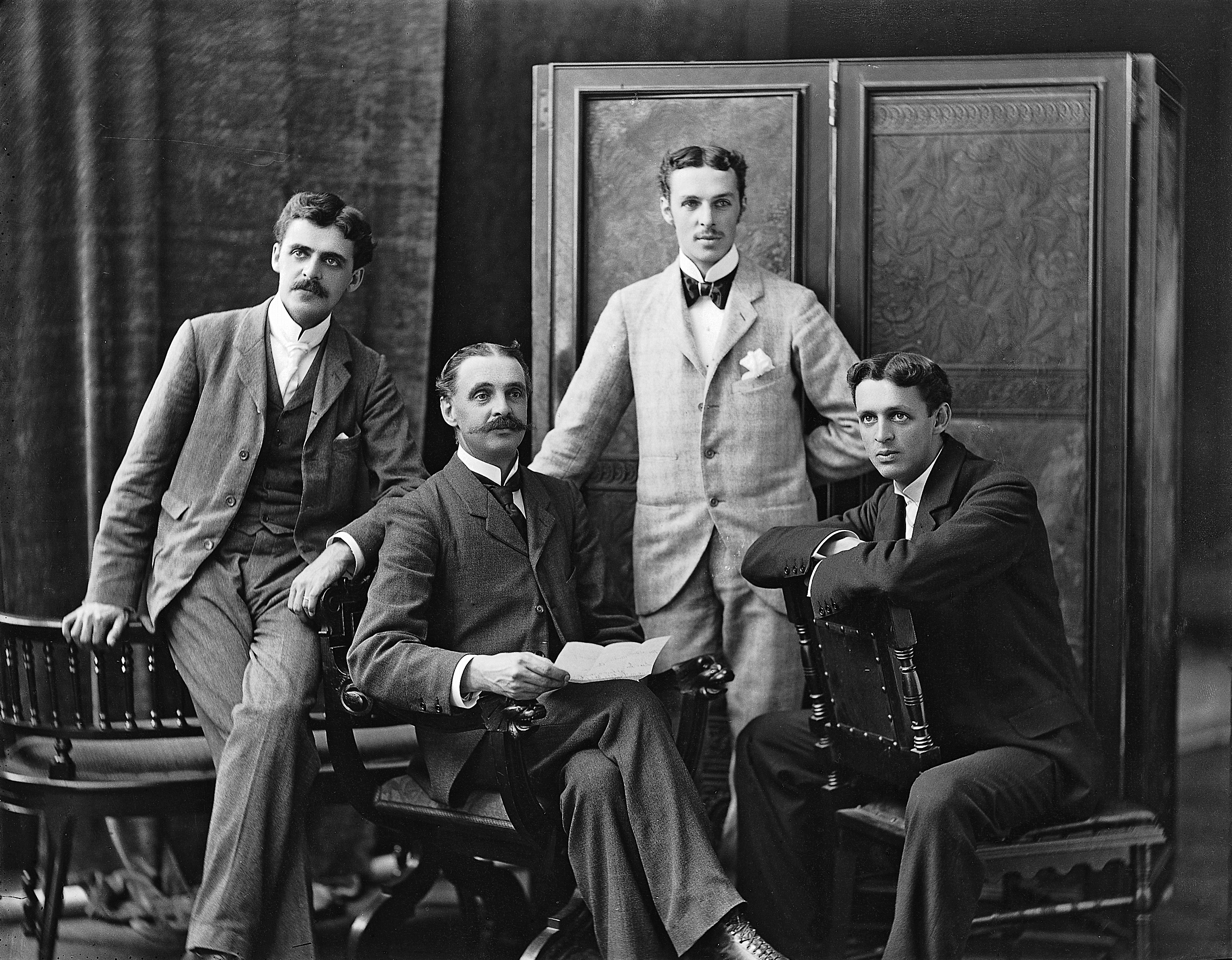
In 1894, the company issued its first catalogue. And in 1896, Birks became the exclusive distributor in Montreal of Hendery and Leslie’s non-religious silver and gold pieces. (See also Domestic Silver.) Hendery and Leslie was a major silverware manufacturer in Canada at the time and had a considerable workforce, its own unique designs, and a considerable amount of equipment. In 1897, Birks purchased Hendery and Leslie outright.
Expansion
By 1901, the company was expanding through a series of mergers, orchestrated by William Birks, who was now the head of the company. William Birks had a vision for company to become an iconic Canadian brand, and so through a series of mergers and takeovers brought Birks across the country, opening stores in Ottawa (1901), Winnipeg (1903), Toronto (1905) and Vancouver (1907). In addition to Birks’ national growth, the company’s flagship store in Montreal underwent a considerable expansion in 1907, growing to occupy the entire west side of Phillips Square. The 18,000-square-foot flagship store featured what was at the time the latest technologies, including electric lighting. The company expanded to Halifax in 1919, Calgary in 1920, and opened its first branches in Europe when it expanded to London in 1925 and Antwerp in 1929.
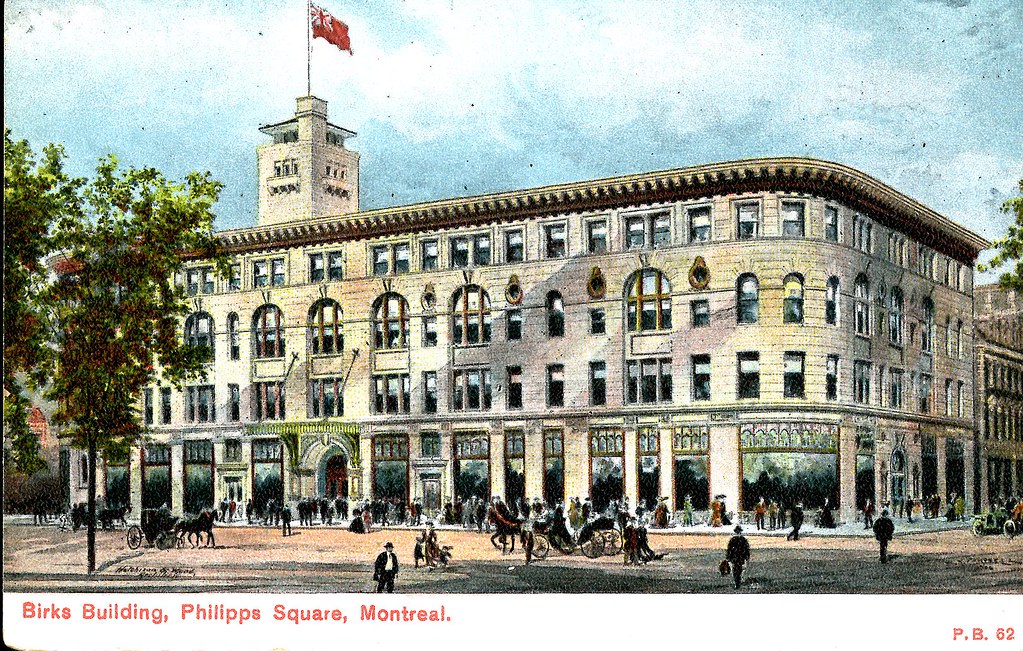
In the 1920s, the company introduced its distinctive blue box, which has since become the brand’s iconic and identifying object and colour.
In 1934, the company was issued a Royal Warrant of Appointment, which allowed it to use the coat of arms of the British Crown in connection with its business activities. This warrant also recognized William Birks as the silversmith to the Prince of Wales ( see King Edward VIII.).
The company continued to expand aggressively throughout Canada in the early decades of the 20th century, such that by the time of the Second World War it held a de facto monopoly on gold and silver products nationwide.
When the first Canadian indoor shopping centre opened in Dorval, Quebec, in 1954, Birks opened the first jewellery store inside a shopping mall in Canada.
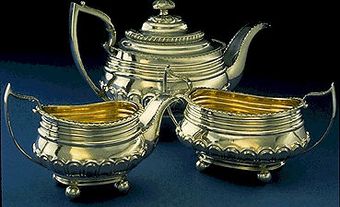
In 1979, the company donated the Henry Birks Collection of Canadian Silver to the National Gallery of Canada in recognition of the firm’s centenary. It is one of the largest collections of silver in the world. The company expanded aggressively in the United States and Canada during the 1980s, at its height with over 200 locations, but this rapid over-expansion was not successful, and the company entered bankruptcy protection in the early 1990s.
In 1993, Jonathan Birks sold the company to the Italian Bergosesia Acquisitions Corporation (later Regaluxe Group). Birks is now traded publicly under the trading symbol BGI.
21st Century
In 2001, the Birks flagship store at Phillips Square was completely renovated. In 2005, Henry Birks & Sons Inc. merged with the American Mayors Jewelers Inc. to form Birks & Mayors. This then became known as the Birks Group in 2013.
In 2007, Birks was named an official sponsor of, and an official supplier of jewellery to, the 2010 Vancouver Olympic Winter Games. (See also Canada at the 2010 Olympic Winter Games.)
In 2017, the company sold the Mayors chain.
Present Operations
The company operates flagship stores in several major Canadian cities, and maintains its headquarters near the original flagship store in Montreal. There are 25 Birks boutiques located across Canada, and over 290 employees. The company remains Canada’s leading designer, manufacturer and retailer of high-end gifts, watches and jewellery. In 2017, a renovation project was undertaken at the Montreal flagship store to transform part of the building into a luxury boutique hotel.
Supreme Court Case
In 1955, the Supreme Court of Canada ruled in favour of Henry Birks & Sons and other businesses in a case relating to the former prohibition on conducting business on the feast days of saints. In addition to blue laws that prevented the conduct of business on Sundays, municipal bylaws in Quebec also allowed business to be suspended on the feast days of Catholic saints. (See also Catholicism in Canada.) Henry Birks & Sons objected to these laws for the lost business. The court determined that the matter was outside the legal jurisdiction of the provinces. The decision marked the beginning of a shift away from religious inspiration for public laws to a secular foundation for law that occurred in Canadian jurisprudence over the latter half of the 20th century.