Share on Facebook
 Share on X
 Share by Email
 Share on Google Classroom
Artemis II was an astronaut moon mission that flew in 2026. Canadian Space Agency (CSA) astronaut Jeremy Hansen and three NASA astronauts flew around the far side of the moon to test the Orion spacecraft for future moon missions. Funding for the robotic Canadarm3 system paid for Hansen’s participation on the flight. CSA astronaut Jenni Gibbons served as Hansen’s backup and communicated with the astronauts during the lunar flyby. The mission served as an example of international collaboration and included other contributions from Canada such as the development of an exercise flywheel and space-friendly food.
A Historic Moon Mission
Artemis II was the first astronaut moon mission since the landing of NASA’s Apollo 17 in 1972. NASA chose the four astronauts for Artemis II under the Artemis Accords, a NASA-led program for lunar and civil space exploration. In part because Canada was one of the original eight signatories to the accords, the CSA received a seat on Artemis II, the first crewed mission of the Artemis program that eventually aims to land astronauts on the moon.
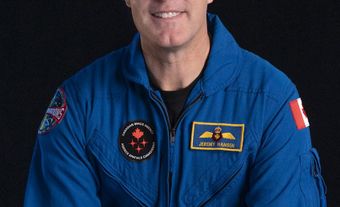
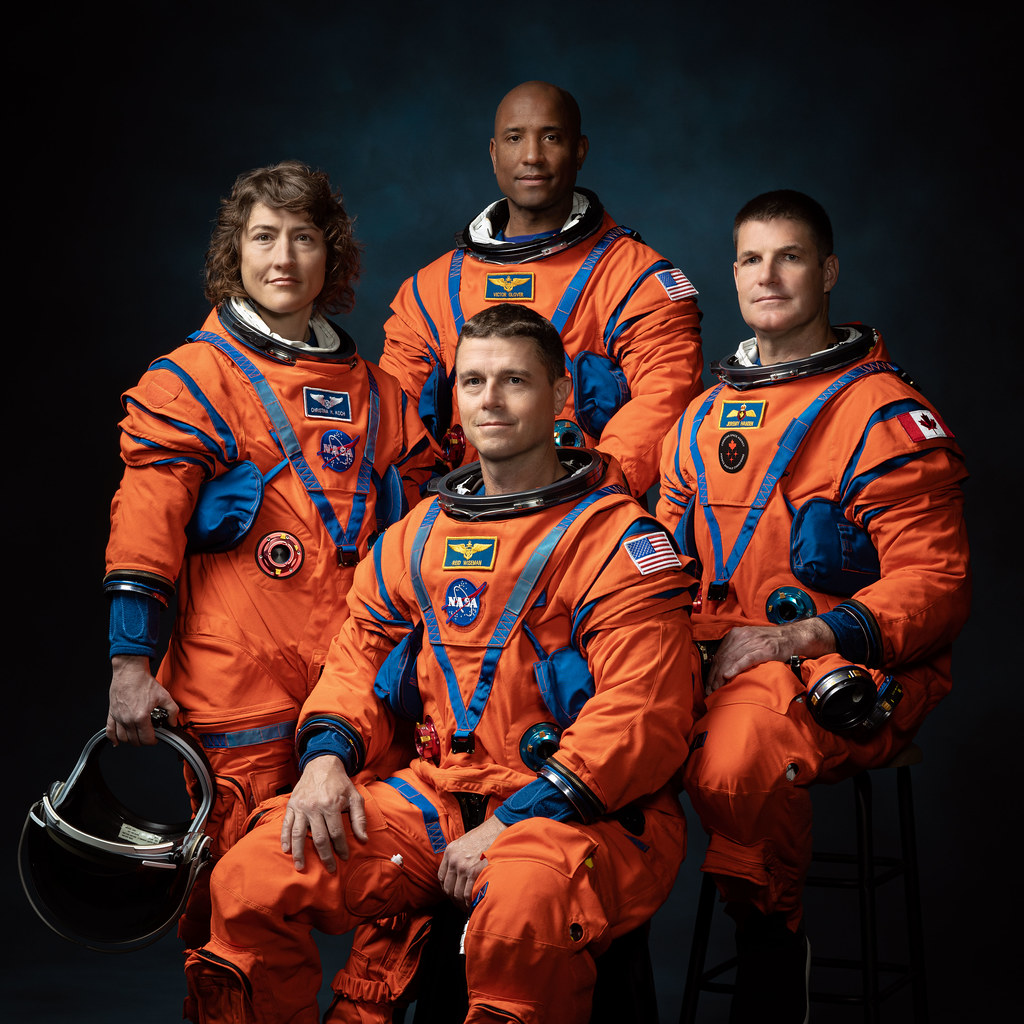
Jeremy Hansen, a CSA astronaut and colonel in the Royal Canadian Air Force, was assigned to Artemis II as a mission specialist. Hansen was selected for CSA service in 2009. His notable ground contributions include becoming the first Canadian to lead an astronaut training class for both NASA and CSA. Navdeep Bains, former Minister of Innovation, Science and Industry, has said Hansen helped develop Canada’s space strategy before the mission assignment.
The other three astronauts were from NASA: Reid Wiseman as commander, Victor Glover as pilot and Christina Koch as mission specialist. With the exception of Hansen, all of the Artemis II astronauts had experience in space on International Space Station (ISS) missions.
Key Mission Milestones
Artemis II launched from NASA’s Kennedy Space Center in Florida on 1 April 2026. Following launch, the Space Launch System rocket inserted the Orion spacecraft and its four astronauts into Earth orbit. The crew orbited Earth twice to make sure that Orion’s systems were behaving normally. The first orbit ranged between 185 km and 2,253 km, while the second was between 185 km and 74,000 km above Earth. For comparison, the ISS orbits between 370 km and 460 km.
The crew did a “proximity operations demonstration” with an upper stage of the rocket to practice maneuvering spacecraft for docking during future moon missions. Then, on Flight Day 2, 2 April, they performed the crucial engine burn to the moon called a “trans-lunar injection.” Flying to the moon took about three days, with Jeremy Hansen and the other crew members doing live public engagement events in between.
Shortly before reaching the moon, the Artemis II astronauts proposed naming a new lunar crater after Carroll, the wife of Reid Wiseman, who died of cancer in 2020. The crew reached its closest approach to the moon on 6 April (Flight Day 6), flying 6,544 km above the lunar surface. The moon was about the size of a basketball from the perspective of the astronauts. The crew performed observations, including photography and video, for about seven hours and by luck observed a solar eclipse toward the end of their observation period. The crew then made the three-day journey back to Earth before making a safe splashdown on 10 April.
The mission had a measurable impact, with millions of mentions on social media and receiving engagement from mainstream television, including a skit on Saturday Night Live. Both Canadian prime minister Mark Carney and United States president Donald Trump called the crew in space during the mission. Canadian actor Ryan Gosling, then starring in a new Hollywood space film titled Project Hail Mary, recorded best wishes for the crew ahead of launch. From space, Hansen said the movie was “uplifting and inspiring” and added the Artemis II crew watched the movie in quarantine before leaving Earth.
Key CSA Contributions: Canadarm3 and Jenni Gibbons
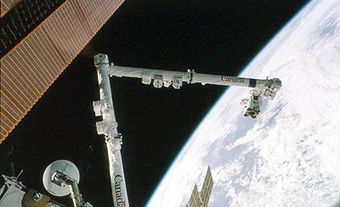
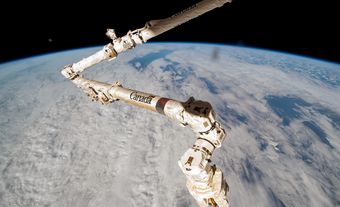
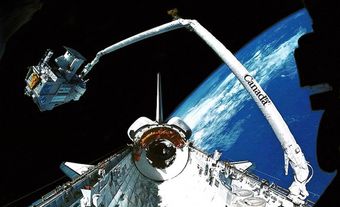
Canada has paid for two Artemis program mission seats for astronauts, including on Artemis II, by funding the development and construction of the robotic Canadarm3. The arm has heritage from the long-running Canadarm program that is managed by MDA Space. (See also Robotics in Canada.)
Canadarm3 is designed to perform maintenance and science tasks at the moon, occasionally without human intervention. MDA Space is moving toward completion of the arm under a $999.8 million contract awarded in 2024. Canadarm3’s contributions to Artemis will be determined between MDA Space, NASA and CSA.
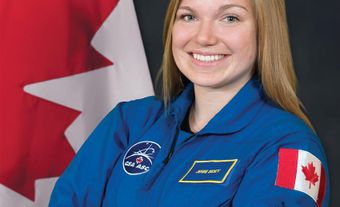
While Jeremy Hansen had a seat on Artemis II, CSA astronaut Jenni Gibbons was assigned as backup so that if Hansen was unable to fly, Canada would preserve a spot on the mission. Gibbons participated in all mission training and, along with NASA backup astronaut Andre Douglas, defined and validated the training and work for future Artemis missions.
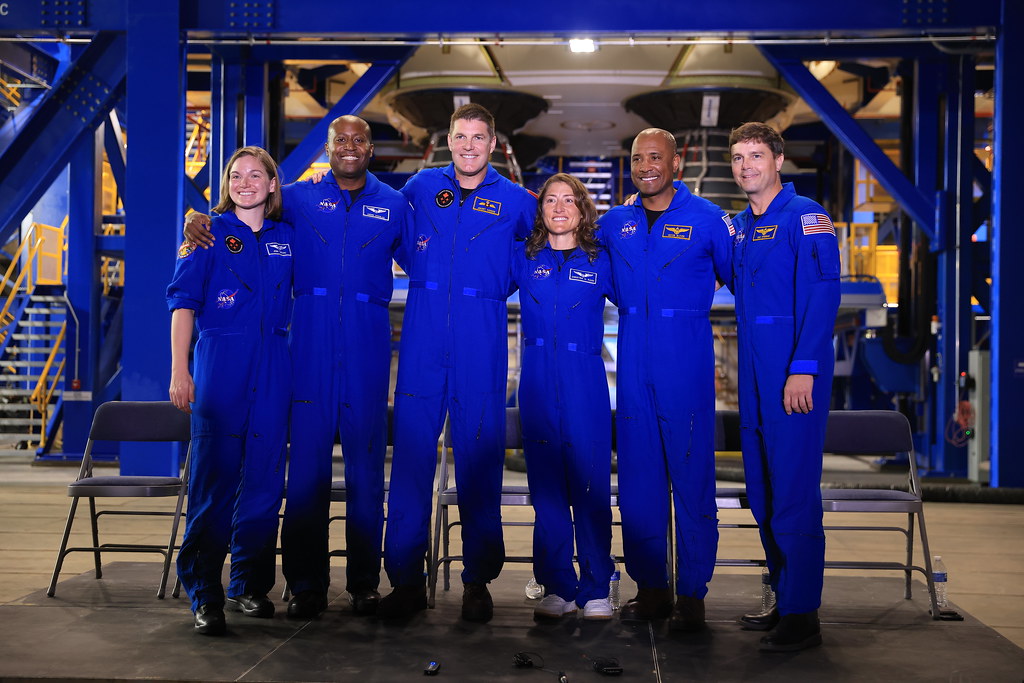
Gibbons also took on several mission key roles. She was part of the team preparing NASA’s Orion spacecraft for the Artemis II astronauts just prior to launch. She also served as astronaut escort for Hansen’s family to help with issues with their travel or during Hansen’s mission. Once Hansen was on his mission, Gibbons served as “capcom,” or the voice of Mission Control, to the astronauts for several shifts, including during lunar flyby.
Canadian Science, Engineering and Food
CSA and the Government of Canada also contributed to developing a flywheel exercise device aboard Artemis II. The flywheel was installed below the entry hatch on Orion to allow astronauts to do squats, deadlifts and other resistance workouts during the mission. Prior to the moon flight, the National Research Council did simulated microgravity testing of the flywheel on a Falcon 20 airplane in 2024 during parabolic flights (flying the plane rapidly up and down) at the Montreal Metropolitan Airport in Longueuil, Quebec. Around 30 individuals from CSA, Canadian Forces Morale and Welfare Services, and the Canadian Armed Forces, also did several days of testing of the device on Earth.
Canadian food was also provided through CSA for Artemis II, including strawberry lavender superseed cereal, shrimp curry with rice, natural wild keta salmon bites, maple cream cookies and maple syrup. This food played a key role in helping the astronauts mark one of the most notable moments of their mission, which was passing out of communication with Earth while on the far side of the moon. During that time, the astronauts took a short break from their duties with a snack of maple cream cookies.