
Browse "Things"
-
Article
Treaty 3
On 3 October 1873, some Saulteaux peoples (an Ojibwe people) and the Government of Canada signed Treaty 3, also known as the North-West Angle Treaty. This agreement provided the federal government access to Saulteaux lands in present-day northwestern Ontario and eastern Manitoba in exchange for various goods and Indigenous rights to hunting, fishing and natural resources on reserve lands. The terms and text of Treaty 3 set precedents for the eight Numbered Treaties that followed. (See also Treaties with Indigenous Peoples in Canada.) This article is a full-length entry about Treaty 3. For a plain-language summary, please see Treaty 3 (Plain-Language Summary).
"https://d3d0lqu00lnqvz.cloudfront.net/media/media/0c20f035-b4ff-4e0a-baad-b18906648db9.jpg" // resources/views/front/categories/view.blade.php
https://d3d0lqu00lnqvz.cloudfront.net/media/media/0c20f035-b4ff-4e0a-baad-b18906648db9.jpg
-
Article
Treaty 3 (Plain-Language Summary)
Treaty 3 was signed between the Anishinaabe and the Government of Canada in 1873. Treaty 3 is also known as the North-West Angle Treaty. The goal of the government was to gain access to land. The land was located in what is known now as northwestern Ontario and eastern Manitoba. The goal of the Anishinaabe was to preserve their way of life. Like the other numbered treaties, Treaty 3 remains controversial. This article is a plain-language summary of Treaty 3. If you are interested in reading about this topic more in depth, please see our full-length entry, Treaty 3.
"https://d3d0lqu00lnqvz.cloudfront.net/media/media/4913942c-18ec-4c1c-be27-6d74ec04cfbe.jpg" // resources/views/front/categories/view.blade.php
https://d3d0lqu00lnqvz.cloudfront.net/media/media/4913942c-18ec-4c1c-be27-6d74ec04cfbe.jpg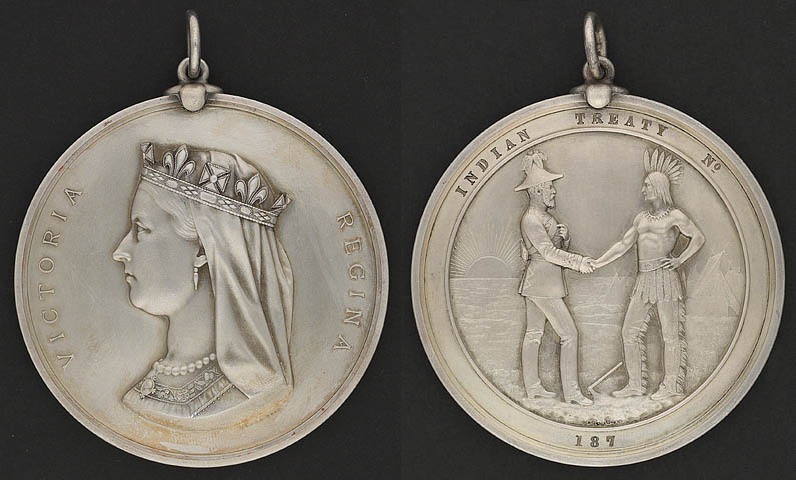
-
Article
Treaty 4
Treaty 4 — also known as the Qu'Appelle Treaty — was signed on 15 September 1874 at Fort Qu’Appelle, Saskatchewan. In exchange for payments, provisions and rights to reserve lands, Treaty 4 ceded Indigenous territory to the federal government. The majority of Treaty 4 lands are in present-day southern Saskatchewan. Small portions are in western Manitoba and southern Alberta. (See Numbered Treaties.) This article is a full-length entry about Treaty 4. For a plain-language summary, please see Treaty 4 (Plain-Language Summary).
"https://d3d0lqu00lnqvz.cloudfront.net/media/media/2bbbb770-33d9-4635-8dcf-bf1e5e84d4c1.jpg" // resources/views/front/categories/view.blade.php
https://d3d0lqu00lnqvz.cloudfront.net/media/media/2bbbb770-33d9-4635-8dcf-bf1e5e84d4c1.jpg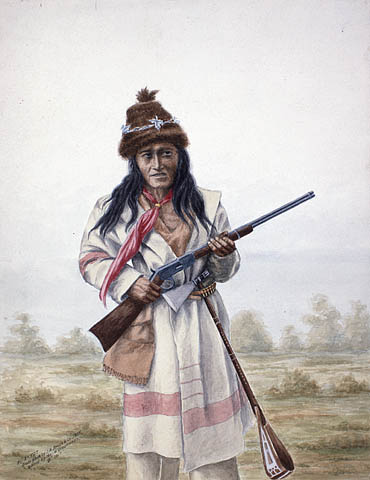
-
Article
Treaty 4 (Plain-Language Summary)
Treaty 4 was signed in 1874. This treaty is also known as the Qu’Appelle Treaty because it was signed at Fort Qu’Appelle, Saskatchewan. The treaty was signed by the federal government and the Cree and Saulteaux. Like all other Numbered Treaties, Indigenous peoples gave up much land to the government. Most of this land is located in southern Saskatchewan. As with the other Numbered Treaties, Treaty 4 remains controversial. This article is a plain-language summary of Treaty 4. If you are interested in reading about this topic more in depth, please see our full-length entry, Treaty 4.
"https://d3d0lqu00lnqvz.cloudfront.net/media/media/4913942c-18ec-4c1c-be27-6d74ec04cfbe.jpg" // resources/views/front/categories/view.blade.php
https://d3d0lqu00lnqvz.cloudfront.net/media/media/4913942c-18ec-4c1c-be27-6d74ec04cfbe.jpg
-
Article
Treaty 5
Treaty 5 — also known as the Winnipeg Treaty — was signed in 1875–76 by the federal government, Ojibwe peoples and the Swampy Cree of Lake Winnipeg . Treaty 5 covers much of present-day central and northern Manitoba, as well as portions of Saskatchewan and Ontario. The terms of Treaty 5 have had ongoing legal and socioeconomic impacts on Indigenous communities (see Numbered Treaties; Indigenous Peoples: Treaties). This article is a full-length entry about Treaty 5. For a plain-language summary, please see Treaty 5 (Plain-Language Summary).
"https://d3d0lqu00lnqvz.cloudfront.net/media/media/18a4376f-d188-4b93-826c-d4b2e5c02ee7.jpg" // resources/views/front/categories/view.blade.php
https://d3d0lqu00lnqvz.cloudfront.net/media/media/18a4376f-d188-4b93-826c-d4b2e5c02ee7.jpg
-
Article
Treaty 5 (Plain-Language Summary)
Treaty 5 is also known as the Winnipeg Treaty. It was signed by Ojibwe and Swampy Cree communities around Lake Winnipeg in 1875 and 1876. Treaty 5 covers much of Manitoba and parts of Saskatchewan and Ontario. This article is a plain-language summary of Treaty 5. If you are interested in reading about this topic more in depth, please see our full-length entry, Treaty 5.
"https://d3d0lqu00lnqvz.cloudfront.net/media/media/4913942c-18ec-4c1c-be27-6d74ec04cfbe.jpg" // resources/views/front/categories/view.blade.php
https://d3d0lqu00lnqvz.cloudfront.net/media/media/4913942c-18ec-4c1c-be27-6d74ec04cfbe.jpg
-
Article
Treaty 6
Treaty 6 was signed by Crown representatives and Cree, Assiniboine and Ojibwe leaders on 23 August 1876 at Fort Carlton , Saskatchewan, and on 9 September 1876 at Fort Pitt, Saskatchewan. The treaty boundaries extend across central portions of present-day Alberta and Saskatchewan. This is the full-length entry about Treaty 6. For a plain-language summary, please see Treaty 6 (Plain-Language Summary).
"https://d3d0lqu00lnqvz.cloudfront.net/media/media/2a58e580-6da4-4fd4-b1fe-dc1357c14c36.jpg" // resources/views/front/categories/view.blade.php
https://d3d0lqu00lnqvz.cloudfront.net/media/media/2a58e580-6da4-4fd4-b1fe-dc1357c14c36.jpg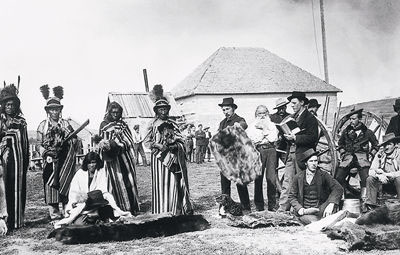
-
Article
Treaty 6 (Plain-Language Summary)
Treaty 6 was created in 1876. It is a treaty between the federal government and Indigenous peoples on the Prairies. Cree, Assiniboine and Ojibwe leaders signed the treaty. Treaty 6 territory is located in Alberta and Saskatchewan. This article is a plain-language summary of Treaty 6. If you are interested in reading about this topic in more depth, please see our full-length entry, Treaty 6.
"https://d3d0lqu00lnqvz.cloudfront.net/media/media/2a58e580-6da4-4fd4-b1fe-dc1357c14c36.jpg" // resources/views/front/categories/view.blade.php
https://d3d0lqu00lnqvz.cloudfront.net/media/media/2a58e580-6da4-4fd4-b1fe-dc1357c14c36.jpg
-
Article
Treaty 7
Treaty 7 is the last of the Numbered Treaties made between the Government of Canada and the Plains First Nations (see Indigenous Peoples: Plains). It was signed on 22 September 1877 by five First Nations: the Siksika (Blackfoot), Kainai (Blood), Piikani (Peigan), Stoney-Nakoda, and Tsuut’ina (Sarcee). Different understandings of the treaty’s purpose, combined with significant culture and language barriers and what some have argued were deliberate attempts to mislead the First Nations on the part of the government negotiators, have led to ongoing conflicts and claims. This article is a full-length entry about Treaty 7. For a plain-language summary, please see Treaty 7 (Plain-Language Summary).
"https://d3d0lqu00lnqvz.cloudfront.net/media/media/0729607a-735a-424b-a138-3e76e6053763.jpg" // resources/views/front/categories/view.blade.php
https://d3d0lqu00lnqvz.cloudfront.net/media/media/0729607a-735a-424b-a138-3e76e6053763.jpg
-
Article
Treaty 7 (Plain-Language Summary)
Treaty 7 was signed on 22 September 1877. It was the final Numbered Treaty between the Government of Canada and Plains First Nations (see also Plains Indigenous Peoples in Canada). Five First Nations signed the treaty: the Siksika, Kainai, Piikani, Stoney-Nakoda and Tsuut’ina. There were different understandings of the treaty’s purpose. There were also cultural and language barriers that contributed to different understandings. The government wanted title to land for settlement. It wanted Indigenous peoples to give up their Aboriginal title to the land. First Nations thought they were signing peace treaties to allow settlement. They did not believe they were giving up their title to land. Some argue the government negotiators tried to mislead First Nations. There are ongoing conflicts and claims about Treaty 7. This article is a plain-language summary of Treaty 7. If you are interested in reading about this topic more in depth, please see our full-length entry, Treaty 7.
"https://thecanadianencyclopedia.ca/images/tce_placeholder.jpg?v=e9dca980c9bdb3aa11e832e7ea94f5d9" // resources/views/front/categories/view.blade.php
https://thecanadianencyclopedia.ca/images/tce_placeholder.jpg?v=e9dca980c9bdb3aa11e832e7ea94f5d9
-
Article
Treaty 8
Treaty 8 was signed on 21 June 1899 by the Crown and First Nations of the Lesser Slave Lake area. The treaty covers roughly 841,487.137 km2 of what was formerly the North-West Territories and British Columbia, and now includes northern Alberta, northwest Saskatchewan, and portions of the modern Northwest Territoriesand BC, making it the largest treaty by area in the history of Canada. Prompted by the discovery of valuable resources in Canada’s north, particularly the Klondike gold rush, the treaty involved First Nations whose social organization was different than those of the Indigenous peoples the government had previously encountered in Numbered Treaties negotiations. As a result of this and other factors endemic to the North, the terms and implementation of Treaty 8 differ importantly from those of previous Numbered Treaties, with long-lasting consequences for the governance and peoples of that area. This article is a full-length entry about Treaty 8. For a plain-language summary, please see Treaty 8 (Plain-Language Summary).
"https://d3d0lqu00lnqvz.cloudfront.net/media/media/875acf12-5aea-4b3e-8636-c204915d5a17.jpg" // resources/views/front/categories/view.blade.php
https://d3d0lqu00lnqvz.cloudfront.net/media/media/875acf12-5aea-4b3e-8636-c204915d5a17.jpg
-
Article
Treaty 8 (Plain-Language Summary)
Treaty 8 is between the Crown and Indigenous peoples. It covers parts of what is now Alberta, Saskatchewan, British Columbia and the Northwest Territories. It was signed on 21 June 1899. Plans for this treaty started because of valuable resources in the north and the Klondike Gold Rush. This article is a plain-language summary of Treaty 8. If you are interested in reading about this topic more in depth, please see our full-length entry, Treaty 8.
"https://d3d0lqu00lnqvz.cloudfront.net/media/media/596e3481-425c-41d1-8798-87043a9cf32d.jpg" // resources/views/front/categories/view.blade.php
https://d3d0lqu00lnqvz.cloudfront.net/media/media/596e3481-425c-41d1-8798-87043a9cf32d.jpg
-
Article
Treaty 9
Treaty 9 (also known as the James Bay Treaty) is one of the 11 post-Confederation Numbered Treaties negotiated with Indigenous peoples in Canada between 1871 and 1921. (See also Treaties with Indigenous Peoples in Canada.) Signed in 1905-6, Treaty 9 covers most of present-day Ontario north of the height of land dividing the Great Lakes watershed from the Hudson and James Bay drainage basins. The purpose of Treaty 9 was to purchase the interests of the resident Cree and Ojibwe peoples to lands and resources to make way for white settlement and resource development. Treaty 9, like other Numbered Treaties, contained provisions for cash treaty payments, the creation of reserves, education and hunting, fishing and trapping rights.
"https://d3d0lqu00lnqvz.cloudfront.net/media/media/ab3026d0-af94-42ad-bfc4-5a7775f728cc.jpg" // resources/views/front/categories/view.blade.php
https://d3d0lqu00lnqvz.cloudfront.net/media/media/ab3026d0-af94-42ad-bfc4-5a7775f728cc.jpg
-
Article
Treaty Day
Treaty Day commemorates the day that certain treaties were signed by the Government of Canada and Indigenous peoples between the 18th and 20th centuries. Treaty Day is also a celebration of the historic relationship between Indigenous peoples and the federal government. It promotes public awareness about Indigenous cultures, histories and heritages for all Canadians.
"https://d3d0lqu00lnqvz.cloudfront.net/media/media/7d7951a1-b287-498f-982e-94b9ddf2a185.jpg" // resources/views/front/categories/view.blade.php
https://d3d0lqu00lnqvz.cloudfront.net/media/media/7d7951a1-b287-498f-982e-94b9ddf2a185.jpg
-
Article
Treaty-Making Power
Treaty-Making Power describes any and all types of international agreements governed by international law which are concluded between and among states and international organizations. Terms such as "convention," "protocol" and "declaration" are sometimes used to describe such agreements.
"https://thecanadianencyclopedia.ca/images/tce_placeholder.jpg?v=e9dca980c9bdb3aa11e832e7ea94f5d9" // resources/views/front/categories/view.blade.php
https://thecanadianencyclopedia.ca/images/tce_placeholder.jpg?v=e9dca980c9bdb3aa11e832e7ea94f5d9