
Browse "Things"
-
Article
Music about Transportation
Of the various means of travel by land, sea, and air, only the railways, with the rhythmic clickety-clack of the wheels and the scream of the locomotive whistle, have provided an obvious subject for imitation in music.
"https://thecanadianencyclopedia.ca/images/tce_placeholder.jpg?v=e9dca980c9bdb3aa11e832e7ea94f5d9" // resources/views/front/categories/view.blade.php
https://thecanadianencyclopedia.ca/images/tce_placeholder.jpg?v=e9dca980c9bdb3aa11e832e7ea94f5d9
-
Article
Transportation in Canada (Plain-Language Summary)
Transportation involves moving of people, natural resources and goods from one place to another. Transportation is an important part of Canada’s economy. It allows trade goods to move between mines, farms, cities and countries. (See also International Trade). Transportation is part of Canada’s history. It helped build social and political unity. It continues to connect people and regions across the country. This article is a plain-language summary of transportation. If you are interested in reading about this topic more in depth, please see our full-length entry, Transportation in Canada.
"https://d3d0lqu00lnqvz.cloudfront.net/transportation/locomotive.jpg" // resources/views/front/categories/view.blade.php
https://d3d0lqu00lnqvz.cloudfront.net/transportation/locomotive.jpg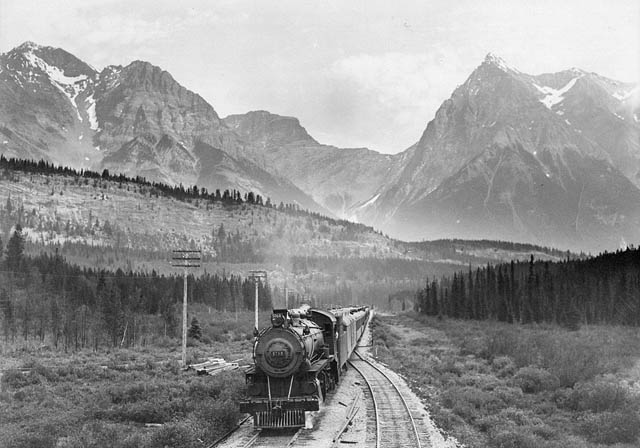
-
Article
Transportation in the North
Inuit and subarctic Indigenous peoples have traversed the North since time immemorial. Indigenous knowledge and modes of transportation helped early European explorers and traders travel and survive on these expanses. Later settlement depended to an extraordinary degree on the development of transportation systems. Today, the transportation connections of northern communities vary from place to place. While the most remote settlements are often only accessible by air, some have road, rail and marine connections. These are often tied to industrial projects such as mines.
"https://d3d0lqu00lnqvz.cloudfront.net/media/media/c6523c8a-095a-441a-9aee-d4be0dc564b8.jpg" // resources/views/front/categories/view.blade.php
https://d3d0lqu00lnqvz.cloudfront.net/media/media/c6523c8a-095a-441a-9aee-d4be0dc564b8.jpg
-
Article
Transportation Regulation
Transportation regulation is administered by all levels of government (federal, provincial, municipal) and covers prices, conditions and levels of service, and the operating authority of transport units.
"https://thecanadianencyclopedia.ca/images/tce_placeholder.jpg?v=e9dca980c9bdb3aa11e832e7ea94f5d9" // resources/views/front/categories/view.blade.php
https://thecanadianencyclopedia.ca/images/tce_placeholder.jpg?v=e9dca980c9bdb3aa11e832e7ea94f5d9
-
Article
Travels and Adventures in Canada and the Indian Territories between the Years 1760 and 1776
Travels and Adventures in Canada and the Indian Territories between the Years 1760 and 1776 (New York, 1809; Toronto, 1901) was written by Alexander Henry (the elder), one of the first Britons to venture into western Indigenous territory after the defeat of the French at Québec.
"https://thecanadianencyclopedia.ca/images/tce_placeholder.jpg?v=e9dca980c9bdb3aa11e832e7ea94f5d9" // resources/views/front/categories/view.blade.php
https://thecanadianencyclopedia.ca/images/tce_placeholder.jpg?v=e9dca980c9bdb3aa11e832e7ea94f5d9
-
Article
Travois
A travois, from the French word travail, “to work,” was a device used for transportation by the Plains Indigenous peoples. Drawn by horses or dogs, the travois carried people’s goods to and from hunting sites and temporary settlements.
"https://d3d0lqu00lnqvz.cloudfront.net/media/media/cb51fb80-deaf-46a4-a9ad-b5bca1c5fc04.jpg" // resources/views/front/categories/view.blade.php
https://d3d0lqu00lnqvz.cloudfront.net/media/media/cb51fb80-deaf-46a4-a9ad-b5bca1c5fc04.jpg
-
Article
Treason
Treason is probably the oldest and most serious offence in political society, with the possible exception of murder. The earliest English treason legislation, which dates from 1351, is the basis of all treason legislation in the English-speaking world. Originally, treason meant an attack upon the person or life of the monarch. But as the state became more important than its sovereign, treason came to indicate any act directed at the overthrow of the government or against the security of the state. Anyone participating in a rebellion or an unsuccessful revolution is technically guilty of treason, although only the leaders tend to be prosecuted. Conversely, it is not uncommon for the leaders of a successful revolution to try former opponents for treason.
"https://thecanadianencyclopedia.ca/images/tce_placeholder.jpg?v=e9dca980c9bdb3aa11e832e7ea94f5d9" // resources/views/front/categories/view.blade.php
https://thecanadianencyclopedia.ca/images/tce_placeholder.jpg?v=e9dca980c9bdb3aa11e832e7ea94f5d9
-
Article
Treasury Board
The Treasury Board, the only statutory committee of CABINET (thus formally a PRIVY COUNCIL committee), was created in 1867. The president of the Treasury Board chairs a board which comprises the finance minister and 4 other ministers appointed by the governor-in-council.
"https://thecanadianencyclopedia.ca/images/tce_placeholder.jpg?v=e9dca980c9bdb3aa11e832e7ea94f5d9" // resources/views/front/categories/view.blade.php
https://thecanadianencyclopedia.ca/images/tce_placeholder.jpg?v=e9dca980c9bdb3aa11e832e7ea94f5d9
-
Article
Treaties 1 and 2
Treaties 1 and 2 were the first of 11 Numbered Treaties negotiated between 1871 and 1921. Treaty 1 was signed 3 August 1871 between Canada and the Anishinabek and Swampy Cree of southern Manitoba. Treaty 2 was signed 21 August 1871 between Canada and the Anishinaabe of southern Manitoba (see Eastern Woodlands Indigenous Peoples). From the perspective of Canadian officials, treaty making was a means to facilitate settlement of the West and the assimilation of Indigenous peoples into Euro-Canadian society (see Treaties with Indigenous Peoples in Canada). Indigenous peoples sought to protect their traditional lands and livelihoods while securing assistance in transitioning to a new way of life. Treaties 1 and 2 encapsulate these divergent aims, leaving a legacy of unresolved issues due to the different understandings of their Indigenous and Euro-Canadian participants. This article is a full-length entry about Treaties 1 and 2. For a plain-language summary, please see Treaties 1 and 2 (Plain-Language Summary).
"https://d3d0lqu00lnqvz.cloudfront.net/media/media/d1c2f761-fbf1-4630-915e-9196456f8635.jpg" // resources/views/front/categories/view.blade.php
https://d3d0lqu00lnqvz.cloudfront.net/media/media/d1c2f761-fbf1-4630-915e-9196456f8635.jpg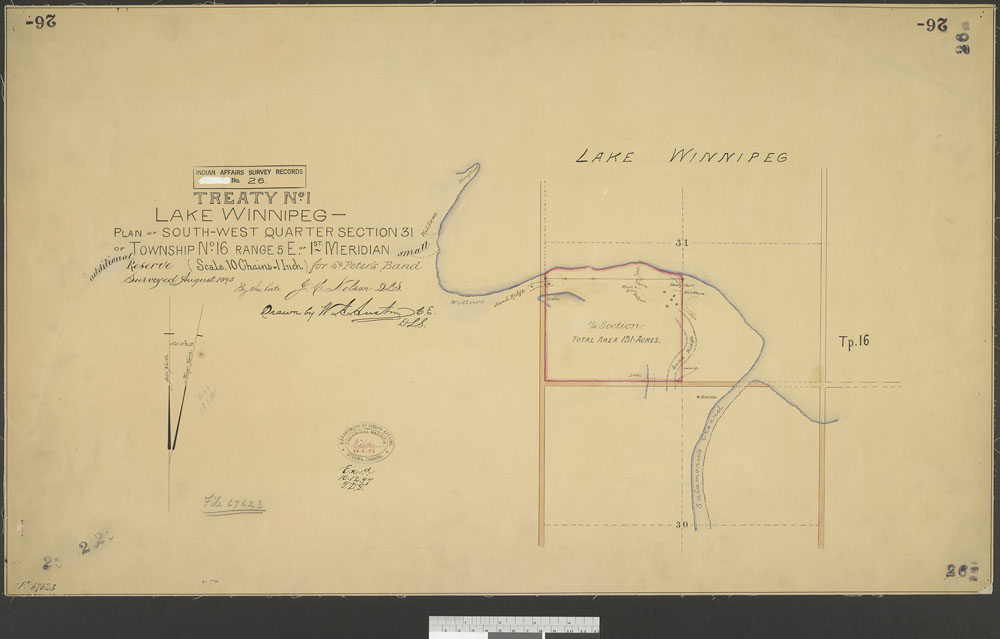
-
Article
Treaties 1 and 2 (Plain-Language Summary)
Several treaties were signed between the federal government and Indigenous peoples in Canada between 1871 and 1921. They are known as “Numbered Treaties.” The first two treaties were signed in 1871. Treaty 1 was signed by the Anishinaabe and Swampy Cree of southern Manitoba. Treaty 2 was signed by the Anishinaabe of southern Manitoba. The government and Indigenous peoples had different goals. The government wanted land for future immigrants. Indigenous peoples aimed to protect their lands and way of life. These treaties were controversial when they were made. They remain controversial today. This article is a plain-language summary of Treaties 1 and 2. If you are interested in reading about this topic more in depth, please see our full-length entry, Treaties 1 and 2.
"https://thecanadianencyclopedia.ca/images/tce_placeholder.jpg?v=e9dca980c9bdb3aa11e832e7ea94f5d9" // resources/views/front/categories/view.blade.php
https://thecanadianencyclopedia.ca/images/tce_placeholder.jpg?v=e9dca980c9bdb3aa11e832e7ea94f5d9
-
Article
Treaties with Indigenous Peoples in Canada (Plain-Language Summary)
Indigenous treaties in Canada are agreements made between the Crown and Indigenous peoples. These agreements typically concern land. Indigenous peoples agreed to share their land in exchange for payments and promises. Before Confederation, Britain controlled the treaty making process. After Confederation, the federal government took control of the treating making process. This article is a plain-language summary of Treaties with Indigenous Peoples in Canada. If you are interested in reading about this topic more in depth, please see our full-length entry, Treaties with Indigenous Peoples in Canada.
"https://d3d0lqu00lnqvz.cloudfront.net/media/media/122dc04b-d0a1-4551-a912-1bee8991746b.jpg" // resources/views/front/categories/view.blade.php
https://d3d0lqu00lnqvz.cloudfront.net/media/media/122dc04b-d0a1-4551-a912-1bee8991746b.jpg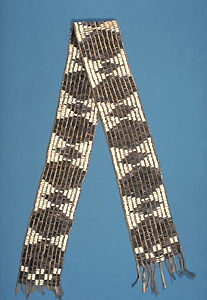
-
Article
Treaties with Indigenous Peoples in Newfoundland and Labrador
Treaties have been a principal mechanism for determining relationships between nations and can define rights, responsibilities and mutual obligations. In what is now Canada, Indigenous nations have created and maintained treaties with each other and Europeans for centuries. These treaties were meant to determine how to co-exist peacefully in a territory. They were not understood by Indigenous nations as a surrender of their sovereignty and identities to colonial powers (see also Treaties with Indigenous Peoples in Canada). Newfoundland and Labrador has historically not considered treaties with Indigenous peoples, despite being one of the first places of colonization in the Americas (see also Colonialism in Canada). This omission is primarily attributed to the province’s unique history, distinguishing it from the other Canadian provinces. Before joining Canada, Newfoundland did not have legal mechanisms for recognizing Indigenous nations. As a result, when joining Canada, Indigenous peoples were omitted from the Terms of Union (see also Newfoundland and Labrador and Confederation). In Newfoundland and Labrador, there are no federal or provincially recognized early treaties. However, historical documents and Indigenous histories show there are at least two treaties from the 18th century. Additionally, there are two modern treaties that cover land in Newfoundland and Labrador and several attempted or ongoing treaty negotiations.
"https://thecanadianencyclopedia.ca/images/tce_placeholder.jpg?v=e9dca980c9bdb3aa11e832e7ea94f5d9" // resources/views/front/categories/view.blade.php
https://thecanadianencyclopedia.ca/images/tce_placeholder.jpg?v=e9dca980c9bdb3aa11e832e7ea94f5d9
-
Macleans
Treating Schizophrenia
Inspired by the realization that schizophrenia is a biochemical brain disorder - and not, as doctors once believed, the result of family influences during childhood - a growing number of scientists are studying the disease.This article was originally published in Maclean's Magazine on January 30, 1995
"https://d3d0lqu00lnqvz.cloudfront.net/media/media/75d06d61-a6a4-4719-bc2b-5ff6be5bfed5.jpg" // resources/views/front/categories/view.blade.php
https://d3d0lqu00lnqvz.cloudfront.net/media/media/75d06d61-a6a4-4719-bc2b-5ff6be5bfed5.jpg
-
Article
Treaty 10
Treaty 10 is the 10th of the 11 Numbered Treaties. It was signed in 1906–07 by the Canadian government and Indigenous peoples in northern Saskatchewan and Alberta. Treaty 10 covers nearly 220,000 km2 of Saskatchewan and Alberta. The terms of Treaty 10 have had ongoing legal and socioeconomic impacts on Indigenous communities.
"https://d3d0lqu00lnqvz.cloudfront.net/media/media/22da8ac5-1905-4c28-ad2e-c9f55c67c7aa.jpg" // resources/views/front/categories/view.blade.php
https://d3d0lqu00lnqvz.cloudfront.net/media/media/22da8ac5-1905-4c28-ad2e-c9f55c67c7aa.jpg
-
Article
Treaty 11
Treaty 11 is the last of the Numbered Treaties signed on 22 August 1921 between First Nations and the Canadian government following Confederation, as Canada expanded its borders north and west. It covers more than 950,000 km2 of present-day Yukon, Northwest Territories and Nunavut. The First Nations involved were predominately Dene, and include the Gwich’in, Tlicho (Dogrib) and Sahtu. As with other Numbered Treaties, the government did not want to enter into treaty until its interests would be served by doing so; accordingly, Treaty 11 was only created in 1921, after oil and gas prospects in the Mackenzie region sparked its interests. However, hasty negotiations combined with weak implementation of the terms — particularly with regard to reserves and land claims — have led to considerable disagreement between the parties on what was meant by the treaty and which promises have not been fulfilled. As a result, many of the signatories to Treaty 11 have also been involved in the modern treaties process ( see Indigenous Peoples: Treaties).
"https://d3d0lqu00lnqvz.cloudfront.net/media/media/ec35153e-3722-48ad-b760-64812a063ffe.jpg" // resources/views/front/categories/view.blade.php
https://d3d0lqu00lnqvz.cloudfront.net/media/media/ec35153e-3722-48ad-b760-64812a063ffe.jpg