Browse "Things"
-
Article
Starfish
Starfish, or sea star, is a common marine animal found from seashore to ocean depths; 1600 species are known worldwide.
"https://d3d0lqu00lnqvz.cloudfront.net/media/media/4815042e-4596-4981-bf6f-7f7c000bdc53.jpg" // resources/views/front/categories/view.blade.php
https://d3d0lqu00lnqvz.cloudfront.net/media/media/4815042e-4596-4981-bf6f-7f7c000bdc53.jpg
-
Article
Starling
Starling is the common name for an Old World family (Sturnidae) of birds, comprising 114 principally tropical species.
"https://d3d0lqu00lnqvz.cloudfront.net/media/media/141f6759-3f84-40bc-ad54-869e0a6ebe39.jpg" // resources/views/front/categories/view.blade.php
https://d3d0lqu00lnqvz.cloudfront.net/media/media/141f6759-3f84-40bc-ad54-869e0a6ebe39.jpg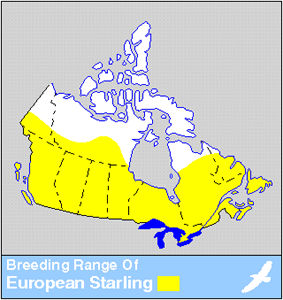
-
Article
Starmania
Starmania. Rock opera, lyrics by Luc Plamondon, music by French composer Michel Berger (b 1947, d 1992).
"https://thecanadianencyclopedia.ca/images/tce_placeholder.jpg?v=e9dca980c9bdb3aa11e832e7ea94f5d9" // resources/views/front/categories/view.blade.php
https://thecanadianencyclopedia.ca/images/tce_placeholder.jpg?v=e9dca980c9bdb3aa11e832e7ea94f5d9
-
Article
State
StateThe state is a broad concept that includes government as the seat of legitimate authority in a territory but also includes bureaucracy, judiciary, the ARMED FORCES and internal POLICE, structures of legislative assemblies and administration, public corporations, regulatory boards, and ideological apparatuses such as the education establishment and publicly owned media. The distinguishing characteristic of the state is its monopoly over the use of force in a given territory. The state as a concept in...
"https://thecanadianencyclopedia.ca/images/tce_placeholder.jpg?v=e9dca980c9bdb3aa11e832e7ea94f5d9" // resources/views/front/categories/view.blade.php
https://thecanadianencyclopedia.ca/images/tce_placeholder.jpg?v=e9dca980c9bdb3aa11e832e7ea94f5d9
-
Article
Station PAPA
Station PAPA Ocean Weather Station "P" is commonly called Station PAPA after the code word for the letter P in the phonetic alphabet used by radio operators. Station PAPA is located in the N Pacific Ocean (50° N, 145° W) and has a water depth of 4200 m.
"https://thecanadianencyclopedia.ca/images/tce_placeholder.jpg?v=e9dca980c9bdb3aa11e832e7ea94f5d9" // resources/views/front/categories/view.blade.php
https://thecanadianencyclopedia.ca/images/tce_placeholder.jpg?v=e9dca980c9bdb3aa11e832e7ea94f5d9
-
Article
Statistics
Statistics is the science concerned with the collection and analysis of numerical information to answer questions wisely. The term also refers to the numerical information that has been collected. Statistics has many applications in Canada, from government censuses and surveys, to decision making in industry, to medical research and technological innovation.
"https://thecanadianencyclopedia.ca/images/tce_placeholder.jpg?v=e9dca980c9bdb3aa11e832e7ea94f5d9" // resources/views/front/categories/view.blade.php
https://thecanadianencyclopedia.ca/images/tce_placeholder.jpg?v=e9dca980c9bdb3aa11e832e7ea94f5d9
-
Article
Statistics Canada
Statistics Canada is the nation’s central statistical agency. It was established in 1918 as the Dominion Bureau of Statistics and adopted its present name in 1971. Under the Statistics Act of that year, it has the responsibility to “collect, compile, analyse, abstract and publish statistical information relating to the commercial, industrial, financial, social, economic and general activities and condition of the people.” The agency works with government departments to develop integrated social and economic statistics for Canada and the provinces and territories. In addition, Statistics Canada is a scientific research organization that develops methodologies and techniques related to statistics and survey design. Click here for definitions of key terms used in this article.
"https://d3d0lqu00lnqvz.cloudfront.net/media/new_article_images/StatisticsCanada/Jean Talon Building.JPG" // resources/views/front/categories/view.blade.php
https://d3d0lqu00lnqvz.cloudfront.net/media/new_article_images/StatisticsCanada/Jean Talon Building.JPG
-
Macleans
StatsCan Reports on Women
Women now make up slightly more than half of all people living in Canada. In fact, in 1991, the last census year, 50.4 per cent of the total population was female, compared with 50.2 per cent in 1981 and 48.4 per cent in 1921.This article was originally published in Maclean's Magazine on August 21, 1995
"https://thecanadianencyclopedia.ca/images/tce_placeholder.jpg?v=e9dca980c9bdb3aa11e832e7ea94f5d9" // resources/views/front/categories/view.blade.php
https://thecanadianencyclopedia.ca/images/tce_placeholder.jpg?v=e9dca980c9bdb3aa11e832e7ea94f5d9
-
Article
Status of Women
The first European expeditions that came to Canada to explore and trade for furs did not include women.
"https://d3d0lqu00lnqvz.cloudfront.net/media/media/be832524-f521-4200-b242-3c702ae0f3c4.jpg" // resources/views/front/categories/view.blade.php
https://d3d0lqu00lnqvz.cloudfront.net/media/media/be832524-f521-4200-b242-3c702ae0f3c4.jpg
-
Article
Statute of Westminster, 1931
The Statute of Westminster is a British law that was passed on 11 December 1931. It was Canada’s all-but-final achievement of independence from Britain. It enacted recommendations from the Balfour Report of 1926, which had declared that Britain and its Dominions were constitutionally “equal in status.” The Statute of Westminster gave Canada and the other Commonwealth Dominions legislative equality with Britain. They now had full legal freedom except in areas of their choosing. The Statute also clarified the powers of Canada’s Parliament and those of the other Dominions. (See also Editorial: The Statute of Westminster, Canada’s Declaration of Independence.)
"https://d3d0lqu00lnqvz.cloudfront.net/media/media/fb8b6e92-b549-4842-8b58-76626f1e9087.jpg" // resources/views/front/categories/view.blade.php
https://d3d0lqu00lnqvz.cloudfront.net/media/media/fb8b6e92-b549-4842-8b58-76626f1e9087.jpg
-
Article
Statute of Westminster 1931 Document
Statute of Westminster, 1931: DocumentSelected text of the Statute of Westminster:An Act to give effect to certain resolutions passed by Imperial Conferences held in the years 1926 and 1930 Whereas the delegates to His Majesty's Governments in the United Kingdom, the Dominion of Canada, the Commonwealth of Australia, the Dominion of New Zealand, the Union of South Africa, the Irish Free State and Newfoundland, at Imperial Conferences holden at Westminster in the years of our...
"https://thecanadianencyclopedia.ca/images/tce_placeholder.jpg?v=e9dca980c9bdb3aa11e832e7ea94f5d9" // resources/views/front/categories/view.blade.php
https://thecanadianencyclopedia.ca/images/tce_placeholder.jpg?v=e9dca980c9bdb3aa11e832e7ea94f5d9
-
Article
Statute of Westminster, 1931 (Plain-Language Summary)
The Statute of Westminster, 1931 is a British law. It was passed on 11 December 1931. It made all the Commonwealth countries independent and equal with Britain. They now had full legal freedom except in areas of their choosing. The Statute also clarified the powers of Canada’s Parliament and those of the other Dominions. (This article is a plain-language summary of the Statute of Westminster, 1931. If you are interested in reading about this topic in more depth, please see our full-length entry, Statute of Westminster, 1931.)
"https://d3d0lqu00lnqvz.cloudfront.net/media/media/fb8b6e92-b549-4842-8b58-76626f1e9087.jpg" // resources/views/front/categories/view.blade.php
https://d3d0lqu00lnqvz.cloudfront.net/media/media/fb8b6e92-b549-4842-8b58-76626f1e9087.jpg
-
Editorial
Editorial: The Statute of Westminster, Canada's Declaration of Independence
The following article is an editorial written by The Canadian Encyclopedia staff. Editorials are not usually updated. In the fall of 1929, Canada’s Minister of Justice, Ernest Lapointe, travelled to England. He took with him Dr. Oscar Skelton — the “elder statesman” of the Canadian civil service, as William Lyon Mackenzie King once described him. When Lapointe and Skelton were done their negotiations, they had confirmed that Canada would have its independence from the British Empire.
"https://d3d0lqu00lnqvz.cloudfront.net/media/media/43cb3921-bb9b-4a07-818d-0f1dfeb80b26.jpg" // resources/views/front/categories/view.blade.php
https://d3d0lqu00lnqvz.cloudfront.net/media/media/43cb3921-bb9b-4a07-818d-0f1dfeb80b26.jpg
-
Article
Steamboats and Paddle Wheelers
Steamboats operated in Canada from the early 1800s to the mid-20th century, transporting people, mail, and supplies along inland rivers and lakes. They were important to Canadian history because they connected remote areas and opened up the interior. Steamboats were also used for moving military troops in the 19th century.
"https://d3d0lqu00lnqvz.cloudfront.net/media/media/889433fb-787d-4d50-9c0d-a3cfcfcff6a5.jpg" // resources/views/front/categories/view.blade.php
https://d3d0lqu00lnqvz.cloudfront.net/media/media/889433fb-787d-4d50-9c0d-a3cfcfcff6a5.jpg
-
Article
Steele Narrows Battle
Steele Narrows Battle, at Loon Lake, 95 km north-east of Lloydminster, scene of the last shots fired in the North-West Resistance on 3 June 1885.
"https://d3d0lqu00lnqvz.cloudfront.net/media/media/a64c2753-6c2c-4abe-a75b-d9e9202495e4.jpg" // resources/views/front/categories/view.blade.php
https://d3d0lqu00lnqvz.cloudfront.net/media/media/a64c2753-6c2c-4abe-a75b-d9e9202495e4.jpg