
Browse "Things"
-
Article
History of Cartography in Canada
Cartography is the art, science and technology of making maps, plans, charts and globes representing Earth or any celestial body at any scale. Cartographic documents have been used as vehicles of communication by different cultures for many millennia; the earliest map to survive, drawn about 2300 BCE on a clay tablet, was found in the Middle East. In Canada, Indigenous people drew maps on the ground and in the snow, and sometimes committed them to media such as animal skins or bark. The maps of the 16th century were rough and often conjectural; maps of the French period became more accurate in the better-known areas; and after 1800, with the widespread use of the sextant and advanced astronomical techniques for determining longitude (for example, using the marine chronometer), the major gaps in the map of Canada were filled. During the 20th century, mapping skills were greatly refined in Canada. This article provides background on the history of cartography in Canada. For more detailed information please see Cartography in Canada: Indigenous Mapmaking; Cartography in Canada: 1500s; Cartography in Canada: 1600–1763; Cartography in Canada: 1763–Second World War; Cartography in Canada: Mapping Since the Second World War; National Topographic System; Cadastral Surveying.
"https://d3d0lqu00lnqvz.cloudfront.net/HistoryofCartographyinCanada/JohannesRuyschMap.jpg" // resources/views/front/categories/view.blade.php
https://d3d0lqu00lnqvz.cloudfront.net/HistoryofCartographyinCanada/JohannesRuyschMap.jpg
-
Article
History of Childhood
Biology and the laws and customs of human culture together govern the nature of human childhood. The ways in which biology and culture come together in children change over time; the story of these changes forms the history of childhood.
"https://thecanadianencyclopedia.ca/images/tce_placeholder.jpg?v=e9dca980c9bdb3aa11e832e7ea94f5d9" // resources/views/front/categories/view.blade.php
https://thecanadianencyclopedia.ca/images/tce_placeholder.jpg?v=e9dca980c9bdb3aa11e832e7ea94f5d9
-
Article
History of Commercial Fisheries
Fisheries drew the first Europeans to what is now Canada, and still sustain large coastal and inland regions.
"https://d3d0lqu00lnqvz.cloudfront.net/media/media/6276098d-b5ff-4f09-8c3a-f5b0396274b0.jpg" // resources/views/front/categories/view.blade.php
https://d3d0lqu00lnqvz.cloudfront.net/media/media/6276098d-b5ff-4f09-8c3a-f5b0396274b0.jpg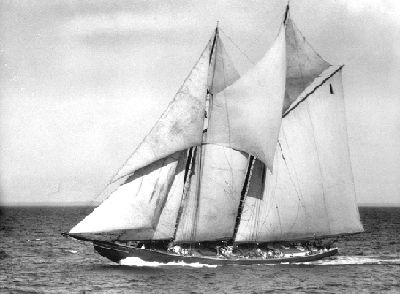
-
Article
History of Construction Industry
Military engineers constructed the first public works, tiny locks, at the rapids on the Soulanges section of the St Lawrence River. These locks were started in 1779 by a British regiment, the Royal Engineers, for Governor Haldimand.
"https://d3d0lqu00lnqvz.cloudfront.net/media/media/60f36f9f-0fb4-41d4-a403-20bf8a981fe4.jpg" // resources/views/front/categories/view.blade.php
https://d3d0lqu00lnqvz.cloudfront.net/media/media/60f36f9f-0fb4-41d4-a403-20bf8a981fe4.jpg
-
Article
History of Education in Canada
The Canadian insistence on the collective concerns of peace, order and good government has meant that state projects such as schooling are seen in terms of their overall impact on society.
"https://d3d0lqu00lnqvz.cloudfront.net/media/media/8b192352-63f2-4358-98bf-206f660e3b65.jpg" // resources/views/front/categories/view.blade.php
https://d3d0lqu00lnqvz.cloudfront.net/media/media/8b192352-63f2-4358-98bf-206f660e3b65.jpg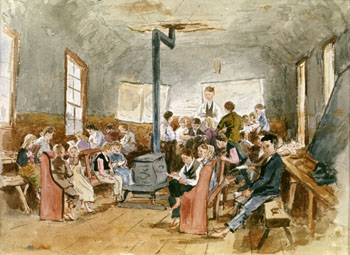
-
Article
History of Engineering
With the beginning of sustained European settlement in what is now Canada, a new set of goals, values, demands and expectations was placed upon the land.
"https://d3d0lqu00lnqvz.cloudfront.net/media/media/5a9d7d32-53b3-46fe-b8a9-d8e168a58a70.jpg" // resources/views/front/categories/view.blade.php
https://d3d0lqu00lnqvz.cloudfront.net/media/media/5a9d7d32-53b3-46fe-b8a9-d8e168a58a70.jpg
-
Article
History of Gender Roles in Canada
Over the course of several thousand years, gender roles in Canada have shifted dramatically. In general, they were more flexible in Indigenous societies and more rigid in settler communities. However, even in colonial times, gender roles were not as narrow as might be expected, particularly on farms and in frontier communities. Gender roles became stricter during the Victorian era, when men and women were relegated to “separate spheres.” Gender roles became more elastic during the world wars, but traditional gender norms were re-established in the 1950s. Since the 1960s, though, gender roles have become more flexible.
"https://d3d0lqu00lnqvz.cloudfront.net/media/media/d698c031-e790-4c17-906a-5b880e71e24d.jpg" // resources/views/front/categories/view.blade.php
https://d3d0lqu00lnqvz.cloudfront.net/media/media/d698c031-e790-4c17-906a-5b880e71e24d.jpg
-
Timelines
History of Health and Healthcare in Canada
The World Health Organization (WHO) describes health as “a state of complete physical, mental and social well-being and not merely the absence of disease or infirmity.” The ways in which health has been understood and managed in Canada has changed overtime. This timeline overviews developments in health and healthcare in Canada.
"https://d3d0lqu00lnqvz.cloudfront.net/media/media/350b6e59-1083-4f86-b24c-c0a1608e2fa0.jpg" // resources/views/front/categories/view.blade.php
https://d3d0lqu00lnqvz.cloudfront.net/media/media/350b6e59-1083-4f86-b24c-c0a1608e2fa0.jpg
-
Article
History of Labour Migration to Canada
Canada’s economic development has relied upon the labour and economic contributions of thousands of immigrant and migrant workers. (See also Economic Immigration to Canada; Immigration to Canada.) These workers came from a multitude of countries and worked a variety of jobs. Many of these workers would also ultimately settle in Canada. This labour and settlement pattern, however, is changing due to Canada’s temporary labour migrant programs. (See also Canada’s Temporary Foreign Worker Programs.) Click here for definitions of key terms used in this article.
"https://thecanadianencyclopedia.ca/images/tce_placeholder.jpg?v=e9dca980c9bdb3aa11e832e7ea94f5d9" // resources/views/front/categories/view.blade.php
https://thecanadianencyclopedia.ca/images/tce_placeholder.jpg?v=e9dca980c9bdb3aa11e832e7ea94f5d9
-
Article
History of Marriage and Divorce
Traditional Christian concepts of marriage dominated Canadian society since the founding of the country. Since the end of the Second World War, however, these customs and norms have changed considerably.
"https://d3d0lqu00lnqvz.cloudfront.net/media/media/f32d2e04-cb15-4747-89d7-c3ef5aa7b97b.jpg" // resources/views/front/categories/view.blade.php
https://d3d0lqu00lnqvz.cloudfront.net/media/media/f32d2e04-cb15-4747-89d7-c3ef5aa7b97b.jpg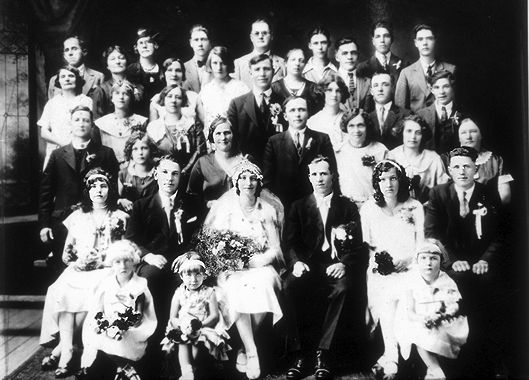
-
Article
History of Mathematics in Canada
Every Canadian university has a mathematics department and offers one or more programs in this field. The same is probably true of almost every university throughout the world, a reflection of the importance of mathematics in contemporary society (see Mathematics and Society). Mathematics came to prominence as a scientific discipline after the Renaissance, during the period historians call the Scientific Revolution (1450-1700), when brilliant astronomer-mathematicians such as Copernicus and Newton discovered the true nature of the solar system, with the sun at the centre and the planets revolving around it. (See also Astronomy.) The role that mathematics played in these major discoveries gave the discipline the stature it has maintained to this day.
"https://d3d0lqu00lnqvz.cloudfront.net/fields_medal.jpg" // resources/views/front/categories/view.blade.php
https://d3d0lqu00lnqvz.cloudfront.net/fields_medal.jpg
-
Article
History of Medicine to 1950
The theory and practice of medicine in Canada changed significantly from the 16th to the 20th century, with important developments in medical education and regulation, understanding of anatomy and disease, public health and immunization, and pharmacology.
"https://d3d0lqu00lnqvz.cloudfront.net/media/media/c0fc3950-0db5-4f37-a1f2-903a52742928.jpg" // resources/views/front/categories/view.blade.php
https://d3d0lqu00lnqvz.cloudfront.net/media/media/c0fc3950-0db5-4f37-a1f2-903a52742928.jpg
-
Article
History of Palaeontology in Canada
Thanks to the progress that had been made in identifying and mapping the Palaeozoic rocks (570-245 million years old) of western New York and northern New England, Logan was able to establish the broad correlations of the formations in the St Lawrence region.
"https://d3d0lqu00lnqvz.cloudfront.net/media/media/5b4dc762-0119-4203-8731-cef6366d724f.jpg" // resources/views/front/categories/view.blade.php
https://d3d0lqu00lnqvz.cloudfront.net/media/media/5b4dc762-0119-4203-8731-cef6366d724f.jpg
-
Article
History of Physics in Canada
The history of physics in Canada involves the development of undergraduate and graduate studies and research in universities, research in government institutions and in private industry.
"https://d3d0lqu00lnqvz.cloudfront.net/media/media/352401f2-9e16-4265-9c53-189828385881.jpg" // resources/views/front/categories/view.blade.php
https://d3d0lqu00lnqvz.cloudfront.net/media/media/352401f2-9e16-4265-9c53-189828385881.jpg
-
Article
History of Powwows
While the exact origin of the powwow is unknown, these celebrations were adopted and adapted by various Indigenous communities across North America throughout the 20th century.
"https://d3d0lqu00lnqvz.cloudfront.net/media/media/f049f627-d2f7-4eaf-9c4f-db03980b55aa.jpg" // resources/views/front/categories/view.blade.php
https://d3d0lqu00lnqvz.cloudfront.net/media/media/f049f627-d2f7-4eaf-9c4f-db03980b55aa.jpg