
Browse "Things"
-
Article
Coutume de Paris
Coutume de Paris, the customary law of the Prévoté et Vicomté de Paris (written 1510; revised 1580), was a code of law first introduced to what is now Canada by the COMPAGNIE DES CENT-ASSOCIÉS in 1627.
"https://thecanadianencyclopedia.ca/images/tce_placeholder.jpg?v=e9dca980c9bdb3aa11e832e7ea94f5d9" // resources/views/front/categories/view.blade.php
https://thecanadianencyclopedia.ca/images/tce_placeholder.jpg?v=e9dca980c9bdb3aa11e832e7ea94f5d9
-
Article
Covenant Chain
The Covenant Chain is the name given to the complex system of alliances between the Haudenosaunee (also known as the Six Nations and Iroquois League) and Anglo-American colonies originating in the early 17th century. The first alliances were most likely between New York and the Kanyen'kehà:ka (Mohawk). These early agreements were referred to figuratively as chains because they bound multiple parties together in alliance. Today the Covenant Chain represents the long tradition of diplomatic relations in North America, and is often invoked when discussing contemporary affairs between the state and Indigenous peoples. (See also Treaties with Indigenous Peoples in Canada.)
"https://d3d0lqu00lnqvz.cloudfront.net/media/media/122dc04b-d0a1-4551-a912-1bee8991746b.jpg" // resources/views/front/categories/view.blade.php
https://d3d0lqu00lnqvz.cloudfront.net/media/media/122dc04b-d0a1-4551-a912-1bee8991746b.jpg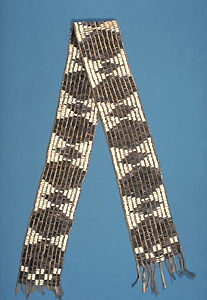
-
Article
COVID-19 Pandemic in Canada
COVID-19 is a severe acute respiratory syndrome caused by a new type of coronavirus, SARS-CoV-2, that emerged in 2019. The virus caused the first cases in China and then quickly spread around the world. Between January 2020 and March 2023, the COVID-19 pandemic caused more than 759 million confirmed cases and 6.87 million deaths globally, including over 4.6 million cases and 51,720 deaths in Canada. It is one of the deadliest pandemics in world history and among the most disruptive and transformative on many levels, especially economically and socially. In May 2023, the World Health Organization declared that COVID-19 was no longer a global emergency. The virus and syndrome continue to circulate in Canada and around the world. Click here for definitions of key terms used in this article. This is the full-length entry about the COVID-19 Pandemic in Canada. For a plain-language summary, please see COVID-19 Pandemic in Canada (Plain-Language Summary).
"https://d3d0lqu00lnqvz.cloudfront.net/COVID/SARS-CoV-2_without_background.png" // resources/views/front/categories/view.blade.php
https://d3d0lqu00lnqvz.cloudfront.net/COVID/SARS-CoV-2_without_background.png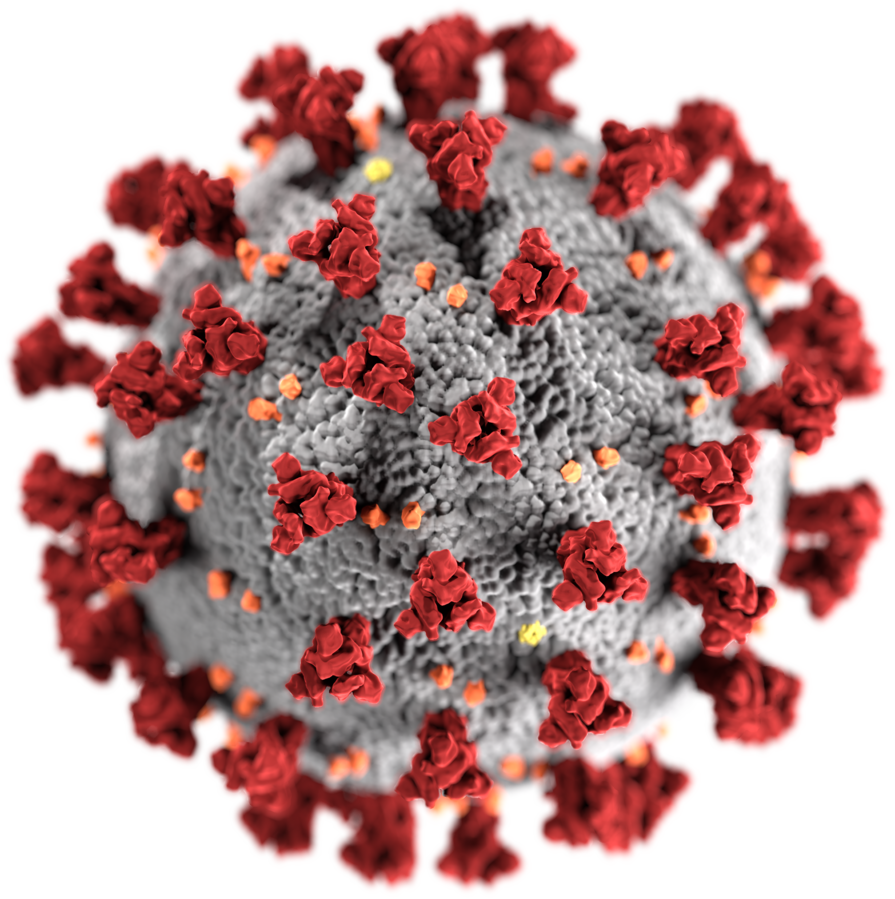
-
Article
COVID-19 Pandemic in Canada (Plain-Language Summary)
COVID-19 has a negative effect on respiration. Respiration means breathing. COVID-19 is a new type of coronavirus, SARS-CoV-2. It appeared in 2019. In approximately three years about 759 million people around the world had COVID-19. In Canada, about 4.6 million people had COVID-19. Around 51,720 died in Canada. The COVID-19 pandemic is one of the most dangerous pandemics in world history. This article is a plain-language summary of COVID-19 Pandemic in Canada. If you are interested in reading about this topic in more depth, please see our full-length entry, COVID-19 Pandemic in Canada.
"https://d3d0lqu00lnqvz.cloudfront.net/COVID/SARS-CoV-2_without_background.png" // resources/views/front/categories/view.blade.php
https://d3d0lqu00lnqvz.cloudfront.net/COVID/SARS-CoV-2_without_background.png
-
Article
COVID-19 Vaccines
In early 2020, as the COVID-19 pandemic accelerated, it seemed very unlikely that a safe and effective vaccine could be developed and deployed within one to two years. A vaccine had never been developed against a new virus during a pandemic, and there was no approved vaccine yet to prevent a coronavirus infection in humans. Despite this, the first COVID-19 vaccine was approved in December 2020, about a year after the first cases were reported. By July 2021, there were more than 30 COVID-19 vaccines authorized for public use by at least one national regulatory authority. This was possible because of decades of research on coronaviruses and vaccine technology — particularly in the use of messenger ribonucleic acid (mRNA) — significant government investment, and unprecedented cooperation between governments and university research labs, pharmaceutical firms and international health organizations. Several Canadian scientists were involved in key elements of the research that led to the mRNA COVID-19 vaccines developed by Pfizer and Moderna. Click here for definitions of key terms used in this article.
"https://d3d0lqu00lnqvz.cloudfront.net/COVID/SARS-CoV-2_without_background.png" // resources/views/front/categories/view.blade.php
https://d3d0lqu00lnqvz.cloudfront.net/COVID/SARS-CoV-2_without_background.png
-
Article
Cowichan Sweater
The Cowichan sweater is a garment created in North America with a distinctly patterned design knitted out of bulky-weighted yarn. It originated during the late 19th century among the Cowichan, a Coast Salish people in British Columbia. Historically also called the Indian sweater or Siwash sweater (a derogatory Chinook word for Indigenous people), the Cowichan people reclaimed the name after the 1950s as a means of emphasizing their claim to the garment. The popularity of the sweater by the mid-1900s thrust Cowichan sweaters into the world of international fashion, where they have been appropriated by non-Indigenous designers. Nevertheless, several knitters from various Coast Salish communities around Vancouver Island and the mainland of British Columbia continue to create and sell authentic sweaters. In 2011, the Canadian government recognized Cowichan knitters and sweaters as nationally and historically significant.
"https://d3d0lqu00lnqvz.cloudfront.net/media/new_article_images/cowichansweater/1024px-Cowichan_Sweater2.jpg" // resources/views/front/categories/view.blade.php
https://d3d0lqu00lnqvz.cloudfront.net/media/new_article_images/cowichansweater/1024px-Cowichan_Sweater2.jpg
-
Article
Coyote
Coyote (Canis latrans, family Canidae), often called prairie wolf or brush wolf, is intermediate in size between the wolf and fox. It resembles a lightly built German Shepherd dog with erect, pointed ears, a pointed muzzle, a flat forehead, a bushy tail (usually held rather low), and a coat of long grey, russet, or yellowish-brown hair.
"https://d3d0lqu00lnqvz.cloudfront.net/media/media/c9bc8847-2efd-4984-9177-d03df0a0d6b1.jpg" // resources/views/front/categories/view.blade.php
https://d3d0lqu00lnqvz.cloudfront.net/media/media/c9bc8847-2efd-4984-9177-d03df0a0d6b1.jpg
-
Article
CP-140 Aurora
The Lockheed Aurora is a long-range maritime patrol aircraft (LRPA) used in the Canadian Armed Forces for antisubmarine warfare (ASW) and maritime surveillance. The Aurora entered service in 1980 and replaced the CP-107 Argus. Thanks to structural improvements and the modernization of its avionics, the aircraft are expected to operate beyond 2030.
"https://d3d0lqu00lnqvz.cloudfront.net/Aurora/cp-140.jpg" // resources/views/front/categories/view.blade.php
https://d3d0lqu00lnqvz.cloudfront.net/Aurora/cp-140.jpg
-
Article
CP Rail Crew Bus Crash
On 28 May 1980, 22 workers on a Canadian Pacific Railway steel crew were killed in a bus accident on the Trans-Canada Highway near Webb, Saskatchewan, west of Regina. It was one of the deadliest motor vehicle disasters in Canadian history.
"https://thecanadianencyclopedia.ca/images/tce_placeholder.jpg?v=e9dca980c9bdb3aa11e832e7ea94f5d9" // resources/views/front/categories/view.blade.php
https://thecanadianencyclopedia.ca/images/tce_placeholder.jpg?v=e9dca980c9bdb3aa11e832e7ea94f5d9
-
Macleans
CP Rail Leaves Montreal
This article was originally published in Maclean’s magazine on December 4, 1995. Partner content is not updated. Ever since the first CP train pulled out of Montreal on June 28, 1886, bound for the new province of British Columbia, Canadian Pacific has played a dominant role in the nation's corporate mythology. And so last week, when CP Ltd.
"https://thecanadianencyclopedia.ca/images/tce_placeholder.jpg?v=e9dca980c9bdb3aa11e832e7ea94f5d9" // resources/views/front/categories/view.blade.php
https://thecanadianencyclopedia.ca/images/tce_placeholder.jpg?v=e9dca980c9bdb3aa11e832e7ea94f5d9
-
Article
Crab
Crab is the common name for two groups of decapod ("ten-footed") Crustaceans. The Anomura, including hermit, mole and lithoid crabs, have relatively normal abdomens. In true crabs, infraorder Brachyura, including genera Cancer and Carcinus, the abdomen is greatly reduced in size and is flexed beneath the thorax.
"https://d3d0lqu00lnqvz.cloudfront.net/media/media/407b4264-d1b7-4ccf-bc5d-ae17394d2ea5.jpg" // resources/views/front/categories/view.blade.php
https://d3d0lqu00lnqvz.cloudfront.net/media/media/407b4264-d1b7-4ccf-bc5d-ae17394d2ea5.jpg
-
Article
Crab Apple
Crab apple (genus Malus) is a deciduous tree that differs from the orchard apple in bearing smaller, often acidic or astringent fruits.
"https://d3d0lqu00lnqvz.cloudfront.net/media/media/3afa6f62-23db-417d-951d-e214b910370f.jpg" // resources/views/front/categories/view.blade.php
https://d3d0lqu00lnqvz.cloudfront.net/media/media/3afa6f62-23db-417d-951d-e214b910370f.jpg
-
Article
Crabbe
William Bell’s first novel, Crabbe (1986), tells the story of a disaffected teenager who escapes to the wilderness, only to learn that running away will not solve his problems. Crabbe has become a popular choice for school curricula across North America. A 2017 study found that it was among the 20 most-cited books in Ontario classrooms. It was one of only three Canadian books on the list, along with Joseph Boyden’s Three Day Road and Yann Martel’s Life of Pi. The literary quarterly Canadian Literature attributed the book’s longevity to its “convincing narrative voice” and “precisely observed sense of detail.”
"https://thecanadianencyclopedia.ca/images/tce_placeholder.jpg?v=e9dca980c9bdb3aa11e832e7ea94f5d9" // resources/views/front/categories/view.blade.php
https://thecanadianencyclopedia.ca/images/tce_placeholder.jpg?v=e9dca980c9bdb3aa11e832e7ea94f5d9
-
Article
Cradleboard
Historically, the cradleboard (or cradle board), was used by various Indigenous peoples to protect and carry babies. Securely bound to a thin rectangular board, a baby could be carried on its mother's back or put in a safe location while she performed her daily routine. In some communities, Indigenous peoples still use cradleboards.
"https://d3d0lqu00lnqvz.cloudfront.net/media/media/495aa08f-68c3-4963-8532-60d59ef3c2e3.jpg" // resources/views/front/categories/view.blade.php
https://d3d0lqu00lnqvz.cloudfront.net/media/media/495aa08f-68c3-4963-8532-60d59ef3c2e3.jpg
-
Article
Craft Brewing in Canada
Prior to the First World War, Canada boasted 117 independent breweries. But by the early 1980s, just 10 brewing companies remained in Canada — and the three largest, Molson, Labatt and Carling O’Keefe — owned 96 per cent of the market.
"https://d3d0lqu00lnqvz.cloudfront.net/media/media/0aa05c31-5e3e-4f8c-9dee-01ed19c06a92.jpg" // resources/views/front/categories/view.blade.php
https://d3d0lqu00lnqvz.cloudfront.net/media/media/0aa05c31-5e3e-4f8c-9dee-01ed19c06a92.jpg