
Browse "Science & Technology"
-
Editorial
The Avro Arrow is Cancelled
The following article is an editorial written by The Canadian Encyclopedia staff. Editorials are not usually updated.
"https://d3d0lqu00lnqvz.cloudfront.net/media/media/25cf1480-ddea-403e-8607-2241587bcf3d.jpg" // resources/views/front/categories/view.blade.php
https://d3d0lqu00lnqvz.cloudfront.net/media/media/25cf1480-ddea-403e-8607-2241587bcf3d.jpg
-
Article
Babiche
Babiche is a type of string traditionally made by Indigenous peoples from rawhide and had multiple uses, such as to lace snowshoes, fishing nets, drumheads and the like. Though typically considered a French Canadian term, babiche is an Algonquian word, loosely translating to “cord” (in Mi’kmaq, ababich) or “thread” (in Ojibwa, assabâbish).
"https://d3d0lqu00lnqvz.cloudfront.net/media/media/03dfd24b-95c1-44ad-8ce5-d0ecf4578831.jpg" // resources/views/front/categories/view.blade.php
https://d3d0lqu00lnqvz.cloudfront.net/media/media/03dfd24b-95c1-44ad-8ce5-d0ecf4578831.jpg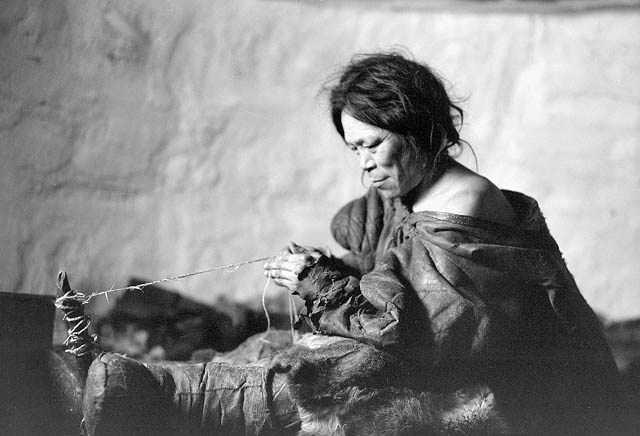
-
Article
Bacteria
Bacteria are microscopic single-celled organisms capable of rapid growth and division. As prokaryotes [Gk, "before nucleus"], bacteria are characterized by the organization of deoxyribonucleic acid (DNA, containing genetic material) into a singular, circular chromosome not bounded by a membrane; and into smaller circular structures (plasmids); small ribosomes (particles active in protein synthesis) uniformly distributed throughout the cytoplasm; and the absence of membrane-bound organelles. The cell shape of most bacteria is spherical or ovoid (coccus), rodlike (bacillus) or spiral (spirillum). The cells generally range in width from 0.2–5 µm, and in length up to 150 µm, though species with larger cells are known.
"https://d3d0lqu00lnqvz.cloudfront.net/media/new_article_images/BacterialInfection/dreamstime_xl_55079944.jpg" // resources/views/front/categories/view.blade.php
https://d3d0lqu00lnqvz.cloudfront.net/media/new_article_images/BacterialInfection/dreamstime_xl_55079944.jpg
-
Article
Balloon
Balloon, vehicle that can rise within Earth's atmosphere because its total weight is less than that of the air it displaces. This principle was first enunciated by Greek mathematician and inventor Archimedes.
"https://d3d0lqu00lnqvz.cloudfront.net/media/media/54457498-4781-48da-824a-8edcf16d9913.MOV" // resources/views/front/categories/view.blade.php
https://d3d0lqu00lnqvz.cloudfront.net/media/media/54457498-4781-48da-824a-8edcf16d9913.MOV -
Article
Beaver (Steamer)
From 1862 to 1874 the HBC trader became Her Majesty's Hired Survey Ship Beaver. After the HBC sold the ship in 1874, it was used as a workhorse and tow until 1888, when it was wrecked in the First Narrows in Vancouver harbour. Only a few relics remain.
"https://d3d0lqu00lnqvz.cloudfront.net/media/media/0fe63fc6-63d8-4891-b455-e5b8d41feabe.jpg" // resources/views/front/categories/view.blade.php
https://d3d0lqu00lnqvz.cloudfront.net/media/media/0fe63fc6-63d8-4891-b455-e5b8d41feabe.jpg
-
Article
Biochemistry
Biochemistry encompasses the study of the chemical nature of living material and of the chemical transformations that occur within it. Living things consist of many types of molecules (biomolecules) which, when isolated and examined, have no particular "living" characteristics, but behave in ordinary chemical ways. The properties of some of these molecules, especially large ones, are complex and subtle but are the result of the operation of chemical and physical laws. The special characteristics of living things arise from the ways in which these biomolecules are assembled within the cell and in the way they replicate. The methodology of biochemistry originated largely in physics, chemistry, immunology and genetics.
"https://d3d0lqu00lnqvz.cloudfront.net/media/media/350b6e59-1083-4f86-b24c-c0a1608e2fa0.jpg" // resources/views/front/categories/view.blade.php
https://d3d0lqu00lnqvz.cloudfront.net/media/media/350b6e59-1083-4f86-b24c-c0a1608e2fa0.jpg
-
Article
Bioethics
The word bioethics is formed from the Greek word for life (bios) and the traditional word for the systematic study of right conduct (ethics).
"https://thecanadianencyclopedia.ca/images/tce_placeholder.jpg?v=e9dca980c9bdb3aa11e832e7ea94f5d9" // resources/views/front/categories/view.blade.php
https://thecanadianencyclopedia.ca/images/tce_placeholder.jpg?v=e9dca980c9bdb3aa11e832e7ea94f5d9
-
Article
Biogeoclimatic Zone
For example, in British Columbia, the Coastal Western Hemlock Zone is one of 14 biogeoclimatic zones. It occupies high precipitation areas up to 1000 m elevation west of the coastal mountains from the Washington to Alaska borders and beyond.
"https://thecanadianencyclopedia.ca/images/tce_placeholder.jpg?v=e9dca980c9bdb3aa11e832e7ea94f5d9" // resources/views/front/categories/view.blade.php
https://thecanadianencyclopedia.ca/images/tce_placeholder.jpg?v=e9dca980c9bdb3aa11e832e7ea94f5d9
-
Article
Biogeography
Biogeography studies all aspects of the adaptations of an organism to its environment, considering systematically the origins, migrations and associations of living things. Hence, it aims for a synthesis of data from nonbiological and biological disciplines: geology, physical geography, geomorphology, climatology and meteorology, on the one hand; biology, taxonomy, genetics and physiology, on the other. Biogeographical relationships cannot be understood except from an ecological perspective which tries to explain the exchanges between an organism and its environment.
"https://d3d0lqu00lnqvz.cloudfront.net/autumncolours/Yellow.jpg" // resources/views/front/categories/view.blade.php
https://d3d0lqu00lnqvz.cloudfront.net/autumncolours/Yellow.jpg
-
Article
Biological Product
A biological product is a substance derived from a living organism and used for the prevention or treatment of disease. Biologicals are usually too complex for chemical synthesis by a laboratory. These products include antitoxins, bacterial and viral vaccines, blood products and hormone extracts.
"https://thecanadianencyclopedia.ca/images/tce_placeholder.jpg?v=e9dca980c9bdb3aa11e832e7ea94f5d9" // resources/views/front/categories/view.blade.php
https://thecanadianencyclopedia.ca/images/tce_placeholder.jpg?v=e9dca980c9bdb3aa11e832e7ea94f5d9
-
Article
BIONESS
BIONESS (Bedford Institute of Oceanography Net and Environmental Sampling System) is a multiple-net sampler for ZOOPLANKTON and micronekton (pelagic animals 1-10 cm in length). It uses a new design concept, with nets arranged horizontally rather than vertically, as in earlier multiple-net samplers.
"https://thecanadianencyclopedia.ca/images/tce_placeholder.jpg?v=e9dca980c9bdb3aa11e832e7ea94f5d9" // resources/views/front/categories/view.blade.php
https://thecanadianencyclopedia.ca/images/tce_placeholder.jpg?v=e9dca980c9bdb3aa11e832e7ea94f5d9
-
Article
Biotechnology
Biotechnology was defined by the 1981 Federal Task Force on Biotechnology (Brossard Committee) as the "utilization of biological processes, be they microbial, plant, animal cells or their constituents, for the provision of goods and services.
"https://thecanadianencyclopedia.ca/images/tce_placeholder.jpg?v=e9dca980c9bdb3aa11e832e7ea94f5d9" // resources/views/front/categories/view.blade.php
https://thecanadianencyclopedia.ca/images/tce_placeholder.jpg?v=e9dca980c9bdb3aa11e832e7ea94f5d9
-
Article
Birchbark Canoe
The birchbark canoe was the principal means of water transportation for Indigenous peoples of the Eastern Woodlands, and later voyageurs, who used it extensively in the fur trade in Canada. Light and maneuverable, birchbark canoes were perfectly adapted to summer travel through the network of shallow streams, ponds, lakes and swift rivers of the Canadian Shield. As the fur trade declined in the 19th century, the canoe became more of a recreational vehicle. Though most canoes are no longer constructed of birchbark, its enduring historical legacy and its popularity as a pleasure craft have made it a Canadian cultural icon.
"https://d3d0lqu00lnqvz.cloudfront.net/media/media/50d0c290-345d-4655-b501-3cfa471dfdb7.jpg" // resources/views/front/categories/view.blade.php
https://d3d0lqu00lnqvz.cloudfront.net/media/media/50d0c290-345d-4655-b501-3cfa471dfdb7.jpg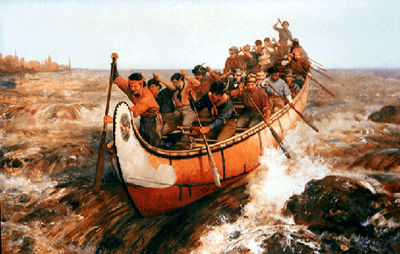
-
Article
Birth Control in Canada
Birth control means the deliberate prevention of conception and pregnancy. The birth control methods used in Canada range from the simplest (like abstinence) to the most complex (like male or female surgical sterilization). (See also History of Birth Control in Canada.)
"https://d3d0lqu00lnqvz.cloudfront.net/media/media/60b165c0-eff9-4770-b2b7-5d78d3be5fe0.jpg" // resources/views/front/categories/view.blade.php
https://d3d0lqu00lnqvz.cloudfront.net/media/media/60b165c0-eff9-4770-b2b7-5d78d3be5fe0.jpg
-
Macleans
Biting Back against Fluoride
"IT'S THE CRIME of the century," 82-year-old Len Greenall says, his voice rising in passionate indignation. "It's an immoral invasion of bodily privacy." He's sitting at the dining room table of his Surrey, B.C.This article was originally published in Maclean's Magazine on November 25, 2002
"https://thecanadianencyclopedia.ca/images/tce_placeholder.jpg?v=e9dca980c9bdb3aa11e832e7ea94f5d9" // resources/views/front/categories/view.blade.php
https://thecanadianencyclopedia.ca/images/tce_placeholder.jpg?v=e9dca980c9bdb3aa11e832e7ea94f5d9
