
Browse "Politics & Law"
-
Article
Veterans' Land Act
Veterans' Land Act, passed 20 July 1942, following a Canadian tradition dating from the 17th century of settling ex-soldiers on the land. In 1919 a Soldier Settlement Act had provided returned WWI veterans who wished to farm with loans to purchase land, stock and equipment.
"https://thecanadianencyclopedia.ca/images/tce_placeholder.jpg?v=e9dca980c9bdb3aa11e832e7ea94f5d9" // resources/views/front/categories/view.blade.php
https://thecanadianencyclopedia.ca/images/tce_placeholder.jpg?v=e9dca980c9bdb3aa11e832e7ea94f5d9
-
Article
Victory Loans
Victory Loans were Canadian government appeals for money to finance the war effort in WWI and WWII.
"https://d3d0lqu00lnqvz.cloudfront.net/media/media/3980aa54-8138-48cd-8690-d3922d40b90a.jpg" // resources/views/front/categories/view.blade.php
https://d3d0lqu00lnqvz.cloudfront.net/media/media/3980aa54-8138-48cd-8690-d3922d40b90a.jpg
-
Macleans
Vietnam Victim Finds Peace In Canada
Her face is round and smooth and she laughs often. She is a grown woman now, a wife and mother living in a modest apartment in the area of Toronto's east end known as "little" Chinatown.This article was originally published in Maclean's Magazine on February 10, 1997
"https://thecanadianencyclopedia.ca/images/tce_placeholder.jpg?v=e9dca980c9bdb3aa11e832e7ea94f5d9" // resources/views/front/categories/view.blade.php
https://thecanadianencyclopedia.ca/images/tce_placeholder.jpg?v=e9dca980c9bdb3aa11e832e7ea94f5d9
-
Article
Canadian Voice of Women for Peace
Canadian Voice of Women for Peace (VOW) is a feminist, non-partisan, non-profit, non-governmental organization founded in 1960. The organization opposes violence and war and promotes nuclear disarmament, peace and social justice. It does so through education, advocacy and strengthening the voices of women. Famous members include politician Thérèse Casgrain, activist Grace Hartman and physicist Ursula Franklin.
"https://d3d0lqu00lnqvz.cloudfront.net/media/media/b22534e5-e1ea-4072-ac0e-5d1c3f107433.jpg" // resources/views/front/categories/view.blade.php
https://d3d0lqu00lnqvz.cloudfront.net/media/media/b22534e5-e1ea-4072-ac0e-5d1c3f107433.jpg
-
Editorial
Voting in Early Canada
The following article is an editorial written by The Canadian Encyclopedia staff. Editorials are not usually updated. Before Confederation, the right to vote in elections was restricted to a small, wealthy, property-owning elite. Because votes were declared publicly, elections were rowdy, highly competitive and even violent. Voting by secret ballot was first introduced in New Brunswick in 1855 and federally in 1874.
"https://d3d0lqu00lnqvz.cloudfront.net/media/media/1e88decf-02d6-4b89-b522-383f360ecac4.jpg" // resources/views/front/categories/view.blade.php
https://d3d0lqu00lnqvz.cloudfront.net/media/media/1e88decf-02d6-4b89-b522-383f360ecac4.jpg
-
Collection
Voting Rights
The right to vote in Canada has not been straightforward. Race, ethnicity, and gender were often factors in determining who had the right to vote, a right that, once earned, could be taken away. Learn about the complicated history of Voting Rights in Canada.
"https://d3d0lqu00lnqvz.cloudfront.net/Final_1949.jpg" // resources/views/front/categories/view.blade.php
https://d3d0lqu00lnqvz.cloudfront.net/Final_1949.jpg
-
Article
Waffle
The Waffle is a group established in 1969 as a caucus within the New Democratic Party (NPD) and dismantled in 1974. Its members' choice of name was self-consciously ironic.
"https://thecanadianencyclopedia.ca/images/tce_placeholder.jpg?v=e9dca980c9bdb3aa11e832e7ea94f5d9" // resources/views/front/categories/view.blade.php
https://thecanadianencyclopedia.ca/images/tce_placeholder.jpg?v=e9dca980c9bdb3aa11e832e7ea94f5d9
-
Article
War Crimes
A commission of inquiry on war criminals was established in February 1985 in response to longstanding charges that Canada has become a haven for Nazi war criminals after WWII, including an allegation that Joseph Mengele has entered the country.
"https://thecanadianencyclopedia.ca/images/tce_placeholder.jpg?v=e9dca980c9bdb3aa11e832e7ea94f5d9" // resources/views/front/categories/view.blade.php
https://thecanadianencyclopedia.ca/images/tce_placeholder.jpg?v=e9dca980c9bdb3aa11e832e7ea94f5d9
-
Article
War Measures Act
The War Measures Act was a federal law adopted by Parliament on 22 August 1914, after the beginning of the First World War. It gave broad powers to the Canadian government to maintain security and order during “war, invasion or insurrection.” It was used, controversially, to suspend the civil liberties of people in Canada who were considered “enemy aliens” during both world wars. This led to mass arrests and detentions without charges or trials. The War Measures Act was also invoked in Quebec during the 1970 October Crisis. The Act was repealed and replaced by the more limited Emergencies Act in 1988.
"https://d3d0lqu00lnqvz.cloudfront.net/media/media/c8a1d56b-60f5-40b0-86e2-3ce31bc3e7b0.jpg" // resources/views/front/categories/view.blade.php
https://d3d0lqu00lnqvz.cloudfront.net/media/media/c8a1d56b-60f5-40b0-86e2-3ce31bc3e7b0.jpg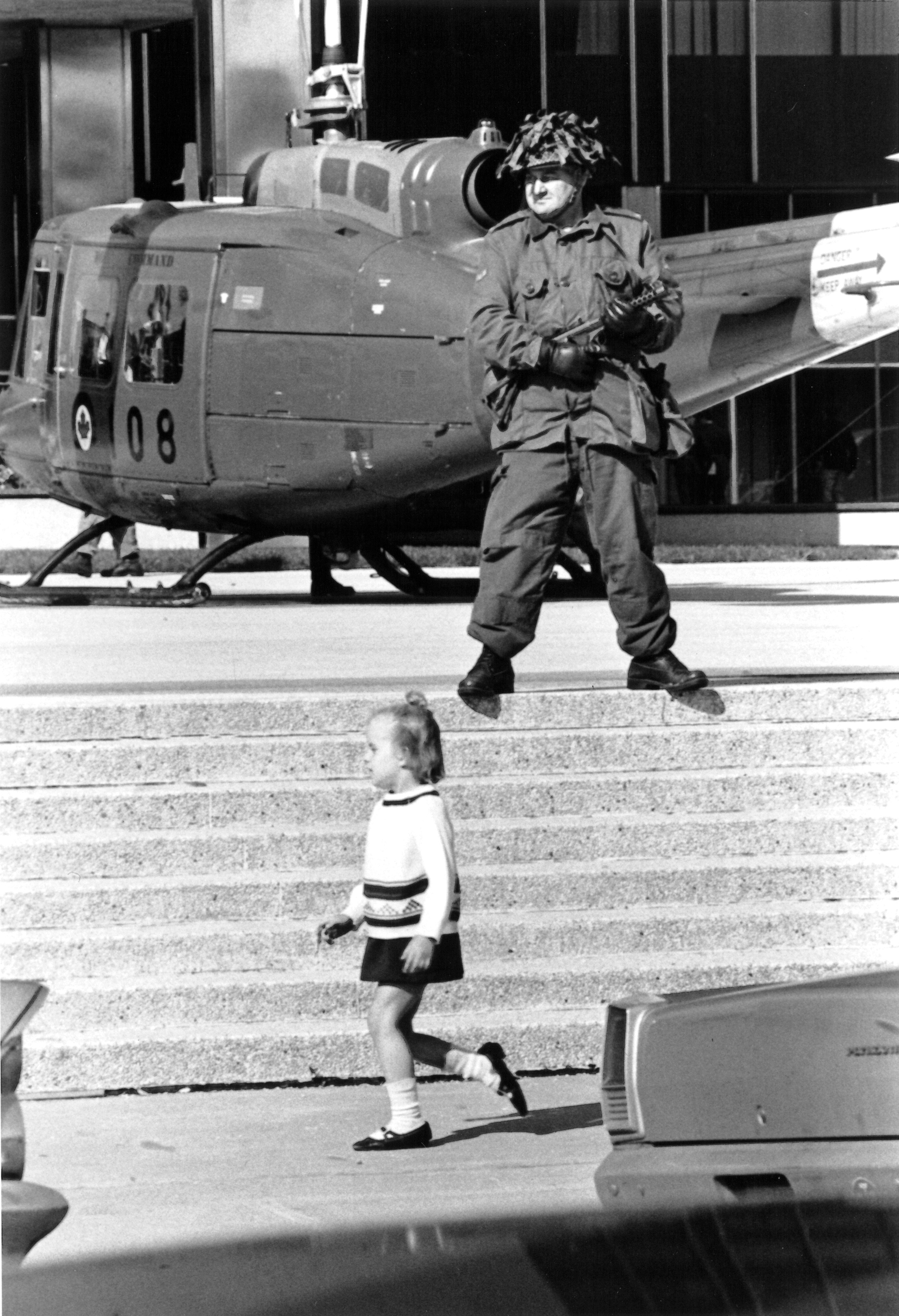
-
Article
Wartime Elections Act
The Wartime Elections Act of 1917 gave the vote to female relatives of Canadian soldiers serving overseas in the First World War. It also took the vote away from many Canadians who had immigrated from “enemy” countries. The Act was passed by Prime Minister Robert Borden’s Conservative government in an attempt to gain votes in the 1917 election. It ended up costing the Conservatives support among certain groups for years to come. The Act has a contentious legacy. It granted many women the right to vote, but it also legitimized in law many anti-immigrant sentiments.
"https://d3d0lqu00lnqvz.cloudfront.net/media/media/6e19f5db-f5f6-4776-baf8-40a98b38b97d.jpg" // resources/views/front/categories/view.blade.php
https://d3d0lqu00lnqvz.cloudfront.net/media/media/6e19f5db-f5f6-4776-baf8-40a98b38b97d.jpg
-
Macleans
Water Wars
This article was originally published in Maclean’s magazine on March 6, 2000. Partner content is not updated. They are an unlikely class of political provocateurs: the water entrepreneurs. In Vancouver, fast-talkers with dreams of getting in on the ground floor of a 21st-century boom once touted their plans for taking pure British Columbia mountain water in tankers to California. Shut down by a B.C.
"https://thecanadianencyclopedia.ca/images/tce_placeholder.jpg?v=e9dca980c9bdb3aa11e832e7ea94f5d9" // resources/views/front/categories/view.blade.php
https://thecanadianencyclopedia.ca/images/tce_placeholder.jpg?v=e9dca980c9bdb3aa11e832e7ea94f5d9
-
Article
Webster-Ashburton Treaty
The Webster-Ashburton Treaty, signed 9 August 1842, was negotiated by US Secretary of State Daniel Webster and Alexander Baring, First Lord Ashburton, for Britain.
"https://d3d0lqu00lnqvz.cloudfront.net/media/media/823298cc-03a3-4150-8566-09f8b73cf2a2.jpg" // resources/views/front/categories/view.blade.php
https://d3d0lqu00lnqvz.cloudfront.net/media/media/823298cc-03a3-4150-8566-09f8b73cf2a2.jpg
-
Article
Welfare State
The welfare state in Canada is a multi-billion dollar system of government programs that transfer money and services to Canadians to deal with an array of societal needs.
"https://d3d0lqu00lnqvz.cloudfront.net/media/media/596ef79e-2f5f-4c7b-974d-2d7c77a5a5a4.jpg" // resources/views/front/categories/view.blade.php
https://d3d0lqu00lnqvz.cloudfront.net/media/media/596ef79e-2f5f-4c7b-974d-2d7c77a5a5a4.jpg
-
Article
West Coast Longshore Strikes 1923 and 1935
West Coast Longshore Strikes, 1923 and 1935 On 8 Oct 1923 the 1400 members of the International Longshoremen's Assn (ILA) in Vancouver struck for higher wages.
"https://thecanadianencyclopedia.ca/images/tce_placeholder.jpg?v=e9dca980c9bdb3aa11e832e7ea94f5d9" // resources/views/front/categories/view.blade.php
https://thecanadianencyclopedia.ca/images/tce_placeholder.jpg?v=e9dca980c9bdb3aa11e832e7ea94f5d9
-
Macleans
Westray Charges Stayed
As other Canadians prepared last week to celebrate the country's 131st birthday, families of the 26 men who died in the May, 1992, Westray mine explosion girded themselves for a more sombre undertaking.This article was originally published in Maclean's Magazine on July 13, 1998
"https://thecanadianencyclopedia.ca/images/tce_placeholder.jpg?v=e9dca980c9bdb3aa11e832e7ea94f5d9" // resources/views/front/categories/view.blade.php
https://thecanadianencyclopedia.ca/images/tce_placeholder.jpg?v=e9dca980c9bdb3aa11e832e7ea94f5d9