Browse "Politics & Law"
-
Article
Special Council of Lower Canada (1838–1841)
Between 1838 and 1841, Lower Canada was governed by an “authoritarian” political body known as the Special Council.
"https://d3d0lqu00lnqvz.cloudfront.net/media/media/9b102db4-f93d-44c3-a26e-d61b3ea11b50.jpg" // resources/views/front/categories/view.blade.php
https://d3d0lqu00lnqvz.cloudfront.net/media/media/9b102db4-f93d-44c3-a26e-d61b3ea11b50.jpg
-
Article
Species at Risk Legislation in Canada
Species at risk are species, subspecies or populations of animals, plants or fungi that are broadly considered to be in decline. In most cases, if the decline is not addressed, these species could be at risk of extinction. Canada is home to many species at risk, whether globally, nationally or locally (see Environmental Movements in Canada). Many pieces of legislation aim to prevent the decline or extinction of wild species in Canada, most notably the federal Species at Risk Act. Every province and territory also has its own regionally specific legislature.
"https://d3d0lqu00lnqvz.cloudfront.net/foxesincanada/Swift-Fox.jpg" // resources/views/front/categories/view.blade.php
https://d3d0lqu00lnqvz.cloudfront.net/foxesincanada/Swift-Fox.jpg
-
Article
Indigenous Peoples and Specific Claims
Specific claims originate in First Nations’ grievances over outstanding treaty obligations, or the administration of Indigenous lands and assets under the Indian Act. Specific claims have been dealt with by several mechanisms since 1973. The Specific Claims Tribunal — an independent judicial body created by the federal government in 2009 — has the authority to make final and binding decisions.
"https://d3d0lqu00lnqvz.cloudfront.net/media/media/4dcbf639-bbf0-4543-b290-714440cf9c81.JPG" // resources/views/front/categories/view.blade.php
https://d3d0lqu00lnqvz.cloudfront.net/media/media/4dcbf639-bbf0-4543-b290-714440cf9c81.JPG
-
Article
Speech from the Throne
The Speech from the Throne declares a government’s agenda for a new session of the legislature. The speech contains comments on the state of the country or province and outlines the matters on which the government will seek action. The monarch or their representative — the governor general federally and the lieutenant-governor provincially — delivers the speech; but it is entirely the work of the Cabinet ministers.
"https://d3d0lqu00lnqvz.cloudfront.net/media/media/11551bec-a5f6-4e78-b101-265ddf7610cb.jpg" // resources/views/front/categories/view.blade.php
https://d3d0lqu00lnqvz.cloudfront.net/media/media/11551bec-a5f6-4e78-b101-265ddf7610cb.jpg
-
Article
Société Saint-Jean-Baptiste
The Société Saint-Jean-Baptiste (SSJB), founded in Montréal in 1834 by Ludger Duvernay, is the oldest patriotic association in French North America. With branches at one time located throughout the continent, it has long been engaged in fighting the linguistic and identity battles of francophones in North America. Since the 1960s, the SSJB network has played a crucial role in developing and defining contemporary Québec nationalism.
"https://d3d0lqu00lnqvz.cloudfront.net/media/media/ef7bbd29-9362-4824-bad2-c951dda3339c.jpg" // resources/views/front/categories/view.blade.php
https://d3d0lqu00lnqvz.cloudfront.net/media/media/ef7bbd29-9362-4824-bad2-c951dda3339c.jpg
-
Article
St. John’s Election Riot of 1861
On 13 May 1861, 2,000 protesters gathered outside the Colonial Building in St. John’s, Newfoundland. They objected to actions taken by the colony’s governor, Sir Alexander Bannerman, during the recent, highly contentious election; he had defied responsible government and install a new, Conservative government. The protest turned into a riot that damaged property and resulted in the deaths of three people. It took months to settle the political stalemate. The Conservatives won by-elections in disputed ridings and remained in power. The riot led to new laws that protected polling stations, saw police officers keep the peace instead of soldiers, and discouraged events and practices that could lead to violence.
"https://d3d0lqu00lnqvz.cloudfront.net/media/new_article_images/StJohnsRiots/Stamp_Newfoundland_1928_20c_Colonial_Building.jpg" // resources/views/front/categories/view.blade.php
https://d3d0lqu00lnqvz.cloudfront.net/media/new_article_images/StJohnsRiots/Stamp_Newfoundland_1928_20c_Colonial_Building.jpg
-
Article
St. Joseph's Island Treaty (No. 11)
The St. Joseph’s Island Treaty of 1798 (also known as Treaty 11 in the Upper Canada numbering system) was an early land agreement between First Nations and British authorities in Upper Canada (later Ontario). It was one of a series of Upper Canada Land Surrenders. The St. Joseph’s Island Treaty encompassed all of St. Joseph’s Island, known as Payentanassin in Anishinaabemowin and today called St. Joseph Island. The 370 km2 island is situated at the northern end of Lake Huron, in the channel between Lakes Huron and Superior. The British needed a post in the area to protect their interests and maintain contact with Indigenous peoples of the region. The British also realized they would have to evacuate their post at Michilimackinac under the terms of Jay’s Treaty and needed an alternative location.
"https://d3d0lqu00lnqvz.cloudfront.net/StJosephIslandTreaty/StJosephIslandTreaty1.jpg" // resources/views/front/categories/view.blade.php
https://d3d0lqu00lnqvz.cloudfront.net/StJosephIslandTreaty/StJosephIslandTreaty1.jpg
-
Article
Stabilization
Stabilization refers to government MONETARY POLICY, FISCAL POLICY, or other actions taken with the goal of minimizing BUSINESS CYCLE fluctuations in important economy-wide variables - especially employment, output and INFLATION.
"https://thecanadianencyclopedia.ca/images/tce_placeholder.jpg?v=e9dca980c9bdb3aa11e832e7ea94f5d9" // resources/views/front/categories/view.blade.php
https://thecanadianencyclopedia.ca/images/tce_placeholder.jpg?v=e9dca980c9bdb3aa11e832e7ea94f5d9
-
Article
Stare Decisis
Stare decisis [Latin, "let the decision stand"] refers to the doctrine of precedent, according to which the rules formulated by judges in earlier decisions are to be similarly applied in later cases.
"https://thecanadianencyclopedia.ca/images/tce_placeholder.jpg?v=e9dca980c9bdb3aa11e832e7ea94f5d9" // resources/views/front/categories/view.blade.php
https://thecanadianencyclopedia.ca/images/tce_placeholder.jpg?v=e9dca980c9bdb3aa11e832e7ea94f5d9
-
Article
State
StateThe state is a broad concept that includes government as the seat of legitimate authority in a territory but also includes bureaucracy, judiciary, the ARMED FORCES and internal POLICE, structures of legislative assemblies and administration, public corporations, regulatory boards, and ideological apparatuses such as the education establishment and publicly owned media. The distinguishing characteristic of the state is its monopoly over the use of force in a given territory. The state as a concept in...
"https://thecanadianencyclopedia.ca/images/tce_placeholder.jpg?v=e9dca980c9bdb3aa11e832e7ea94f5d9" // resources/views/front/categories/view.blade.php
https://thecanadianencyclopedia.ca/images/tce_placeholder.jpg?v=e9dca980c9bdb3aa11e832e7ea94f5d9
-
Article
Status of Women
The first European expeditions that came to Canada to explore and trade for furs did not include women.
"https://d3d0lqu00lnqvz.cloudfront.net/media/media/be832524-f521-4200-b242-3c702ae0f3c4.jpg" // resources/views/front/categories/view.blade.php
https://d3d0lqu00lnqvz.cloudfront.net/media/media/be832524-f521-4200-b242-3c702ae0f3c4.jpg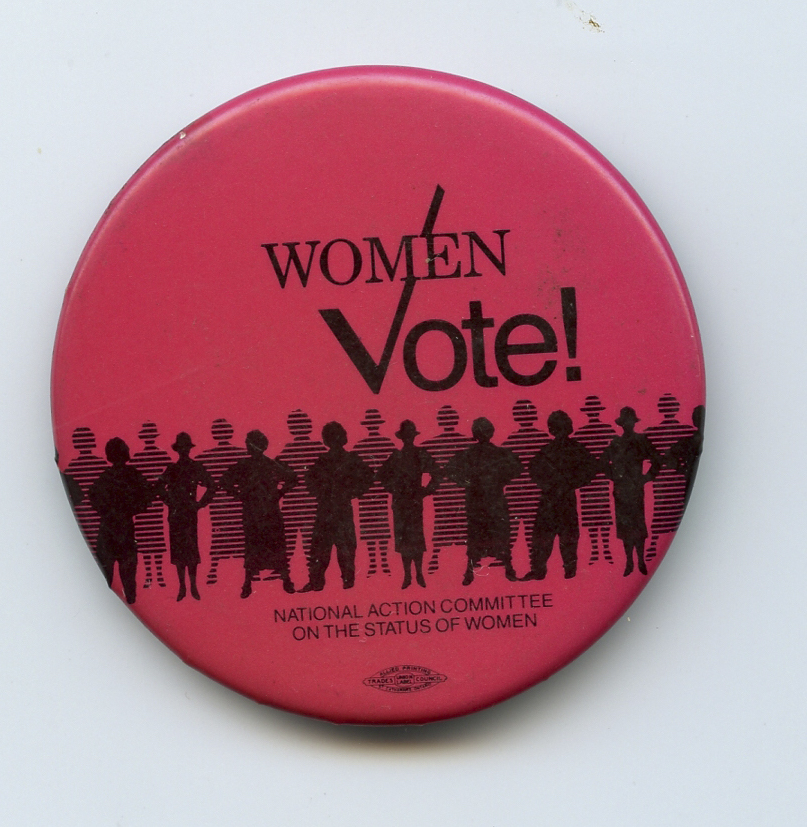
-
Article
Statute of Westminster, 1931
The Statute of Westminster is a British law that was passed on 11 December 1931. It was Canada’s all-but-final achievement of independence from Britain. It enacted recommendations from the Balfour Report of 1926, which had declared that Britain and its Dominions were constitutionally “equal in status.” The Statute of Westminster gave Canada and the other Commonwealth Dominions legislative equality with Britain. They now had full legal freedom except in areas of their choosing. The Statute also clarified the powers of Canada’s Parliament and those of the other Dominions. (See also Editorial: The Statute of Westminster, Canada’s Declaration of Independence.)
"https://d3d0lqu00lnqvz.cloudfront.net/media/media/fb8b6e92-b549-4842-8b58-76626f1e9087.jpg" // resources/views/front/categories/view.blade.php
https://d3d0lqu00lnqvz.cloudfront.net/media/media/fb8b6e92-b549-4842-8b58-76626f1e9087.jpg
-
Article
Statute of Westminster 1931 Document
Statute of Westminster, 1931: DocumentSelected text of the Statute of Westminster:An Act to give effect to certain resolutions passed by Imperial Conferences held in the years 1926 and 1930 Whereas the delegates to His Majesty's Governments in the United Kingdom, the Dominion of Canada, the Commonwealth of Australia, the Dominion of New Zealand, the Union of South Africa, the Irish Free State and Newfoundland, at Imperial Conferences holden at Westminster in the years of our...
"https://thecanadianencyclopedia.ca/images/tce_placeholder.jpg?v=e9dca980c9bdb3aa11e832e7ea94f5d9" // resources/views/front/categories/view.blade.php
https://thecanadianencyclopedia.ca/images/tce_placeholder.jpg?v=e9dca980c9bdb3aa11e832e7ea94f5d9
-
Editorial
Editorial: The Statute of Westminster, Canada's Declaration of Independence
The following article is an editorial written by The Canadian Encyclopedia staff. Editorials are not usually updated. In the fall of 1929, Canada’s Minister of Justice, Ernest Lapointe, travelled to England. He took with him Dr. Oscar Skelton — the “elder statesman” of the Canadian civil service, as William Lyon Mackenzie King once described him. When Lapointe and Skelton were done their negotiations, they had confirmed that Canada would have its independence from the British Empire.
"https://d3d0lqu00lnqvz.cloudfront.net/media/media/43cb3921-bb9b-4a07-818d-0f1dfeb80b26.jpg" // resources/views/front/categories/view.blade.php
https://d3d0lqu00lnqvz.cloudfront.net/media/media/43cb3921-bb9b-4a07-818d-0f1dfeb80b26.jpg
-
Article
Steven Truscott Case
At the age of 14, Steven Truscott was wrongly convicted of killing his 12-year-old schoolmate Lynne Harper. Five decades later he was exonerated.
"https://d3d0lqu00lnqvz.cloudfront.net/media/media/3623c200-158f-4385-9756-3c4900055fcf.jpg" // resources/views/front/categories/view.blade.php
https://d3d0lqu00lnqvz.cloudfront.net/media/media/3623c200-158f-4385-9756-3c4900055fcf.jpg