Browse "Politics & Law"
-
Editorial
Sixty Years On, Korean War Still Echoes
When is a war not a war? For the Korean War, the answer is not always clear. This year, 2013, marks the 60th anniversary of the ceasefire of a war that not everyone describes that way. It had ambiguous beginnings, more than 20 participating countries, and still no formal end. But some things are evident. This year, Historica Canada is commemorating this sometimes-forgotten but still-resonant period of our recent history, and Canada’s role therein. Our country sent more than 26,000 members of our military to the Korean “theatre.” More than 500 Canadians died, and another 1,000 were wounded; 32 became prisoners of war.
"https://thecanadianencyclopedia.ca/images/tce_placeholder.jpg?v=e9dca980c9bdb3aa11e832e7ea94f5d9" // resources/views/front/categories/view.blade.php
https://thecanadianencyclopedia.ca/images/tce_placeholder.jpg?v=e9dca980c9bdb3aa11e832e7ea94f5d9
-
Article
Slavery Abolition Act, 1833
An Act for the Abolition of Slavery throughout the British Colonies; for promoting the Industry of the manumitted slaves; and for compensating the Persons hitherto entitled to the Service of such Slaves (also known as the Slavery Abolition Act) received Royal Assent on 28 August 1833 and took effect 1 August 1834. The Act abolished enslavement in most British colonies, freeing over 800,000 enslaved Africans in the Caribbean and South Africa as well as a small number in Canada.
"https://d3d0lqu00lnqvz.cloudfront.net/media/media/9ea57f84-ae9c-45f6-97a9-ee077202abee.jpg" // resources/views/front/categories/view.blade.php
https://d3d0lqu00lnqvz.cloudfront.net/media/media/9ea57f84-ae9c-45f6-97a9-ee077202abee.jpg
-
Macleans
Slavery in Sudan
This article was originally published in Maclean’s magazine on April 10, 2000. Partner content is not updated. Like many a fellow nomad, Jongchol Dudi Mayar measures distance in days.
"https://thecanadianencyclopedia.ca/images/tce_placeholder.jpg?v=e9dca980c9bdb3aa11e832e7ea94f5d9" // resources/views/front/categories/view.blade.php
https://thecanadianencyclopedia.ca/images/tce_placeholder.jpg?v=e9dca980c9bdb3aa11e832e7ea94f5d9
-
Article
Small Claims Court
Small Claims Court, the common name of courts established by provincial legislation for civil matters involving small sums of money. In Québec, the upper limit of the small claims court is $7 000, but in the other provinces it is $1000, $2000 or $3000.
"https://thecanadianencyclopedia.ca/images/tce_placeholder.jpg?v=e9dca980c9bdb3aa11e832e7ea94f5d9" // resources/views/front/categories/view.blade.php
https://thecanadianencyclopedia.ca/images/tce_placeholder.jpg?v=e9dca980c9bdb3aa11e832e7ea94f5d9
-
Article
Smuggling
Smuggling has always been an important issue of Canadian history and life and remains so to this day. With over 7000 km of shared border with the US, the opportunity to smuggle is ever-present. The provinces with a shared US border are not the only ones at risk.
"https://d3d0lqu00lnqvz.cloudfront.net/media/media/24ba1d7b-72f3-4d1f-9a7b-9ccf3d952f95.jpg" // resources/views/front/categories/view.blade.php
https://d3d0lqu00lnqvz.cloudfront.net/media/media/24ba1d7b-72f3-4d1f-9a7b-9ccf3d952f95.jpg
-
Article
Social and Welfare Services
There is a general division in Canada between social security programs and social and welfare services. Social security programs, which are the responsibility of all levels of government, provide direct economic assistance in one form or another to individuals or families. Included in this category are programs such as Family Allowances, Old Age Pensions and provincial and municipal social-assistance programs.
"https://thecanadianencyclopedia.ca/images/tce_placeholder.jpg?v=e9dca980c9bdb3aa11e832e7ea94f5d9" // resources/views/front/categories/view.blade.php
https://thecanadianencyclopedia.ca/images/tce_placeholder.jpg?v=e9dca980c9bdb3aa11e832e7ea94f5d9
-
Article
Social Class
Social class refers to persistent social inequalities. Two distinct types of social inequality have been identified by researchers working with 2 different sociological theories.
"https://thecanadianencyclopedia.ca/images/tce_placeholder.jpg?v=e9dca980c9bdb3aa11e832e7ea94f5d9" // resources/views/front/categories/view.blade.php
https://thecanadianencyclopedia.ca/images/tce_placeholder.jpg?v=e9dca980c9bdb3aa11e832e7ea94f5d9
-
Article
Social Democracy
Social democracy, historically, is a term that has been used by individuals on both the far and moderate left to describe their beliefs, but in recent years the latter have embraced the term almost exclusively (indeed radical left-wing critics often use the term disparagingly). For many adherents, the term "social democracy" is interchangeable with the term "democratic socialism."
"https://d3d0lqu00lnqvz.cloudfront.net/media/media/da3bcfa0-e3cd-449f-877a-8ccf7cf80778.jpg" // resources/views/front/categories/view.blade.php
https://d3d0lqu00lnqvz.cloudfront.net/media/media/da3bcfa0-e3cd-449f-877a-8ccf7cf80778.jpg
-
Article
Social Insurance Number
Almost every Canadian who pays money to, or receives benefits from, the federal government has a 9-digit Social Insurance Number (SIN).
"https://thecanadianencyclopedia.ca/images/tce_placeholder.jpg?v=e9dca980c9bdb3aa11e832e7ea94f5d9" // resources/views/front/categories/view.blade.php
https://thecanadianencyclopedia.ca/images/tce_placeholder.jpg?v=e9dca980c9bdb3aa11e832e7ea94f5d9
-
Article
Social Justice
With the arrival of INDUSTRIALIZATION over the course of the nineteenth century, early attempts to aid the poor were linked with ideas of moral and social reform and were intertwined with religion.
"https://d3d0lqu00lnqvz.cloudfront.net/media/media/f7bc84ae-cde2-4414-9328-88f53f651d37.jpg" // resources/views/front/categories/view.blade.php
https://d3d0lqu00lnqvz.cloudfront.net/media/media/f7bc84ae-cde2-4414-9328-88f53f651d37.jpg
-
Article
Social Security
Social security refers to government programs that replace people's income lost due to pregnancy, illness, accident, disability, the death or absence of a family's breadwinner, unemployment, old age or retirement. A cornerstone of Canada’s social services, it is a subject of recurring political debate and discussion — and an increasingly important one, as Canada’s population ages.
"https://d3d0lqu00lnqvz.cloudfront.net/Social_Protection_Staircase.jpg" // resources/views/front/categories/view.blade.php
https://d3d0lqu00lnqvz.cloudfront.net/Social_Protection_Staircase.jpg
-
Macleans
Social Union Deal
Even Lucien Bouchard's glowering presence could not entirely sour the mood. In announcing a deal to overhaul the way Ottawa and the provinces work together on social programs, Prime Minister Jean Chrétien spoke proudly of "a new departure.This article was originally published in Maclean's Magazine on February 15, 1999
"https://thecanadianencyclopedia.ca/images/tce_placeholder.jpg?v=e9dca980c9bdb3aa11e832e7ea94f5d9" // resources/views/front/categories/view.blade.php
https://thecanadianencyclopedia.ca/images/tce_placeholder.jpg?v=e9dca980c9bdb3aa11e832e7ea94f5d9
-
Article
Socialism
Socialism is a political doctrine that criticizes the existence of social, economic and political inequality in society. Seeking to lessen class inequality, socialists call for a redistribution of power from the affluent owners to the working class.
"https://thecanadianencyclopedia.ca/images/tce_placeholder.jpg?v=e9dca980c9bdb3aa11e832e7ea94f5d9" // resources/views/front/categories/view.blade.php
https://thecanadianencyclopedia.ca/images/tce_placeholder.jpg?v=e9dca980c9bdb3aa11e832e7ea94f5d9
-
Article
Socialist Party of Canada
Socialist Party of Canada (SPC) emerged in 1904 when the Socialist Party of British Columbia, a group of Marxists influential in BC mining camps and among BC trade unionists, merged with the Canadian Socialist League. By 1910 it had spread from coast to coast.
"https://thecanadianencyclopedia.ca/images/tce_placeholder.jpg?v=e9dca980c9bdb3aa11e832e7ea94f5d9" // resources/views/front/categories/view.blade.php
https://thecanadianencyclopedia.ca/images/tce_placeholder.jpg?v=e9dca980c9bdb3aa11e832e7ea94f5d9
-
Article
Softwood Lumber Dispute
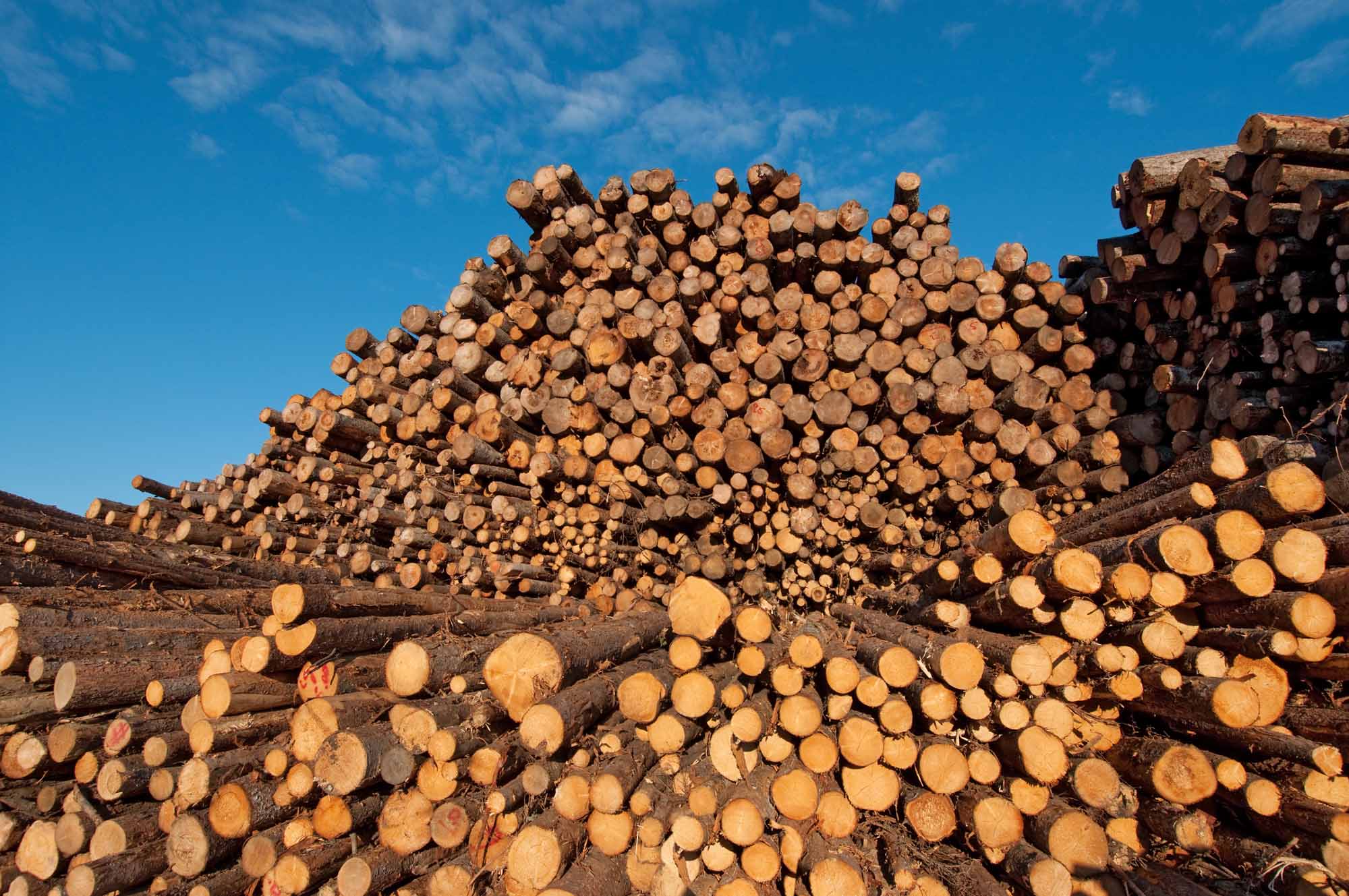
The softwood lumber dispute between Canada and the United States first arose in 1982. Members of the US lumber industry argued that low Canadian stumpage rates gave Canadian producers an unfair trade advantage. In the US, timber is harvested largely on private land. Prices are generally determined through auctions. But in Canada, timber is typically harvested on public (Crown) land. Individuals or companies pay “stumpage fees” to provincial governments for the right to cut and remove timber. US lumber producers have long argued that Canadian stumpage fees are low and constitute an unfair subsidy, which Canada denies. This dispute has lasted for decades and produced lawsuits, tariffs, trade agreements and many rounds of negotiations.
"https://d3d0lqu00lnqvz.cloudfront.net/media/media/c1513b07-b36d-4c5c-8ff0-1b063bb48745.jpg" // resources/views/front/categories/view.blade.php
https://d3d0lqu00lnqvz.cloudfront.net/media/media/c1513b07-b36d-4c5c-8ff0-1b063bb48745.jpg