
Browse "Politics & Law"
-
Article
Functionalism
FunctionalismFunctionalism is a concept of world order developed in the early 20th century by such writers as Leonard Woolf and David Mitrany, who argued that if nations joined in economic and social interdependence, and if national well-being depended upon the maintenance of peace, then war would be less likely. This theory influenced the founders of the UNITED NATIONS, with its specialized functional agencies and its organs for security and for economic and social questions. Canadians...
"https://thecanadianencyclopedia.ca/images/tce_placeholder.jpg?v=e9dca980c9bdb3aa11e832e7ea94f5d9" // resources/views/front/categories/view.blade.php
https://thecanadianencyclopedia.ca/images/tce_placeholder.jpg?v=e9dca980c9bdb3aa11e832e7ea94f5d9
-
Article
Canada and the G7 (Group of Seven)
The G7, or Group of Seven, is an international group comprising the governments of the world’s largest economies: Germany, France, Italy, Japan, the United Kingdom, the United States and Canada. It was founded as the G6 in 1975 and became the G7 with the addition of Canada in 1976. The Group is an informal bloc; it has no treaty or constitution and no permanent offices, staff, or secretariat. The leaders of the member states meet at annual summits to discuss issues of mutual concern and to coordinate actions to address them. The meeting location and the organization’s presidency rotates among the members. The European Union is also a non-enumerated member, though it never assumes the rotating presidency.
"https://d3d0lqu00lnqvz.cloudfront.net/media/new_article_images/G7/G7_summit_at_Shimakan.jpg" // resources/views/front/categories/view.blade.php
https://d3d0lqu00lnqvz.cloudfront.net/media/new_article_images/G7/G7_summit_at_Shimakan.jpg
-
Editorial
Canada and the G-8
The following article is an editorial written by The Canadian Encyclopedia staff. Editorials are not usually updated. Eight statesmen, scores of aides, hundreds of press, and thousands of security personnel will all descend on Kananaskis, Alberta, in late June 2002. For the fourth time since 1976, but the first time in Western Canada, a Canadian prime minister will be hosting the G-8 leaders summit.
"https://d3d0lqu00lnqvz.cloudfront.net/media/media/6a141c7c-00aa-499d-ba22-e1f9f0d9d0d1.jpg" // resources/views/front/categories/view.blade.php
https://d3d0lqu00lnqvz.cloudfront.net/media/media/6a141c7c-00aa-499d-ba22-e1f9f0d9d0d1.jpg
-
Article
Gallicanism
Gallicanism is a doctrine which originated in France in the Middle Ages and sought to regulate the relationship between the Catholic Church and the state. It underlined the independence of the French Church in terms of papal authority, but also its subordination to the royal power. It thus confirmed the supremacy of the state in public life, unlike Ultramontanism, which supported the submission of the Churches and kingdoms to the papacy.
"https://thecanadianencyclopedia.ca/images/tce_placeholder.jpg?v=e9dca980c9bdb3aa11e832e7ea94f5d9" // resources/views/front/categories/view.blade.php
https://thecanadianencyclopedia.ca/images/tce_placeholder.jpg?v=e9dca980c9bdb3aa11e832e7ea94f5d9
-
Macleans
Gay Rights Bill Passes
This article was originally published in Maclean’s magazine on May 13, 1996. Partner content is not updated. One year ago this week, Chris Phibbs and Chris Higgins, lesbian partners for seven years, hosted a celebration at their Toronto home. "There were flowers, telegrams, balloons," recalls Phibbs. "It was as much fun as a family has ever had.
"https://thecanadianencyclopedia.ca/images/tce_placeholder.jpg?v=e9dca980c9bdb3aa11e832e7ea94f5d9" // resources/views/front/categories/view.blade.php
https://thecanadianencyclopedia.ca/images/tce_placeholder.jpg?v=e9dca980c9bdb3aa11e832e7ea94f5d9
-
Macleans
Gay Rights Upheld in Alberta
This article was originally published in Maclean’s magazine on April 13, 1998. Partner content is not updated. Delwin Vriend never set out to be a gay-rights poster boy. Last week, the 32-year-old computer technologist at the University of Alberta in Edmonton sounded drained by his seven-year battle with the Alberta government over its unwillingness to provide equal rights to gays and lesbians.
"https://thecanadianencyclopedia.ca/images/tce_placeholder.jpg?v=e9dca980c9bdb3aa11e832e7ea94f5d9" // resources/views/front/categories/view.blade.php
https://thecanadianencyclopedia.ca/images/tce_placeholder.jpg?v=e9dca980c9bdb3aa11e832e7ea94f5d9
-
Article
Généreux Case
In 1985, in the Valente case, the Supreme Court dealt for the first time with judicial independence. On the second occasion, it was with the MacKay case, which dealt with military justice.
"https://thecanadianencyclopedia.ca/images/tce_placeholder.jpg?v=e9dca980c9bdb3aa11e832e7ea94f5d9" // resources/views/front/categories/view.blade.php
https://thecanadianencyclopedia.ca/images/tce_placeholder.jpg?v=e9dca980c9bdb3aa11e832e7ea94f5d9
-
Article
Genocide
Genocide is the intentional destruction of a particular group through killing, serious physical or mental harm, preventing births and/or forcibly transferring children to another group. The Canadian government has formally recognized certain instances of genocide abroad, including the Armenian genocide, the Holodomor, the Holocaust, the Rwandan genocide, the ethnic cleansing in Bosnia, the Uyghur genocide and the Rohingya genocide. Within Canada, some historians, legal scholars and activists have claimed that the historical, intergenerational and present treatment of Indigenous peoples are acts of genocide.
"https://d3d0lqu00lnqvz.cloudfront.net/media/media/1f69f381-4d3b-489f-aba6-0a7dd06d3e92.jpg" // resources/views/front/categories/view.blade.php
https://d3d0lqu00lnqvz.cloudfront.net/media/media/1f69f381-4d3b-489f-aba6-0a7dd06d3e92.jpg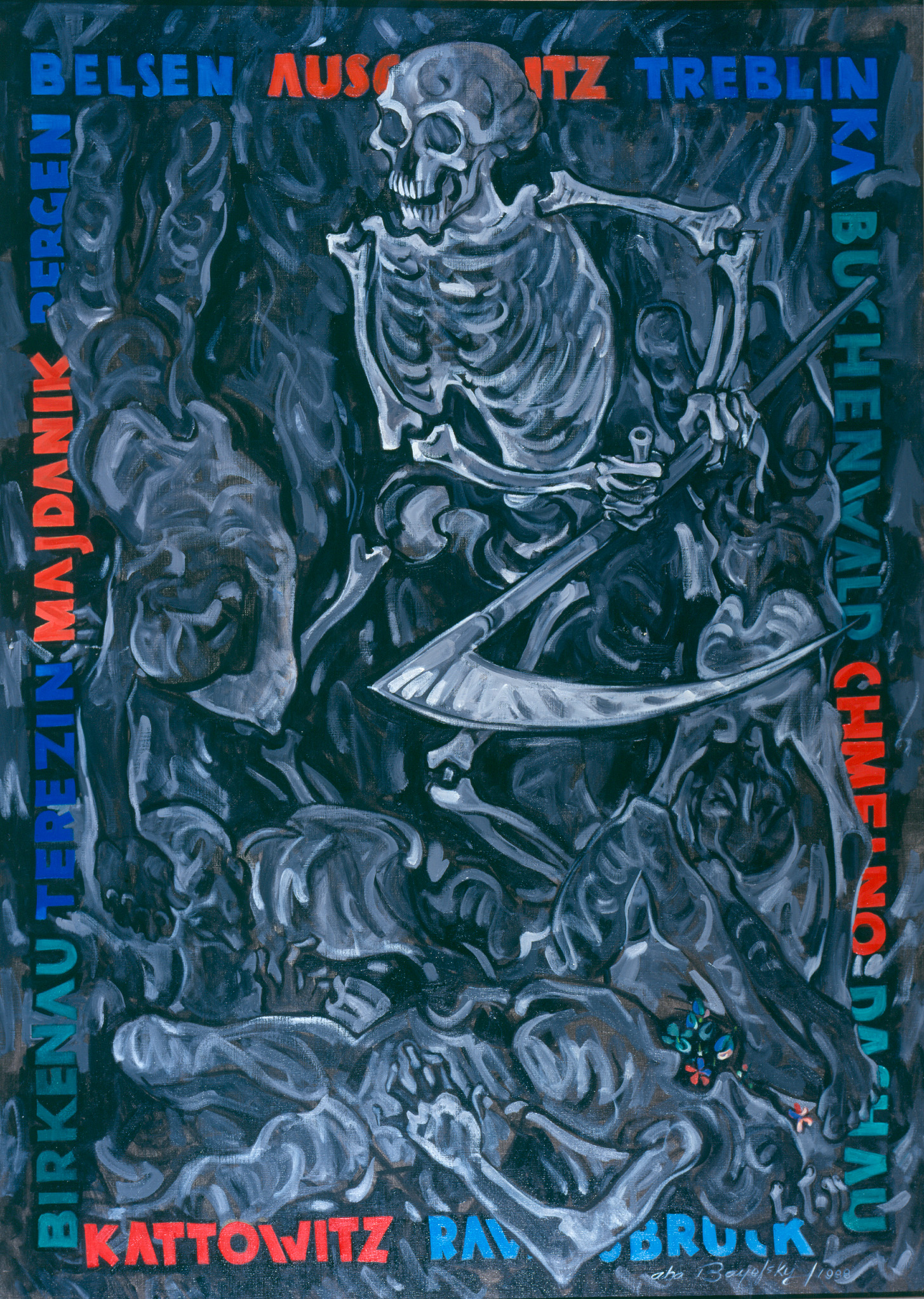
-
Article
Geopolitics
Geopolitics refers to a strategy for national identity and development based on a country's geographical characteristics and natural resources.
"https://thecanadianencyclopedia.ca/images/tce_placeholder.jpg?v=e9dca980c9bdb3aa11e832e7ea94f5d9" // resources/views/front/categories/view.blade.php
https://thecanadianencyclopedia.ca/images/tce_placeholder.jpg?v=e9dca980c9bdb3aa11e832e7ea94f5d9
-
Article
Gerald Stanley Case
On 9 February 2018, Gerald Stanley, a white farmer in rural Saskatchewan, was acquitted of murder and manslaughter in the killing of Colten Boushie, a 22-year-old Cree man. The acquittal caused great controversy but was not appealed by prosecutors. However, it led the Justin Trudeau government to abolish peremptory challenges, which allowed Stanley’s legal team to keep five Indigenous people off the all-white jury that acquitted him. In 2021, an investigation conducted by a civilian watchdog concluded that that the RCMP was insensitive and racially discriminatory toward Boushie’s mother, and that the police mishandled witnesses and evidence. A Globe and Mail investigation also found that the RCMP “destroyed records of police communications from the night Colten Boushie died.”
"https://thecanadianencyclopedia.ca/images/tce_placeholder.jpg?v=e9dca980c9bdb3aa11e832e7ea94f5d9" // resources/views/front/categories/view.blade.php
https://thecanadianencyclopedia.ca/images/tce_placeholder.jpg?v=e9dca980c9bdb3aa11e832e7ea94f5d9
-
Macleans
Giant Mine Murders: Ten Years Later
It was 8:45 a.m. on sept. 18, 1992, when the rail car transporting the replacement workers hit the trip wire, setting off an explosion so powerful that it drove bits of their flesh and bone deep into the hard rock ceiling.This article was originally published in Maclean's Magazine on August 19, 2002
"https://thecanadianencyclopedia.ca/images/tce_placeholder.jpg?v=e9dca980c9bdb3aa11e832e7ea94f5d9" // resources/views/front/categories/view.blade.php
https://thecanadianencyclopedia.ca/images/tce_placeholder.jpg?v=e9dca980c9bdb3aa11e832e7ea94f5d9
-
Article
Ginger Group
Ginger Group, an independent group of members of Parliament who in 1924 split from the PROGRESSIVE PARTY because they did not support a party structure that inhibited an MP's ability to act solely as the representative of his constituents.
"https://thecanadianencyclopedia.ca/images/tce_placeholder.jpg?v=e9dca980c9bdb3aa11e832e7ea94f5d9" // resources/views/front/categories/view.blade.php
https://thecanadianencyclopedia.ca/images/tce_placeholder.jpg?v=e9dca980c9bdb3aa11e832e7ea94f5d9
-
Macleans
Girls Kill Teenage Schoolmate
This article was originally published in Maclean’s magazine on December 8, 1997. Partner content is not updated. The waterfront park where Reena Virk was viciously beaten and left to drown looks like a Canadian dream: clumps of trees dot one shore, while attractive middle-class homes line the opposite bank.
"https://thecanadianencyclopedia.ca/images/tce_placeholder.jpg?v=e9dca980c9bdb3aa11e832e7ea94f5d9" // resources/views/front/categories/view.blade.php
https://thecanadianencyclopedia.ca/images/tce_placeholder.jpg?v=e9dca980c9bdb3aa11e832e7ea94f5d9
-
Editorial
Editorial: Newfoundland’s Contribution to the Patriation of the Constitution
The following article is an editorial written by The Canadian Encyclopedia staff. Editorials are not usually updated. In the decades since 1982, politicians and the media have recounted the same story about the patriation of Canada’s constitution and the adoption of the Charter of Rights and Freedoms. Most of the credit in this version goes to Prime Minister Pierre Trudeau. Three others are credited with breaking an impasse in the 1981 negotiations: federal justice minister Jean Chrétien, Saskatchewan attorney general Roy Romanow, and Ontario attorney general Roy McMurtry. But in his memoirs, former Newfoundland Premier Brian Peckford argues that the key intervention in the patriation process came from Peckford and the members of the Newfoundland delegation.
"https://d3d0lqu00lnqvz.cloudfront.net/media/media/0bc62d4c-deea-4509-8390-d8fa47d7c99a.jpg" // resources/views/front/categories/view.blade.php
https://d3d0lqu00lnqvz.cloudfront.net/media/media/0bc62d4c-deea-4509-8390-d8fa47d7c99a.jpg
-
Article
Godbout Case
In the Godbout case (1997), the Supreme Court of Canada unanimously decided that the obligation imposed on all its permanent employees by the city of Longueuil (near Montréal) that they live in the city was unconstitutional.
"https://thecanadianencyclopedia.ca/images/tce_placeholder.jpg?v=e9dca980c9bdb3aa11e832e7ea94f5d9" // resources/views/front/categories/view.blade.php
https://thecanadianencyclopedia.ca/images/tce_placeholder.jpg?v=e9dca980c9bdb3aa11e832e7ea94f5d9