Browse "History"
-
Macleans
Red River Flood
This article was originally published in Maclean’s magazine on May 12, 1997. Partner content is not updated. The flood of the century, they have been calling it in Manitoba, an awesome demonstration of natures raw might.
"https://d3d0lqu00lnqvz.cloudfront.net/media/media/c61bdc21-634f-4316-9ab1-acb89adc0cdf.jpg" // resources/views/front/categories/view.blade.php
https://d3d0lqu00lnqvz.cloudfront.net/media/media/c61bdc21-634f-4316-9ab1-acb89adc0cdf.jpg
-
Article
Red River Resistance
The Red River Resistance (also known as the Red River Rebellion) was an uprising in 1869–70 in the Red River Colony. The resistance was sparked by the transfer of the vast territory of Rupert’s Land to the new Dominion of Canada. The colony of farmers and hunters, many of them Métis, occupied a corner of Rupert’s Land and feared for their culture and land rights under Canadian control. The Métis mounted a resistance and declared a provisional government to negotiate terms for entering Confederation. The uprising led to the creation of the province of Manitoba, and the emergence of Métis leader Louis Riel — a hero to his people and many in Quebec, but an outlaw in the eyes of the Canadian government.
"https://d3d0lqu00lnqvz.cloudfront.net/media/media/f0a1f84f-c420-4038-8815-42587e295b75.jpg" // resources/views/front/categories/view.blade.php
https://d3d0lqu00lnqvz.cloudfront.net/media/media/f0a1f84f-c420-4038-8815-42587e295b75.jpg
-
Article
Red Tory
The language of Red Toryism became popular in the mid-1960s when Gad Horowitz suggested that George Grant was Red Tory.
"https://thecanadianencyclopedia.ca/images/tce_placeholder.jpg?v=e9dca980c9bdb3aa11e832e7ea94f5d9" // resources/views/front/categories/view.blade.php
https://thecanadianencyclopedia.ca/images/tce_placeholder.jpg?v=e9dca980c9bdb3aa11e832e7ea94f5d9
-
Editorial
Redrawing the West: The Politics of Provincehood in 1905
The following article is an editorial written by The Canadian Encyclopedia staff. Editorials are not usually updated.
"https://d3d0lqu00lnqvz.cloudfront.net/media/media/0aab1420-d19c-4cf3-9103-2deacba6cbbf.jpg" // resources/views/front/categories/view.blade.php
https://d3d0lqu00lnqvz.cloudfront.net/media/media/0aab1420-d19c-4cf3-9103-2deacba6cbbf.jpg
-
Macleans
Referendum Question Unveiled
Finally, the question. It is not long: only 41 words in French, 43 in English. Nor is it as clear as Jacques Parizeau always promised it would be. It is, in fact, cloaked in ambiguity, carefully crafted to obscure the full magnitude of the decision that awaits Quebec's 4.9 million voters.This article was originally published in Maclean's Magazine on September 18, 1995
"https://thecanadianencyclopedia.ca/images/tce_placeholder.jpg?v=e9dca980c9bdb3aa11e832e7ea94f5d9" // resources/views/front/categories/view.blade.php
https://thecanadianencyclopedia.ca/images/tce_placeholder.jpg?v=e9dca980c9bdb3aa11e832e7ea94f5d9
-
Article
Reform Movement in Upper Canada
After the War of 1812, Upper Canada began to develop rapidly. This resulted in social and economic tensions and political issues. These included the expulsion of Robert Gourlay, the Alien Question, the Anglican monopoly of the Clergy Reserves and education, and Tory control of patronage.
"https://d3d0lqu00lnqvz.cloudfront.net/media/media/9e9e3848-d959-4713-9a6f-8747181ebc24.jpg" // resources/views/front/categories/view.blade.php
https://d3d0lqu00lnqvz.cloudfront.net/media/media/9e9e3848-d959-4713-9a6f-8747181ebc24.jpg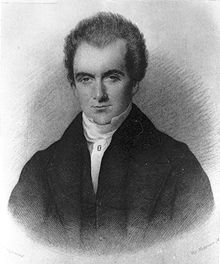
-
Macleans
Reform Unveils Election Platform
During his teenage years, Preston Manning spent many early daylight hours milking cows and performing other chores at the dairy farm near Edmonton owned by his father, Ernest, then the Social Credit premier of Alberta.This article was originally published in Maclean's Magazine on October 28, 1996
"https://d3d0lqu00lnqvz.cloudfront.net/media/media/a0c0fe6e-6906-48af-ac1b-c83f3c63eb36.jpg" // resources/views/front/categories/view.blade.php
https://d3d0lqu00lnqvz.cloudfront.net/media/media/a0c0fe6e-6906-48af-ac1b-c83f3c63eb36.jpg
-
Article
Refus global
Refus global was a manifesto published in 1948 and signed by 16 figures from Quebec’s artistic community. It challenged the traditional values of Quebec. The manifesto also fostered an opening-up of Quebec society to international thought. (See also Quiet Revolution.)
"https://d3d0lqu00lnqvz.cloudfront.net/media/media/fe698d06-4a75-46e2-aa34-435400e0724e.jpg" // resources/views/front/categories/view.blade.php
https://d3d0lqu00lnqvz.cloudfront.net/media/media/fe698d06-4a75-46e2-aa34-435400e0724e.jpg
-
Article
Refus Global Manifesto
Refus Global Manifesto We are the offspring of modest French-Canadian families, working class or lower middle class, who, ever since their arrival from the Old Country, have always remained French and Catholic through resistance to the conqueror, through strong attachment to the past, by choice and sentimental pride and out of sheer necessity. We are the settlers who, in 1760, were first thrust into the fortress of fear, the usual refuge of the vanquished, and...
"https://d3d0lqu00lnqvz.cloudfront.net/media/media/1eeca976-046e-482e-ad6e-6c08419b4a46.jpg" // resources/views/front/categories/view.blade.php
https://d3d0lqu00lnqvz.cloudfront.net/media/media/1eeca976-046e-482e-ad6e-6c08419b4a46.jpg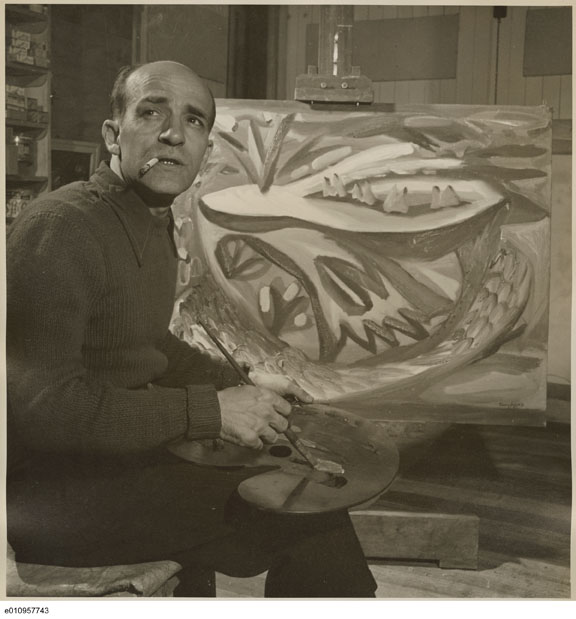
-
Article
Regina Manifesto
The Regina Manifesto was the founding policy document of the Co-operative Commonwealth Federation (CCF). Written in 1933, the 14-point policy statement called for eradicating capitalism and adopting socialist economic and social policies in a democratic state.
"https://d3d0lqu00lnqvz.cloudfront.net/media/media/d27e812a-e155-4b23-94b4-55060feada96.jpg" // resources/views/front/categories/view.blade.php
https://d3d0lqu00lnqvz.cloudfront.net/media/media/d27e812a-e155-4b23-94b4-55060feada96.jpg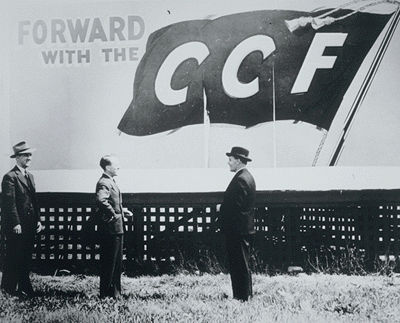
-
Macleans
Reid Arrested After Bank Robbery
This article was originally published in Maclean’s magazine on June 21, 1999. Partner content is not updated. Over the telephone, Susan Musgrave, one of British Columbia's most celebrated poets, is weeping and talking ceaselessly at the same time, trying to figure out how things could have taken such a terrible turn.
"https://thecanadianencyclopedia.ca/images/tce_placeholder.jpg?v=e9dca980c9bdb3aa11e832e7ea94f5d9" // resources/views/front/categories/view.blade.php
https://thecanadianencyclopedia.ca/images/tce_placeholder.jpg?v=e9dca980c9bdb3aa11e832e7ea94f5d9
-
Article
Remembrance Day in Canada
Remembrance Day is a yearly memorial day that is observed in many Commonwealth countries, including Canada, to remember those who died in military service, and honour those who served in wartime. It is observed across Canada each year on 11 November — the anniversary of the Armistice agreement of 1918 that ended the First World War. On Remembrance Day, public ceremonies and church services often include the playing of “Last Post,” a reading of the fourth stanza of the poem “For the Fallen,” and two minutes of silence at 11 a.m. Wreaths are laid at local war memorials and assemblies are held in schools. Millions of Canadians wear red poppy pins in the weeks leading up to and on 11 November in remembrance. In 2020 and 2021, Remembrance Day services and events were affected by the COVID-19 pandemic. Many events were either held online, cancelled or limited to a small number of participants due to fear of contagion.
"https://d3d0lqu00lnqvz.cloudfront.net/media/media/064a5591-1989-4fac-b81e-7bd9099c8053.jpg" // resources/views/front/categories/view.blade.php
https://d3d0lqu00lnqvz.cloudfront.net/media/media/064a5591-1989-4fac-b81e-7bd9099c8053.jpg
-
Article
Remembrance Day Poppy
The red poppy is a symbol of Remembrance Day that was inspired by the poem “In Flanders Fields,” written by Lieutenant-Colonel John McCrae. Canada officially adopted the poppy as a symbol of remembrance in 1921. Red poppy pins are sold by the Royal Canadian Legion and worn by millions of Canadians in the weeks leading up to and on 11 November.
"https://d3d0lqu00lnqvz.cloudfront.net/media/media/064a5591-1989-4fac-b81e-7bd9099c8053.jpg" // resources/views/front/categories/view.blade.php
https://d3d0lqu00lnqvz.cloudfront.net/media/media/064a5591-1989-4fac-b81e-7bd9099c8053.jpg
-
Editorial
Andrew Mynarski's Thirteenth Mission
The following article is an editorial written by The Canadian Encyclopedia staff. Editorials are not usually updated.
"https://d3d0lqu00lnqvz.cloudfront.net/media/media/b05b4a40-de07-4dba-aca6-b02911771b6d.jpg" // resources/views/front/categories/view.blade.php
https://d3d0lqu00lnqvz.cloudfront.net/media/media/b05b4a40-de07-4dba-aca6-b02911771b6d.jpg
-
Article
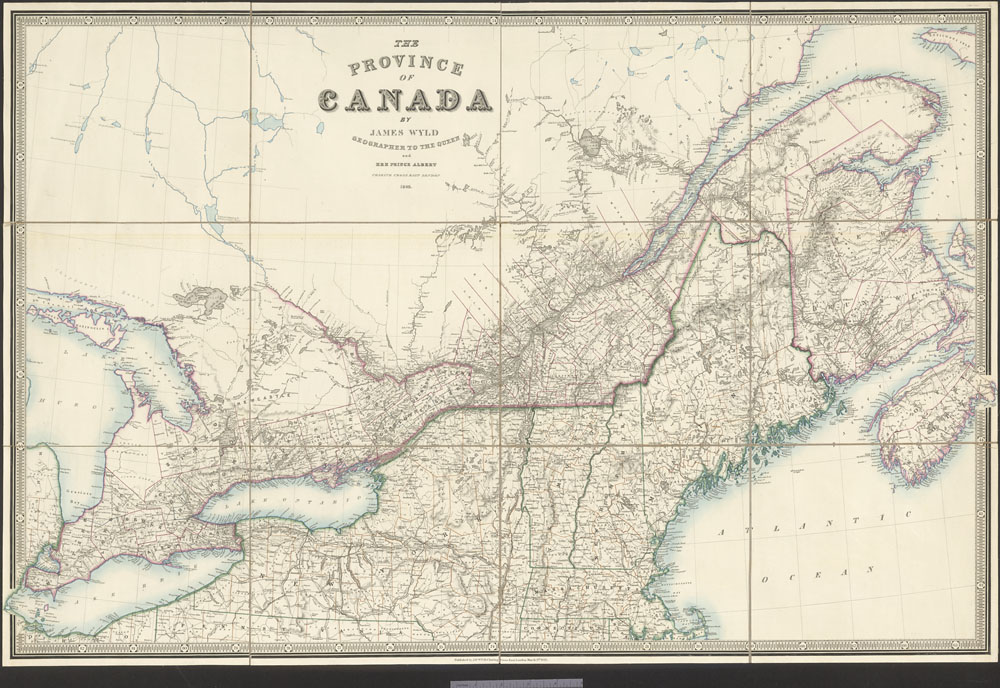
Rep by Pop
Representation by population is a political system in which seats in a legislature are allocated on the basis of population. It upholds a basic principle of parliamentary democracy that all votes should be counted equally. Representation by population was a deeply divisive issue among politicians in the Province of Canada (1841–67). Nicknamed “rep by pop,” it became an important consideration in the lead up to Confederation. (See also: Representative Government; Responsible Government.)
"https://d3d0lqu00lnqvz.cloudfront.net/media/media/bf6a8447-8306-4749-bb63-2f6129eb20a6.jpg" // resources/views/front/categories/view.blade.php
https://d3d0lqu00lnqvz.cloudfront.net/media/media/bf6a8447-8306-4749-bb63-2f6129eb20a6.jpg