Browse "History"
-
Article
Pier 21
Pier 21 was an immigration depot on the Halifax harbourfront that operated from 1928 to 1971.
"https://d3d0lqu00lnqvz.cloudfront.net/media/media/fd704360-23a5-4333-9dc4-fed52fcc81b8.jpg" // resources/views/front/categories/view.blade.php
https://d3d0lqu00lnqvz.cloudfront.net/media/media/fd704360-23a5-4333-9dc4-fed52fcc81b8.jpg
-
Article
Pinky Schooner
A Pinky Schooner was an ancient type of vessel adapted to a primitive sloop or schooner rig in the British North American colonies and widely used in the Maritime provinces until the early 1900s. Often less than 14 m long, they were cheap to build and ideally suited for fishing.
"https://thecanadianencyclopedia.ca/images/tce_placeholder.jpg?v=e9dca980c9bdb3aa11e832e7ea94f5d9" // resources/views/front/categories/view.blade.php
https://thecanadianencyclopedia.ca/images/tce_placeholder.jpg?v=e9dca980c9bdb3aa11e832e7ea94f5d9
-
Article
Pioneer Life
As each new area of Canada was opened to European settlement, pioneers faced the difficult task of building homes and communities from the ground up. Pioneer life revolved around providing the basic necessities of existence in a northern wilderness — food, shelter, fuel and clothing. Pioneering life was integral to family life and provided social stability for the settlement of a larger population across the country.
"https://d3d0lqu00lnqvz.cloudfront.net/media/media/e4a05698-f812-4056-9de1-b60785850314.jpg" // resources/views/front/categories/view.blade.php
https://d3d0lqu00lnqvz.cloudfront.net/media/media/e4a05698-f812-4056-9de1-b60785850314.jpg
-
Article
Place Names
Canada has about 350,000 official place names. These include names of populated places, water bodies (e.g. lakes) and geographical features (e.g. mountains).
"https://d3d0lqu00lnqvz.cloudfront.net/media/media/26c8ac6d-be78-4acc-9097-9854b0762516.jpg" // resources/views/front/categories/view.blade.php
https://d3d0lqu00lnqvz.cloudfront.net/media/media/26c8ac6d-be78-4acc-9097-9854b0762516.jpg
-
Article
Playing-Card Money
Playing-card money was a type of paper money used periodically in New France from 1685 to the British Conquest in 1763. Playing cards issued by the king — later replaced with white cards cut to various shapes — held values equivalent to French livres.
"https://d3d0lqu00lnqvz.cloudfront.net/media/media/f1733c26-ebb9-45c6-be6b-aecf8c7a9503.jpg" // resources/views/front/categories/view.blade.php
https://d3d0lqu00lnqvz.cloudfront.net/media/media/f1733c26-ebb9-45c6-be6b-aecf8c7a9503.jpg
-
Article
Political History
Political history is the study of the processes, activities and institutions of governments, the influences on them and the individuals involved with them.
"https://thecanadianencyclopedia.ca/images/tce_placeholder.jpg?v=e9dca980c9bdb3aa11e832e7ea94f5d9" // resources/views/front/categories/view.blade.php
https://thecanadianencyclopedia.ca/images/tce_placeholder.jpg?v=e9dca980c9bdb3aa11e832e7ea94f5d9
-
Article
Prairie Dry Belt Disaster
Five major investigations were commissioned, but to little avail. Between 1921 and 1926, 138 townships in southern Alberta, comprising nearly 3.2 million acres (1.3 million ha), lost at least 55% of their population; by 1926 80% of the Tilley-East country was permanently evacuated.
"https://d3d0lqu00lnqvz.cloudfront.net/media/media/ea2328a1-2ce9-4f2e-be69-d92cbfb2ae7a.jpg" // resources/views/front/categories/view.blade.php
https://d3d0lqu00lnqvz.cloudfront.net/media/media/ea2328a1-2ce9-4f2e-be69-d92cbfb2ae7a.jpg
-
Article
History of Settlement in the Canadian Prairies
The Canadian Prairies were peopled in six great waves of migration, spanning from prehistory to the present. The migration from Asia, about 13,300 years ago, produced an Indigenous population of 20,000 to 50,000 by about 1640. Between 1640 and 1840, several thousand European and Canadian fur traders arrived, followed by several hundred British immigrants. They created dozens of small outposts and a settlement in the Red River Colony, where the Métis became the largest part of the population. The third wave, from the 1840s to the 1890s, consisted mainly but not solely of Canadians of British heritage. The fourth and by far the largest wave was drawn from many nations, mostly European. It occurred from 1897 to 1929, with a pause (1914–22) during and after the First World War. The fifth wave, drawn from other Canadian provinces and from Europe and elsewhere, commenced in the late 1940s. It lasted through the 1960s. The sixth wave, beginning in the 1970s, drew especially upon peoples of the southern hemisphere. It has continued, with fluctuations, to the present. Throughout the last century, the region has also steadily lost residents, as a result of migration to other parts of Canada, to the United States, and elsewhere.
"https://d3d0lqu00lnqvz.cloudfront.net/media/media/e1c671ab-3dcf-459c-b108-0bc6e4a86b99.jpg" // resources/views/front/categories/view.blade.php
https://d3d0lqu00lnqvz.cloudfront.net/media/media/e1c671ab-3dcf-459c-b108-0bc6e4a86b99.jpg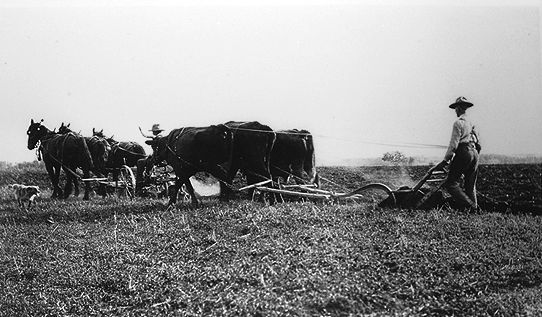
-
Macleans
Preserving St. Roch
A small horde of second- and third-graders swarms down onto the blood-red deck like so many giggling pirates. But the "blood" on the deck is really red-oxide paint. And the children - from Parkcrest Elementary School in Burnaby, B.C.This article was originally published in Maclean's Magazine on May 11, 1998
"https://thecanadianencyclopedia.ca/images/tce_placeholder.jpg?v=e9dca980c9bdb3aa11e832e7ea94f5d9" // resources/views/front/categories/view.blade.php
https://thecanadianencyclopedia.ca/images/tce_placeholder.jpg?v=e9dca980c9bdb3aa11e832e7ea94f5d9
-
Article
Prince Edward Island and Confederation
Despite hosting talks about Confederation, Prince Edward Island did not join the Dominion of Canada until 1873, when a crippling debt forced it into the national fold as the country's seventh province.
"https://d3d0lqu00lnqvz.cloudfront.net/media/media/9a650dcd-e8ad-4685-8baf-c4bba9cae8e7.jpg" // resources/views/front/categories/view.blade.php
https://d3d0lqu00lnqvz.cloudfront.net/media/media/9a650dcd-e8ad-4685-8baf-c4bba9cae8e7.jpg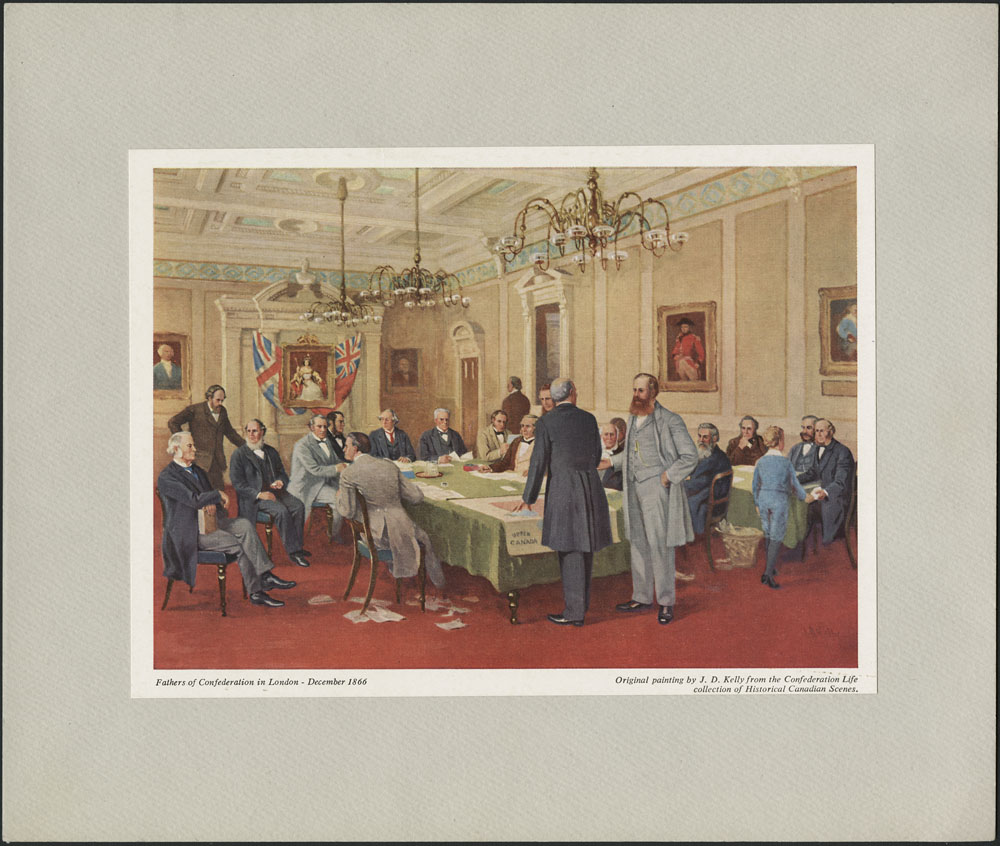
-
Article
Sheila Na Geira
According to legend, Sheila Na Geira (also spelled NaGeira and Nagira) was an Irish aristocrat or princess who, 300 or 400 years ago, while travelling between France and Ireland, was captured by a Dutch warship and then rescued by British privateers. She fell in love and was married to one of the privateers, Lieutenant Gilbert Pike. They settled at western Conception Bay. By the early 20th century, the legend was being told as part of Newfoundland’s oral tradition, and has since been popularized by poems, novels, scholarly articles and several plays.
"https://d3d0lqu00lnqvz.cloudfront.net/dreamstime_resize_33120989-2.jpg" // resources/views/front/categories/view.blade.php
https://d3d0lqu00lnqvz.cloudfront.net/dreamstime_resize_33120989-2.jpg
-
Article
Prison Ships in Canada: A Little-Known Story
On 15 July 1940, an unusual vessel docked at the Port of Québec, and a crowd gathered to greet the new arrival. The small craft used for patrolling and transportation on the St. Lawrence River at Québec City, the Jeffy Jan II — rechristened HMC Harbour Craft 54 by the young Canadian Navy during the war — was sent to surveil the ship and its sensitive cargo and passengers. The vessel in question was the prison ship MS Sobieski.
"https://d3d0lqu00lnqvz.cloudfront.net/media/media/05a335d9-a323-47e8-8090-059e81d8b8a4.jpg" // resources/views/front/categories/view.blade.php
https://d3d0lqu00lnqvz.cloudfront.net/media/media/05a335d9-a323-47e8-8090-059e81d8b8a4.jpg
-
Article
Prisoner of War Camps in Canada
Canada operated prison camps for interned civilians during the First and Second World Wars, and for 34,000 combatant German prisoners of war (POWs) during the Second World War.
"https://d3d0lqu00lnqvz.cloudfront.net/media/media/cde937a6-33ac-4af0-87d7-4a9323820e13.jpg" // resources/views/front/categories/view.blade.php
https://d3d0lqu00lnqvz.cloudfront.net/media/media/cde937a6-33ac-4af0-87d7-4a9323820e13.jpg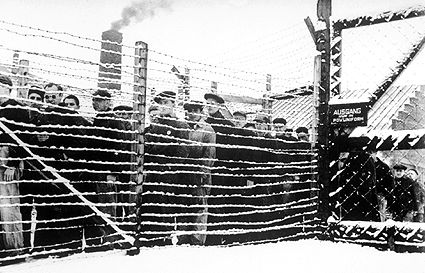
-
Article
Promyshlennik
A Promyshlennik is a Russian (chiefly Cossack) free-lance exploiter of natural resources, notably furs. Like the coureurs de bois, promyshlenniki had a sure instinct for rivers, forests and terrain.
"https://thecanadianencyclopedia.ca/images/tce_placeholder.jpg?v=e9dca980c9bdb3aa11e832e7ea94f5d9" // resources/views/front/categories/view.blade.php
https://thecanadianencyclopedia.ca/images/tce_placeholder.jpg?v=e9dca980c9bdb3aa11e832e7ea94f5d9
-
Article
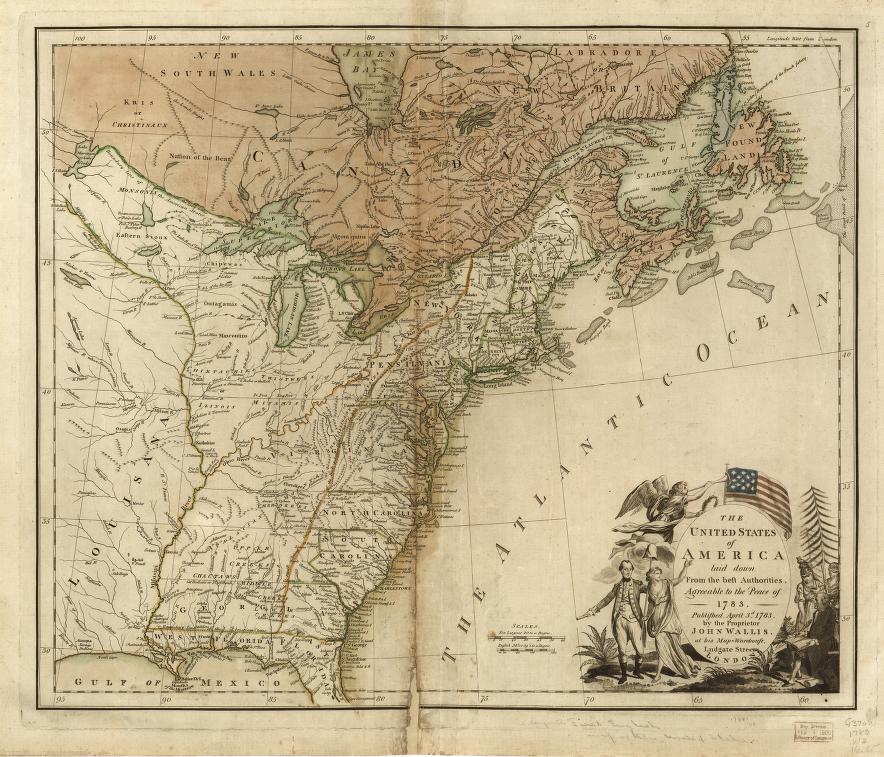
The Propaganda War in Canada During the American Revolution
American colonists conducted a propaganda campaign in the British colony of Canada prior to and during the American Revolution. Its aim was to persuade French Canada become the 14th colony and join the rebellion against Britain. The propaganda initially took the form of appeals. The core message was that Britain was tyrannizing its colonies and that joining the rebellion would deliver liberty and happiness to French Canadians. American agents and sympathizers in Canada helped spread the message, often adding rumours of British plans to raise taxes or deport French Canadians. The propaganda campaign helped weaken support for British rule prior to the American invasion of 1775, but it lost traction in the face of counterpropaganda by British authorities and growing public hostility to invading American troops, who seized goods and plundered properties.
"https://d3d0lqu00lnqvz.cloudfront.net/American-Revolution/1783-Map.jpg" // resources/views/front/categories/view.blade.php
https://d3d0lqu00lnqvz.cloudfront.net/American-Revolution/1783-Map.jpg