
Browse "Business & Economics"
-
Article
North West Company
Founded in 1779, the North West Company was a major force in the fur trade from the 1780s to 1821. Managed primarily by Highland Scots who migrated to Montréal after 1760, or came as Loyalists escaping the American Revolution, it also drew heavily on French-Canadian labour and experience. The name first described Montréal traders who in 1776 pooled resources to reduce competition among themselves and to resist inland advances of the Hudson’s Bay Company.
"https://d3d0lqu00lnqvz.cloudfront.net/media/media/ae171a3d-7542-4745-8013-b08068bf08e5.jpg" // resources/views/front/categories/view.blade.php
https://d3d0lqu00lnqvz.cloudfront.net/media/media/ae171a3d-7542-4745-8013-b08068bf08e5.jpg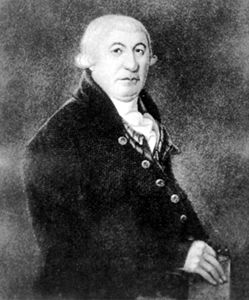
-
Article
Northern Gateway Pipeline Proposal
The $7.9 billion Northern Gateway project was a pipeline proposal that Enbridge put forward in 2008. Northern Gateway would have carried diluted bitumen (“dilbit”) about 1,170 km from Bruderheim, Alberta to a terminal on the Pacific Ocean at Kitimat, British Columbia. Enbridge claimed that the project would create $1.2 billion in tax revenue for BC, as well as 560 jobs. The Federal Court of Appeal overturned the pipeline’s approval in 2016. That same year, the Liberal government of Prime Minister Justin Trudeau rejected the project.
"https://d3d0lqu00lnqvz.cloudfront.net/media/media/de50644a-0b88-4e0a-991b-a6c9222e3c29.jpg" // resources/views/front/categories/view.blade.php
https://d3d0lqu00lnqvz.cloudfront.net/media/media/de50644a-0b88-4e0a-991b-a6c9222e3c29.jpg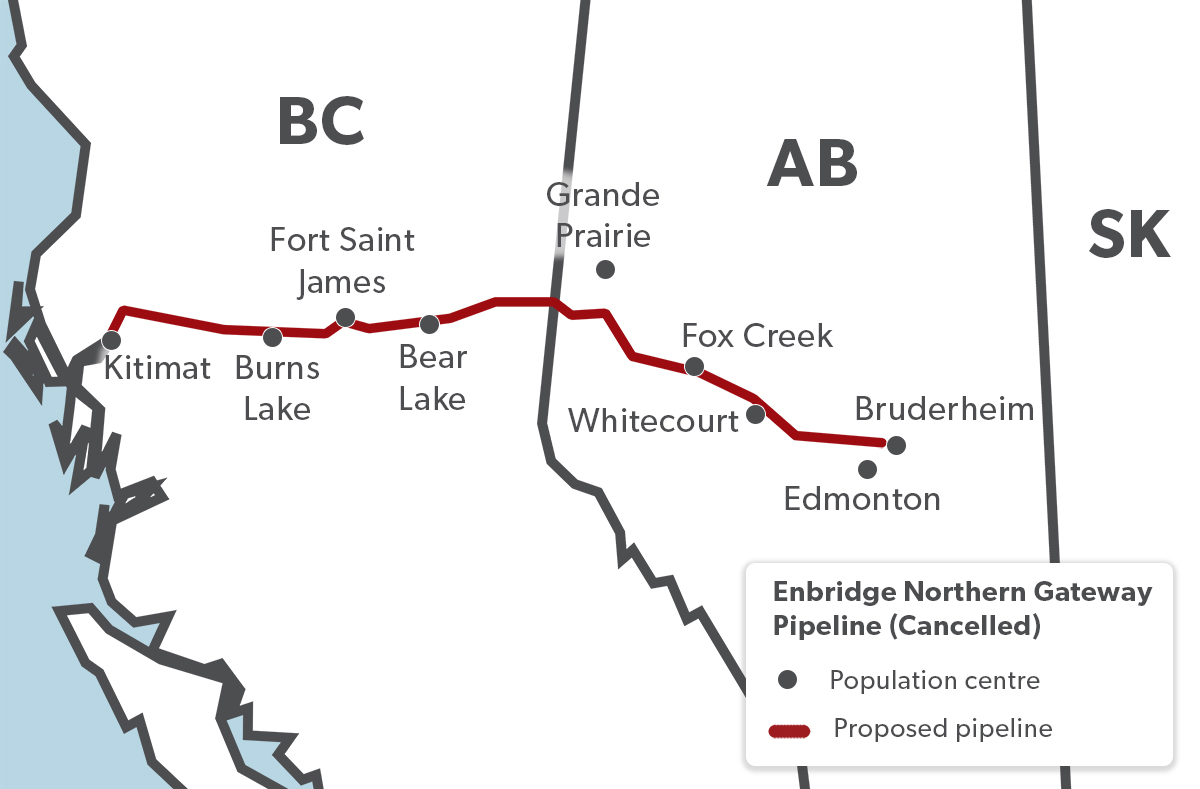
-
"https://thecanadianencyclopedia.ca/images/tce_placeholder.jpg?v=e9dca980c9bdb3aa11e832e7ea94f5d9" // resources/views/front/categories/view.blade.php
https://thecanadianencyclopedia.ca/images/tce_placeholder.jpg?v=e9dca980c9bdb3aa11e832e7ea94f5d9
-
Macleans
Nova and TransCanada Merge
This article was originally published in Maclean’s magazine on February 9, 1998. Partner content is not updated. When he arrived at his Calgary office last Nov. 11 after unveiling a plan to split Nova Corp.'s pipeline and petrochemical operations into separate companies, CEO Ted Newall received an urgent message from his counterpart at TransCanada PipeLines Ltd.
"https://thecanadianencyclopedia.ca/images/tce_placeholder.jpg?v=e9dca980c9bdb3aa11e832e7ea94f5d9" // resources/views/front/categories/view.blade.php
https://thecanadianencyclopedia.ca/images/tce_placeholder.jpg?v=e9dca980c9bdb3aa11e832e7ea94f5d9
-
Article
NOVA Corporation
NOVA Corporation was a Canadian energy company based in Calgary. Originally known as the Alberta Gas Trunk Line Company Ltd., it was established in 1954 to build, own and operate Alberta’s natural gas gathering and transmission facilities. In 1998, NOVA merged with TransCanada (now TC Energy), creating the fourth largest gas pipeline company in North America.
"https://thecanadianencyclopedia.ca/images/tce_placeholder.jpg?v=e9dca980c9bdb3aa11e832e7ea94f5d9" // resources/views/front/categories/view.blade.php
https://thecanadianencyclopedia.ca/images/tce_placeholder.jpg?v=e9dca980c9bdb3aa11e832e7ea94f5d9
-
Article
Nova Scotia Research Foundation Corporation
The Nova Scotia Research Foundation Corporation (NSRFC) was a research organization established by the province as the Nova Scotia Research Foundation in 1946 in response to Henry M.
"https://thecanadianencyclopedia.ca/images/tce_placeholder.jpg?v=e9dca980c9bdb3aa11e832e7ea94f5d9" // resources/views/front/categories/view.blade.php
https://thecanadianencyclopedia.ca/images/tce_placeholder.jpg?v=e9dca980c9bdb3aa11e832e7ea94f5d9
-
Article
Ocean Industry
The search for hydrocarbon resources in offshore areas, the driving force behind the development of the ocean industry, began in earnest in the early 1960s in the shallow waters of the Gulf of Mexico.
"https://thecanadianencyclopedia.ca/images/tce_placeholder.jpg?v=e9dca980c9bdb3aa11e832e7ea94f5d9" // resources/views/front/categories/view.blade.php
https://thecanadianencyclopedia.ca/images/tce_placeholder.jpg?v=e9dca980c9bdb3aa11e832e7ea94f5d9
-
Article
Ocean Mining
Several types of valuable mineral deposits exist under the oceans and other large bodies of water. Where water is shallow, placer deposits can be recovered by large dredges (eg, tin minerals off the coasts of Java and Borneo).
"https://thecanadianencyclopedia.ca/images/tce_placeholder.jpg?v=e9dca980c9bdb3aa11e832e7ea94f5d9" // resources/views/front/categories/view.blade.php
https://thecanadianencyclopedia.ca/images/tce_placeholder.jpg?v=e9dca980c9bdb3aa11e832e7ea94f5d9
-
Article
Oil, Chemical and Atomic Workers International Union v Imperial Oil Limited et al
In 1961 the BC Legislature prohibited trade unions from using membership fees paid under a collective agreement checkoff provision for political purposes.
"https://thecanadianencyclopedia.ca/images/tce_placeholder.jpg?v=e9dca980c9bdb3aa11e832e7ea94f5d9" // resources/views/front/categories/view.blade.php
https://thecanadianencyclopedia.ca/images/tce_placeholder.jpg?v=e9dca980c9bdb3aa11e832e7ea94f5d9
-
Article
Oil Sands
The Canadian oil sands (or tar sands) are a large area of petroleum extraction from bitumen, located primarily along the Athabasca River with its centre of activity close to Fort McMurray in Alberta, approximately 400 km northeast of the provincial capital, Edmonton. Increased global energy demand, high petroleum dependency and geopolitical conflict in key oil producing regions has driven the exploration of unconventional oil sources since the 1970s which, paired with advances in the field of petroleum engineering, has continued to make bitumen extraction economically profitable at a time of rising oil prices. Oil sands are called “unconventional” oil because the extraction process is more difficult than extracting from liquid (“conventional”) oil reserves, causing higher costs of production and increased environmental concerns.
"https://d3d0lqu00lnqvz.cloudfront.net/media/media/55ab3410-4b51-409d-bdb8-019dbd2c6d20.jpg" // resources/views/front/categories/view.blade.php
https://d3d0lqu00lnqvz.cloudfront.net/media/media/55ab3410-4b51-409d-bdb8-019dbd2c6d20.jpg
-
Article
One Big Union
The One Big Union (OBU) was a radical labour union formed in Western Canada in 1919. It aimed to empower workers through mass organization along industrial lines. The OBU met fierce opposition from other parts of the labour movement, the federal government, employers and the press. Nevertheless, it helped transform the role of unions in Canada. Click here for definitions of key terms used in this article.
"https://d3d0lqu00lnqvz.cloudfront.net/media/new_article_images/OneBigUnion/OBU_logo.JPG" // resources/views/front/categories/view.blade.php
https://d3d0lqu00lnqvz.cloudfront.net/media/new_article_images/OneBigUnion/OBU_logo.JPG
-
Macleans
Ontario Hydro to be Privatized
This article was originally published in Maclean’s magazine on February 12, 1996. Partner content is not updated.
"https://d3d0lqu00lnqvz.cloudfront.net/media/media/4c2c080b-2319-41db-bfdd-da332a9d805d.jpg" // resources/views/front/categories/view.blade.php
https://d3d0lqu00lnqvz.cloudfront.net/media/media/4c2c080b-2319-41db-bfdd-da332a9d805d.jpg
-
Macleans
Ontario Hydro's $6 Billion Loss
It was a sight to behold: men and women who have dumped all over the province's public electrical utility from the dawn of political time, running in rhetorical circles in an effort to persuade worried voters and nervous consumers that Ontario Hydro's decision to write $6.This article was originally published in Maclean's Magazine on March 2, 1998
"https://thecanadianencyclopedia.ca/images/tce_placeholder.jpg?v=e9dca980c9bdb3aa11e832e7ea94f5d9" // resources/views/front/categories/view.blade.php
https://thecanadianencyclopedia.ca/images/tce_placeholder.jpg?v=e9dca980c9bdb3aa11e832e7ea94f5d9
-
Article
Otto Higel Co. Ltd.
Otto Higel Co. Ltd. Toronto manufacturer of piano and organ supplies. The company was founded in 1896 by Otto Higel (b Silesia, Germany, 1869, d Toronto 2 Jul 1930), who had bought the Toronto piano action and key manufacturing business of F.
"https://thecanadianencyclopedia.ca/images/tce_placeholder.jpg?v=e9dca980c9bdb3aa11e832e7ea94f5d9" // resources/views/front/categories/view.blade.php
https://thecanadianencyclopedia.ca/images/tce_placeholder.jpg?v=e9dca980c9bdb3aa11e832e7ea94f5d9
-
Article
Pacific Fur Company
The Pacific Fur Company was established on 23 June 1810 and headed by New York fur dealer John Jacob Astor. Principal partners included ex-Nor'Westers Alexander McKay, Donald McKenzie and Duncan McDougall.
"https://thecanadianencyclopedia.ca/images/tce_placeholder.jpg?v=e9dca980c9bdb3aa11e832e7ea94f5d9" // resources/views/front/categories/view.blade.php
https://thecanadianencyclopedia.ca/images/tce_placeholder.jpg?v=e9dca980c9bdb3aa11e832e7ea94f5d9